
Our very own children's illustrative genius
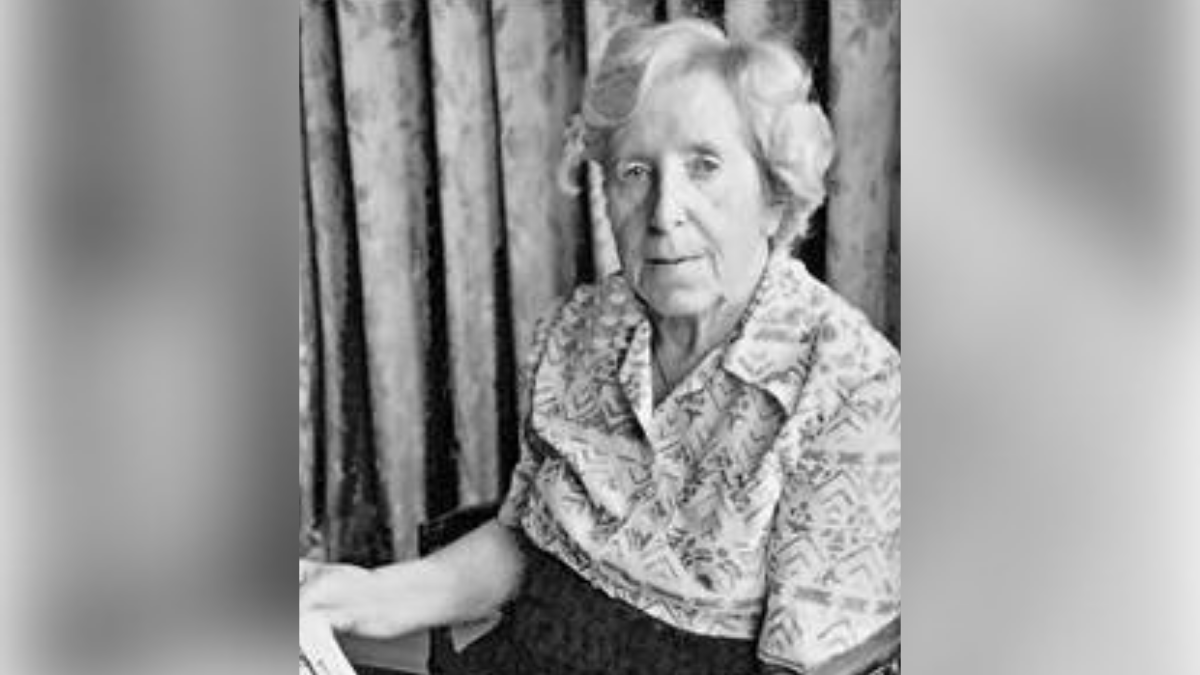
Margaret Tempest drew the animals that lived in millions of childhood imaginations. But behind those gentle watercolours was a pioneering Ipswich artist, a passionate sailor and a decidedly ungentle literary feud.

There was a time when the most exciting thing that could happen in a child's bedroom was the arrival of a new book.
No television in the corner, no tablet, no computer games. Just a picture book, perhaps a bedside lamp, and the glorious prospect of disappearing into another world.
And for generations of British children, that world belonged to Little Grey Rabbit.
There was Hare, rather full of himself. Squirrel, vain and sometimes infuriating. Fuzzypeg the hedgehog, Water Rat, Moldy Warp the mole and a whole countryside of creatures who dressed like people, cooked proper meals and lived in improbably comfortable little houses.
The pictures were beautiful: delicate watercolours, tiny domestic details, gingham curtains, polished furniture and woodland animals behaving rather like the inhabitants of a particularly agreeable Suffolk village.
The woman responsible for those unforgettable illustrations came from Ipswich.
Her name was Margaret Tempest, and her life was rather more adventurous than her artwork might suggest.
Born in 1892 into a prominent Ipswich family, Margaret grew up in comfortable circumstances. Her father, a solicitor and magistrate, served as mayor of Ipswich, as would her younger brother, Frank.
She was educated at Ipswich High School for Girls and Ipswich School of Art, before moving to London to study at Westminster School of Art.
Already, you sense that this was no ordinary Edwardian young lady.
Margaret had a gift for drawing, but turning that talent into a career was another matter. Professional opportunities for women artists were limited, and respectable society still had rather firm opinions about what women should and should not do.
Margaret was not particularly interested in those limitations.
In 1919, she helped establish the Chelsea Illustrators Club, an enterprising collective of women artists operating from a studio in a barn off the King's Road.
Imagine the scene. A group of talented young women running their own creative business, designing greetings cards, producing commercial illustrations, organising exhibitions and selling their work.
Long before anyone had thought of calling such people creative entrepreneurs, Margaret and her friends were quietly getting on with it.
The collective survived for 20 years.
Margaret also taught drawing, and among her pupils was a boy who would become famous in a quite different field: Peter Scott, son of the Antarctic explorer Captain Robert Falcon Scott, and later one of Britain's most important conservationists.
Then, in 1929, came the commission that changed everything.
Margaret was offered a manuscript by a writer named Alison Uttley. It concerned three woodland animals: a squirrel, a hare and a little grey rabbit.
The resulting book, The Squirrel, the Hare and the Little Grey Rabbit, began one of the most successful partnerships in British children's literature.
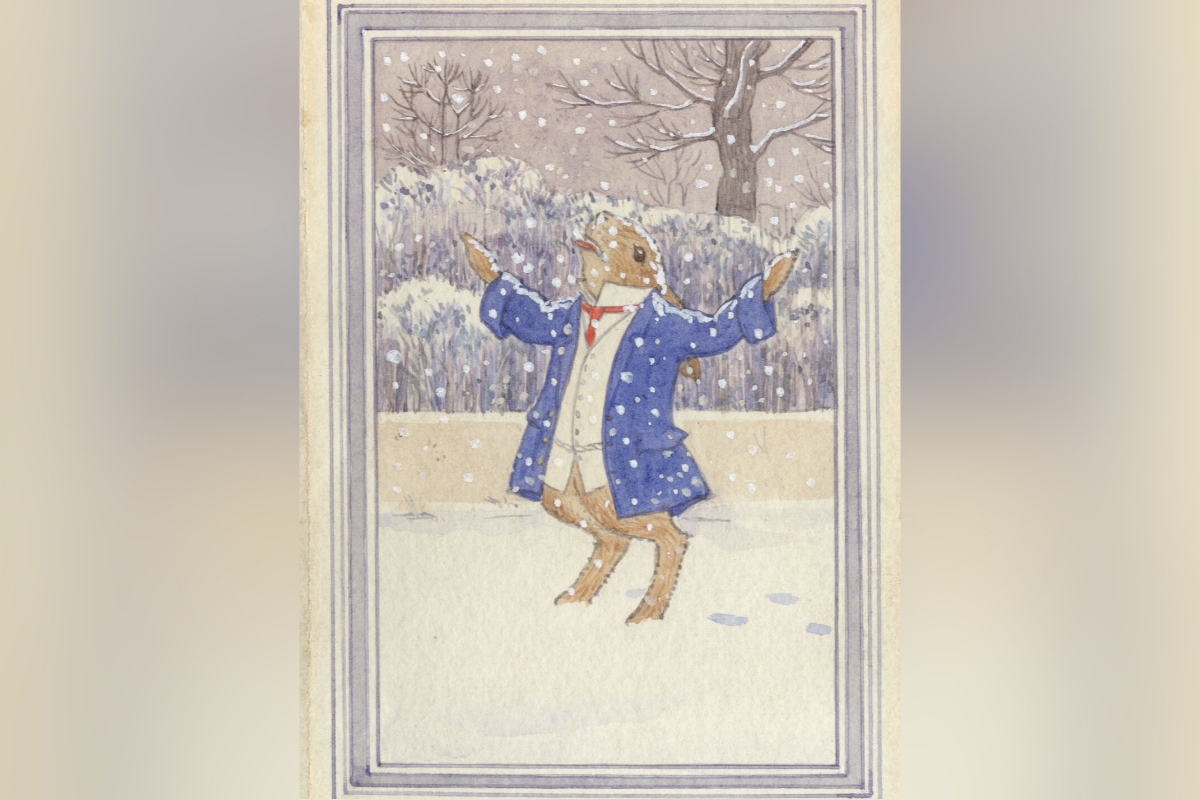
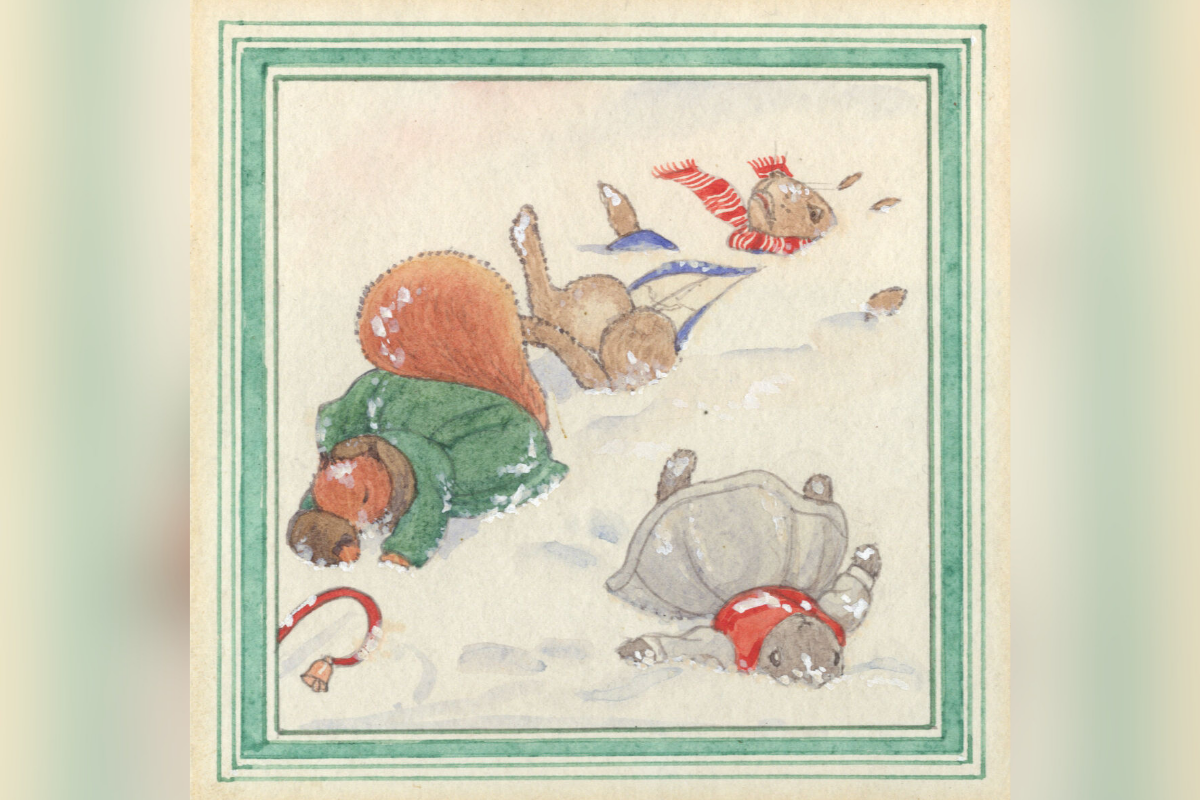
Illustrations by Margaret Tempest (Photos: C Bonhams Auctions)
Uttley supplied the stories. Tempest gave the characters their faces.
And what extraordinary faces they were.
Little Grey Rabbit was gentle and unassuming, usually wearing a pinafore and looking as though she had spent the morning tidying up after her considerably less helpful housemates.
Hare was magnificently self-important. Squirrel appeared to regard domestic responsibilities as something best left to somebody else.
The humour was subtle, the landscapes affectionate, and the attention to tiny details astonishing.
Margaret illustrated 34 books in the series, helping create a visual world recognised by generations of readers.
But here is where the story becomes considerably less cosy.
Behind the scenes, the two women did not get on.
In fact, that is putting it mildly.
Alison Uttley was a brilliant writer, but her private diaries, published long after her death, reveal a woman capable of extraordinary resentment.
She disliked comparisons with Beatrix Potter, had a particularly low opinion of fellow children's author Enid Blyton, and developed an intense dislike of Margaret Tempest.
At one point, Uttley described her illustrator as "absolutely awful".
There were disagreements over copyright and, more fundamentally, over who deserved credit for creating the characters readers loved.
It is an interesting question.
Without Uttley's stories there would have been no Little Grey Rabbit. But without Tempest's pictures, would those little creatures have occupied quite such a permanent place in the national imagination?
The collaboration eventually deteriorated into estrangement.
One imagines Little Grey Rabbit would have been thoroughly upset by the whole business, while Squirrel would probably have enjoyed the gossip.
Margaret, meanwhile, had interests considerably more exciting than woodland tea parties.
She loved sailing.
Not simply a pleasant afternoon bobbing about in a dinghy, but serious sailing along the Suffolk coast and the River Orwell.
She regularly sailed with her brother Frank and became commodore of Pin Mill Sailing Club.
Think about that for a moment. A woman born in Victorian Britain, who had established herself professionally in a male-dominated industry, was now taking charge of a sailing club on the Orwell.
Her drawings might have been gentle, but there was clearly steel beneath the watercolours.
Margaret was also a respected member of Ipswich's artistic community, exhibiting with Ipswich Fine Art Club and maintaining her links with the town throughout her career.
In 1951, at the age of about 59, she married Sir Edward Grimwood Mears, a widowed cousin and former chief justice in Allahabad, India.
Not exactly a conventional first marriage.
They enjoyed 12 years together before his death in 1963, aged 93.
Margaret continued living in Ipswich, at 3 St Edmunds Road, and kept drawing well into old age.
One particularly lovely family recollection survives. When children visited her, she would sit them on her knee and ask which animal they liked best.
Then she would draw it for them.
Imagine being a child, sitting on the knee of the woman who illustrated Little Grey Rabbit, and watching your favourite creature appear from the end of her pencil.
Sadly, Parkinson's disease eventually robbed Margaret of the ability to draw. She died in 1982, aged 90.
Her work, however, lived on.
Today, original Tempest watercolours are collected and sold by specialist dealers and auction houses. Her illustrations are preserved in collections, including the Victoria and Albert Museum, while Ipswich has honoured her with a blue plaque at her former home in St Edmunds Road.
And there is a rather wonderful final detail.
Those apparently modest drawings of animals in kitchens, gardens and country lanes helped create a world recognised far beyond Suffolk.
Yet the woman behind them repeatedly returned to the place where she belonged: Ipswich, the Orwell and the quiet countryside that must have felt so familiar to her.
Next time you are passing St Edmunds Road, cast a glance towards the home of Margaret Tempest.
An artist, a businesswoman, a sailor, a pioneer – and the woman who made a little grey rabbit immortal.
More in the They Came from Ipswich series
 Jon Moran

 Jon Moran

Don't forget: If you enjoy our content, please add Ipswich.co.uk as a "preferred source" on Google so you can easily find more of the content you value.
This article cost us ~£54 to produce
It's free for you to read thanks to the generous support of our partners. Please support us by supporting them.
Below the line