
They came from Ipswich: The missing drummer of Genesis
An Ipswich-born drummer helped shape the sound of one of prog rock’s biggest bands, then vanished so completely that even Genesis couldn’t find him. This is the extraordinary story of John Mayhew.

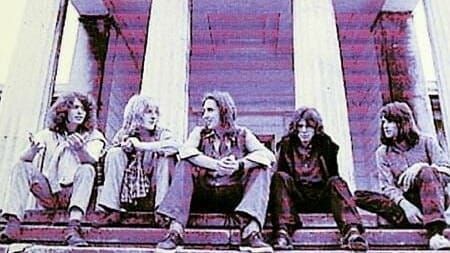
Some rock and roll stories don't end with sold-out stadiums and gold discs. They end with somebody quietly getting on with life while everybody else becomes famous. One of the most remarkable begins in Ipswich.
John Mayhew was born here in March 1947. If the name isn't immediately familiar, try this: before Phil Collins became the drummer in Genesis, there was an Ipswich lad behind the kit. He played on Trespass, the 1970 album that transformed Genesis from an ambitious, rather uncertain collection of former schoolboys into one of the defining progressive rock bands of the decade.
And then, more or less, he vanished.
This was long before Invisible Touch, stadium tours or Peter Gabriel dressed as a flower. Genesis were ambitious young men convinced that long, complicated songs about imaginary worlds were a perfectly reasonable way to spend an evening.
Mayhew came from a different world. He learned drums at sixteen when a school friend invited him to replace another drummer, played with Suffolk bands, including The Epics, and then moved to London, working as a carpenter between musical engagements.
His recruitment was wonderfully unglamorous. Forget the often-repeated story about an advertisement in Melody Maker. Mayhew insisted he'd simply left his telephone number around London, hoping something worthwhile would turn up.
One afternoon in 1969, he returned from work to discover that somebody called Mike Rutherford had rung. Rutherford called again at six. The band was Genesis, a name Mayhew liked, even though he had never heard their music. He travelled to Surrey, met Peter Gabriel, Tony Banks, Anthony Phillips and Rutherford, and found himself with the job.
Genesis had made their debut album, From Genesis to Revelation, without troubling the record-buying public much. They were searching for a sound of their own.
The band retreated to a Surrey cottage with road manager Richard Macphail and worked. And worked. Mayhew recalled rehearsing eleven hours a day, walking in the countryside and reading George Orwell at night. Their dedication bordered on monastic.
Mayhew brought practical skills, too, making their battered delivery van more habitable and constructing equipment. Among those formidable musical brains was the chap from Ipswich with a toolbox.
By 1970 they had attracted the attention of Tony Stratton-Smith's Charisma label. Mayhew even managed to talk their proposed weekly wage down from £15 to £10, thinking the smaller amount quite sufficient. Not, perhaps, a negotiating tactic recommended to modern musicians.
Then came Trespass.
Released in October 1970, it's where the Genesis progressive rock fans know and love begins to emerge. There's the acoustic delicacy of Dusk, the brooding White Mountain, the slowly unfolding Stagnation and Looking for Someone. And then there's The Knife.
If you've never heard The Knife, do yourself a favour. Turn it up. Suddenly pastoral Genesis become a snarling rock band. The rhythms shift, the organ charges forward, and Mayhew's drumming supplies the momentum. It isn't Phil Collins playing. It's John Mayhew, from Ipswich.
The album wasn't initially a hit. Its reputation grew as Genesis grew. But by the time it reached the shops, Mayhew had gone.
Anthony Phillips was struggling with the pressure of live performance and decided to leave. The remaining musicians used the upheaval to reconsider their drummer too. Mayhew was asked to go. He later said plainly that he had found the group's increasingly complex arrangements difficult, and acknowledged that Collins possessed a technical facility he did not.
There is a sad detail in Mayhew's own account. He remembered being told the news in a coffee shop, with tears in his eyes. He had grown attached to the band. As their audience was beginning to grow, his place in it was disappearing.
Phil Collins joined, Steve Hackett followed, and Genesis became Genesis. Landmark albums, international acclaim and, eventually, a completely different sort of pop superstardom were still ahead.
Mayhew carried on playing for a while. He returned to Ipswich, worked with other bands and travelled through Europe, eventually settling in New Zealand and Australia. By the early 1980s he had put away his drumsticks, concentrating instead on carpentry, decorative work and furniture making.
He wasn't at the reunions. His former colleagues didn't know where to contact him. Yet 'missing' overstates it: he was simply living another life, far from rock fame.
Then came a twist that you couldn't invent.
In the 2000s, Mayhew enrolled on a course devoted to the furniture designs of Charles Rennie Mackintosh. The instructor, Dave Burgess, was a Genesis enthusiast. He saw the name John Mayhew on the attendance list, and couldn't quite believe what he was looking at. A casual remark about once playing drums confirmed it. After decades of silence, the missing member of Genesis had been found in a furniture workshop.
In 2006 he emerged at Genesis fan conventions, reunited with Anthony Phillips and even returned to the drums to play The Knife with tribute band ReGenesis. There were interviews, applause and overdue recognition. There were also accumulated royalties from the old recordings.
He wasn't bitter. He described his Genesis year as one of the best of his life. There is considerable dignity in that.
The ending, sadly, was less kind. Mayhew died in Glasgow on 26 March 2009, the day before his 62nd birthday. His older brother Paul, with whom he'd lost contact, had only recently begun trying to find him. The reunion he had hoped for never happened.
So here's a small suggestion. Next time somebody talks about Ipswich's contribution to popular music, let's not stop at the obvious names. Put Trespass on the turntable. Look at that extraordinary sleeve, with its knife slashed across the picture. Listen to the drummer.
For one remarkable chapter of the Genesis story, the man keeping time was one of ours.
Don't forget: If you enjoy our content, please add Ipswich.co.uk as a "preferred source" on Google so you can easily find more of the content you value.
Local journalism is expensive to produce
It's free for you to read thanks to the generous support of our partners. Please support us by supporting them.
Below the line