A decision years in the making
Wednesday, 25 March 2026, will be remembered as the day Suffolk's local government was fundamentally reshaped. Following Prime Minister's Questions today, the government confirmed what many had long campaigned for: Suffolk's six councils will be abolished and replaced by three new unitary authorities, anchored in Ipswich, Bury St Edmunds and Lowestoft.
For some, the announcement felt like the culmination of a decade's work. Mark Ling, a long-term campaigner who has lobbied for a three-council model since 2016, described it as "the biggest thing that could happen to this town — even bigger than City of Culture", arguing that fragmented local governance has been "the root cause of all the town's challenges."
"Today's decision by the government to implement three Suffolk unitaries is a game-changer for Ipswich and Suffolk," he said. "I take huge pride in having fought tooth and nail to help win a once-in-a-lifetime opportunity; not only to make greater efficiencies and intelligent cost savings but to win a better, more balanced, and more representative Suffolk for all its stakeholders."

Ipswich's MP, Jack Abbott, had made his own position clear months earlier, speaking in support of the government's devolution legislation at Westminster in September 2025. He argued that three unitary authorities in Suffolk, working alongside a mayor for East Anglia, struck the right balance between scale and local accountability.
"People want their councils to deliver public services effectively, responsibly, and accessibly, which is why I believe our devolution settlement needs to produce unitary authorities with sufficient scale to achieve this," he told the House. "However, people rightly want their councillors and councils to be rooted in their local community, so that they can listen, understand, and act in their best interests. And that's why I believe that three unitary authorities in Suffolk, working alongside a mayor for East Anglia, achieves that balance."
Abbott, who moved to Suffolk aged 10 and has described it as his home, was characteristically direct about the stakes. "For a long time, we've been ill served as a town and a county by short termism and a do nothing approach," he said. "Every day I've entered this job, I've thought about all the ways we can leverage the change that we need to set us on a new path."
He argued the potential went beyond local government efficiency. "Greater Ipswich would renew our area's economic foundations and deliver the infrastructure we need after years of neglect," he said, adding that the area could "become a nationally leading economic powerhouse."
How we got here
The formal process began in earnest in September 2025, when Suffolk's councils were asked to submit their competing visions to Westminster by a deadline of 26 September.
Suffolk County Council went first, publishing its One Suffolk business case on 8 September 2025. Commissioned from global advisory firm Grant Thornton, the plan set out a case for replacing all six of Suffolk's councils with a single unitary authority serving 760,000 residents. It projected savings of £78.2 million in the first five years and £39.4 million annually thereafter, and promised to harmonise council tax to the lowest level in the county from day one — a pledge that would have meant significant reductions for Ipswich residents, who pay some of the highest council tax rates in the country.
"I am certain that One Suffolk will deliver the greatest possible savings and the greatest improvement to services of any of the proposals put to government," said Councillor Richard Rout, Suffolk County Council's cabinet member for devolution, local government reform and NSIPs.
A week later, on 15 September, the district and borough councils published their rival plan — the 'Case for Change to Three Councils for Suffolk', proposing three new authorities: Central and Eastern Suffolk, Western Suffolk, and Ipswich and Southern Suffolk. They promised savings of £34 million annually and £20 million reinvestment in local services, arguing their model would be "big enough to deliver, local enough to care."
By 18 September, Suffolk County Council's cabinet had unanimously approved its One Suffolk submission. The full council vote — 43 in favour, 17 against, two abstentions — was a formality, but the debate laid bare the depth of feeling on both sides. Councillor Andrew Stringer, leader of the Green, Liberal Democrat and Independent group, warned: "Suffolk is a county with areas of different character and need. What is best for Ipswich, for example, may not be best for rural Mid Suffolk, or the coastal communities of East Suffolk."
The battle over the numbers
From the outset, the dispute was as much about competing financial projections as competing visions of democracy.
Suffolk County Council argued its analysis — based on Suffolk-specific data — showed that three councils would cost £145.3 million more than the current two-tier system over five years. The district and borough councils rejected this, presenting their own analysis showing the opposite: that the One Suffolk plan, once council tax harmonisation was factored in, would cost £81.8 million over five years rather than deliver savings, while their Power of 3 proposal would make £128.5 million available to reinvest in services over the same period.
Councillor John Ward, leader of Babergh District Council, did not hold back. "The county's spokesperson should spend less time trying to attack the Power of Three proposals, and concentrate on giving honest and reliable information," he said. Councillor Rout responded by calling the district and borough councils' projections "fanciful economics", accusing them of assuming "every slice of toast would land butter side up and every lottery ticket would contain the winning numbers."
Neither the One Suffolk nor the Power of 3 business cases included the financial impact of their preferred council tax harmonisation methods — both sides acknowledged this was ultimately a decision for the new councils to make. This did not stop each from using the other's omission as ammunition.
A formal complaint — and a lobbying row
The dispute escalated further in November 2025, when the district and borough councils wrote formally to Alison McGovern, minister of state for local government and homelessness, accusing Suffolk County Council of breaching publicity guidelines and using taxpayers' money to fund a lobbying campaign.
Freedom of information requests had revealed that the county council had commissioned an external communications agency with a budget of up to £50,000. Documentation showed the campaign brief included instructions to "expose weaknesses of alternative proposals and influence the Government's decision making." Part of the campaign had invited newsletter recipients to send a proforma letter to their MP in support of One Suffolk — which the district councils described as "a clear case of public funds being used to create a lobbying campaign."
The county council strongly rejected the allegations. Councillor Rout said the Local Government Code of Publicity "was fully taken into consideration throughout the planning and delivery of work," adding: "To suggest our business case is dishonest is both ironic and hypocritical."
The row prompted sharp words at the county council building, too. Councillor Andrew Stringer, speaking during the full council debate in September, highlighted the county council's spending of £37,000 on leaflets, £6,700 on photographs and £500 on badges. "This is how much they care about saving you money," he said.
The public has its say
In November 2025, the government launched a statutory public consultation on the two competing proposals, giving Suffolk residents until 11 January 2026 to have their say. The process drew contributions from across the county, with business, health, social care and community leaders lining up on both sides.
Supporting One Suffolk, Nick Hulme, outgoing chief executive of East Suffolk and North Essex NHS Foundation Trust, warned that three councils could "perpetuate the postcode lottery we already contend with." Businessman Richard Brame put it in blunter terms: "If this was a business, there would be no question. Would you have three CFOs, or would you have one?"
Those backing three councils argued the opposite: that Suffolk's diversity — its coastal communities, market towns and urban centre — demanded authorities that understood their own areas. "Three unitaries based on real areas of interdependence, commonality, and customer-facing governance," as Ling put it, echoing arguments he had first made in a written proposal in 2016.
The response
Suffolk County Council: 'A significant opportunity has been missed'
Senior sources at Suffolk County Council acknowledged on earlier today that the decision, while unwelcome, was not entirely unexpected. The political arithmetic had always made the county council's position difficult: in a county where the district and borough councils are largely not Conservative-controlled, securing government backing for a single Conservative-led county authority was always going to be a significant challenge. Those close to the discussions suggested that, in their view, politics ultimately proved more influential than the financial arguments.
In their official statement, council leader Matthew Hicks said he was "astounded" by the decision.
"LGR provided a huge opportunity to improve the services our residents rely on, and I strongly believe that a single authority was the only way to do this," he said. "Dividing our county into three new areas carries huge risks to service provision for vulnerable people and long-term financial resilience."
Hicks argued that the three-council business case "lacked significant supporting evidence and delivery plans," adding: "Senior leaders from across Suffolk highlighted their concerns with the plan, however, their views appear to have been ignored."
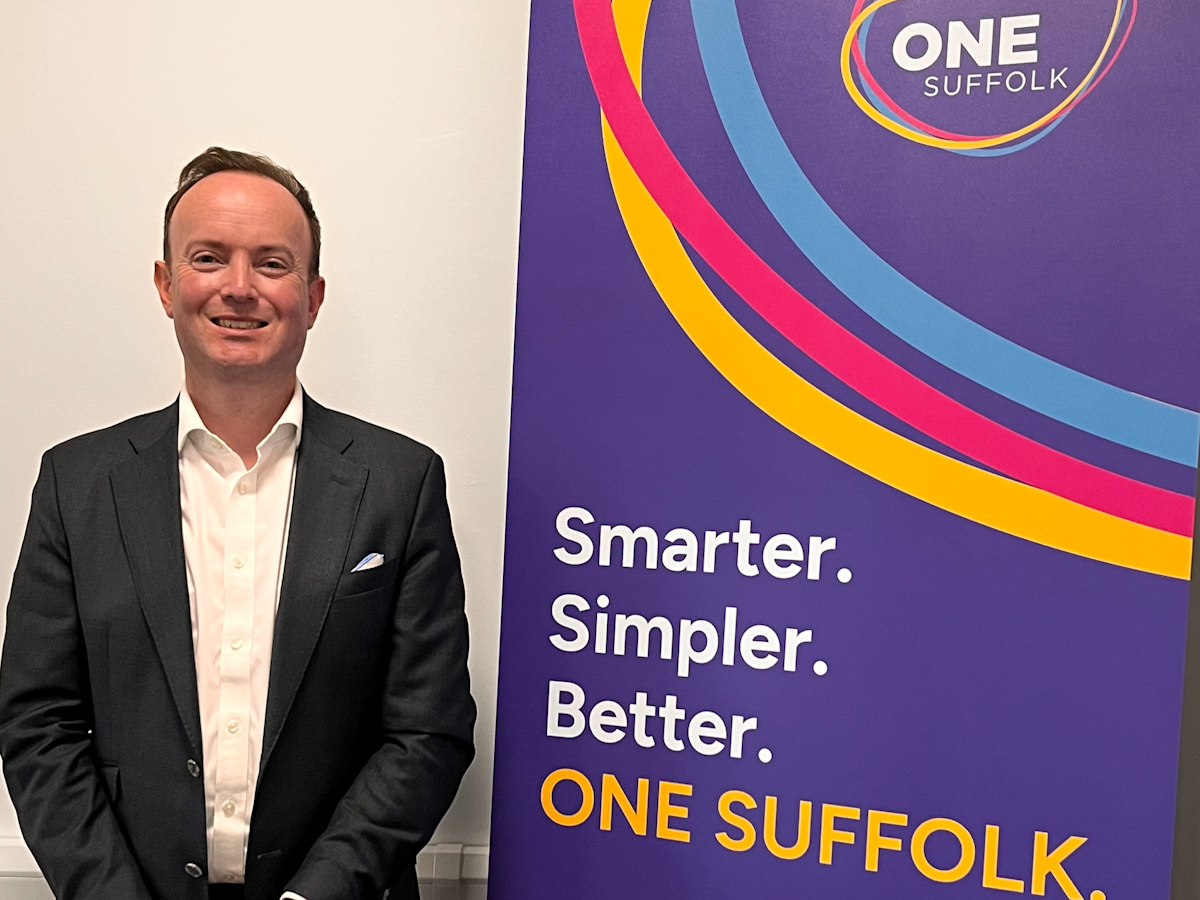
Councillor Rout was equally forthright. "This decision threatens the future financial stability of local government in Suffolk, and I fear the net result will be substantial cuts to local services," he said. "Splitting up key county-wide services that vulnerable residents rely on, such as adult social care and children's services, is an enormous risk."
On the financial consequences, Rout said: "Government opting for three new councils means Suffolk will be £145 million worse off in the first five years and £13 million worse off every year thereafter."
His conclusion left little room for ambiguity. "I stand by the fact that a single council for Suffolk is the smartest, simplest and best option for our county and think a significant opportunity has been missed — but I've come to expect little else from this hopeless Government."
Green, Liberal Democrat and Independent Group: 'A victory for localism'
The official opposition at Suffolk County Council took a markedly different view. Councillor Andrew Stringer, leader of the Green, Liberal Democrat and Independent group, said the decision recognised that three councils would better serve the county's diverse communities.
"Suffolk is a county with areas of different character and need," he said. "What is best for Ipswich, for example, may not be best for rural Mid Suffolk, or the coastal communities of East Suffolk. Having three councils keeps services local and responsive to the needs of each particular community."
Stringer also challenged the county council's financial case, pointing to research from the District Councils Network showing that Band D council tax bills are on average £250 per year higher in council areas serving more than 500,000 people. "Suffolk currently has a population of 760,000 and this would be a huge area for one council to run effectively," he said, adding that large unitary councils "are no stranger to financial peril — look at Birmingham City Council or Somerset, both facing enormous financial challenges after unitarisation."
He also raised a claim, citing BBC reporting, that the leader and chief executive of Suffolk County Council had written to the government in secret requesting that the three-council option should not even be put to public consultation. Suffolk County Council has not responded to that allegation.
"That the government has recognised and agreed that three councils will better serve Suffolk is a victory of localism versus the balance sheet," Stringer said. "It is now the challenge to all our political leaders to work together in a positive way to deliver these changes in a way that will bring the most benefit."
District and Borough Councils: 'Delighted'
The district and borough councils — whose Power of 3 proposal had driven the campaign for this outcome — were emphatic in their welcome. In a joint statement, the five council leaders said: "We are delighted to have the opportunity to reshape local government so it can better serve our residents and businesses, both now and for future generations.
"We had confidence in our Three Councils for Suffolk proposal, and we are pleased that the Government has listened to both us and the public in concluding that three unitary councils will best reflect and support the diverse needs across Suffolk."
They confirmed that transition planning is already under way, with shadow authority elections scheduled for 2027 and the new councils formally taking over in April 2028. "We are committed to ensuring a smooth transition and to creating councils that are large enough to deliver, and local enough to truly care," the leaders added.
Ipswich MP Jack Abbott: 'An ambitious future for Suffolk'
Ipswich MP Jack Abbott said he was "delighted" that the government backed "an ambitious future for Suffolk, creating three new unitary councils, Greater Ipswich, East Suffolk and West Suffolk."
He said: "This is a once-in-a-generation opportunity to improve our public services, build the housing and infrastructure we need, and boost our local economy. As I've said before, tinkering around with a broken system and sticking with the status quo would've shortchanged Ipswich and Suffolk, so this is a welcome, long-term decision that is in our local resident's best interests.
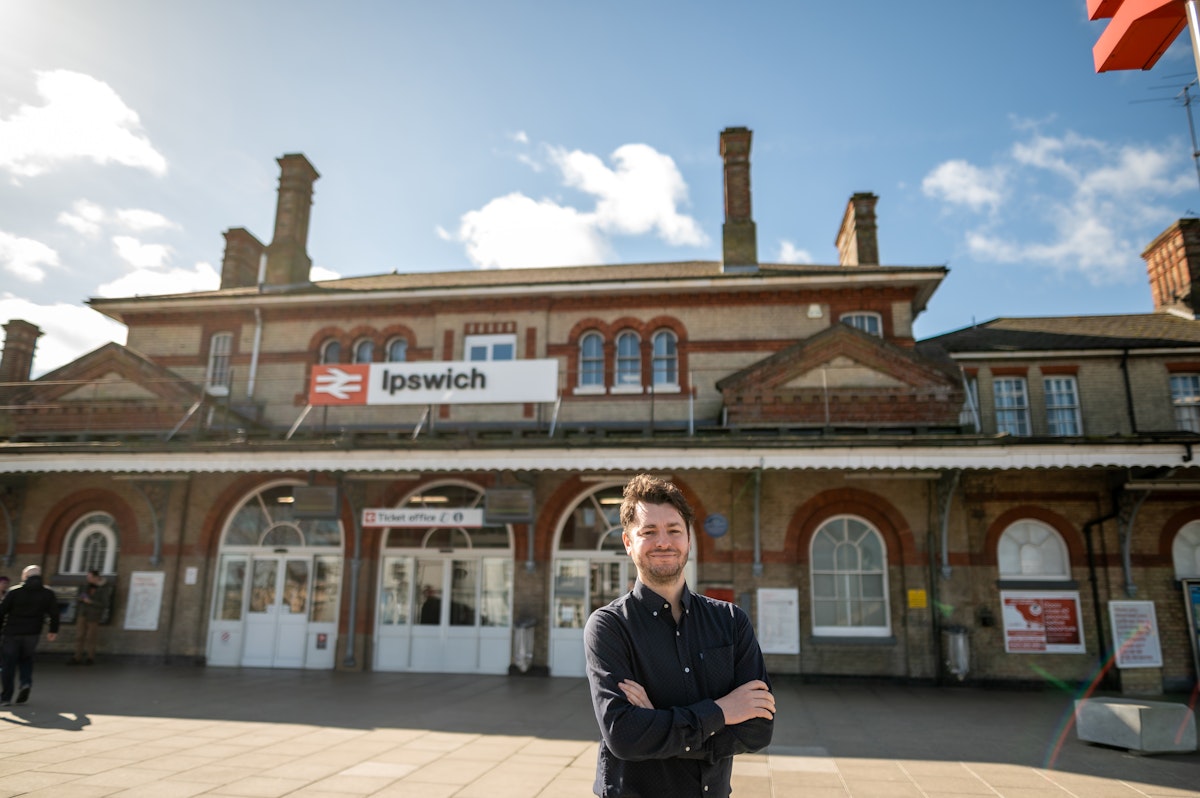
"While these new councils will offer better, more efficient services, they will be rooted in local representation and identity. Suffolk's historical fabric remains intact, but a Greater Ipswich will finally give local people the power and resources we need to fulfil our potential."
Suffolk Chamber of Commerce: 'Imperative that the new unitary system works in alignment with the business community'
Suffolk Chamber of Commerce offered a measured welcome, while setting out clear expectations for what the new authorities must deliver.
Paul Simon, head of public affairs at the Chamber, said the organisation hoped the new councils would "fully realise the efficiencies and savings identified in their business plan, to increase investment in relevant day-to-day business-facing functions, including planning, environmental health and licensing."
He called for a more SME-friendly procurement culture, with greater weighting given to local firms and closer cooperation with the Suffolk Supply Chain. "There is an absolute imperative that the new unitary system works in alignment with the business community, our MPs and the forthcoming Norfolk and Suffolk mayor to enhance support for key government investment in our out-of-date connectivity, road, rail and utilities infrastructure," he added.
What's next?
The practical timeline now moves forward: shadow council elections are expected in May 2027, with the three new unitary authorities formally taking over in May 2028, ending the two-tier system that has been in place in Suffolk since 1974.
Ipswich Borough Council had already begun preparing for the transition. In September 2025, it unanimously approved plans to establish a new town council for the borough, ensuring the town retains its own layer of local governance — and its historic mayoral role — when the borough council ceases to exist.
The bottom line
Suffolk's local government reorganisation has been one of the most fiercely contested political debates this county has seen in decades. The arguments — over finances, over democracy, over who was telling the truth — grew bitter at times. But the outcome is now settled. Three new councils will reshape how Suffolk is governed for a generation. Whether they deliver on the promises made in their name is a question that will take years to answer. But for many in our town, this will be seen as a massive win and a significant moment in the town's recent history and future.