
Ipswich Town walked into a trap it could have (and should have) easily avoided
In case you didn't know, Nigel Farage visited Portman Road on Monday. He posed for photographs. He held up a shirt with his name on the back. He posted it all online. It was political genius from the Reform UK frontman, but it was a massive misstep from the club.

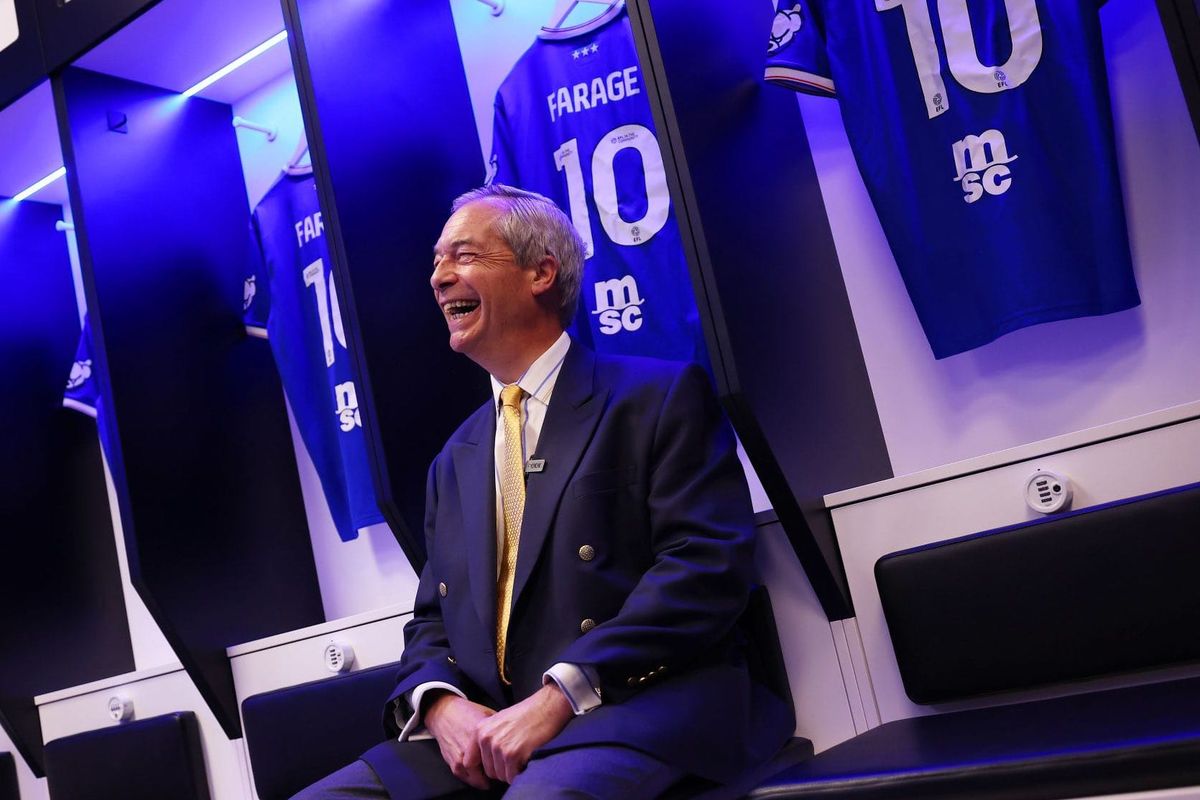
Let me be clear about what this piece is not. It is not an argument for or against Reform UK, its politics, or whether Farage should be welcome anywhere in Ipswich. Those are debates for other forums. This is about something narrower and, for supporters of this club, more pressing: Ipswich Town had a chance to avoid becoming a prop in someone else's political campaign, and it did not take it.
The moment that matters is not when the booking was made. Our understanding is that Reform did not use Farage's name or the party's when they initially arranged the tour — a detail that, if true, puts the club in a genuinely difficult position at the outset. But the moment that head of communications, Marcus Nash, greeted Nigel Farage and his team at the entrance to Portman Road, that position changed entirely. At that point, someone at the club knew exactly who had arrived, why he was there and what he was likely to do with the visit. That is the moment a decision should have been made.
What happened next tells its own story. This was not a standard stadium tour. Standard tours do not come with camera crews, security details and an entourage. Any member of staff accompanying Farage through the ground — and he would have been accompanied, as any visitor with that level of access would be — would have seen that this was not a normal booking the moment he walked through the door. The club has not explained what, if anything, was said or done at that point.
The fan response since has been fierce, and it is worth paying attention to — not because it tells us anything about the rights and wrongs of Reform UK's politics, but because it demonstrates precisely why the club should have been more careful. One long-standing season ticket holder wrote that this was "the most ashamed and embarrassed" they had ever felt supporting the club. Another described the visit as "a slap in the face to all decent supporters, our players, staff and history as a fairly multicultural club."
Supporters on the other side urged calm, pointing out that Reform had booked commercially and that refusing the booking would have in itself been a political statement.
Both reactions are understandable. And together, they illustrate the bind the club is now in — a bind that was, if not entirely avoidable, at least manageable. The club did not need to take a political position. It needed to exercise basic judgement about how its facilities and its name were being used. There is a meaningful difference between a politician attending a match as a guest, or an MP visiting the directors' box, and a party leader using the home dressing room as a campaign backdrop. The club appears not to have drawn that line.
Football clubs that wade into political waters, even inadvertently, rarely emerge unscathed. The club may well feel it has been used, and it would not be entirely wrong, but "we were used" is only a satisfying answer if the club says it — clearly, promptly and with some account of what actually happened. The decision not to comment when asked is what has allowed this story to grow. Silence, in a situation like this one, is not neutrality.
The club has championed the phrase "run towards adversity" since Mark Ashton arrived. It is a good phrase. Monday was a moment to apply it.
The bottom line
This is a PR nightmare of the club's own making. The club cannot, and should not, pass judgment on Reform's politics, but it should issue a clear statement setting out what happened, what staff knew and when, and what steps it will take to ensure its facilities are not used for political campaigning again. Meanwhile, a very smug Nigel Farage will continue to lap up the attention he could only have dreamt his PR stunt would generate.
Ipswich Town Football Club was approached for comment.
Update
The club has since released the following statement:
"Following Monday’s visit by the Reform party and its leader, Nigel Farage, the club would like to issue the following statement: Ipswich Town Football Club has, over several years, hosted representatives from a range of political parties. The club remains apolitical and does not support or endorse any individual or party. The club will continue to engage with representatives from across the political spectrum as part of its role within the community. Ipswich Town is proud to be an inclusive, diverse, and welcoming organisation that supports all members of the local and wider community. This commitment remains unchanged."
It seemingly dispels the idea that the club unknowingly gave Farage and his entourage a tour of the stadium, and that, in their view, they simply gave him the same level of access and treatment they would give any other political figure. It's a statement that won't sit comfortably with many fans.
Don't forget: If you enjoy our content, please add Ipswich.co.uk as a "preferred source" on Google so you can easily find more of the content you value.
Local journalism is expensive to produce
It's free for you to read thanks to the generous support of our partners. Please support us by supporting them.
Below the line