
What Ipswich's crime figures show, and what they leave in the dark
Suffolk Constabulary has reported significant reductions across most crime categories in Ipswich, and the officers behind those numbers deserve fair credit – but the story is more complicated than the headline figures alone can tell.


On Wednesday, 27 May 2026, Suffolk Constabulary announced that crime in Ipswich in 2025 was 11% lower than the long-term average for the town, with a 2% reduction between 2024 and 2025. The figures, broken down across 12 offence categories, show significant falls in violence, public order offences, theft from the person, burglary, and stalking and harassment, alongside smaller drops in drug offences and sexual offences.
Superintendent Tom Pearse, Suffolk Constabulary's Southern Area Commander, described the results as a reflection of years of focused work. "We have worked incredibly hard over the past few years to tackle many of the key issues being seen by our officers on the streets, being reflected in the crime figures, but most importantly, by our residents who are most affected by this criminality," he said.
"I believe this is incredibly positive news for Ipswich and our communities and shows that despite some of the negativity we have seen and read, Ipswich is a fantastic place to live in, to work and to visit."
There is a great deal in the figures that supports his framing. But before reading too much into any single number, in either direction, it is worth pausing on what crime statistics actually are.
What the data captures
The figures published by Suffolk Constabulary measure the volume of crime recorded by the force. The constabulary has confirmed that, while most of that volume will come from crime reported by the public, some will reflect incidents officers attended, came across, or were alerted to without a formal report being made.
That is a meaningful distinction. Recorded crime is not the same as crime that has occurred. The gap between the two has been the subject of criminological study for decades, often referred to as the "dark figure of crime" – the body of offences that take place but never reach official statistics.
Going deep on topics like local crime data, it's impact on our town and challenging those who can change it, requires time, resources and effort. If you want to us do more of it, please consider supporting our journalism by becoming a member for just £4.75 per month – roughly the same as two thirds of a pint.
As Ziggy MacDonald set out in a 2002 paper in The Economic Journal, there are two principal reasons crime falls into that dark figure. The first is what might be called the reporting gap: victims and witnesses who, for any number of reasons, do not contact the police. The second is the recording gap: incidents that are reported but, for procedural or threshold reasons, do not end up logged as a crime.
MacDonald's research, drawing on the British Crime Survey, found that reporting behaviour is shaped by a wide range of factors, including age, gender, employment status, attitudes towards the police, and the specific circumstances of the incident. Victims who consider the police ineffective, or who feel some sense of culpability, are less likely to report. Victims of repeated incidents are less likely to report each one. Those whose losses are insured are more likely to report than those whose are not.
The headline figures from Suffolk Constabulary tell us, accurately, how much crime was recorded in Ipswich last year. They do not, and cannot, tell us how much crime actually occurred.
What a falling number can mean
This matters because the same figure can support more than one interpretation, and the honest answer is often that we do not have enough information to choose between them.
Take violence against the person, down 12% on the long-term average. The most encouraging reading is that less violence is taking place in Ipswich. That reading is consistent with the operational work Supt Pearse describes, with reductions in associated criminality such as public order offences, and with the constabulary's emphasis on tackling serious violence since 2022. It is a plausible and probably partially correct interpretation.
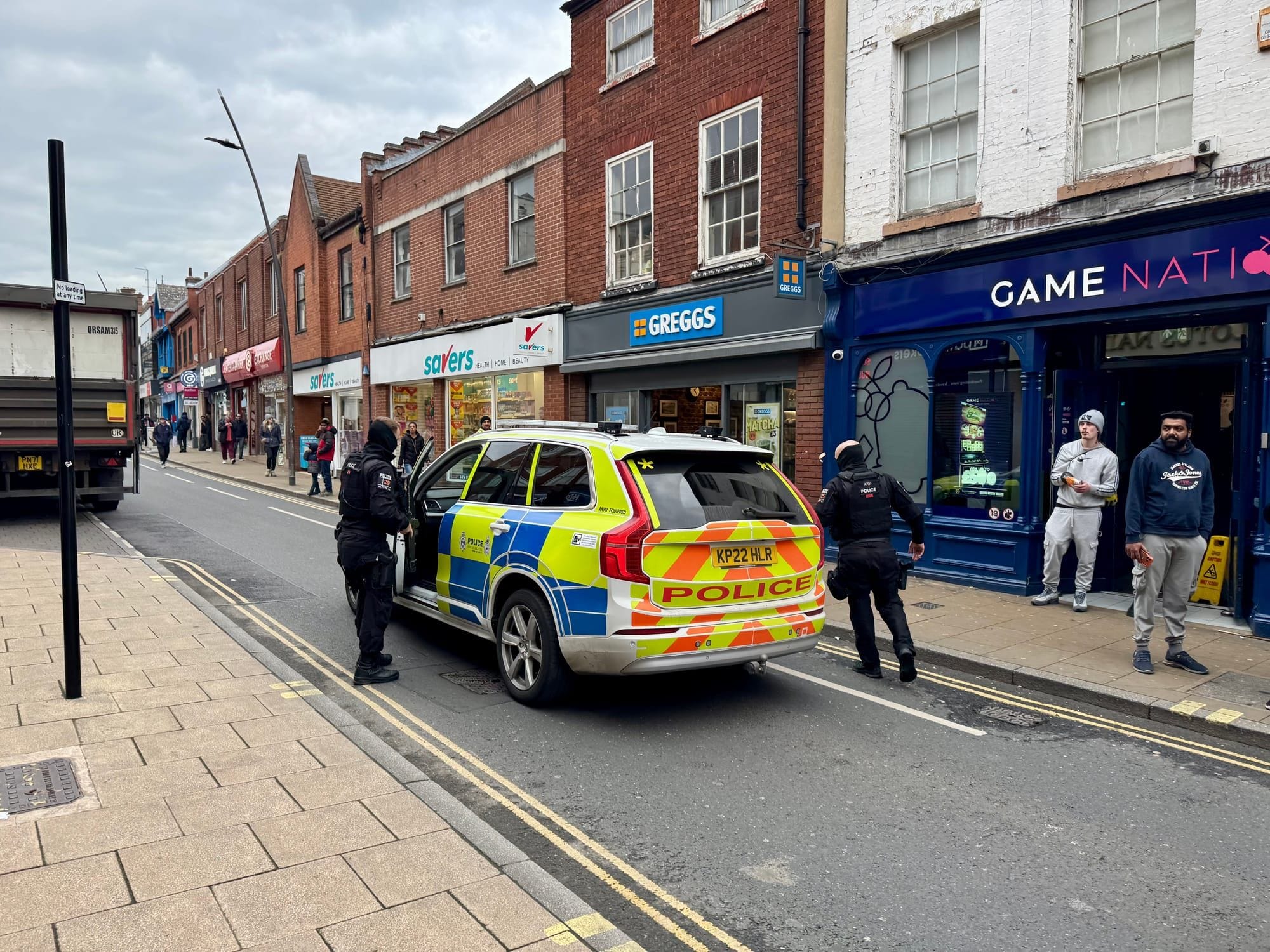
But other readings are also possible. Falling recorded violence could, in part, reflect changes in victims' willingness to come forward. It could reflect changes in how incidents are classified. It could reflect demographic or seasonal shifts. The available data does not let us distinguish cleanly between these possibilities, and the constabulary itself acknowledges that "crime figures and patterns of crime fluctuate and are often heavily affected by national issues".
A 12% fall is still a 12% fall, and it remains the best available indicator of what is happening on the streets. But it is an indicator, not a measurement of total violence in the town.
What a rising number can mean
The same caution applies, with as much force, in the other direction. Shoplifting in Ipswich is up 28% on the long-term average and up 38% year-on-year – by some distance the most pronounced movement in the dataset.
It is tempting to read that figure as straightforwardly bad news. And it might be. Cost-of-living pressures, organised retail crime, and a national rise in shoplifting since the pandemic are all well-documented factors that could be contributing to the trend.
But a rise in recorded shoplifting can also reflect things that are not, in themselves, negative. More retailers reporting offences. Better detection by town centre officers. More cases being pursued rather than written off. A shift in how the constabulary classifies and records the offence. Each of those is a plausible factor, and at least some of them would, on any reasonable reading, count as progress rather than deterioration.
Supt Pearse acknowledged shoplifting as an area requiring continued work. "While overwhelmingly positive, the figures still show areas that require improvement, for example shoplifting, which has been widely-publicised as being an issue across the country," he said. "We will continue to work extremely hard to prevent these high standards slipping, looking to prevent crime, pursue those that persist in these activities and build strong cases to help bring positive resolutions and where appropriate prosecutions."
The point is not that the figure means nothing. It is that a single number, in either direction, rarely means just one thing.
What sits outside the data altogether
There is a further layer to consider: the categories the data does not cover.
Anti-social behaviour is recorded separately from notifiable crime and does not appear in the offence categories published in this release. Yet for many residents, ASB is the form of disorder that most shapes how safe the town feels – homeless people drinking in doorways, intimidation around cash machines, drug paraphernalia in side streets, behaviour that is visible, persistent, and frequently goes unrecorded as crime at all.
This is a recurring theme in conversations about Ipswich on social media and among residents we speak to. The perception that the town centre does not feel as safe as the figures suggest is real, even where it is unevidenced by the data, and is itself a fact worth taking seriously.
It is also where the limits of recorded crime as a measure become most apparent. A reduction in violent offences is a meaningful and welcome thing. It is not the same thing as a reduction in the experiences that make people feel uneasy walking through town on a quiet weekday evening.
Suffolk's Police and Crime Commissioner, Tim Passmore, framed the figures in terms of confidence as well as crime. "We're really fortunate to live in one of the safest counties in the country, and it's great to hear that crime figures in our county town continue to fall," he said. "The relatively new policing model has seen more visible policing in the town which is having a very positive impact; this is great news for Ipswich and Suffolk as a whole."
That observation about visible policing matches our own. Despite a vocal social media narrative that there is little to no police presence in the town centre, this publication, which is based on the high street, sees officers in the town on a daily basis. To the naked eye, there appears to be a greater police presence than two years ago and response times, in our experience, appear to be swift.
Whether that translates into how the town feels to those who do not work on it every day is a separate, and harder, question.
Organised crime and the need for visible change
There is a further dimension to all of this that sits uneasily alongside the falling figures: the organised criminality the government itself has identified as a national problem on Britain's high streets, and which remains a visible presence on Ipswich's. This crime is largely untouched by crime data.
Earlier this month, we reported on the government's £30m "national crackdown" on organised crime on the high street – a programme that funds dedicated police resource in Greater Manchester, the West Midlands, and a joint Kent and Essex unit, but not in Suffolk.
 Oliver Rouane-Williams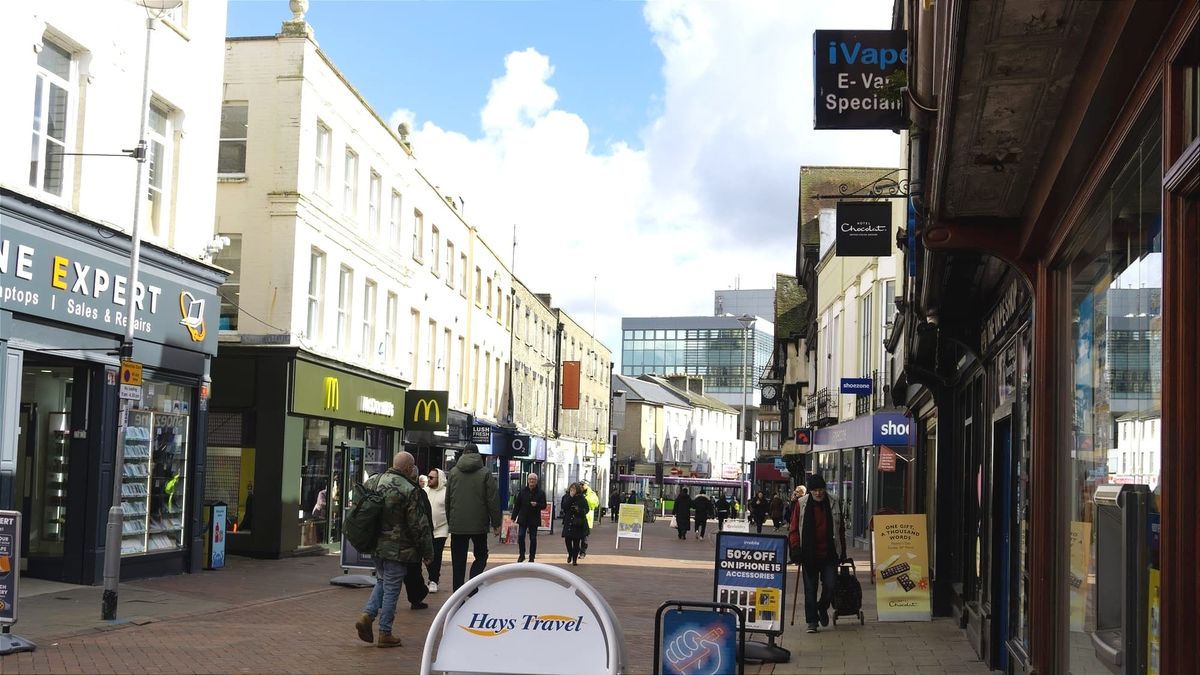
Operation Machinize, the National Crime Agency-led initiative running across England and Wales, is often spoken about as evidence that something is being done.
The work done under Op Machinize, particularly around modern slavery and welfare, has clear value, and the officers and partner agencies involved deserve recognition for it. But the question of whether it goes far enough to meaningfully alter the situation on Ipswich's high street is a different one – and the answer, on the available evidence, is that it does not.
Sporadic raids producing seizures of illicit cigarettes and vapes, accompanied by occasional immigration-related arrests, are not the level of intervention the scale of the problem warrants. They are a starting point, not a resolution. The NCA's own Senior Lead for Machinize, Sal Melki, acknowledged that "the problem won't be solved overnight or through disruptive action alone" and that the operation was designed to inform longer-term solutions.
What residents and legitimate businesses need to see in Ipswich is harder, more permanent change. Permanent closure orders on premises repeatedly linked to criminality. Arrests, charges and sentences brought against those running the operations, not just those working in them. Unexplained wealth orders pursued against those who appear to operate high street businesses with no, or at least a very limited, plausible commercial basis. The kind of action that does not simply move the problem from one shopfront to another under a different name.
To date, we are not aware of any publicised arrests, charges or sentences in Ipswich of those running organised crime operations on the town's high street. That is not the same as saying no work is happening – it may simply not yet have produced publicised outcomes. But until it does, the gap between the rhetoric of national crackdowns and the lived experience of walking through town remains a real one, and one that the headline crime figures do not address.
The bottom line
The reductions Suffolk Constabulary has reported are real, and the officers and partners behind them deserve fair credit. Violence down 12%, public order offences down 32%, theft from the person down 37% on the long-term average – these are not trivial numbers, and they reflect work that has visibly been put in.
But the data is one part of the picture, not the whole of it. A falling figure is not always a falling reality, a rising figure is not always a rising problem, and the disorder that shapes how the town feels most often sits in the categories the figures do not capture at all.
Crime, as recorded, is down in Ipswich. That is worth acknowledging and applauding. Whether the town is safer, and whether it feels safer, are related questions – but they are not the same one, and no single number can answer them on its own.
Going deep on topics like local crime data, it's impact on our town and challenging those who can change it, requires time, resources and effort. If you want to us do more of it, please consider supporting our journalism by becoming a member for just £4.75 per month – roughly the same as two thirds of a pint.
Don't forget: If you enjoy our content, please add Ipswich.co.uk as a "preferred source" on Google so you can easily find more of the content you value.
This article cost us ~£149 to produce
It's free for you to read thanks to the generous support of our partners. Please support us by supporting them.
Below the line