
When will the government's 'national crackdown' on high street crime reach Ipswich?
The government has accepted that organised crime is gutting Britain's high streets and has put £30m behind a "national crackdown" to fight it, but the funded officers are going to Manchester, the West Midlands, Kent and Essex. Ipswich has again been overlooked – and no one seems to be asking why.

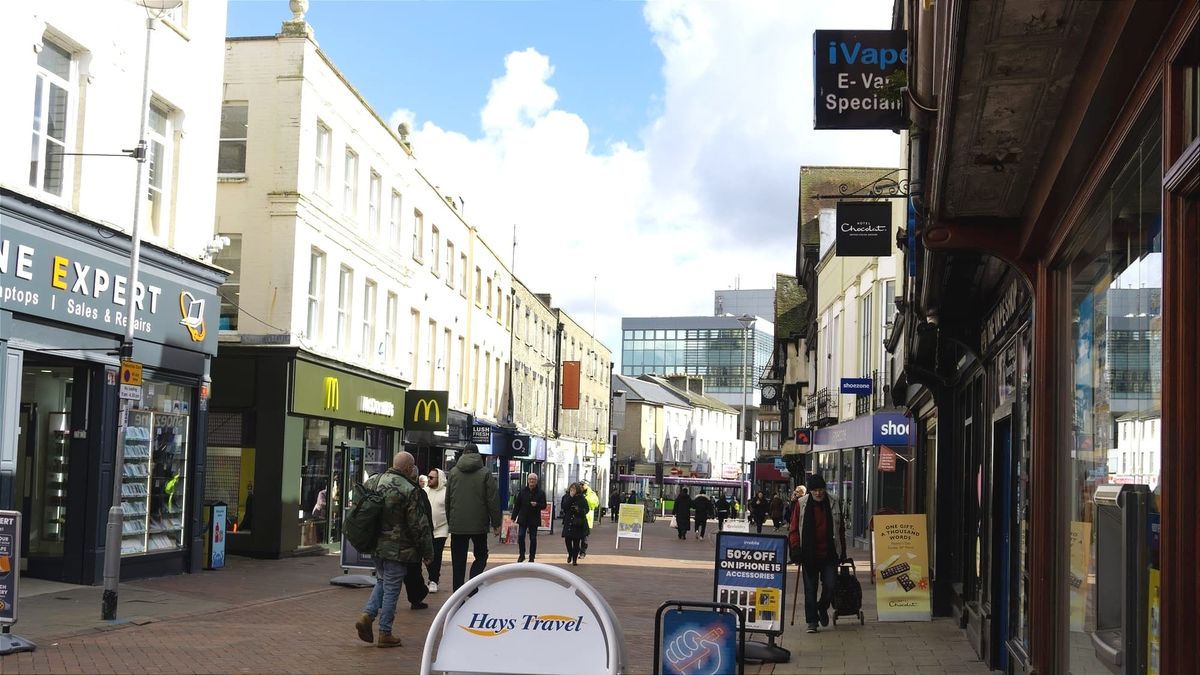
On Tuesday, 19 May 2026, the Home Office announced what it described as a major nationwide offensive against the criminal gangs operating behind shopfronts on Britain's high streets. Rogue barber shops, vape stores, mini-marts and sweet shops linked to organised crime, the announcement said, would face raids, closures and cash seizures over the next three years.
Posting on X, the Prime Minister Sir Keir Starmer said: "For too long, organised criminals have exploited our high streets to launder their dirty money. Not anymore. We will shut these shop fronts down and drive crime off our high streets to protect communities and legitimate businesses."
His strong words were echoed by Home Secretary, Shabana Mahmood: "Criminal gangs have exploited our high streets to launder their dirty money and undercut honest businesses. We are hitting back with a nationwide crackdown to shut these fronts down, seize dirty cash and drive organised crime off our high streets and put bosses behind bars."
A "nationwide crackdown".
The funding totals £30m over three years. Within that, £20m goes towards an enhanced law enforcement response, including a new multi-agency co-ordination cell based at the National Crime Agency (NCA). A new High Street Organised Crime Unit will bring together government departments, policing partners and Trading Standards. And 75 new police officers will be recruited.
Those officers will not be recruited in Suffolk. They won't be spearheading the nationwide crackdown on Ipswich's high street.
Independent local journalism like this takes time, care, and...well...money. If you value what we do, become a member for just £4.75 a month and help us keep asking the questions that need asking in Ipswich.
What they're saying
According to the written statement made to the House of Commons by the Security Minister, Dan Jarvis, on the same day, the operational funding will pay for an uplift in NCA officers, "dedicated operational activity by Greater Manchester police, West Midlands police, and by a joint Kent police and Essex police unit", an HMRC-led surge against tax evasion, and an annual national multi-agency crackdown.
The £6m for Trading Standards is, in the Home Office's words, directed to "at-risk local authorities". Suffolk doesn't appear to be one of them.
What is clear is that the police uplift is geographically targeted. Four named force areas will receive funded officers.
A Suffolk Constabulary spokesperson said: "Suffolk Constabulary is aware of the Government's recent announcement regarding additional investment to tackle organised crime on the high street. We are currently awaiting further detail on how this funding and support will be allocated and what it will mean for forces locally."
The constabulary added that "tackling retail crime and the organised criminality that underpins it remains a clear priority", noting the recent launch of dedicated town centre teams across the county and an established programme of partnership work with local authorities, businesses and Trading Standards.
However, no additional officers from this round of funding are coming to Ipswich, and the town has not been named as a priority area for the new operational response. The government has presented the crackdown as a national one, but on the ground in Ipswich, very little appears set to change.
Jack Abbott, the Labour MP for Ipswich, welcomed the announcement.
"People in Ipswich want safer streets, less crime and stronger communities," he said. "For too long, criminal gangs have used rogue businesses to launder money, exploit workers and bring crime into our communities. That is why our Government is investing £30 million to take back our high streets, including a new High Street Organised Crime Unit targeting dodgy businesses linked to organised crime."
Mr Abbott pointed to local successes, citing seizures of "thousands of illegal cigarettes, vapes and tobacco products" by Suffolk Police, lethal weapons taken off the streets, and significant arrests. He added that "illegal working raids and arrests have both more than doubled since 2023".
He did not address the absence of Suffolk from the funded police uplift.
Ipswich Central, the Business Improvement District (BID) for the town, works with town centre businesses every day and sits in the rooms where police, council and partner agencies coordinate their response.
Its chief executive, Lee Walker, said the local working relationship was strong, but that the scale of the issue had outgrown the resources available.
"We have a strong working relationship locally with Suffolk Constabulary, Ipswich Borough Council and partner agencies, and there are a lot of dedicated people working extremely hard in difficult circumstances," he said. "But I think it is fair to say the scale and complexity of the issues facing town centres nationally has grown significantly over recent years, while resources remain under considerable pressure."
"The reality is that enforcement is resource-intensive. Whether it is trading standards, immigration enforcement, environmental health, police, licensing or HMRC activity, these issues often cut across multiple agencies and require sustained intervention rather than isolated action. So yes, I do think additional national resources and coordinated enforcement support would help, particularly where there are concerns around organised or repeat offending."
A pattern of being overlooked
This is not the first time Ipswich.co.uk has raised the question of whether Ipswich is being left out of national enforcement against high street organised crime.
In April 2025, we reported on Operation Machinize, the NCA-led operation that had coordinated 265 raids on suspected criminal front businesses across England and Wales. The piece noted the striking similarity between Ipswich and Shrewsbury, where officers had seized cash and illicit vapes and detained suspected asylum seekers during raids on barber shops, and asked whether Ipswich would be next.
Despite police rhetoric and the occasional headline, there has been virtually no visible sign of any operation making a meaningful impact on the town's high street in years. Shops in the categories the NCA has linked to money laundering continue to open, close, and reopen. The only difference to Ipswich's streetscape each year is the addition of more businesses that appear to fit the government's description of "dodgy".
The evidence that Ipswich has a problem is not in doubt. The question is why Ipswich remains an afterthought.
The maths on the high street
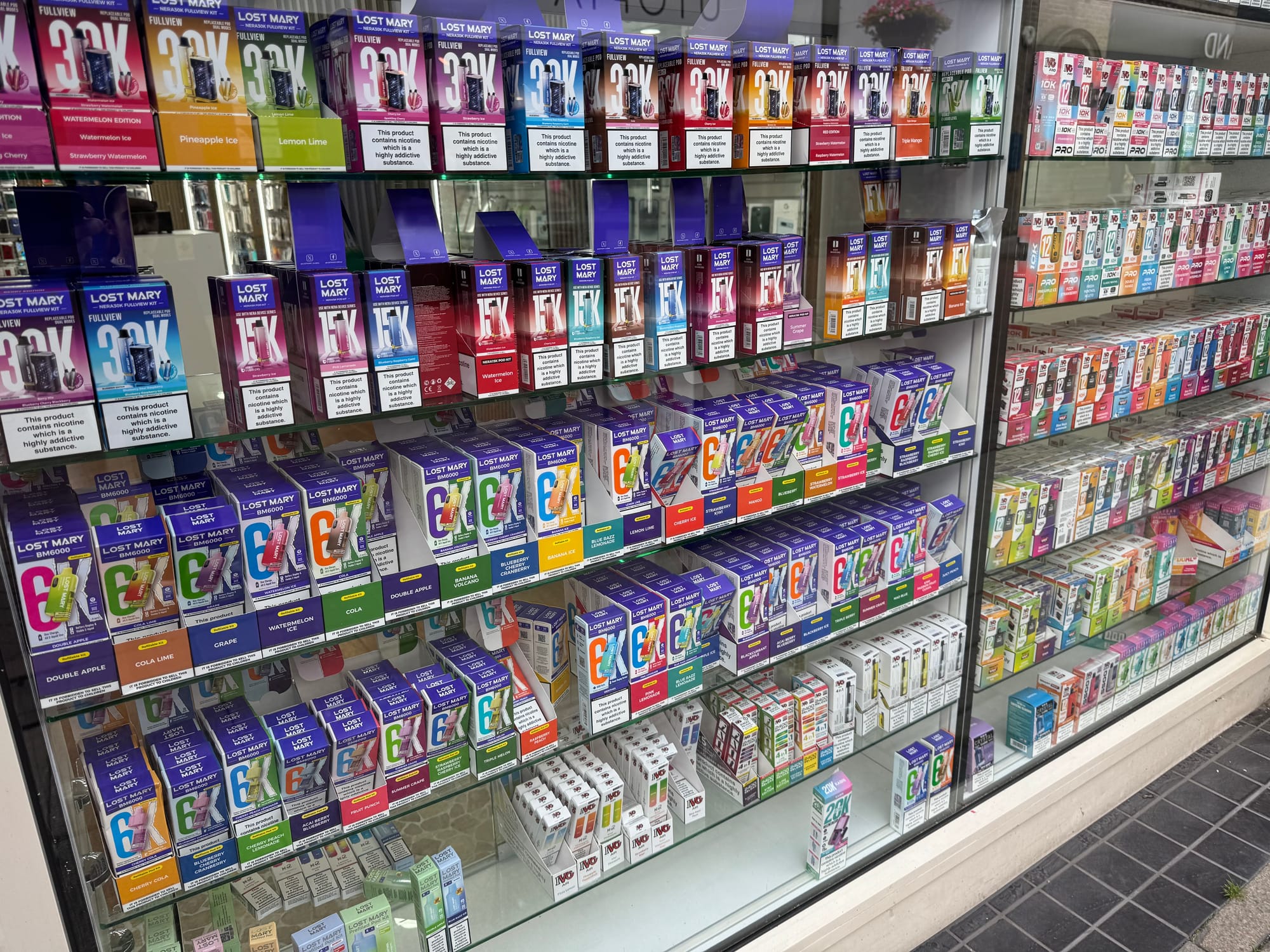
For the purpose of this feature, our definition of the town centre comprises Tavern Street, Carr Street, Westgate Street, Upper Brook Street, Dogs Head Street, Buttermarket, Lloyd's Avenue, Tacket Street, Queen Street, St Peter's Street and St Nicholas Street. On these streets, there are 13 vape outlets, 15 mobile repair stores, 4 American candy stores, 12 Turkish-style barbers, and 16 off-licences and convenience stores.
To be absolutely clear: we are not suggesting all or any of those businesses are engaged in illegal activity. The presence of a shop is not evidence of wrongdoing. Many will be entirely legitimate, paying their taxes, employing people lawfully, and serving real customers.
But the volume of businesses in these categories, sitting within a few hundred metres of each other, often with virtually no visible footfall, invites questions about the size of the market they are operating in.
Take mobile phone repair stores. According to IBISWorld, the UK mobile phone repair industry has been in steady decline as smartphone build quality has improved. Revenue is expected to fall at a compound annual rate of 4.6% over the five years through 2025-26, to £689.1m. The sector is forecast to contract a further 3.6% in 2025-26 alone.
If Ipswich's share of that national market were proportional to its share of the UK adult population, the entire town's mobile repair market, including stores outside the town centre, would be worth around £1.38m a year. Even if every single repair in Ipswich were carried out in the town centre (which they will not), the maximum average turnover per store would be approximately £91,880 – unlikely to be enough to cover rent, rates, staff and operating expenses.
The vape market is larger but more diffuse. The UK vaping industry is worth around £2.5bn and serves roughly 5.5m adult vapers. Applied proportionally, that suggests roughly 13,944 adult vapers in Ipswich spending an estimated £5m a year – an average of £359 per year per customer. But much of that spend happens online, in supermarkets, and outside the town centre. It's impossible to predict the town centre market share, but it certainly isn't impossible to see that the majority of these stores lack the customer footfall required to make the numbers stack up.
The numbers are not in themselves proof of anything. But to the lay person, it is nearly impossible to conceive that many of these businesses are even remotely viable – and the government seems to agree.
The scale of what is being accepted
The numbers cited by the government are not small. The NCA estimates that at least £12bn of criminal cash is generated in the UK each year, with £1bn laundered through high street businesses such as mini-marts, barber shops, vape stores and sweet shops. The latest round of Operation Machinize, in November 2025, saw 2,734 premises raided, 924 individuals arrested, more than £13m of suspected criminal proceeds seized or restrained, and more than £2.7m worth of illicit commodities destroyed.
The Home Secretary's framing was that criminal gangs "have exploited our high streets to launder their dirty money and undercut honest businesses". The Prime Minister said: "We will shut these shop fronts down."
There is no parallel reading of these statements in which Ipswich is not part of the problem they describe. There have been some seizures locally, but not many, and seizures are not enough. A few quid's worth of illegal vapes pulled out from behind a shop counter is not a deterrent to organised crime. Arrests are. Deportations are. Full permanent closures are. Unexplained wealth orders are. Rhetoric is not.
Ipswich cannot afford to be continually forgotten
Ipswich is not the only town in this position. Plenty of communities across England and Wales will look at the four named force areas and feel a similar sting and sense of frustration. That should be acknowledged.
But this publication exists to fight for Ipswich. And the case for Ipswich being on the next list, in whatever form further funding might take, is undeniably strong.
There is a structural problem with how Ipswich tends to be seen from outside. The town is routinely placed in the same bucket as Suffolk, a predominantly rural county with consistently low headline crime levels. The risk is that, at a county level, those challenges get averaged out and deprioritised.
As Walker puts it: "Ipswich is unique within Suffolk in terms of density, footfall, night-time economy activity and concentration of businesses. The pressures facing a major town centre are very different to those facing rural communities, even though both are important.
"Sometimes that can create a situation where Ipswich experiences challenges more commonly associated with larger urban areas, but within funding and policing structures designed around a predominantly rural county. That is not a criticism of partners locally, because everyone is trying to balance competing demands, but I do think there is a strong argument that Ipswich requires recognition as a place with distinct town centre pressures and opportunities."
Asked what he would ask of central government, the police and the council, Walker was clear on the need for sustained commitment rather than one-off announcements.
"The biggest ask is coordination, consistency and long-term commitment," he said. "Town centres cannot be turned around through isolated interventions or short-term announcements. Businesses and investors need confidence that there is a long-term plan around enforcement, standards, safety, cleanliness, public realm and investment."
"From government, we would like to see recognition that towns like Ipswich need targeted support and sustained funding, not just one-off initiatives focused solely on the very largest cities. From enforcement agencies, businesses want visible, proactive and joined-up action where there is evidence of persistent criminality or non-compliance."
"And from all partners collectively, we need continued focus on making the town centre somewhere people want to spend time — because ultimately successful town centres are not built purely through enforcement, they are built through confidence, activity, culture, safety and pride in place working together."
The risk of waiting is that the problem deepens. Organised criminal networks do not stand still while announcements are made about other regions. Legitimate businesses, the ones the Prime Minister says he is protecting, continue to compete against operations that do not play by the rules. And the public, watching the same shopfronts open and close and reopen under different names, draws its own conclusions about how seriously this issue is being taken locally.
The bottom line
The government has decided that organised crime on the high street is a problem worth £30m of public money. It has decided that the problem is serious enough to warrant a new dedicated unit, 75 additional officers, a multi-agency co-ordination cell, and a Prime Ministerial post on X.
It has also decided that those officers will go to Manchester, the West Midlands, Kent and Essex. Not here.
Ipswich is not asking for special treatment. It is asking to be taken as seriously as the towns and cities the government has already named. The funded enforcement that is going to happen elsewhere is going to happen because the case for it was made. The question for Ipswich, for its MP, for its council, and for Suffolk Constabulary, is who is making that case here, and how loudly.
Because if the answer is no one, the next announcement will look much like this one. And Ipswich will still not be on the list.
Don't forget: If you enjoy our content, please add Ipswich.co.uk as a "preferred source" on Google so you can easily find more of the content you value.
This article cost us ~£162 to produce
It's free for you to read thanks to the generous support of our partners. Please support us by supporting them. Please also consider directly funding our journalism by becoming a member for just £4.75 per month.
Below the line