
Planning Ipswich's future in the shadow of local government reorganisation
Ipswich Borough Council is legally required to begin writing a new blueprint for the town's future development, but the authority doing the writing may not exist by the time it's finished. It's one of the more peculiar and consequential paradoxes thrown up by local government reorganisation.


A Local Plan is not a document most people read. But its effects are felt everywhere: in the new housing estate approved on the edge of town, in the green space that was protected from developers, in the retail unit granted permission on a busy high street.
Prepared by a local council in consultation with its community, a Local Plan sets out a vision and legal framework for the development of an area over a 15-to-20-year period. It determines which land can be built upon, which areas must be protected, and how infrastructure — schools, roads, GP surgeries — must keep pace with growth. Once adopted, it becomes the starting point for every planning decision the council makes.
Ipswich Borough Council's current Local Plan was adopted in March 2022. Under national policy, it will become out of date in March 2027 — five years on from adoption — at which point the council loses much of its ability to resist unwanted development. As the council's own report puts it, where there is no up-to-date Local Plan, "sustainable development is favoured, meaning that land not already allocated in the Local Plan should be seen as 'sustainable development' and the local planning authority should look to grant permission."
For a town with limited undeveloped land within its boundaries, the stakes are high.
The clock is ticking
Ipswich Borough Council's Executive considered a report on Tuesday, 16 June 2026 seeking approval to formally commence preparation of a new Local Plan under the government's new plan-making system — a more structured and time-bound process than its predecessor, requiring councils to pass through a series of mandatory "gateway" assessments before a plan can proceed to examination.
The new system gives councils until 31 December 2026 to publish a notice of intention to commence plan preparation. But the council has chosen to move faster. By publishing that notice before 30 June 2026 and completing an initial "Gateway 1" self-assessment by 31 October 2026, IBC stands to secure £108,474 in Local Plan Implementation funding from the Ministry of Housing, Communities and Local Government (MHCLG). Miss those earlier deadlines, and the money is gone.
Councillor Carole Jones, Ipswich Borough Council's portfolio holder for planning and museums, said the urgency was justified. "Our current Ipswich Local Plan will come to an end in March 2027 and ensuring this is updated and maintained is essential to ensuring Ipswich continues to grow in a sustainable way," she said. "By beginning work now, we can provide clarity and confidence for residents and businesses, while supporting our priorities for regeneration, housing and economic growth."
The reorganisation paradox
Here is where it gets complicated. On 25 March 2026, the government announced that all six local authorities in Suffolk — including Ipswich Borough Council — will be abolished on 1 April 2028 and replaced with three new unitary authorities. One of those authorities will cover Ipswich and South Suffolk.
Under even the most optimistic projections in IBC's own timetable, the new Local Plan will not be adopted until late 2029 at the earliest — more than a year after IBC ceases to exist. The council is being asked to spend the next three years, and significant public resource, producing a statutory document it will almost certainly never adopt.
The council's report is candid about this. It notes that "it is not possible for a new Local Plan to be adopted prior to the new Unitary Authorities being in place" and acknowledges that the decision on the plan — currently scheduled for around April 2029 — "will not be the Executive of Ipswich Borough Council and will, under any scenario, be the decision of a Unitary Authority."
When asked how confident the council was that its work would be carried forward by the new unitary authority — particularly in the event of a change of political leadership — the planning team pointed to the evidence-led nature of the process as the key safeguard. "Local Plan making must be based upon up-to-date evidence," the council said. "It is envisaged that any work undertaken by Ipswich Borough Council will be taken forward meaningfully as the work is to be evidence-led and subject to public consultation."
That's great in principle, but it's hard to discount the politics of a change in council administration.
A question of geography
A further complication concerns the geography of the plan itself. The new unitary authority for Ipswich and South Suffolk will cover an area currently served by three separate Local Plans — Ipswich's, Babergh's, and Mid Suffolk's. Legislation states that only one Local Plan may be in effect for any local planning authority area at any one time, raising a question that, as yet, has no clear legal answer: can a new unitary authority inherit and operate multiple Local Plans simultaneously?
The existing Suffolk authorities wrote to MHCLG in April 2026 raising this issue. The government's response, received on 1 May 2026, was firm but not entirely helpful: local government reorganisation is not a reason to delay plan-making, MHCLG said, and early work can either be carried forward by new unitary authorities or used to inform the new local plan for the unitary area.
The council's report acknowledges that "the position remains ambiguous" and confirms that Counsel advice is being sought on whether new unitary authorities can legally adopt multiple Local Plans. In the meantime, IBC is proceeding on the basis of its existing boundaries, while retaining the flexibility to shift to the wider Ipswich and South Suffolk geography if legal advice requires it.
An added layer: the mayoral strategy
Devolution adds yet another layer of complexity. A new combined Mayoral Strategic Authority (MSA) for Norfolk and Suffolk is proposed, with the first mayoral elections expected in May 2028. The MSA will be responsible for producing a Spatial Development Strategy (SDS) — a higher-tier planning document setting strategic priorities for growth and development across the whole of Norfolk and Suffolk, including housing requirements.
Local Plans will be required to conform with the SDS. Since Ipswich's Local Plan is expected to be progressed ahead of the SDS, there is a risk that elements of the plan — particularly housing numbers — may need to be revisited once the SDS emerges. The council's report warns that "an immediate Local Plan review may be required" if the housing requirements in the adopted Local Plan are significantly out of alignment with the SDS when it arrives.
The current housing requirement for Ipswich, set by national government, stands at just over 700 dwellings per annum. Whether the SDS will revise that figure upwards or downwards remains to be seen.
What happens next, and how to get involved
Despite the complexity, IBC is pressing ahead. Scoping consultation — the first formal stage of public engagement, inviting residents and stakeholders to feed into what the plan should contain and how consultation should be carried out — is due to begin in July 2026.
Councillor Jones said the council's approach would remain "flexible as wider Local Government Reorganisation proposals develop, ensuring we are well placed to respond to future changes while securing vital government funding to support this work."
Residents wishing to follow the process or take part in consultation can do so via the council's dedicated Local Plan page at ipswich.gov.uk, which will be updated ahead of the July scoping consultation.
The bottom line
What Ipswich Borough Council is being asked to do is tough: produce a legally binding plan for the town's future knowing that another authority will decide whether to adopt it, and that a mayoral strategy not yet written may require it to be revised almost immediately.
It is a product of overlapping reforms — to planning law, to local government, and to regional governance — arriving simultaneously and without a clear playbook.
The work is necessary, the evidence base will be valuable, and residents should engage with the scoping consultation in July. But the question of who ultimately shapes Ipswich's future — the council elected to do it, or the authorities created to replace it — will remain, for now, unanswered.
More from the chamber
It was a busy day in yesterday's Executive meeting. Here's everything you need to know:
 Oliver Rouane-Williams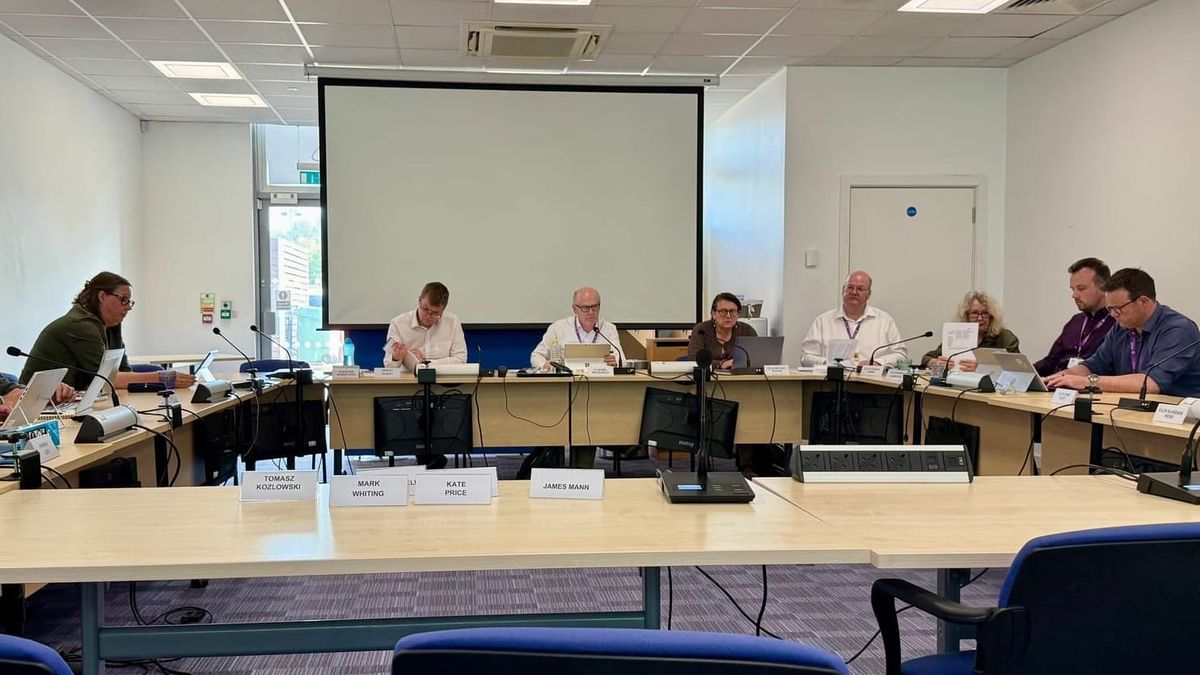
 Oliver Rouane-Williams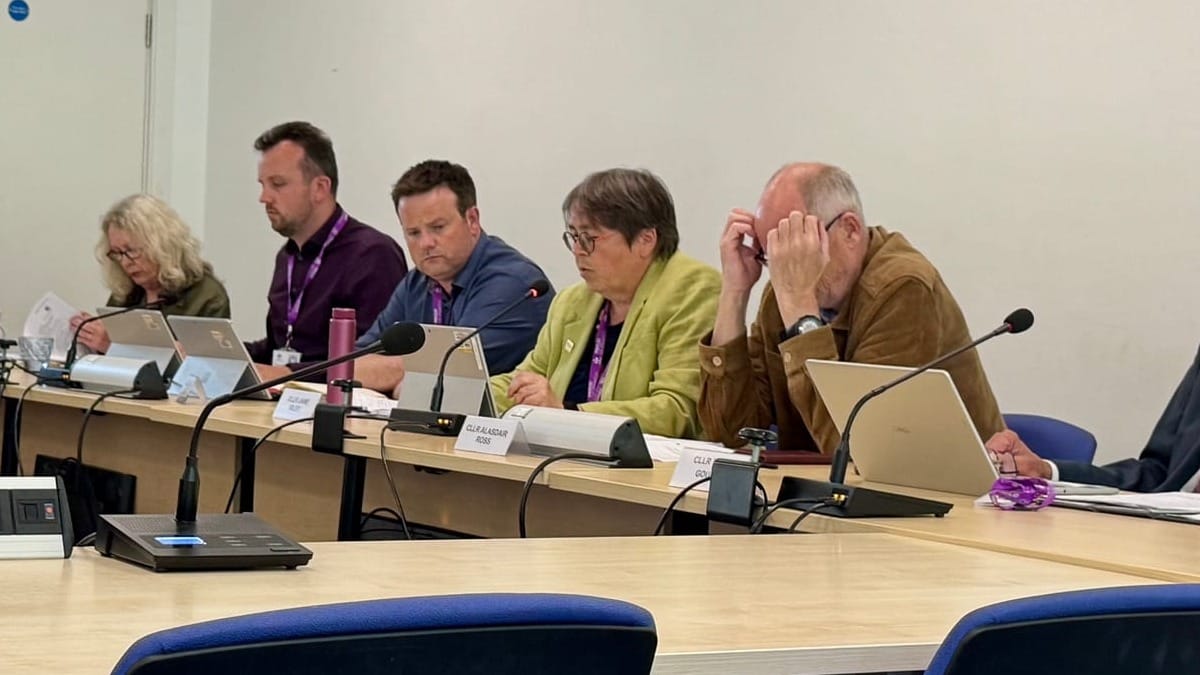
 Oliver Rouane-Williams
 Oliver Rouane-Williams
 Oliver Rouane-Williams
Don't forget: If you enjoy our content, please add Ipswich.co.uk as a "preferred source" on Google so you can easily find more of the content you value.
This article cost us ~£216 to produce
It's free for you to read thanks to the generous support of our partners. Please support us by supporting them.
Below the line