
'Felixstowe is terrified of being lumped in with Ipswich'
Suffolk County Council's cabinet voted unanimously to spend up to £500,000 fighting the government's reorganisation plans in court, but a single remark from the council's leader raises a question many in Ipswich have long been asking: whose interests is Suffolk County Council actually fighting for?

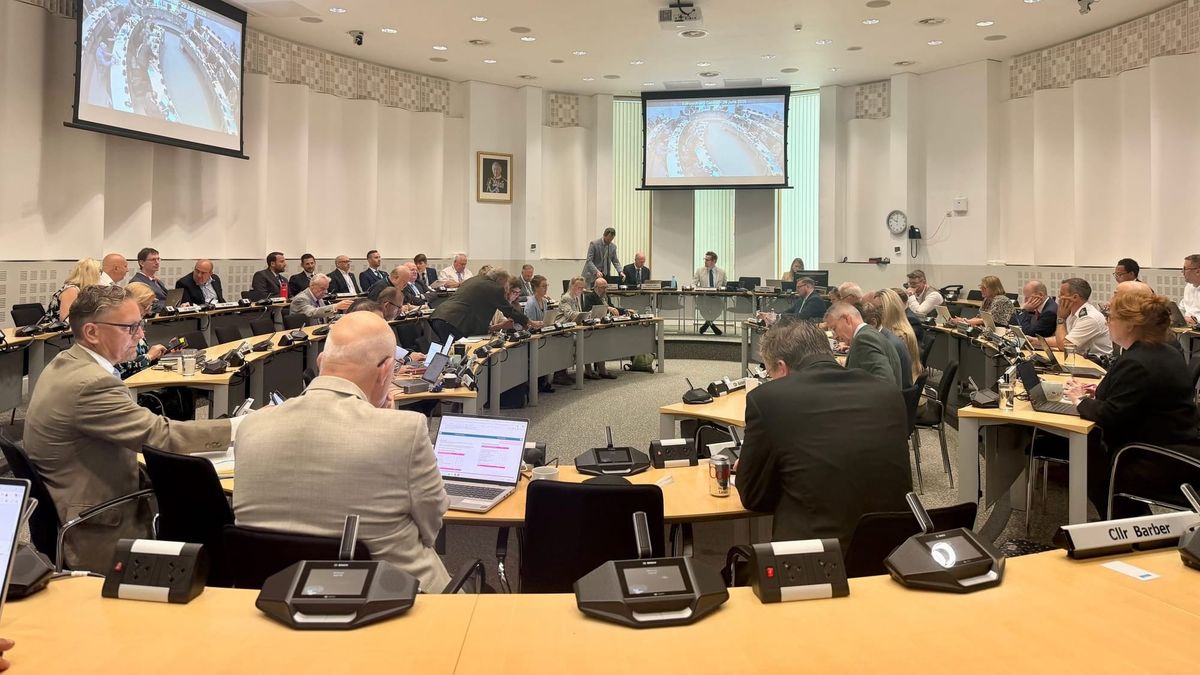
Monday's extraordinary cabinet meeting, convened at short notice on 29 June, had one item on the agenda: whether to instruct officers to continue with the judicial review claim against the Secretary of State for Housing, Communities and Local Government.
The claim had already been filed on Tuesday, 24 June — five days before the meeting — using executive powers held by council leader Councillor Michael Hadwen. Cabinet members were not being asked to make the decision to launch the challenge; they were being asked to agree that legal proceedings should continue.
All cabinet members voted in favour.
The challenge contests the Secretary of State's decision, announced on 25 March 2026, to replace Suffolk's existing county, district and borough councils with three new unitary authorities: Western Suffolk Council, Central and Eastern Suffolk Council, and Ipswich and South Suffolk Council.
For a fuller explanation of the two legal grounds being pursued and what the courts can and cannot deliver, see our earlier analysis:
 Oliver Rouane-Williams
'Services would collapse'
The atmosphere in the chamber was charged from the outset. Councillor Hadwen opened proceedings by setting out why, in his view, the legal challenge was both necessary and proportionate — arguing that the government had refused to disclose the reasoning and evidence behind a decision that he said would cost Suffolk an estimated £40 million to deliver and reshape public services, negatively, for generations.
He told cabinet members that the government's response to the council's pre-action letter had revealed that civil servants had recommended the single-unitary option for Suffolk as the strongest proposal against the published criteria, and that the Secretary of State had chosen the three-unitary model anyway.
"The Secretary of State rejected professional advice," Hadwen said, "and potentially overstepped his powers when he decided to implement his chosen council model for Suffolk."
Each cabinet member then set out the case from the perspective of their own portfolio.
Councillor Christopher Hudson, cabinet member for transport and highways, warned that splitting Suffolk's 4,000-mile road network across three separate authorities would be damaging and costly. He said analysis showed the three-unitary model could require up to 158 additional posts, costing £6.1 million a year — money he argued would be diverted away from frontline maintenance. He also raised concerns about Suffolk Highways' existing contracts, warning that fragmenting them could introduce legal risk and reduce the pool of contractors willing to bid.
Councillor Tony Gould, cabinet member for education and SEND, focused on the county's 12,000 children and young people with education, health and care plans — legal documents requiring input from specialist advisors and carrying statutory obligations. He said Suffolk was in the middle of a major improvement programme following an area SEND inspection, and warned that splitting delivery across three authorities would threaten that progress and make it harder to recruit and retain the specialist staff needed.
Councillor Simon Aalders, cabinet member for children and young people, raised safeguarding concerns. He warned that the trusted relationships and shared governance structures underpinning Suffolk's child protection arrangements had been built across a single county footprint, and that redesigning them across three separate authorities would create gaps — with consequences, he said, that were well-documented from similar reorganisations elsewhere in the country.
Councillor Philip Faircloth-Mutton, deputy leader and cabinet member for adult social care, said the county's social care system — which costs around £400 million a year — derived its value from commissioning at scale across the whole county. Fragmenting that into three smaller commissioning authorities, he argued, would reduce purchasing power, create complexity for providers, and introduce risk to safeguarding arrangements where, he said, accountability needed to sit clearly in one place.
Councillor June Mummery, cabinet member for coastal affairs, communities and public health, pointed to services that operated as single county-wide teams — libraries, archives, public health — and warned that splitting them would create duplication and additional management costs at a time when every pound needed to reach the front line. She said she believed the Secretary of State had "ignored the advice of his own civil service and pushed ahead anyway." She honed in on Suffolk Libraries, which many argue is only successful because it was taken out of council control, only for Suffolk County Council to bring it back in-house last year in a contentious move led by Faircloth-Mutton before he defected to Reform.
Councillor Morgan Brobyn, cabinet member for food, waste and rural affairs, highlighted the county-wide nature of flood management, waste disposal and rural services, arguing that these did not respect council boundaries and required strategic thinking at county level.
Councillor Tristan Gale, cabinet member for planning, devolution and the fire service, warned that the Suffolk Fire and Rescue Service was being forced to plan its separation from the county council without adequate government funding or clear timelines — creating what he described as a "yo-yo effect" for an emergency service that could not afford instability.
Councillor Vicky Armstrong, cabinet member for finance, economic development and efficiency, stressed that the legal challenge carried financial risk, but argued the costs of reorganisation itself — which she said analysis suggested could run to £145.3 million over five years — needed to be weighed against the cost of the challenge. She disputed the government's claimed savings, arguing that the history of reorganisation showed transition costs consistently exceeded projections while benefits took far longer to materialise.
Behind closed doors — briefly
Shortly after Councillor Hadwen concluded his opening remarks — in which he criticised the government for conducting a process he described as lacking transparency — the press and public were asked to leave the chamber. A decision that was briefly contested – to no avail – by Greens leader Andrew Stringer.
The exclusion lasted approximately 15 minutes, during which cabinet members received legal advice in private session. Both the media and public were then invited back in for cabinet members' remarks and the councillor question session that followed.
Opposition pushes back
The challenge was, unexpectedly, not without its critics.
The three opposition group leaders each raised concerns, though their lines of attack differed.
Councillor Andrew Stringer, leader of the Green group and the official opposition, drew a parallel with planning committees, noting that councillors regularly depart from the advice of professional planning officers — and that a Secretary of State doing the same with civil service advice was not, in itself, unlawful. His argument was that the strength of this ground of challenge should not be overstated.
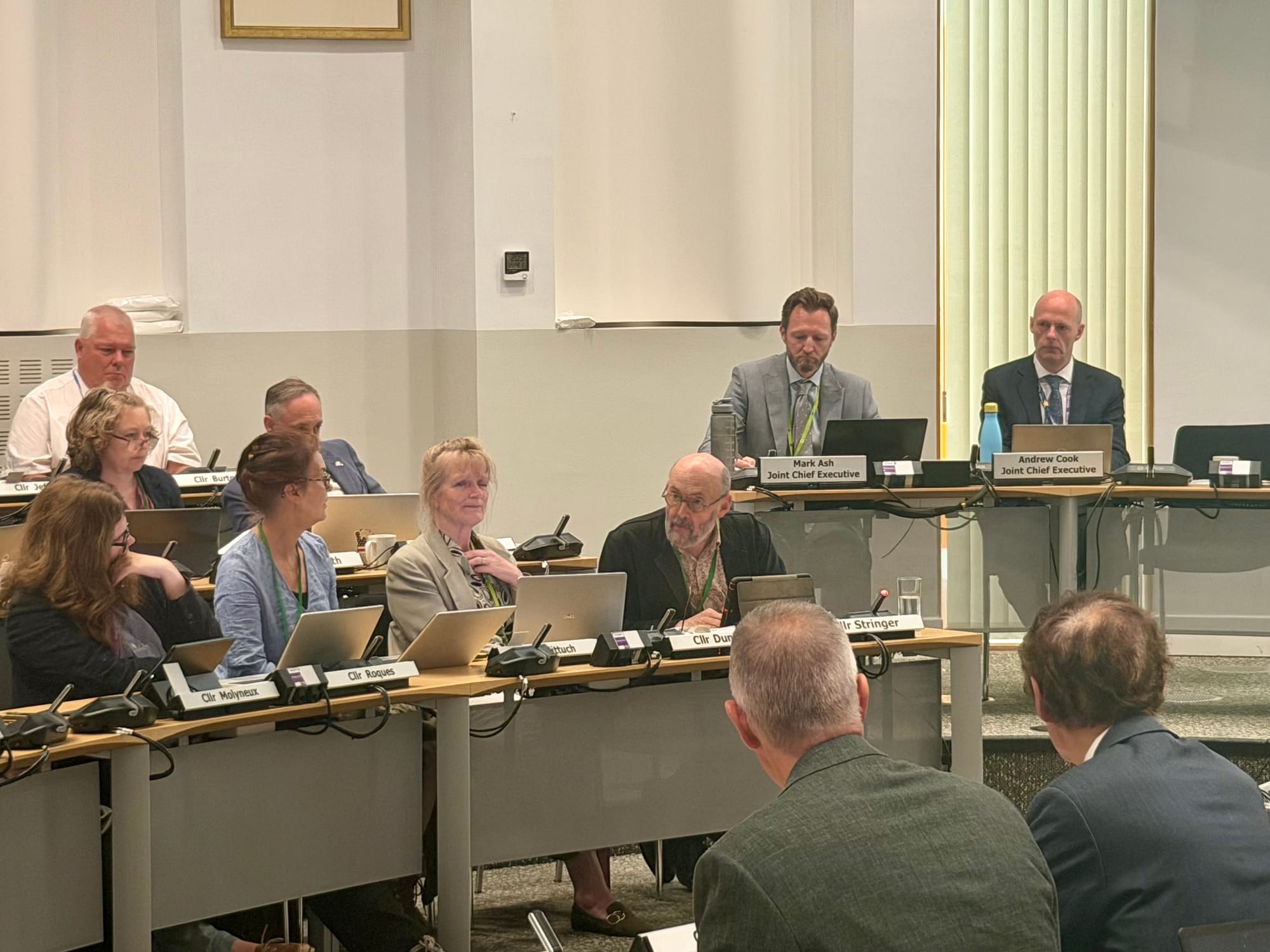
Councillor Martin Cook, leader of the Labour group, focused on the process and the timeline. He noted that the decision to file the claim had been taken by Hadwen alone on 18 June, the claim filed on 24 June, and cabinet informed only on 26 June — two days after it had already been submitted. He questioned how a decision committing up to £500,000 of public money had not been classified as a key decision under the council's own constitution, which would have required wider scrutiny.
Councillor Richard Rout, leader of the Conservative group, challenged the decision-making process directly. He noted — as he had previously — the irony of a leader who had come to office pledging transparency taking a decision of this magnitude alone, before his own cabinet had been consulted.
Hadwen defended the constitutional basis for his actions, arguing that rule 14.6 of the constitution permitted urgent decisions of this kind where delay would seriously prejudice the council's interests — in this case, the filing deadline of 1 July. He said bringing the decision to cabinet was a choice he had made in the interests of transparency, not a legal requirement.
He was also asked directly what outcome the administration was actually seeking. His answer was notable. The judicial review, he reaffirmed, was not about securing a single unitary council for Suffolk. Its aim was to halt the reorganisation process entirely — and if successful, to force the government to either begin again or abandon the process. His own preferred outcome, he said, was "true devolution": meaningful powers devolved to the existing district and borough councils, giving them genuine teeth rather than restructuring the architecture around them.
Several councillors pressed further on the financial risk. One asked whether the section 151 officer — the council's statutory finance officer — had formally assessed the affordability of committing up to £500,000 from unallocated reserves to a legal challenge not provided for in the budget. Hadwen said all proper procedures had been followed and that officers, including the section 151 officer, had been consulted throughout.
Another councillor raised the risk of delay to reorganisation preparations. Whatever the outcome of the legal challenge, she argued, there was a real danger that officers and councillors would be so absorbed by the proceedings that the county would be less prepared for the three-unitary structure if the challenge ultimately failed. Hadwen said he had instructed officers to continue their work on reorganisation in parallel, on the basis of good governance, acknowledging that preparing for all eventualities was the responsible course.
'Felixstowe is terrified of being lumped in with Ipswich'
Hadwen also offered a brief glimpse of how he sees our town. Asked about his conversations with district council leaders, he said: "Felixstowe is terrified of being lumped in with Ipswich."
For a leader seeking to convince the whole of Suffolk that his administration acts in the county's collective interests, it was a bold and perhaps telling choice of words — particularly given the view of many Ipswich residents that the county has long worked against the town.
If this administration is to convince Ipswich residents that Suffolk County Council is fighting for them as much as it is for the rest of the county, it may need to choose its words more carefully.
What happens next
The council has until Wednesday, 1 July 2026, to formally serve the claim. If the court grants permission for the judicial review to proceed, a substantive hearing will follow. The council can withdraw at any stage, and its papers note that the merits of the challenge should be kept under review as the government discloses further documentation.
The financial exposure is asymmetric. If the challenge fails, the council will ordinarily be required to pay its own costs and approximately 70% of the government's — a figure that has not been publicly quantified, and which it is not clear the £500,000 budget covers.
Separately, the government must still pass primary legislation through Parliament to formally abolish the existing councils and create the new unitary authorities — a process that presents its own potential checkpoint, regardless of the judicial review's outcome.
The bottom line
Suffolk County Council's cabinet voted unanimously to press ahead with its legal challenge — but unanimity in a controlling majority Reform UK administration is not the same as widespread public consensus. Despite messaging to the contrary, many in our county are in favour of LGR. The questions raised on Monday about process, mandate, financial risk, and legal merit were serious ones, and they did not receive answers that will satisfy everyone.
The future of local government in Suffolk — and with it the shape of public services for people across Ipswich and the county — will now be decided, at least in part, in the courts. The bill, win or lose, will be paid by taxpayers.
Don't forget: If you enjoy our content, please add Ipswich.co.uk as a "preferred source" on Google so you can easily find more of the content you value.
This article cost us ~£135 to produce
It's free for you to read thanks to the generous support of our partners. Please support us by supporting them.
Below the line