
Suffolk is taking the Government to court over LGR, but can it win its £500k taxpayer-funded battle?
Suffolk County Council has filed a judicial review claim against the Secretary of State over local government reorganisation. The legal arguments are now known, but the threshold is high, and even a successful outcome may not deliver what the council is seeking. We explain all.

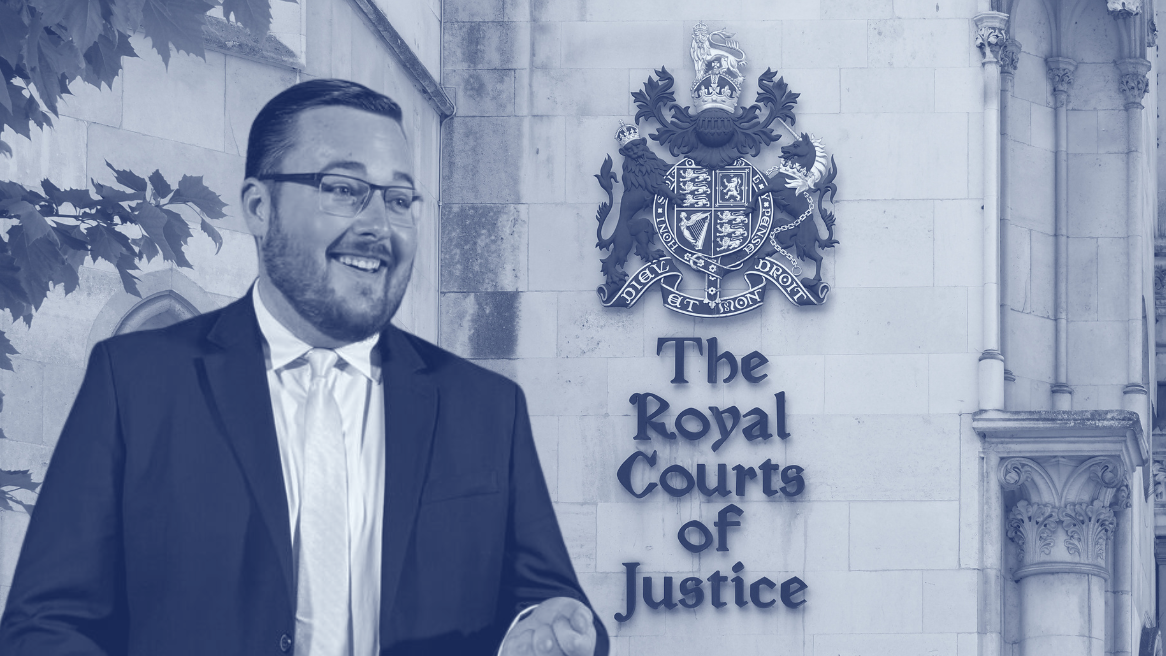
The claim was filed on Tuesday, 24 June — five days before the extraordinary cabinet meeting at which councillors are being asked to formally approve it. The decision to file was taken by Councillor Michael Hadwen, leader of Suffolk County Council, using his executive powers under the council's constitution. Cabinet members are not being asked to make the decision; they are being asked to note it and agree that legal proceedings should continue.
The claim challenges the Secretary of State for Housing, Communities and Local Government's decision, announced on 25 March 2026, to replace Suffolk's existing county, district and borough councils with three new unitary authorities: Western Suffolk Council, Central and Eastern Suffolk Council, and Ipswich and South Suffolk Council.
Councillor Hadwen said: "Having reviewed that information, our concerns have been confirmed — the current proposal is not in Suffolk's best interests and is unfit for our county."
The council has been clear that the challenge is not an attempt to secure a single unitary council for Suffolk. Its aim is to overturn the Government's decision entirely and halt the reorganisation process.
The two legal arguments
Suffolk County Council is pursuing two grounds of challenge.
The first is that the Secretary of State acted beyond his legal powers. The council's pre-action letter argues that the decision to create three new unitary authorities with redrawn boundaries — splitting existing districts between them — is not permitted under the Local Government and Public Involvement in Health Act 2007 (LGPIHA). Under that legislation, proposals for reorganisation must use existing council areas as building blocks. The council argues that the districts' proposal did just that in its unmodified form, but then asked the Secretary of State to immediately modify the boundaries — something the council argues he cannot lawfully do in this way.
The council contends that boundary changes of this kind require involvement of the Local Government Boundary Commission, which has a specific statutory role in such matters. SCC's pre-action letter states that the approach adopted was "a device to pave the way for a different outcome which the LGPIHA did not in fact allow."
The Government Legal Department (GLD) disputes this robustly. In its response of 12 June 2026, it argues that section 7(1)(a) of the LGPIHA explicitly empowers the Secretary of State to implement a proposal "with modification", and that section 11(6) makes clear this can include boundary changes. It points to case law, including R v Secretary of State for the Environment ex p Lancashire CC [1994], in which a court held that modification of a boundary was permissible provided the resulting scheme was not "a different animal" from the original proposal. The Government maintains it was not.
The second ground is that the Secretary of State departed from his own published criteria without rational justification. A key criterion was that new councils should "aim for a population of 500,000 or more." Each of the three proposed Suffolk authorities would have a population of roughly half that level. The council argues the Secretary of State failed to provide adequate reasoning for departing so significantly from his own guideline.
The GLD's response counters that the 500,000 figure was "a guiding principle, not a target", a position it says was made clear to all councils from the outset. The Secretary of State's letter of 25 March 2026 states: "The 500,000 population figure has always been a guiding principle, not a fixed threshold. Whilst all three new councils are below the 500,000 level, I am satisfied that it is appropriate on the basis that it produces a more coherent and effective outcome for Suffolk."
The civil service recommendation
What has sharpened the legal challenge — and given it renewed political charge — is the contents of the GLD's response to the pre-action letter. That response confirmed that civil service officials recommended against the three-unitary proposal. The advice given to the Secretary of State stated: "We consider the 1 unitary to be the strongest proposal for Suffolk against the criteria. The single unitary proposal meets all the criteria, and does so more strongly than the 3 unitary proposal in relation to its geography, financial resilience, and service delivery."
In other words, the Secretary of State chose the three-unitary proposal, despite being advised by officials that the single-unitary option was stronger. This is not in itself unlawful — ministers are entitled to depart from civil service advice — but the council argues that in doing so without adequate published reasoning, the decision cannot withstand legal scrutiny. The council's follow-up letter of 16 June 2026 stated that the GLD's own response had "strongly reinforced the need for the production of documents", since it had now become apparent that the Secretary of State had "reversed the specific advice and recommendations of his civil servants."
The Government declined to disclose the underlying advice and meeting records, arguing that its explanation of the decision-making process was sufficient.
What a judicial review can and cannot do
It is important to understand what judicial review is, and what it is not. A court conducting a judicial review does not decide whether the Government made the right decision. It decides only whether the decision was made lawfully — that is, whether it was illegal, irrational, or procedurally unfair.
Even a successful challenge would not necessarily stop local government reorganisation in Suffolk. If the court found a procedural flaw, the Secretary of State could, depending on the grounds, potentially remake the decision through a corrected process — and arrive at the same outcome. The council's own papers state that, if the ultra vires ground succeeded, a successful outcome would leave the Secretary of State "effectively with a choice between adopting the single unitary proposal and leaving a two-tier system in place (or inviting fresh proposals)."
The claim must first clear a permission stage, usually decided on paper without a hearing. If permission is refused, the council can seek a renewal hearing. Only if permission is granted does the case proceed to a substantive hearing with a judgment.
The cost, and who pays if it fails
The council's own papers state that total costs are "relatively unlikely" to exceed £500,000. Councillor Hadwen has defended the outlay by arguing that the cost of a judicial review is "nothing compared to the cost of LGR," though both the one- and three-unitary proposals forecast significant savings.
Those costs will be met by repurposing earmarked reserves.
The financial risk is asymmetric. If the council's claim fails, it will ordinarily be required to pay its own legal costs and approximately 70% of the Government's. That exposure has not been publicly quantified. If the claim is withdrawn early, there may be scope to negotiate a settlement with no costs awarded.
Councillor Hadwen's predecessor Matthew Hicks put the concern plainly: "By the administration's own admission, if this challenge fails the council will have to pay not only its own legal costs but most of the Government's too — and it is being funded by raiding the council's reserves."
It's unclear if the circa £500,000 budget allows for this.
The process question
The legal challenge has not only raised questions about the Government's conduct — it has also raised questions about the council's own.
Opposition groups across all three parties have criticised the decision-making process. Councillor Richard Rout, leader of the Conservative group, said: "There is a glaring irony at the heart of this. The Reform administration is taking the Government to court for, in their words, failing to follow a proper and transparent process. Yet they have taken this decision in exactly the way they accuse the Government of behaving — behind closed doors, by one man, before anyone else had a say."
Councillor Andrew Stringer, leader of the Green group, the official opposition, said: "We responded straight away when we were asked who we would want on [the] Constitution Working Party. The constitution is the foundation of how the council makes its decisions, and it’s important that all the political groups at the council have input into any proposed changes. We have no idea what changes Reform UK were planning to make to the constitution, which apparently they have now abandoned.
"They have also convened an Extraordinary Cabinet meeting for Monday, 29 June, which we are yet to receive any supporting information about, even though it’s only a few days away. We know it will be related to their legal challenge to the government about stopping Local Government Reorganisation.
"They said the report would be provided for councillors yesterday, but we heard nothing.
"It’s hard to see whether it’s a deliberate measure by the Reform administration to keep councillors from other political groups in the dark, or whether they’re just really disorganised and not sure what they are doing.
"The role of opposition groups at the council is to challenge the administration and hold them to account, which is hard to do in such a chaotic environment.”
Councillor Martin Cook, leader of the Labour group, questioned the priorities behind the decision: "How can a legal challenge that a cash-strapped council admits could cost more than £500,000 possibly be a priority for Suffolk?"
The administration is also seeking to have the decision classified as "urgent" under rule 14.6 of the council's constitution, which would prevent it from being called in for formal scrutiny.
Councillor Hadwen has not directly addressed the process criticism, but has defended the substance of the challenge, arguing that the Government's decision was reached without transparency and that legal action was the only means of compelling disclosure.
What comes next
The council has until Wednesday, 1 July 2026, to formally serve the claim. Cabinet members will be asked at Monday's extraordinary meeting to agree to instruct officers to continue with legal proceedings. And that's exactly what it is expected to do.
If permission is granted, the claim will proceed to a substantive hearing. The council can withdraw at any stage, and the papers note it should keep the merits of its claim under review as the Government discloses further documentation.
Separately, ministers must still pass primary legislation in Parliament to formally abolish the existing councils and create the new unitary authorities. That process presents a further potential checkpoint, regardless of the outcome of the judicial review.
Basically, this has all the earmarks of a long, drawn-out, politically charged and expensive process.
The bottom line
Suffolk County Council's leader has taken the decision to commit public money to a legal challenge that was filed before it was formally approved, on grounds the Government contests robustly, in pursuit of an outcome — halting reorganisation entirely — that the courts may not be able to deliver even if it wins.
The detail that the Secretary of State overruled his own civil servants perhaps adds some weight to the challenge, but the questions raised about process cut both ways.
Councillor Hadwen came to office pledging transparency and a commitment to protecting the public purse. On his first day as leader, he promised residents that his administration would be open and accountable. Whether filing a legal claim before his own cabinet had a chance to consider it — and seeking to block that decision from being called in for scrutiny — sits comfortably with those commitments is a question only residents can answer.
What is clear is that the future of local government in Suffolk — and with it the shape of public services for people in Ipswich and across the county — will now be decided, at least in part, in the courts. The question remains: at what cost to taxpayers?
Don't forget: If you enjoy our content, please add Ipswich.co.uk as a "preferred source" on Google so you can easily find more of the content you value.
This article cost us ~£122 to produce
It's free for you to read thanks to the generous support of our partners. Please support us by supporting them.
Below the line