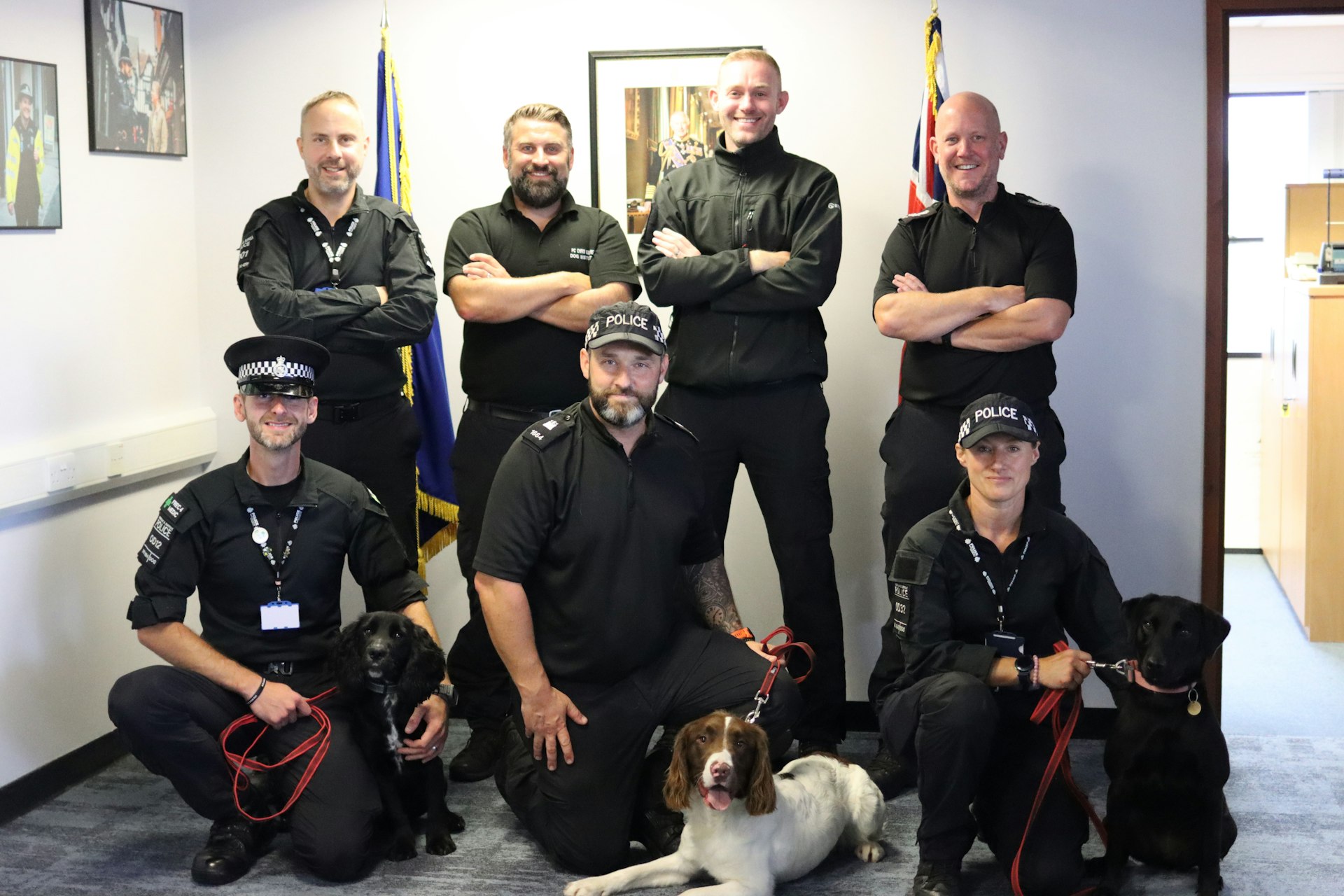
Why it matters: The Digital Evidence Detection Dogs (DEDD) represent a significant advancement in tackling cybercrime and protecting vulnerable communities, with officers describing them as "a game-changer" for investigations.
The details: After completing an eight-week intensive course, the three dogs and their handlers can now detect a wide range of electronic devices that criminals often attempt to hide during investigations.
The teams will be deployed across both counties to support search operations during warrants, safeguarding work, and high-risk investigations.
The bigger picture: The initiative reflects how modern policing must evolve to combat contemporary crime. The dogs join existing specialist teams within the dog section, which already include drugs, cash and weapons detection teams, and explosive detection teams.
What they're saying: Inspector Gary Chapman from the Dogs Section said: "These dogs are a game-changer. Their ability to locate hidden devices quickly and accurately enhances our capability in investigations. It's a modern solution to a modern challenge."
Tim Passmore, Suffolk's Police and Crime Commissioner, said: "Police tactics have had to change over the years to meet changing demand, so it makes absolute sense for police dogs to do the same. I must say, as the owner of two Springer spaniels, I am delighted to see the dog unit evolving to deal with digital crime. It is quite remarkable what these wonderful dogs can sniff out."
What's next: The Digital Evidence Detection Dog teams will operate alongside their other duties as general-purpose police dog handlers, making them available for a range of operations where digital evidence may be crucial to investigations.
The bottom line: With criminals increasingly using digital devices to commit crimes, Norfolk and Suffolk police have equipped themselves with specialist dogs trained to detect hidden electronic evidence that could prove crucial to investigations.