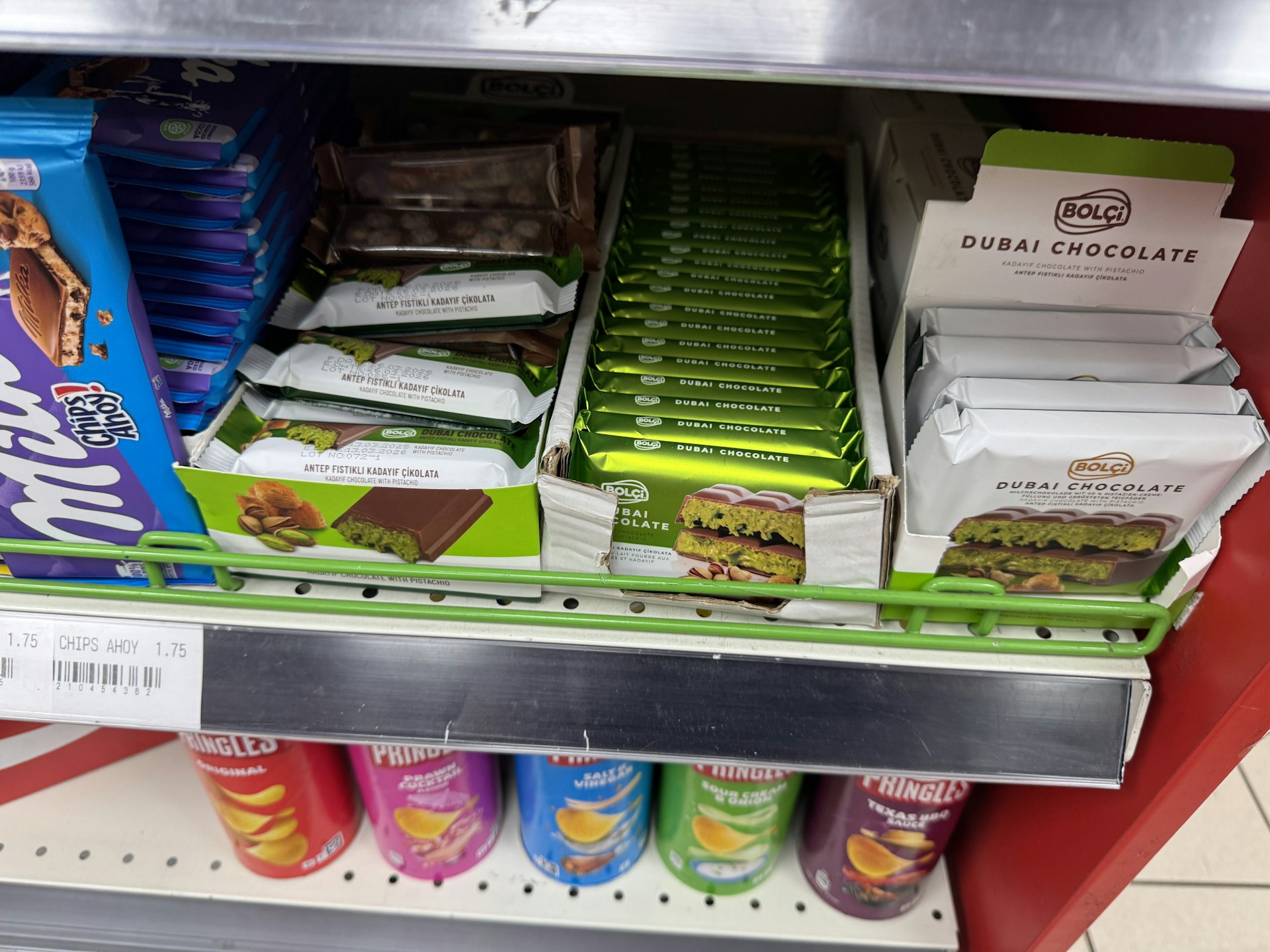
Why it matters: Dubai chocolate and Dubai-style chocolate have gained popularity through social media content creators, but many imported products are not formulated for the UK market, prompting concerns to be raised by Suffolk Trading Standards and the Food Standards Agency.
The details: The FSA has identified six key safety concerns with these chocolate products:
Undeclared allergens: Labels may not properly declare or emphasise allergen information, including wheat, milk, sesame and soya, putting those with food allergies at serious risk
Misleading labelling: Some products contain incorrect or missing warning labels, such as alerts that certain colours may adversely affect activity and attention in children
Poor quality ingredients: Legal minimum requirements for dry cocoa solids in milk chocolate are not being met, with some products containing as low as 4 per cent, indicating poor quality chocolate
Unsafe imported ingredients: Pistachios sourced from Iran and Turkey require safety proof that has not been provided
Unauthorised additives: Lutein (E161B), which is not permitted in chocolate, has been found in Kanafa Chocolate from Dubai
Chemical contamination: Glycidol, a carcinogenic substance that can damage DNA, has been discovered in chocolate from the United Arab Emirates
The bottom line: Suffolk Trading Standards and the FSA are warning consumers, particularly those with food allergies, to be cautious when buying Dubai chocolate, whilst local businesses must ensure the products they source comply with UK legal requirements and food safety standards.