
Why the Great White Horse Hotel still faces an uncertain future despite planning approval
Ipswich's most famous historic building has cleared its first major hurdle, with planners unanimously approving its conversion into 21 flats, but without grant funding, the development remains commercially unviable, leaving its future far from certain.

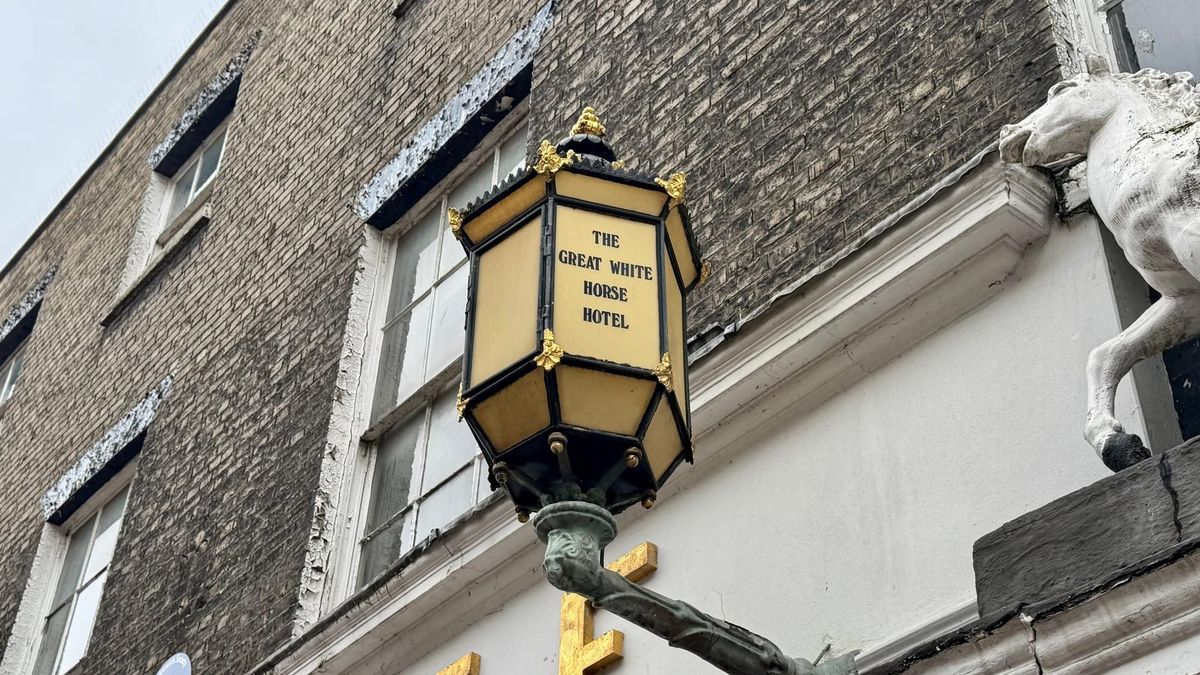
Why it matters: The Grade II* listed Great White Horse Hotel on Tavern Street has been on Historic England's Heritage at Risk Register since falling into decline following its closure as a hotel in 2008. Wednesday's unanimous decision by Ipswich Borough Council's planning committee is the first significant step towards bringing it back into use after nearly two decades of vacancy.
The details: The committee approved plans submitted by White Horse Ipswich Ltd — the investment vehicle of developer John Howard and his business partner David Carr — to convert the upper floors into 21 residential flats, a mix of one and two-bedroom units, while retaining three existing ground-floor retail units.
- Community spaces would be created on the ground floor
- The planning officer who presented the proposals described the site as "extremely important to Ipswich", with buildings on it dating back to 1518.
- Cllr Carole Jones, the authority's lead for planning, welcomed the plans for "a really precious building that is in dire need" of redevelopment.
- With no objections from either residents or consultees, councillors were quick to agree with the planning officer's recommendation of approval.
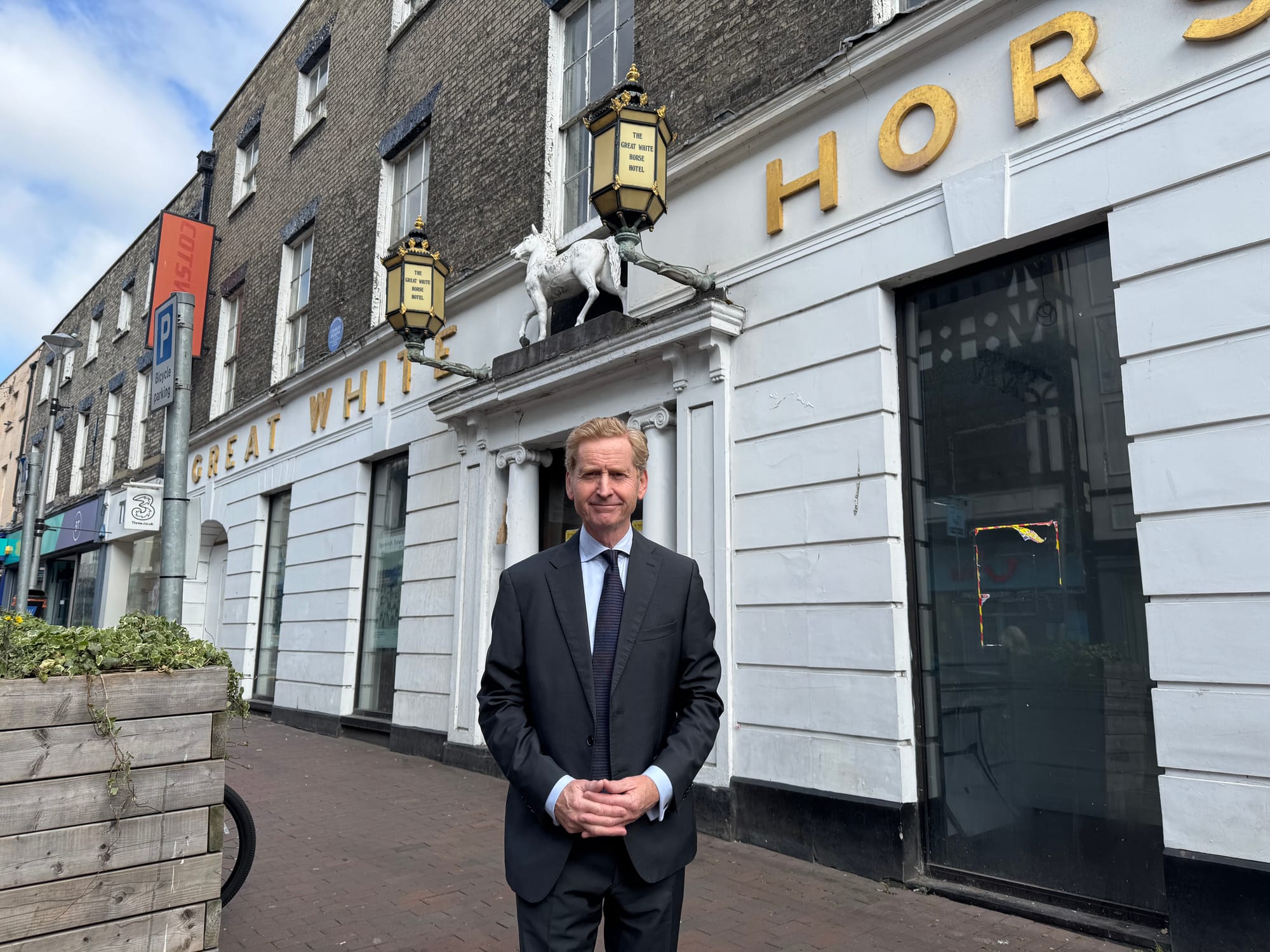
For context: The hotel has its origins in the 16th and 17th centuries and is closely associated with Charles Dickens, who stayed there and based an inn in his novel The Pickwick Papers on the building. It once served as accommodation for the likes of Admiral Nelson and, later, the Beatles.
An independent assessor commissioned by the council found the scheme is projected to make a loss of more than £2.6m. As a result, the council has not sought the legal financial contributions — known as Section 106 obligations — that would normally be required from a development of this size, covering costs such as education, public open space and infrastructure.
The viability question: Despite the planning approval, Howard was keen to stress that this is "the beginning of the beginning", not "the beginning of the end". The development cannot proceed without grant funding, and it is currently unclear where that will come from.
Howard previously submitted an application for a Towns Fund grant to transform the building into a four-star boutique hotel, and had an operator waiting in the wings, but it is unclear whether that will be granted, or whether it could be applied to the residential conversion.
What they're saying: Howard said the development "had the support of the town, and now the planning committee," but stressed it was now crucial that it received support from "all stakeholders" to provide the grant funding required to make the development feasible.
The bottom line: Wednesday's unanimous approval is a genuine milestone for one of Ipswich's most cherished and at-risk buildings — but planning permission alone will not save it. The hard work of securing the funding needed to make the scheme financially viable is still to come.
Don't forget: If you enjoy our content, please add Ipswich.co.uk as a "preferred source" on Google so you can easily find more of the content you value.
This article cost us ~£34 to produce
It's free for you to read thanks to the generous support of our partners. Please support us by supporting them.
Below the line