
What the 2026 Budget means for Ipswich
A £100 energy payment, a bigger break on business rates and another rise in the minimum wage – John Healey's first Budget reaches into almost every household and high street business in Ipswich. Here is who gains, who pays, and what people in the town make of it.

The Chancellor delivered his statement against what he called a backdrop of "global uncertainties and pressures are swirling worldwide and hitting people here at home", promising "breathing space now, fresh hope for the future".
To summarise:
Households get help with energy bills. Town centre traders get a meaningful cut in their rates bill. Employers get another increase in the cost of each person they employ. And savers face a higher tax bill on their interest.
What lands on the doormat
The most immediate measure for Ipswich homes is a one-off £100 energy payment, paid directly into bank accounts, for 20 million households in council tax bands A to D. The Treasury puts the cost at £2.6bn. Given the town's housing stock sits heavily in the lower bands, the reach locally will be wide.
Alongside it, standing charges on gas bills are being abolished for 23 million homes, a change the government says will save two-thirds of households an average of £45 a year. The temporary zero rate of VAT on domestic electricity has been extended to 30 June 2027, which the Chancellor said takes £50 off the annual price cap.
The temporary 5p per litre cut in fuel duty continues until the end of June 2027, after which rates return to pre-2022 levels and rise with inflation. Import tariffs come off more than 100 products, including baked beans, chocolate and gherkins. Self-employed fathers become eligible for paternity pay for the first time, and the "cliff edge" in carers' allowance, which left some claimants owing thousands of pounds after crossing an earnings threshold, is removed.
There was no change to income tax on wages, and no change to the taxation of dividends.
A better deal on the high street
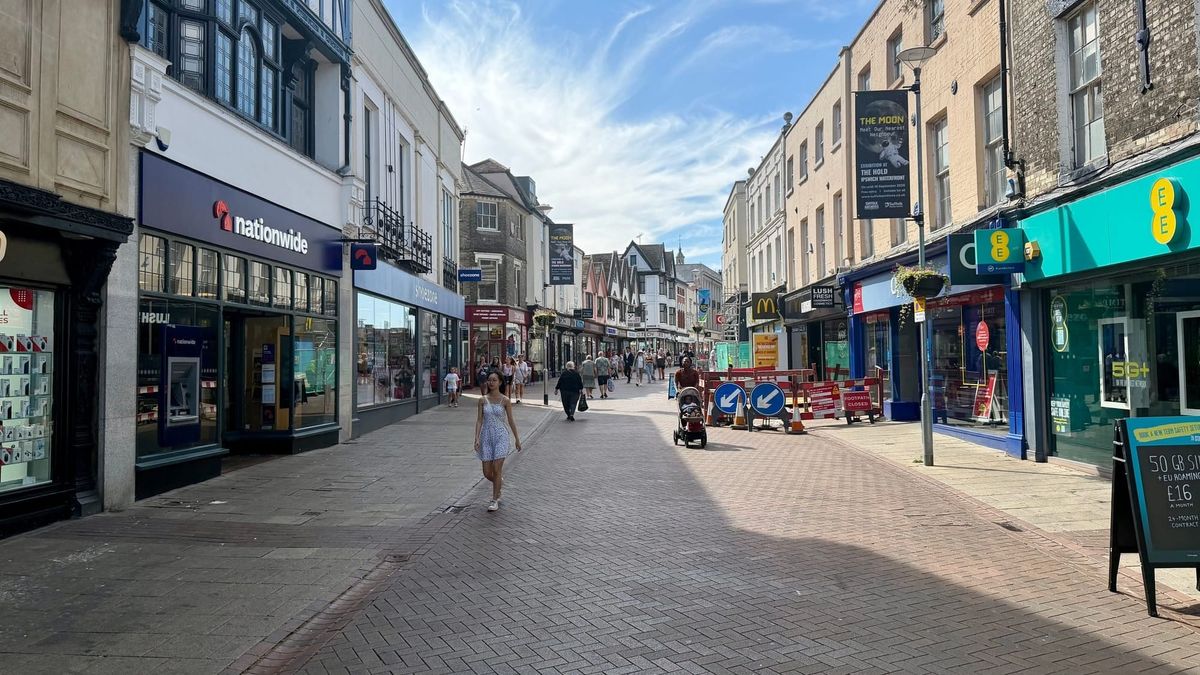
The headline measure for Ipswich's independent traders is the threshold for small business rate relief for retail, hospitality and leisure businesses rising from £12,000 to £18,000, a tax break the government says will reach 70,000 smaller firms. Adult gaming centres and vape shops are excluded.
Lee Walker, chief executive of Ipswich Central, welcomed it, while placing the Budget in a wider holding pattern.
"Whilst there was no headline policy that could excite people, this appeared to be a budget rooted in steady as she goes, ahead of what must be a large raft of changes in the Prime Minister's 10-year plan and spending review," he said.
"The changes to business rates can only be a good thing and should be encouraged to go even further as this will be tangible money in the pockets of people who have gone and started a business."
He was blunter on gambling, where the duty on higher-stakes machines rises from 20 per cent to 25 per cent from April 2027. "The Chancellor's tax on gambling and vape shops is needed, and an awful lot of the money that is in the industry is not legitimate and prevents businesses that could survive otherwise."
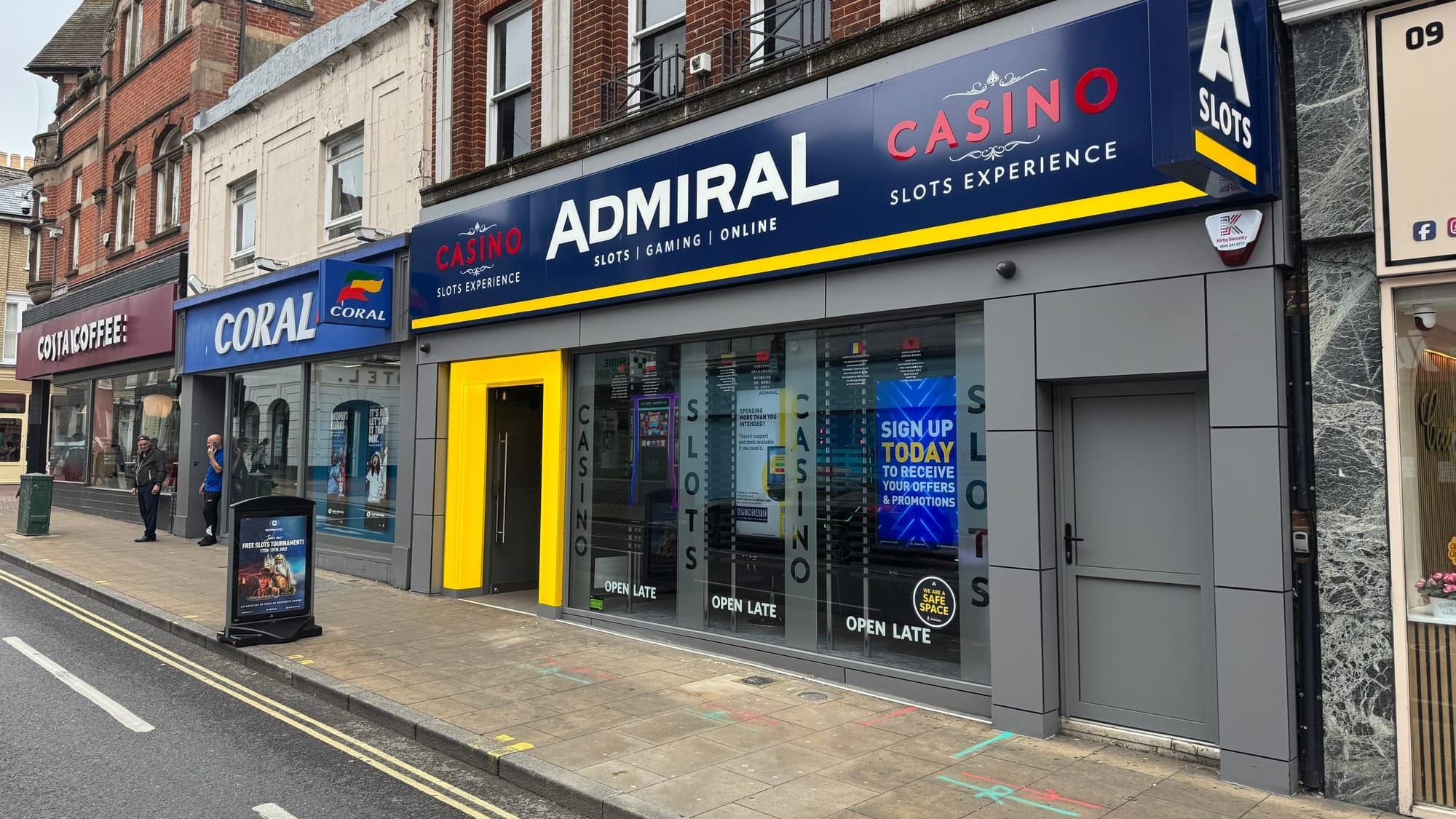
The relief on rates is not the whole picture for hospitality, though. Alcohol duty rises in line with inflation from 1 February 2027, with a more generous discount for small producers.
The bill for employers
The measure that drew the sharpest local response was one the Chancellor framed as help for workers. Both the national minimum wage and the national living wage rise by 3.9 per cent in April. The living wage for over-21s was set at £12.71 from April 2026; the minimum wage for 18 to 20-year-olds was £10.85.
But George Pennell, managing director of local commercial cleaning firm Vivo Clean, said the increase brings "significant financial pressure" to a labour-intensive business.
"Whilst I fully support people being paid fairly for the work they do, the reality is that these increases have to be funded somehow," he said. "We operate in an extremely competitive industry, where margins are already tight, and passing these increases on to clients is becoming increasingly difficult. Our customers are facing exactly the same financial pressures, and there is only so much they can absorb."
His concern runs beyond his own payroll. "My concern is that the continued increase in employment costs will make businesses increasingly cautious about recruitment, particularly when it comes to younger, less experienced workers. I can see youth unemployment rising further as employers become less willing to take a chance on someone who needs training and development."
Lee Walker shared the worry, saying he feared the rates gain "will be offset by a further rate in minimum wage at a time when businesses can least afford it".
The Budget does carry measures aimed at employers and founders. The trading allowance rises from £1,000 to £3,000 from April 2027. A new capital gains tax founders' relief, now out to consultation, will offer a lower rate on qualifying disposals from the same date. An extra £20.4bn goes to the national wealth fund and the British Business Bank, and £100m is earmarked for a local apprenticeship service matching young people with local firms.
Peter Harrup, regional managing partner at BDO in East Anglia, said the region had come into the Budget looking for "confidence, stability and investment", and pointed to devolution as the measure that resonated locally. BDO research found 88 per cent of East Anglian businesses were upbeat about mayors and councils gaining greater control over locally raised tax revenues. Mayors will receive 20 per cent of business rates revenue from next year, with 100 per cent retained locally by the end of the decade – a roadmap that leaves open what areas without a mayor receive.
"Entrepreneurs need the government to build on today's announcements by simplifying taxes so they can focus on delivering innovation and driving growth," he said.
Suffolk Chamber of Commerce took a similar view, welcoming the rates reductions and the support for founders while arguing the statement does "little to cut costs and alleviate the accumulated pressures being faced by many of Suffolk's average SMEs". It said firms would be disappointed that there was no re-evaluation of employer national insurance contributions and no stronger action on business energy costs.
On devolution, the chamber was clear about what Suffolk needs next. "Approving the Norfolk and Suffolk mayoral devolution deal will be vital to take full advantage of these ambitions for Suffolk businesses, but so will the delivery of crucial infrastructure projects for Suffolk and the Eastern region," it said, naming funding for the Ely and Haughley rail junctions, an extension of East West Rail east of Cambridge, and business cases for the A14 Copdock Interchange and the A11 Fiveways roundabout – schemes it says remain under threat of re-evaluation for inclusion in the Road Investment Strategy pipeline.
Who picks up the bill
Much of the help for households is funded by the banks. The Corporation Tax surcharge on banking companies rises temporarily to 6 per cent for 15 months, running from 1 January 2027 to 31 March 2028. The Chancellor said he celebrated the role banks play in the economy, but framed the increase as a means of giving families breathing space.
Savers contribute too. The Chancellor reversed his predecessor's plan to cut the cash ISA allowance, keeping it at £20,000. But from 6 April 2027 the rates of income tax on savings income rise to 24 per cent at the basic rate, 44 per cent at the higher rate and 49 per cent at the additional rate.
Colin Low of Ipswich-based Kingsfleet called it a Budget of tinkering, and said he expected the change to reach stocks and shares ISAs as well as ordinary savings. "On the positive side, we have seen the ludicrous proposed changes to ISA allowances being scrapped, but on the downside, we are seeing a 24% rate on savings interest, and that will now also apply within stocks and shares ISAs," he said.
"The confusion of ISA options is a disappointment, as we have been told that there are two new ISA solutions that we should be expecting. A combination of confusing solutions and changes in tax legislation will not help people to see the benefits of long-term saving."
Would-be buyers get a new First Time Buyer ISA, replacing the Lifetime ISA for new savers from April 2029, with a 25 per cent government bonus of up to £20,000 towards a home worth up to £450,000. From 29 October, the penalty for withdrawing Lifetime ISA money to buy a property above the price cap falls from 25 per cent to 20 per cent. A new equity loan scheme, Your First Home, will lend £4.7bn, and land sold to social housing providers will no longer attract VAT.
The bottom line
This was a Budget that chose its targets carefully: banks, gamblers and savers pay, so that households and small shops do not.
The town's traders will take the rates relief. Its employers are less convinced the sums add up. As George Pennell put it: "The Government talks about growth, but it needs to recognise that businesses need the confidence and financial breathing space to actually deliver it."
Whether that breathing space arrives may depend less on this Budget than on the spending review, the 10-year plan, a devolution deal still to come, and whatever follows the next general election.
As the Suffolk Chamber of Commerce put it: "If Healey and Burnham truly want to rewire the state and beat the OBR's growth forecasts, more must be done to back Suffolk businesses."
Don't forget: If you enjoy our content, please add Ipswich.co.uk as a "preferred source" on Google so you can easily find more of the content you value.
This article cost us ~£89 to produce
It's free for you to read thanks to the generous support of our partners. Please support us by supporting them.
Below the line