
Toothless in England: Dental campaign challenges new NHS board
A campaign group has called on the newly merged Norfolk & Suffolk NHS board to explain millions of pounds in unspent dental funding and set out a plan to improve access for patients.

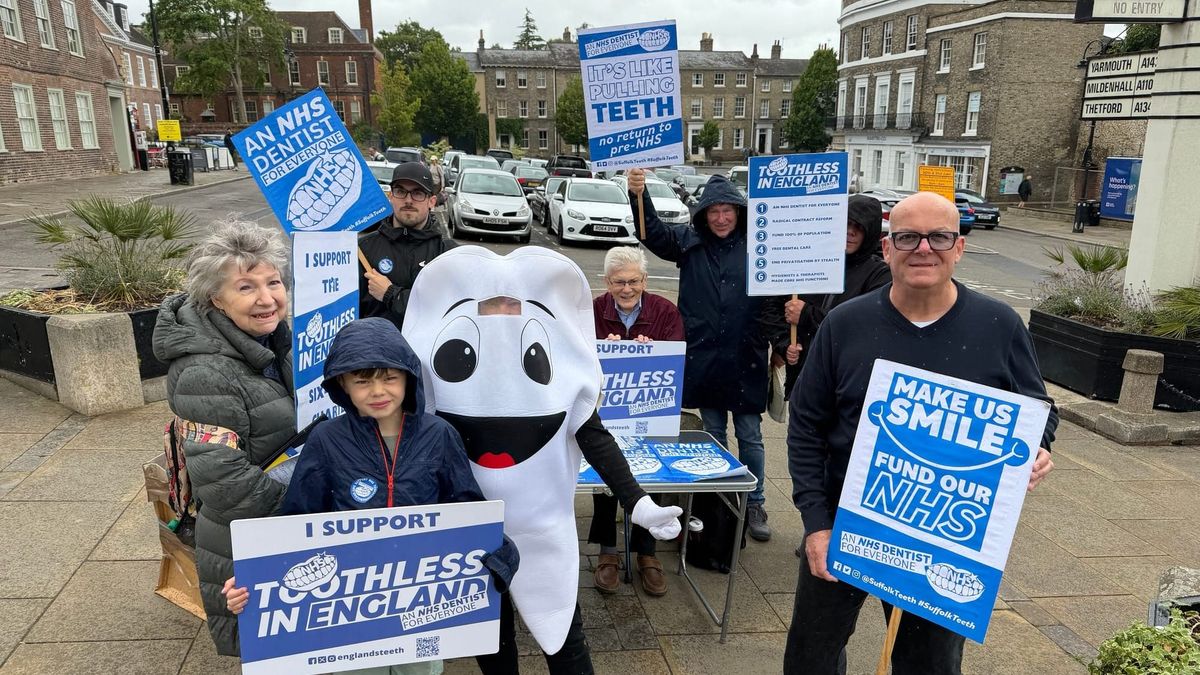
Why it matters: Only 37.9% of Suffolk adults were seen by an NHS dentist in the two years to 2023/24, below the England average of 40.3%, according to Suffolk's own 2025 Oral Health Profile. Access is worst in Mid Suffolk (27.9%), Babergh (30.1%) and West Suffolk (35.1%), and more than 108,000 Suffolk residents cannot reach an NHS dental service within 30 minutes by public transport.
The big picture: Campaign group Toothless in England issued the challenge to NHS Norfolk and Suffolk Integrated Care Board (ICB), which was formed on 1 April 2026 through the merger of the former Suffolk and North East Essex ICB and Norfolk and Waveney ICB.
 Oliver Rouane-Williams
The campaign says the new board "inherits both the problems and the responsibility to fix them."
The details: Toothless in England is calling on the ICB to:
- Publish a formal response to the Suffolk 2025 Oral Health Profile and the available Norfolk oral health evidence
- Provide full transparency on recent dental underspend and clawback across both former ICB areas
- Set out a timed plan to increase routine NHS dental capacity in the lowest-access districts and rural and coastal communities
- Explain what happened to unused mobile dental funding
- Report publicly on how many additional patients have gained ongoing NHS dental care, not just urgent appointments
For context: The same Oral Health Profile shows the picture in Ipswich itself is more mixed than the county-wide figures suggest. Adults in Ipswich actually have the best access to an NHS dentist anywhere in Suffolk, with 56.7% seen in the past 24 months, and the town has the highest concentration of NHS dental practices in the county, albeit against a low baseline.
However, Ipswich's children fare far worse than their counterparts elsewhere in Suffolk. Between 2021 and 2024, 95 out of 200 Suffolk children under five admitted to hospital with tooth decay were from Ipswich alone — nearly half the county's total, despite Ipswich making up a much smaller share of Suffolk's population.
What they're saying: Mark Jones, of Toothless in England, said: "The new Norfolk & Suffolk ICB has a clean slate and a clear choice. It can continue the pattern of large underspends, limited transparency, and heavy reliance on urgent care while waiting for national reform, or it can treat the oral health evidence seriously and put money into restoring proper NHS dentistry where people live."
He added: "Patients in Mid Suffolk, Babergh, West Suffolk, rural Norfolk and coastal communities have waited long enough. The data is there. The money was there. What has been missing is the determination to turn both into actual appointments and ongoing care."
The other side: The ICB was approached for comment but declined to respond to this publication's enquiry.
The ICB has previously spoken publicly about dental access. In a statement issued on 14 July 2026, chief executive Dr Ed Garratt said dentistry "remains one of our highest priorities and we're investing in both immediate improvements and long-term solutions to ensure more people can access the care they need."
The ICB says it holds a £112m ring-fenced dental budget and is progressing a procurement to increase NHS dental capacity across Suffolk, reinvesting funding released through dental contract changes in Norfolk, and supporting a new dental school at the University of East Anglia, due to open to its first students in September 2027.
What's next: Toothless in England says it remains ready to discuss practical solutions with county councillors and the ICB and will continue pressing for measurable results for patients.
The bottom line: Toothless in England wants the ICB to publish its underspend figures and a timed plan for dental access; the ICB says dentistry is a priority and has committed £112m to it, but declined to respond to the campaign's specific claims.
Don't forget: If you enjoy our content, please add Ipswich.co.uk as a "preferred source" on Google so you can easily find more of the content you value.
This article cost us ~£53 to produce
It's free for you to read thanks to the generous support of our partners. Please support us by supporting them.
Below the line