
The remarkable story of Ipswich Town's first black footballer
He played just three games for Ipswich Town, was injured after half an hour of his debut and found himself caught up in the arrival of Bobby Robson. But Steve Stacey's journey from wartime Bristol to Portman Road, is one of the most extraordinary stories in the club's history.

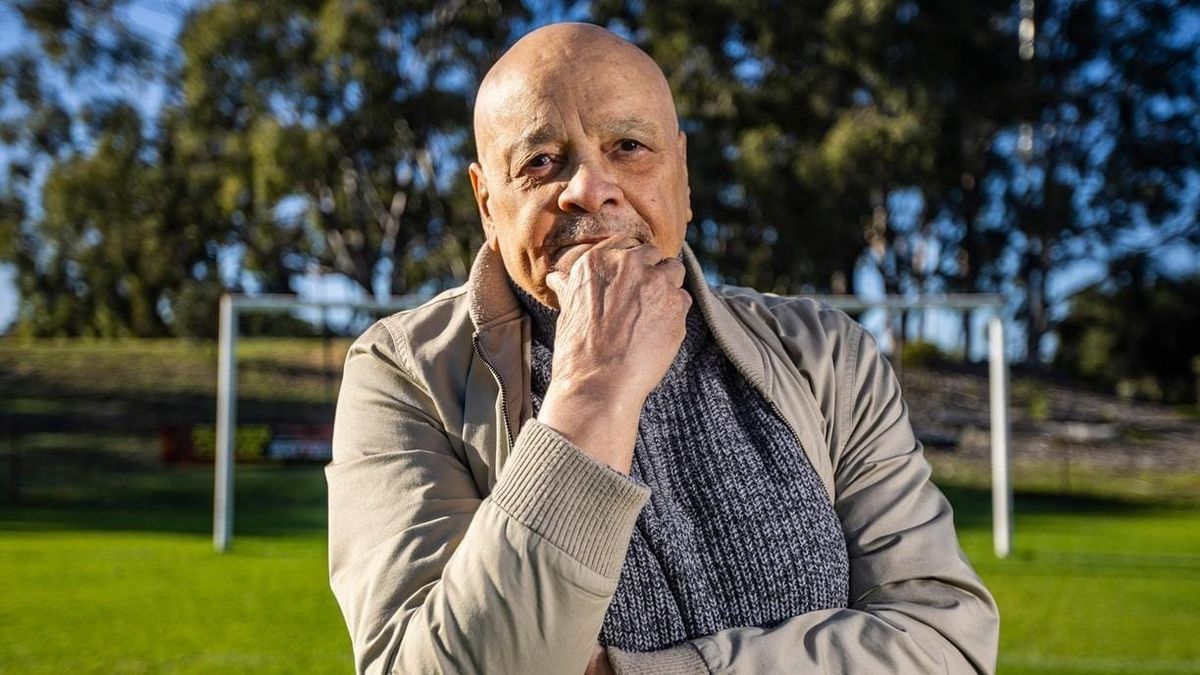
There are some footballers whose names become inseparable from a club. They have stands named after them, statues erected in their honour and songs that survive long after their boots have been hung up.
Then there are those whose contribution is rather less obvious.
Steve Stacey belongs firmly in the second category.
He made just three first-team appearances for Ipswich Town. He never scored a goal for the club. He won no trophies at Portman Road, and his time in Suffolk coincided with a rather awkward changing of the guard.
Yet, on Saturday, 14 September 1968, Stacey walked onto the pitch against Liverpool and quietly made history.
He became the first black footballer to play for Ipswich Town's senior team.
There were no special ceremonies, no commemorative presentations and, so far as we know, no great declaration from the terraces that something important had happened.
It was simply a football match.
And, as it turned out, not an especially happy one for Steve Stacey.
A journey that began during the Second World War
To understand how Stacey came to be at Portman Road, we must begin not in Suffolk but in Bristol, during the final years of the Second World War.
Stephen Darrow Stacey was born on 27 August 1944, the son of Evelyn Stacey, a young white woman from Bristol, and Clarence Lee Sims, a black American serviceman stationed in Britain.
Their relationship was one of thousands formed between British women and American servicemen during the war. But there was an important difference.
The American armed forces were segregated, and Clarence was refused permission to marry Evelyn because of their different racial backgrounds.
He returned to the United States in 1945.
Evelyn was left to raise their son in a country where mixed-race children were relatively uncommon and prejudice could be both casual and cruel.
Steve grew up in Bristol with his mother and grandmother, surrounded by people who looked different from him.
There is something particularly striking about this part of his story. His father had crossed the Atlantic to help fight a war against racial tyranny in Europe, while serving in an army whose own rules prevented him from marrying the woman he loved.
It is an uncomfortable contradiction, and one which would shape much of Stacey's early life.
For years, he knew little of the father who had disappeared across the ocean.
But he did have football.
The boy who found somewhere to belong
Post-war Bristol was not a city overflowing with opportunities for a young black boy.
Football, however, offered something different.
In the streets around his childhood home, the game was played with whatever space and equipment could be found. There were no academy contracts, performance analysts or carefully managed development pathways.
There was a ball, a collection of boys and the simple question of who could play.
Stacey discovered that he could.
He became captain of his street football team, a moment he would later describe as one of the most important of his life.
It provided acceptance in a world where his appearance had often made him an outsider.
His ability eventually took him into professional football with Bristol City, although his personal allegiance as a youngster had been to the other half of the city, Bristol Rovers.
He subsequently moved to Wrexham, then playing in the Fourth Division.
And this is where Ipswich Town entered the story.
An unexpected journey to Suffolk
In September 1968, Stacey was told that Wrexham had agreed to sell him to a First Division club.
Rather curiously, he was not immediately told which one.
He was taken to Blackpool airport, where he met Bill McGarry, the manager of Ipswich Town.
McGarry had just guided Ipswich back into the First Division, and the club was preparing to establish itself once again among English football's leading sides.
Stacey was offered a contract which, according to his account, would double his wages.
Understandably, there was little hesitation.
He was allowed to continue training at Wrexham for the remainder of the week before travelling to Ipswich on the Friday.
There was, however, another piece of information he was about to discover.
His first match would be against Liverpool.
Not just any Liverpool, either, but Bill Shankly's Liverpool, with established international footballers and ambitions at the very top of the English game.
Stacey had been playing Fourth Division football. Within days, he would be facing one of the most formidable sides in the country.
To make matters more interesting, he was asked to play at centre-half, rather than in his more familiar position at full-back.
Welcome to Ipswich.
Saturday, 14 September 1968
Portman Road attracted 24,514 spectators for the visit of Liverpool.
Ipswich had returned to the First Division after four seasons away, and the excitement of top-flight football was still fresh.
For Stacey, aged 24, this was the opportunity for which he had worked throughout his young life.
It was also a milestone that nobody else in the Ipswich first team had previously reached.
He was the club's first black senior player.
One might imagine the occasion deserved a rather grand beginning.
Unfortunately, football has a habit of showing little respect for historical significance.
After approximately half an hour, Stacey suffered a serious hamstring injury and had to leave the field.
He later recalled that he had been troubled by hamstring problems during his spells with Bristol City and Wrexham, and this latest setback would keep him out for around three months.
Liverpool eventually won 2-0.
In the record books, Stacey's debut became one more appearance in an otherwise unremarkable September defeat.
But history is not always measured in goals, victories or trophies.
Sometimes it is measured simply by who was there.
The Ipswich that Stacey encountered
It is worth remembering just how different England was in 1968.
The Race Relations Act had been extended that year, introducing further legal protections against discrimination.
Enoch Powell had delivered his notorious Rivers of Blood speech only months earlier.
The wider national debate about immigration, identity and race was increasingly bitter.
Professional football remained overwhelmingly white.
For someone such as Stacey, being the only black player in a dressing room was not unusual. It was practically the normal state of affairs.
Yet his own recollections of football are more complicated than one might expect.
He consistently distinguished between the prejudice he encountered in wider society and the acceptance he generally found among fellow professionals.
He believed that, within a football team, the essential question was whether a player was good enough.
That did not mean racism was absent from football.
He later recalled an unpleasant encounter with a spectator while taking a corner at Queens Park Rangers, when a man grabbed him around the neck and subjected him to abuse.
But Stacey's experiences also demonstrate why it is a mistake to assume every black footballer's story followed precisely the same course.
His was a life shaped by racism, certainly, but also by friendship, opportunity, talent and an extraordinary determination to make something of himself.
Then along came Bobby Robson
If Stacey's arrival at Ipswich had been unsettling, the next few months were scarcely less so.
In November 1968, Bill McGarry left Portman Road to take over at Wolverhampton Wanderers.
His eventual replacement, appointed in January 1969, was a young manager named Bobby Robson.
Today, Robson is remembered as one of the greatest figures in Ipswich Town's history.
He built the team that would win the FA Cup in 1978 and the UEFA Cup in 1981, and went on to manage England.
But those achievements were still far in the future.
The early Robson years were not altogether harmonious.
The new manager introduced different ideas, methods and expectations, and not everyone in the existing squad welcomed them.
Stacey later recalled the divisions between players associated with McGarry and those adjusting to Robson's approach.
It was not, by his account, a particularly pleasant period.
He also admitted that he became caught up in the disagreements, something he subsequently regretted.
There is an amusing footnote to the relationship.
Stacey has been credited with giving Robson the nickname 'Marty', apparently inspired by the comedian Marty Feldman, whose famously expressive eyes and facial contortions provided an irresistible comparison when the manager was berating his players.
It was the sort of dressing-room humour that may have amused the footballers rather more than their manager.
Whatever their differences, Stacey would later acknowledge Robson's achievements.
And, as history has shown, the young manager certainly knew how to build a football team.
The other black pioneer at Portman Road
There is another name which deserves a place in this story.
Johnny Miller.
Born in Ipswich, Miller came through Town's youth system and signed professional terms before Stacey arrived.
He was therefore already part of the club when Stacey made his historic senior debut.
Miller subsequently made his own first-team appearance against Coventry City on 25 March 1969, a goalless draw at Portman Road.
He became the second black footballer to represent Ipswich Town's senior team.
The distinction matters because Miller is sometimes remembered by supporters as the club's first black player.
In terms of joining the club, there is a case for recognising his earlier presence. But in terms of first-team appearances, the historical record identifies Stacey as the first.
Miller would go on to establish a far more substantial playing career at Portman Road.
Indeed, the young winger was once tipped by a national football writer as a potential future England international.
That prediction was not fulfilled, but Miller remains an important figure in Ipswich's history, and particularly in the history of black footballers from the town itself.
Stacey, meanwhile, would never establish himself as a regular member of the First Division side.
His Ipswich career amounted to just three senior appearances.
For a footballer who had arrived with such hopes, it was a disappointing return.
His contribution to the club's history, however, was already assured.
A footballing journey continued
Stacey's career did not end at Portman Road.
He went on to play for several other English clubs, including Charlton Athletic and Exeter City, becoming the first black Football League player to represent both.
In 1974, he emigrated to Australia with his wife and two daughters.
There he continued playing and coaching, becoming involved in the development of football and efforts to broaden participation.
His contribution eventually extended well beyond the field.
But perhaps the most remarkable chapter of his life still lay ahead.
Finding the father he had never known
For much of his childhood and adult life, Stacey had lived with the absence of his father.
Clarence Lee Sims had returned to America after the war, and the two had lost contact.
Years passed.
Stacey became a professional footballer, married, raised a family and eventually settled on the other side of the world.
Then, after decades of separation, he succeeded in tracing his American family.
His father was from Kemper County, Mississippi, in the Deep South.
It was a part of America with a deeply troubled racial history, where segregation and violence had shaped the lives of black communities for generations.
The reunion brought Stacey face to face with a history that had always been part of him, but which he had never properly known.
It also revealed the other side of the story begun in wartime Bristol.
The young serviceman who had been prevented from marrying Evelyn had returned to a country where racial discrimination was enforced not merely through prejudice but through law and, frequently, violence.
Stacey's journey had taken him from a Bristol street football team to the English First Division, and then to Australia.
Finding his father completed a circle which had begun more than four decades earlier.
It is difficult to think of many three-appearance Ipswich Town footballers whose lives have travelled quite so far.
A story finally told
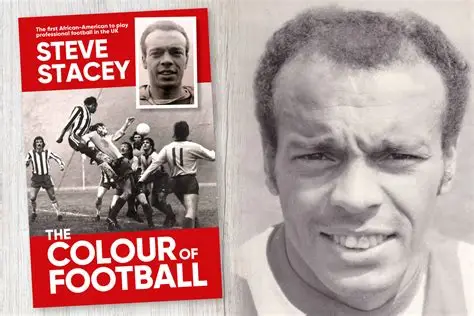
In 2019, Stacey published his autobiography, The Colour of Football.
He had spent years working on it, revisiting memories of his childhood, professional career and family history.
The book was supported by the Professional Footballers' Association, which recognised the importance of preserving the experiences of players who had helped change the game.
Stacey returned to Bristol for its publication and spoke about his experiences with younger generations.
It was an opportunity to explain a world which, thankfully, has changed considerably since his childhood.
Football today is international, multicultural and filled with outstanding black players from across the world.
Yet many of the men who helped make that possible are not household names.
Some were celebrated. Others played only briefly at the highest level.
Stacey belongs among those whose historical importance is considerably greater than their statistical record.
More than three appearances
Ipswich Town has enjoyed some extraordinary footballers over the years.
It has won the league championship, the FA Cup and the UEFA Cup. Its history includes World Cup winners, international captains and some of the most respected names in English football.
Steve Stacey's name rarely appears alongside them.
Three appearances do not ordinarily earn a footballer much space in the history books.
But there is a good argument that Stacey deserves rather more recognition than he has received.
He arrived at Portman Road in 1968, when the social landscape of Britain was changing and professional football was only beginning to reflect that change.
He made history without setting out to do so.
He endured an unhappy debut, an injury, a difficult managerial transition and a short-lived career in Suffolk.
And yet his appearance against Liverpool marked the beginning of something important in Ipswich Town's history.
There is a pleasing simplicity about the fact that the first black player to represent the club did not arrive amid great fanfare.
He was signed because Bill McGarry thought he could play football.
The same reason, one hopes, that any footballer should be signed.
For the 24,514 people at Portman Road that September afternoon, it was a disappointing 2-0 defeat.
For Steve Stacey, it was the fulfilment of a childhood ambition, even if it lasted only half an hour before his hamstring gave way.
For Ipswich Town, it was a small but significant moment in a much larger story.
And perhaps that is the proper way to remember him.
Not merely as the first black player to wear the blue shirt in a senior game, but as a remarkable man whose life stretched from the segregated American military of the 1940s, through the streets of post-war Bristol, to Portman Road, Australia and the Mississippi of his father's childhood.
Three games for Ipswich Town.
A lifetime of history.
Don't forget: If you enjoy our content, please add Ipswich.co.uk as a "preferred source" on Google so you can easily find more of the content you value.
This article cost us ~£181 to produce
It's free for you to read thanks to the generous support of our partners. Please support us by supporting them.
Below the line