
The double Olympic gold medalist who never was
He wrote some of Britain’s best-loved songs, entertained troops during the Second World War and died in Ipswich. Decades later came the extraordinary discovery that he had secretly won two Olympic gold medals – except he had not.

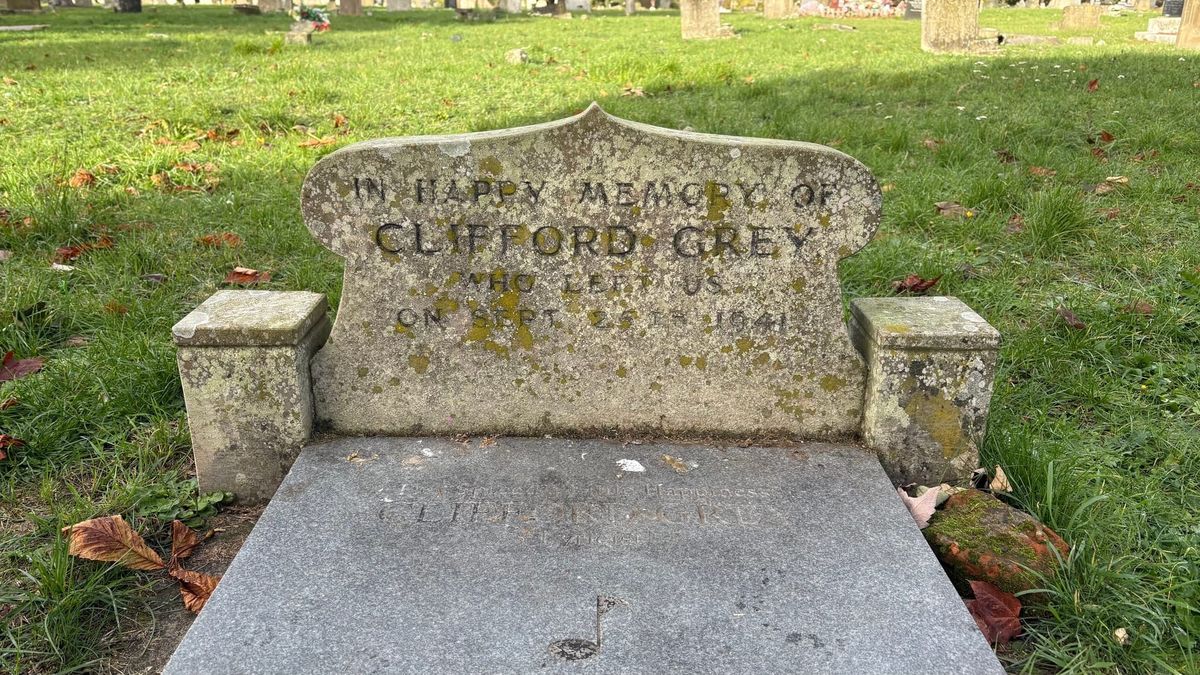
There is a grave in Ipswich Old Cemetery that tells a rather wonderful story. Unfortunately, part of it is not true.
The man buried there was one of Britain’s most successful songwriters, a favourite of the West End and Broadway, who worked with some of the biggest names in entertainment. His songs were performed by generations of singers, and one of them would become a hit for Sting more than 40 years after his death.
But according to the memorial erected in his honour, Clifford Grey was also an Olympic champion, winning gold medals for the United States at the Winter Games of 1928 and 1932.
Quite a remarkable achievement for an English songwriter who, by all accounts, was rather more comfortable at a piano than on a bobsleigh. For more than 30 years, historians, journalists and even members of his own family believed that Grey had lived an astonishing double life, travelling secretly to Switzerland and America to compete against the world’s finest winter sportsmen.
It was a splendid story. There were photographs, family recollections, newspaper reports and Olympic records to support it. There was even a proper grave marker erected in Ipswich celebrating his sporting achievements.
And then somebody discovered a newspaper interview from 1948. The whole extraordinary tale began to unravel.
From the music halls to Hollywood
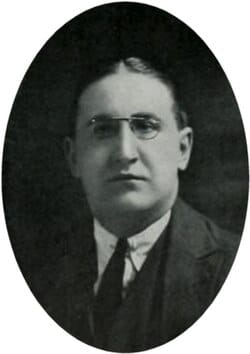
Clifford Grey was not actually born Clifford Grey, and he was not born in Ipswich either. He arrived in the world as Percival Davis in Birmingham on 5 January 1887, the son of a whip manufacturer.
His early attempts at conventional employment were unsuccessful, and he found himself drawn towards the rather less predictable world of entertainment. He joined a travelling concert party, adopted the name Clifford Grey and began performing in music halls and seaside theatres.
By 1916, he was helping to write the songs for The Bing Boys Are Here, one of the great theatrical successes of the First World War. Among the songs he helped create was If You Were the Only Girl (In the World), a romantic number that became enormously popular and would remain so for decades. He also co-wrote Another Little Drink Wouldn’t Do Us Any Harm, a title that presumably required very little explanation to audiences enjoying an evening out.
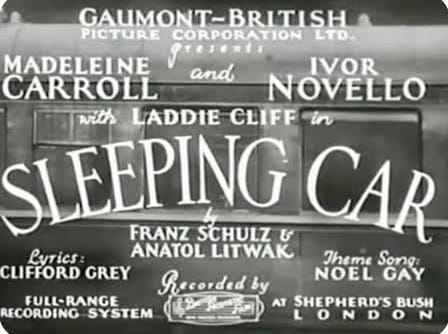
Success brought him into the company of theatrical royalty. He worked with composers and performers associated with Ivor Novello, Jerome Kern, George Gershwin and the great Broadway impresario Florenz Ziegfeld.
Hollywood followed, with Grey providing lyrics and screenplays during the early years of talking pictures.
He was prolific, talented and unusually versatile. His work appeared in musical comedies, films and revues on both sides of the Atlantic. Then, in 1929, he collaborated with composer Vivian Ellis on the musical Mr Cinders, creating Spread a Little Happiness.
More than half a century later, Sting recorded it for the film Brimstone & Treacle, taking the song into the British Top 20 in 1982. Even people who have never heard of Clifford Grey may well know his music.
The secret Olympic champion
Now for the really peculiar part.
In 1928, at the Winter Olympics in St Moritz, Switzerland, an American bobsleigh team led by a remarkably young Billy Fiske won the gold medal. One of the five men in the sled was a fellow called Clifford Gray, nicknamed “Tippy”.
Four years later, at Lake Placid in New York State, he won another gold medal, this time in a four-man bobsleigh. Two Winter Olympics. Two gold medals.
When an American journalist, Tim Clark, began investigating the story in the late 1970s, he noticed something curious. The Olympic champion had been involved in show business and songwriting. His name was almost identical to that of a famous British lyricist. Could they possibly be the same man?
Clark contacted the American Society of Composers, Authors and Publishers, which helped pass an enquiry to one of the British songwriter’s daughters.
She was intrigued. Her father had travelled extensively, mixing with entertainers and wealthy Americans. He had spent time in Switzerland, and the man in an old photograph of the Olympic team looked remarkably like him.
Another daughter recalled being visited by her father in Switzerland around the time of the 1928 Games. She even remembered an enthusiasm for bobsleigh.
Suddenly the theory seemed entirely plausible. Perhaps Grey had adopted an American identity to compete. Perhaps he had simply been too modest to tell anyone.
The story appeared in Yankee Magazine in 1979 and gathered momentum. Historians picked it up, biographical accounts repeated it and the idea of a British songwriter secretly winning Olympic gold became accepted as fact.
What a marvellous fellow Clifford Grey must have been! While his contemporaries were writing songs and sipping cocktails, he had apparently been hurtling down frozen Alpine tracks in a metal sled.
There was one rather substantial flaw. Nobody could prove that the two men were the same person.
Ipswich gives its Olympic champion a proper memorial
Back in Ipswich, Grey’s grave had attracted little attention for decades.
Then, in 1997, local historian David Routh discovered his story while browsing a second-hand book about musical theatre. Routh enlisted the help of his friend Norman Carter, a singer familiar with Grey’s music, and the two men began researching the songwriter.
Their discoveries helped bring his achievements back to public attention. There were radio programmes, newspaper stories and considerable excitement about Ipswich’s extraordinary connection with Olympic history.
Eventually, Grey’s descendants became involved, and plans were made to give the songwriter a more fitting memorial.
In 2005, a ceremony took place in Ipswich Old Cemetery. The mayor and mayoress attended, members of Grey’s family were present, and a swing band performed some of his best-loved music.
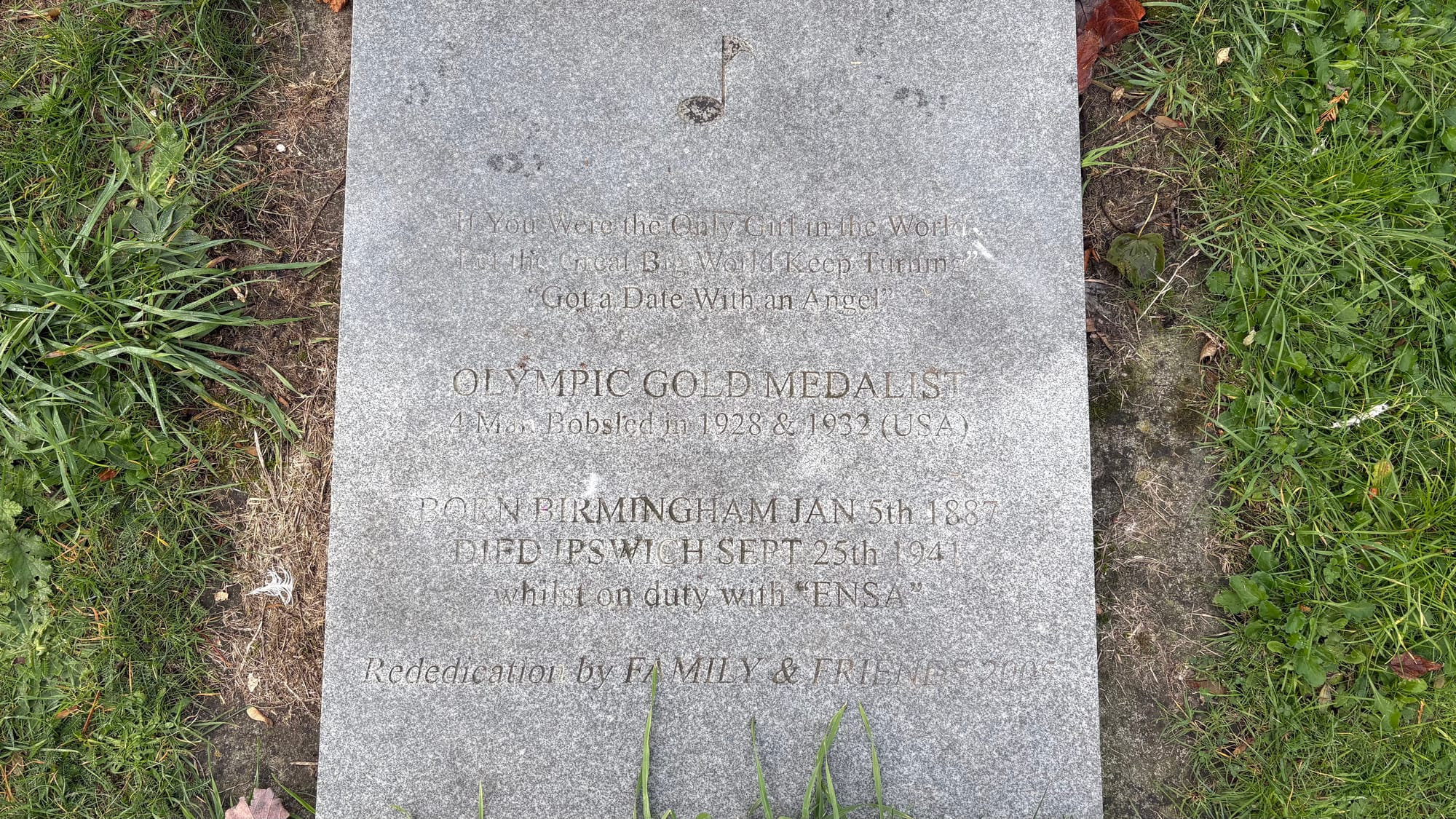
A new stone was placed alongside his original grave marker. It celebrated his songwriting achievements and proudly described him as an Olympic gold medallist, recording victories in 1928 and 1932 for the United States.
It must have been a lovely occasion, and a thoroughly deserved tribute to an exceptionally talented man. Except for those two gold medals.
The newspaper cutting that ruined everything
The truth finally emerged through the research of sports journalist Andy Bull, who was writing a book about the American bobsleigh champions.
Bull was fascinated by the story, but increasingly troubled by inconsistencies. The two men had different recorded birth dates. There were discrepancies in their backgrounds, and the American athlete was associated with Cornell University, something that did not fit comfortably with the Birmingham-born entertainer’s life.
Supporters of the secret identity theory had explanations for everything. The Olympic champion, they argued, had simply invented an American past.
Bull kept searching.
Then he found something remarkable in the Sarasota Herald-Tribune, dated 9 March 1948. It was an interview with Clifford “Tippy” Gray, the American Olympic champion, talking about his life and career.
There he was, alive and well, seven years after Clifford Grey, the British songwriter, had died in Ipswich. That settled the matter. There had been two Cliffords all along.
In fact, the American was almost as interesting as his English namesake. He had worked in entertainment, appeared in films and written music in Paris, including material for the Moulin Rouge. He moved in glamorous, sometimes scandalous circles, and had an eventful career quite independently of his achievements in sport.
He really had won those two gold medals. The Olympic records were correct. They had simply been attributed to the wrong Clifford by people investigating the British songwriter.
In 2015, Bull published the results of his investigation in The Guardian, alongside his book Speed Kings.
One of Grey’s grandchildren admitted she had loved the original story because it was so much more romantic to believe her grandfather had been an Olympic champion. And you can understand why.
There is something irresistible about the idea of a mild-mannered English lyricist leading a secret life as an international sporting superstar. It is the sort of plot that might have made a rather good musical comedy.
His final performance
Yet Clifford Grey hardly needed an invented sporting career to make his life extraordinary.
When the Second World War arrived, the successful songwriter joined the Entertainments National Service Association (ENSA), the organisation responsible for providing entertainment to servicemen and women. He was still doing what he had always done best: bringing a little happiness to an audience.
In September 1941, he was presenting a concert party in Ipswich when the town came under German aerial bombardment. Grey, who suffered from asthma, was badly affected by the experience. Accounts describe him suffering a fatal heart attack in the aftermath of the bombing.
He died on 25 September 1941, aged just 54.
His career had taken him from Birmingham music halls to London theatres, Broadway and Hollywood. But it was in Ipswich that his remarkable life came to an end, and where he was laid to rest.
A little piece of Hollywood in Cemetery Lane
And that brings us back to his grave in Ipswich Old Cemetery.
The memorial remains a particularly curious monument to the peculiar ways in which history is sometimes written. It honours a genuinely important figure in British entertainment, whose work helped define an era of popular music and musical theatre. But it also celebrates two Olympic victories that belonged to somebody else.
There is an added irony. The newer inscription credits Grey with victories in four-man bobsleigh in both 1928 and 1932, although the 1928 event actually involved five competitors in each sled. So even the incorrect sporting achievement is not recorded quite correctly.
And there is one final, delicious twist to this wonderfully tangled story. When the actual double Olympic champion Clifford Gray died in California, the brief notice published in the local newspaper reportedly credited him with writing If You Were the Only Girl (In the World).
That was the British Clifford’s song. Even in death, the two men could not quite escape one another.
The bottom line
It would be easy to dismiss the whole business as an embarrassing historical mistake. But somehow that seems rather unkind.
Those who arranged the memorial acted with the best of intentions, and the surviving family genuinely believed the story. More importantly, Grey was a man whose real achievements were worth commemorating. The songs remain. The films remain. And an enormous amount of happiness was spread through his music. Perhaps that is a better legacy than any pair of Olympic medals.
The next time you find yourself walking through Ipswich Old Cemetery, keep an eye out for Clifford Grey. He was never an Olympic champion, but he certainly deserves his place in the history books.
And somewhere in Ipswich, beneath a gravestone that still claims two Olympic gold medals, you suspect the real Clifford Grey would have appreciated the joke.
Don't forget: If you enjoy our content, please add Ipswich.co.uk as a "preferred source" on Google so you can easily find more of the content you value.
This article cost us ~£81 to produce
It's free for you to read thanks to the generous support of our partners. Please support us by supporting them.
Below the line