
Suffolk's 'pothole crisis,' and Reform's 'war' to fix it
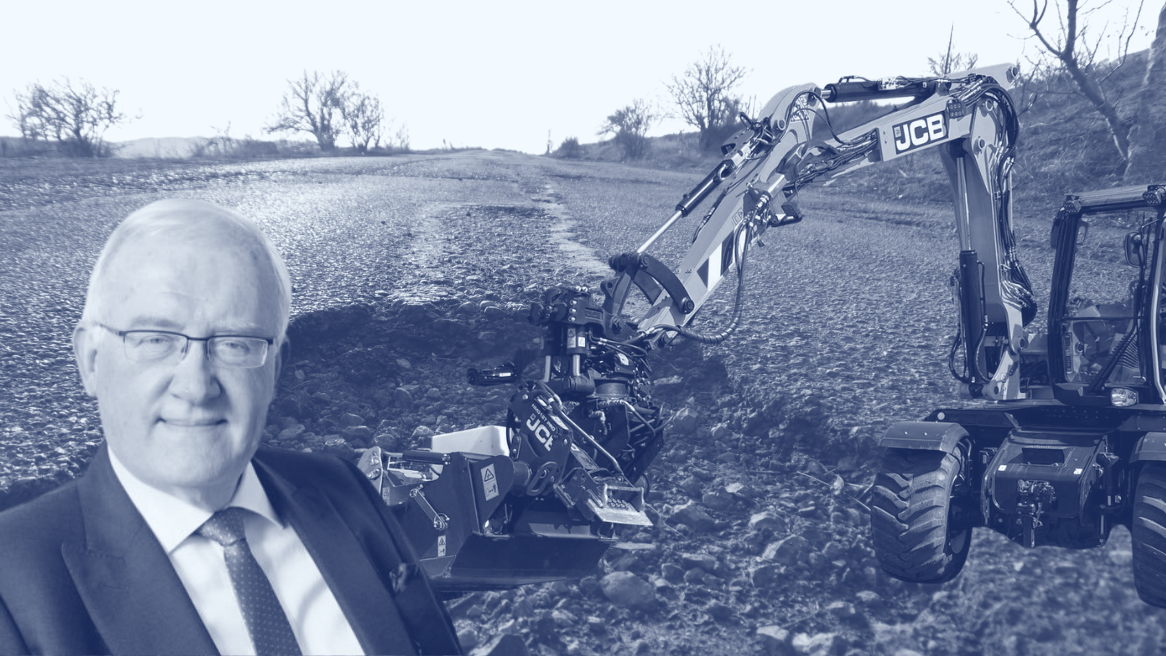
Potholes are reported to cost UK drivers an estimated £1.48bn a year and have been linked to thousands of road casualties. Suffolk County Council believes a new piece of machinery and a wider change in how it works could help turn the tide on its own backlog.

A problem felt on every street
Potholes are, for many, simply an irritant. For others, they are dangerous. Figures from the AA show call-outs to pothole-related breakdowns reached near-record levels in 2023, with more than 450,000 incidents involving damage such as broken suspension springs, distorted wheels and damaged shock absorbers.
The safety picture is more serious still. Department for Transport statistics record 7,847 casualties between 2021 and 2022 where the primary cause was a poor or defective road surface, including 452 cyclists and 725 motorists killed or seriously injured.
Potholes form through a combination of three factors: cracks in ageing asphalt, water that seeps into those cracks and expands when it freezes, and the weight of passing traffic that breaks up the weakened surface. The UK's high traffic volumes, dense buried utilities and frequent freeze-thaw cycles over winter make the problem worse here than in many other European countries.
In Suffolk, the scale of the task is considerable. Suffolk Highways currently has around 370 repair orders awaiting completion across the county, a figure the council says is constantly changing as new defects are identified through routine inspections and reports from road users. At this time of year, the council typically repairs around 1,000 road defects each month, with that number often more than doubling during winter as colder, wetter weather takes its toll on the network.
The machine at the centre of the trial
Suffolk County Council has begun trialling the JCB Pothole Pro, a specialist machine on a free two-day loan from the manufacturer, as part of what it describes as a new approach to delivering public services.
The Pothole Pro is a modified wheeled excavator fitted with three dedicated attachments that cut, crop and clean a defect in preparation for permanent filling. A planer first removes the damaged surface to a set depth, a hydraulic cropper squares off the edges around the defect and ironwork, and an integrated sweeper clears away debris. JCB says a typical pothole can be prepared in around eight minutes, after which a conventional patching crew completes the repair using hot asphalt.
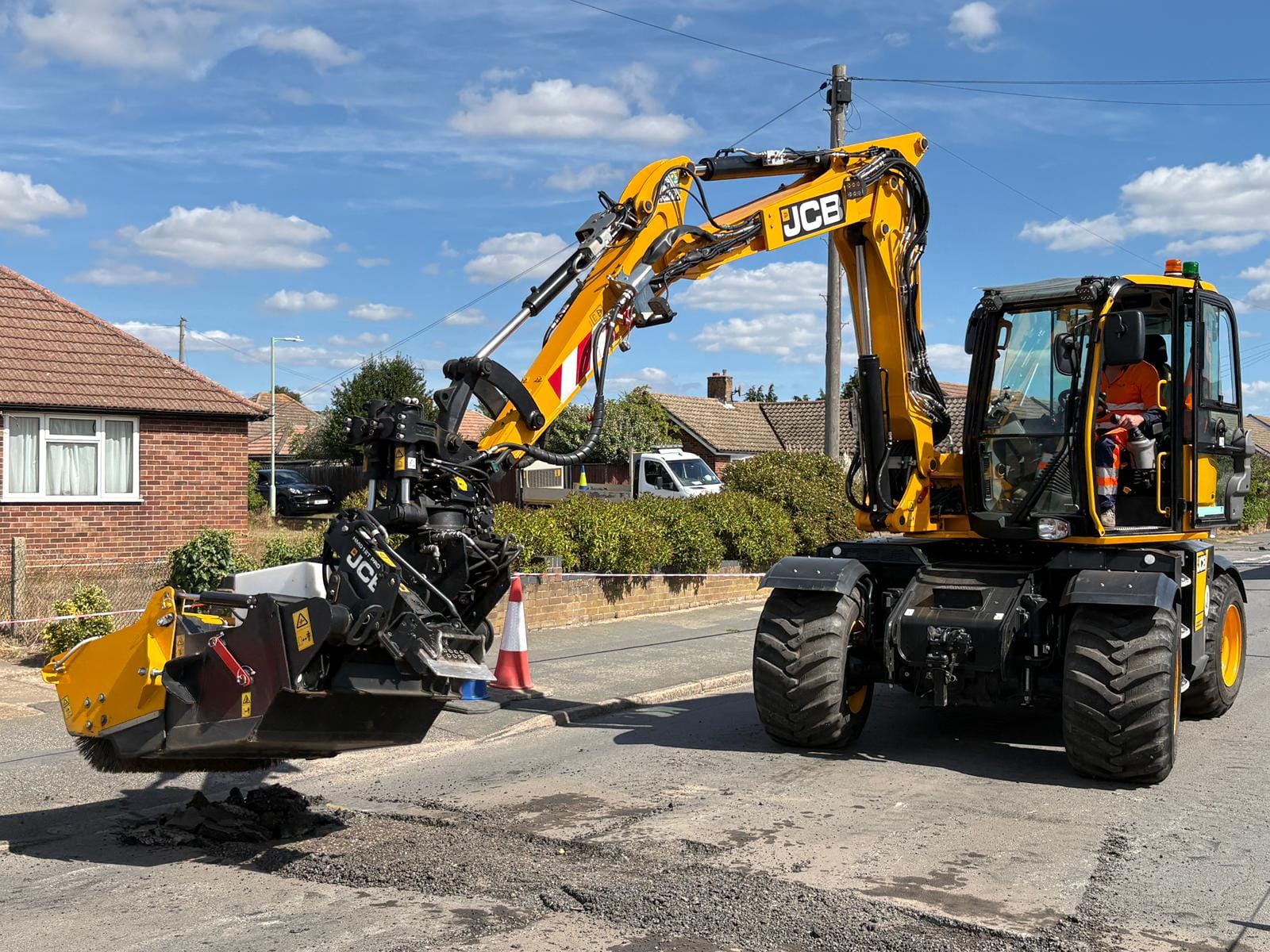
Suffolk Highways is running the JCB machine alongside its existing repair methods to allow a direct, like-for-like comparison. Both approaches will address approximately 90 square metres of carriageway defects, covering a similar number of potholes, allowing the council to assess excavation performance, productivity and operational efficiency. Trial locations were identified using RoadAI, a system that analyses highway imagery to flag defects before they worsen, alongside reports from residents.
JCB points to results elsewhere in support of the technology. Stoke-on-Trent Council, which helped develop the machine, reported a 750% increase in output and a 97% reduction in potholes requiring a return visit within six months, compared with traditional repair methods. These figures come from the manufacturer and Stoke-on-Trent's own reporting; Suffolk's trial is intended to test whether similar results can be achieved locally.
Councillor Christopher Hudson, the council's cabinet member for transport and highways, said: "I am very excited at the prospect of trialling Pothole Pro and seeing if it can help us here in Suffolk in the fight against potholes. If it performs here as it has elsewhere, it can help us get ahead of defects and deliver improved road surfaces for residents across the county. This trial is an opportunity to assess the effectiveness of the technology in Suffolk and determine where, if anywhere, it can help us improve the way we manage road defects."
The council said it will publish the results of the trial in due course. Asked whether it was considering leasing or purchasing a fleet of Pothole Pro machines to expand repairs across the county, the council said it was too early to discuss any wider strategy, as no decisions had been made ahead of the trial concluding.
JCB and its chairman, Lord Bamford, donated £200,000 to Reform UK in November 2025. Announced in November 2025, the £200,000 contribution marked a notable shift for Lord Bamford, a major billionaire donor who has historically given over £10 million to the Conservative Party.
Not the first machine Suffolk has tried
The Pothole Pro is not the first piece of specialist equipment Suffolk Highways has tested in recent years. In February 2024, the council trialled the Dragon Patcher, a single-operator truck that uses compressed air to clean a defect before injecting a heated bitumen and aggregate mix to seal it, initially targeting rural roads.
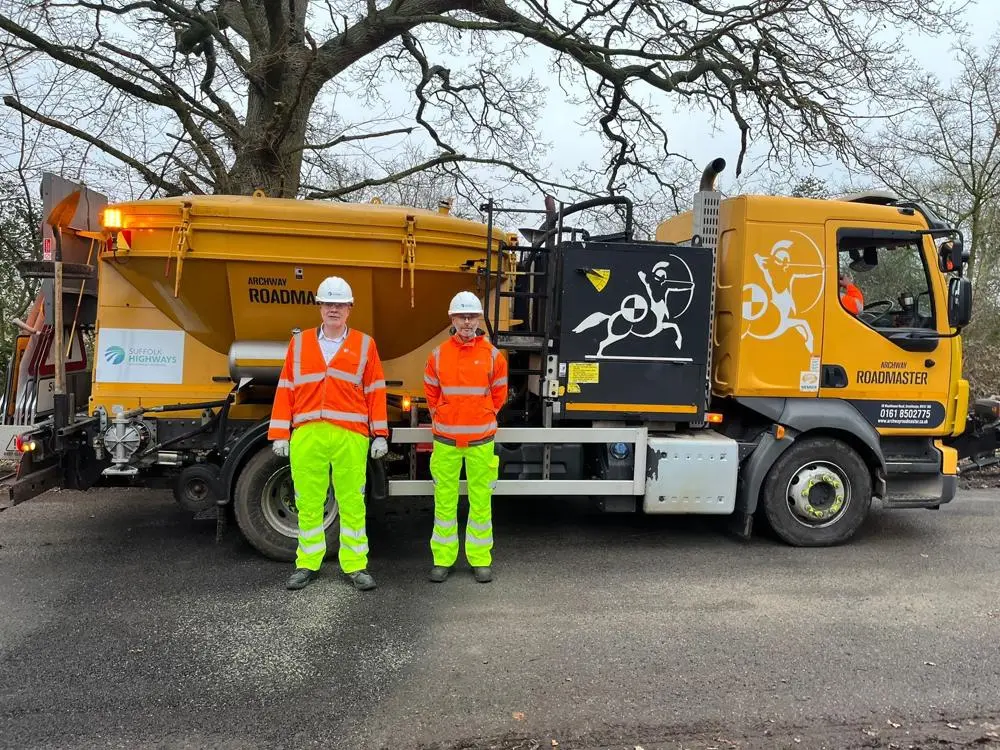
At the time, Councillor Paul West, then cabinet member for Ipswich, operational highways and flooding, said the machine could work five times faster than traditional repair methods and pointed to its use of HVO biodiesel and reduced material waste as environmental benefits. The council reported repairing 2,851 potholes across the county in the two months before that trial began, alongside separate figures showing more than 15,000 potholes repaired and over 141 miles of road resurfaced in the preceding financial year.
Suffolk County Council announced that they invested an additional £1.23 million specifically to acquire new Dragon Patchers following the initial trial period.
The two machines take different approaches. The Dragon Patcher offers a rapid, self-contained "clean and shoot" repair suited to higher volumes of rural defects, while the Pothole Pro carries out a more involved "cut and carve" process aimed at permanent, structural repairs on urban and suburban roads, though it still requires a following crew to lay the final asphalt.
Part of a wider plan
The pothole trial has arrived alongside a new strategic statement published by Suffolk County Council, setting out the priorities of the administration led by Cllr Michael Hadwen. Fixing Suffolk's roads is listed as one of eight priority actions, sitting alongside commitments to rebuild public trust, prioritise frontline services and manage council spending more tightly.
The statement commits the council to waging "war on the pothole crisis", pushing for long-term solutions to A14 resilience and congestion in Ipswich, and campaigning for government investment in the A12, A14 and A11, alongside rail infrastructure upgrades at the Ely and Haughley junctions.
Cllr Hadwen said: "Today is about two things – new ways of waging war on potholes and our fresh new approach to running the county council. Residents have been very clear that they are not happy with the way the council has been led in the past. My administration agrees, which is why we are here to break that mould. Fresh thinking, plain speaking and getting on with the job is how we are running this council and is what residents can expect from us. The Pothole Pro is one example of the kind of innovation we are keen to explore in Suffolk, and I look forward to seeing how it performs in practice, alongside a range of other improvements we are making to deliver better outcomes for residents, who must come first."
The bottom line
Suffolk's pothole backlog will not be resolved by a single two-day trial, and the council itself has stopped short of committing to any wider rollout until the results are in. But with hundreds of repair orders outstanding and winter set to add pressure to the network, residents will be watching to see whether this latest piece of kit, and the strategy it sits within, delivers on the Reform administration's first meaningful action since winning its majority control of the council in May.
Don't forget: If you enjoy our content, please add Ipswich.co.uk as a "preferred source" on Google so you can easily find more of the content you value.
This article cost us ~£149 to produce
It's free for you to read thanks to the generous support of our partners. Please support us by supporting them.
Below the line