
Suffolk's first women's health support hub to open in Ipswich
This month, Women's Health Hope — the Ipswich charity founded by Monica Thomas — announces the launch of Suffolk's first Women's Health Support Hub. A milestone that follows years of campaigning and one woman's determination to turn her own health journey into something that helps others.

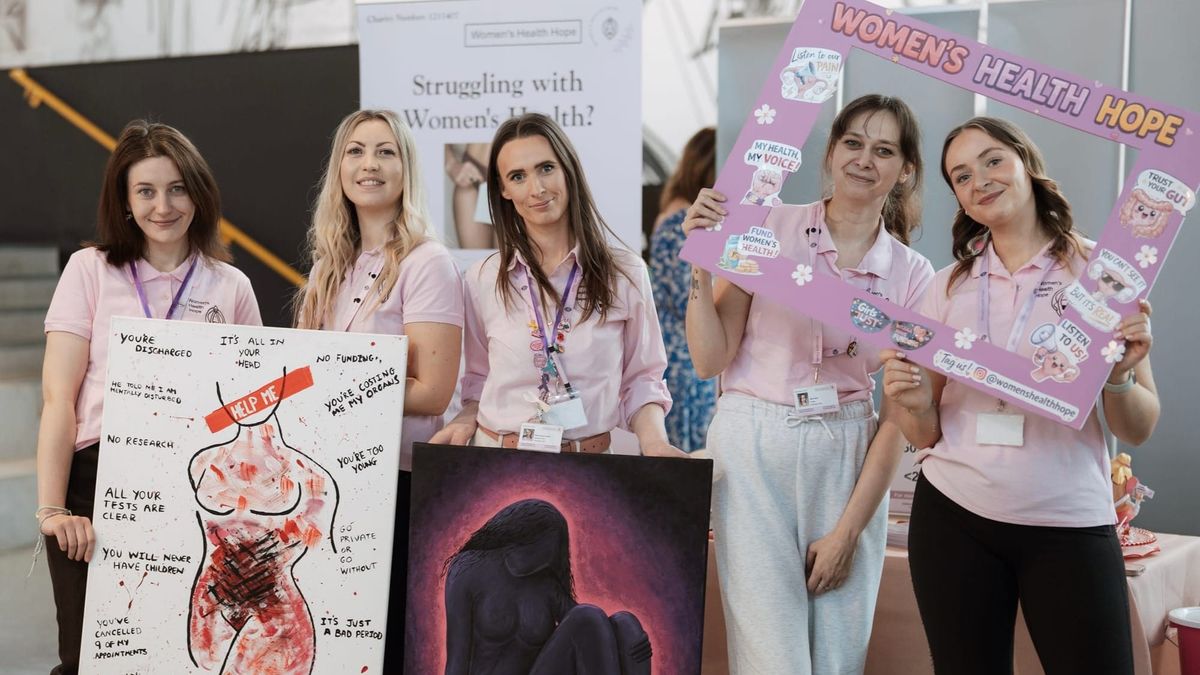
The hub will open at the Unity Centre and Whitton Centre on Meredith Road, Ipswich, with a community opening on Saturday, 1 August, welcoming women and girls from across the county to explore the new space and meet the team.
For years, campaigners have warned that Suffolk was being left behind as women's health hubs opened elsewhere in England, never quite reaching our county. Rather than wait for the system to catch up, Monica built one herself.
A gap ought to be closed
The Department of Health and Social Care's renewed Women's Health Strategy for England, published in April 2026, set out plans to bring women's health care closer to communities across the country. The strategy says that where high-quality women's health hubs already exist, they will continue to lead local services — while in other areas, women's health care will be folded into broader "neighbourhood health centres" rather than standalone hubs.
Suffolk, meanwhile, has had neither a dedicated hub nor an endometriosis specialist, with complex cases referred out of the county to Colchester.
For Monica, this is a gap that holds importance, and one she feels passionately. "For some time, we have been campaigning to ensure women in Suffolk are not left behind," she said. "While progress is being made in some areas nationally, women and girls in Suffolk do not have access to a dedicated women's health hub."
She is careful about what the new hub is — and what it is not. "The Women's Health Support Hub is not a clinical service, but a community-based initiative focused on support, education, awareness, wellbeing and signposting," she said. There will be no scans or specialists on site. Instead, help will be provided through peer support, educational sessions, signposting, wellbeing activities and, above all, company.
"For many women, the hub may be the first time they have met others who truly understand what they are going through," Monica said. "No woman should have to navigate her health journey alone."
From one support group to a county-first
The hub is the latest step in a journey that began with a single support group.
She had gone to her local hospital with a simple proposition. "We don't really have much for women in Suffolk," she recalled telling staff. "I would like to start a support group." They agreed, and after a few meetings she launched it.
It was because of the proposition that everything else grew. "Through that support group, I met the team I now have," she said, and turning it into a charity had always been the plan.
The pace was brisk. Women's Health Hope launched in July 2024 and secured charity status that December. "We actually did it quite quick, to be honest," Monica said. "We worked really, really hard on that, and just ensuring that everything was done in the right way, because it's really important. You are working for the beneficiaries, the ladies that you're supporting."
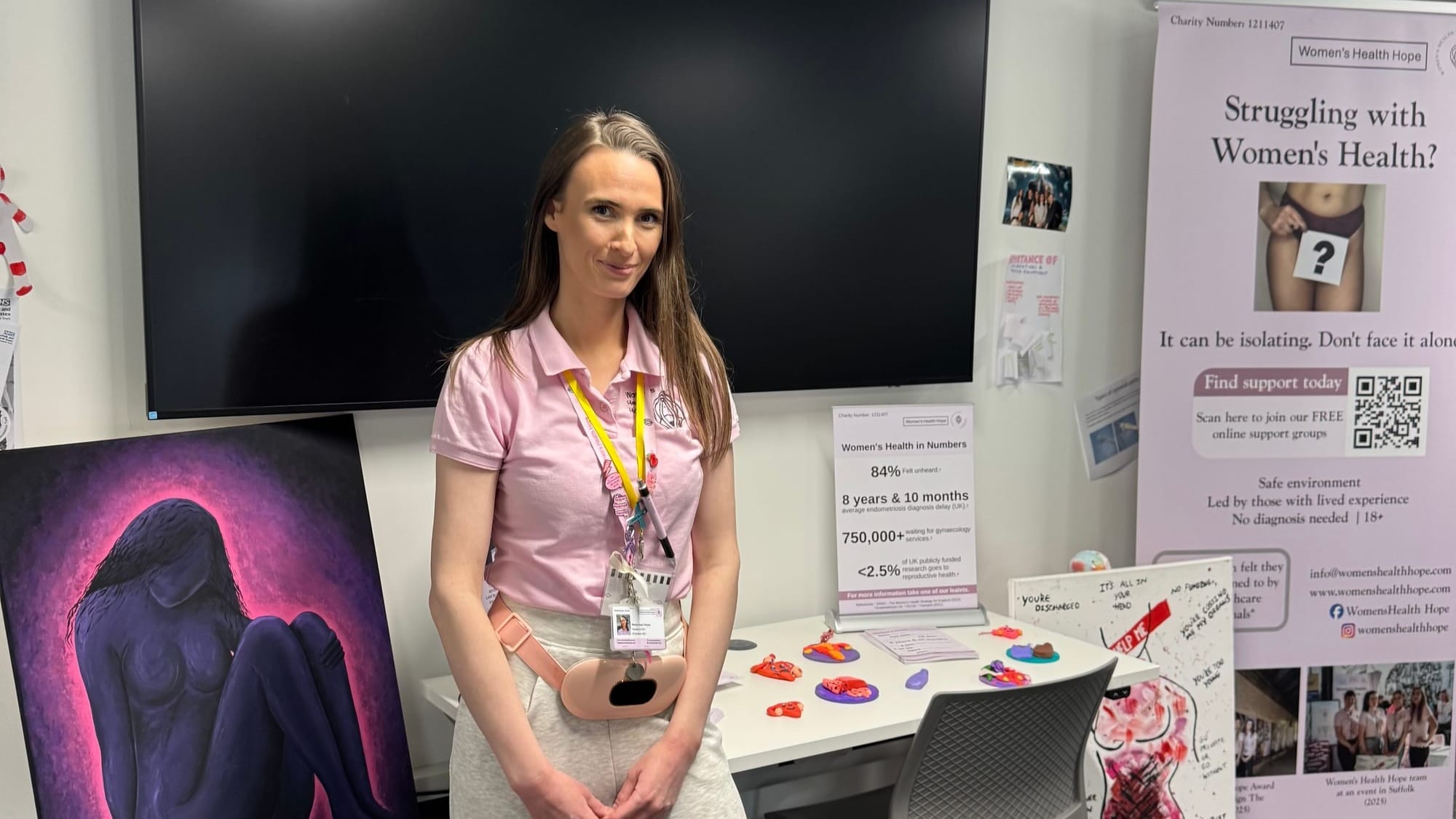
The charity has since grown well beyond those early meetings. Alongside support groups, it now runs educational programmes in colleges and universities, work placements in businesses, and lived-experience training in medical settings — all delivered by a team of volunteers.
That growth has not come without its own challenges, and Monica is candid that the hardest one was internal. "Confidence in myself is a massive thing," she said. "For me, it was just believing that I was going to be good enough for it." The members helped change that. "Many of our members have been our members from day one still to now. I think that goes to show how good it is."
The company matters
Ask Monica what peer support actually does for a woman, and the answer comes quickly. "First and foremost, it's the mental health," she said.
"So many women that we've connected with feel incredibly isolated with this. Building friendships and community is such a vital part of anyone's life. As adults, it's really hard to make friends, and to make friends who you have some form of connection with is really difficult."
The groups, she said, give women the confidence to go back and keep pushing for answers. "Some of the women who are under us, the feedback we've had is they wouldn't even have a diagnosis if it wasn't for the support groups," she said. "We encourage it. We go for a second opinion, a third opinion. We'll tell them, keep going back — and they do."
"Believe women the first time"
Underpinning all of it is a question Monica returns to again and again: why are women so often not believed?
"We can go right back in history," she said. "Women are always seen as hysterical and dramatic, and it is still in our society now. If a woman gets upset, she's often labelled as dramatic or emotional. And it's very much still in our medical field."
She speaks from experience. Over years of seeking answers, she was told her symptoms were anxiety, stress, even imaginary. "That's actually what I was told for a long, long time," she said. "One doctor even wrote on my medical records that I was mentally disturbed because I'd had a difficult childhood, and that was then blamed for my physical symptoms."
It is this, she argues, that does the lasting damage — not only delaying diagnoses but contributing to wrong ones. "What really contributes to it is not believing women and not listening to them the first time," she said. "It not only delays diagnosis, but it contributes to misdiagnosis."
The remedy, she believes, starts early. "School," she said, when asked where change begins. "Normalising talking about periods — and that's boys and girls." She is emphatic that the message must reach everyone. "Boys, they've got mums. They might have sisters. They might go on to have a wife, they might have daughters." She has carried that same message into workplaces, including male-dominated ones, where she has learned not to expect resistance. "You get a lot of comments, you get a lot of laughs at the beginning. And then normally, 20 minutes in, you've captured them, and they're like, oh, this is serious."
The journey behind the hope
The charity's name is no accident. "My middle name is Hope," Monica explained. "My official name is Monica Hope Thomas. When I was setting this up, I wanted to give back some form of hope — that things will get better."
She is open that the charity grew out of the hardest period of her own life. "We wouldn't have the charity if it wasn't for my darkest days," she said. By her own account she had reached a very low point, and the work became part of what carried her forward. "The charity actually gave me hope to be able to stick around," she said. "I was like, I've got to do something with this really rubbish experience. I have to make good of it in some way."
That sense of purpose has since taken her further than she ever imagined. "Way back when I started, I never thought that I would then end up on Good Morning Britain and in Westminster doing the things I am now," she said. In March, she travelled to Parliament alongside fellow Ipswich campaigners as MPs debated the case for specialist endometriosis services locally — part of a campaign in which Ipswich MP Jack Abbott has been a consistent ally to the charity.
Abbott welcomed the new hub, while acknowledging the work still to do locally. "I'm delighted by the launch of Suffolk's first Women's Health Support Hub, a welcome step forward in improving women-centred, joined-up healthcare," he said. "I want to pay tribute to Monica Thomas, who has been the driving force behind this initiative."
"Too many women in Suffolk continue to face long waits for diagnosis and treatment, particularly for conditions such as endometriosis, fibroids and other gynaecological conditions," he continued. "I have supported action on endometriosis, including leading a debate on the issue in Parliament, calling for faster diagnosis, reduced referral delays, better training for clinicians, and stronger specialist women's health services so symptoms are taken seriously earlier."
He added: "Our Government is determined to turn ambition into delivery through the Women's Health Strategy, but I know we have much to do locally. No woman should be left in pain or dismissed while waiting for treatment, and I will keep working with NHS leaders, campaigners and colleagues to deliver better care for women across Ipswich and Suffolk."
The bottom line
Suffolk still has no NHS women's health hub and no endometriosis specialist, and a community-led space — however welcome — does not change those facts on its own. What it does change is that, from this summer, women in Ipswich who feel unheard, isolated or dismissed will have somewhere to go and someone to talk to. Monica Thomas spent years waiting for a system to listen. Rather than keep waiting, she built the room herself — and put the word "hope" above the door.
The community opening takes place on Saturday, 1 August, from 10:30–12:30 at the Unity Centre and Whitton Centre, Meredith Road, Ipswich, IP1 6ED. To find out more about Women's Health Hope, visit womenshealthhope.com.
If anything in this article resonates with you and you are struggling, you do not have to face it alone. You can call Samaritans free, at any time, on 116 123.
Don't forget: If you enjoy our content, please add Ipswich.co.uk as a "preferred source" on Google so you can easily find more of the content you value.
This article cost us ~£87 to produce
It's free for you to read thanks to the generous support of our two community impact partners: local contractor Barnes Construction, and flat roof waterproofing and design firm Axter. Please support us by supporting them.
Below the line