
Suffolk's adult social care rated 'Good' again, but watchdog flags waiting lists
Suffolk County Council's adult social care service has retained its "Good" rating from the Care Quality Commission, with inspectors praising compassionate staff and strong partnership working, while highlighting waiting lists for assessments, reviews and care equipment as areas for improvement.

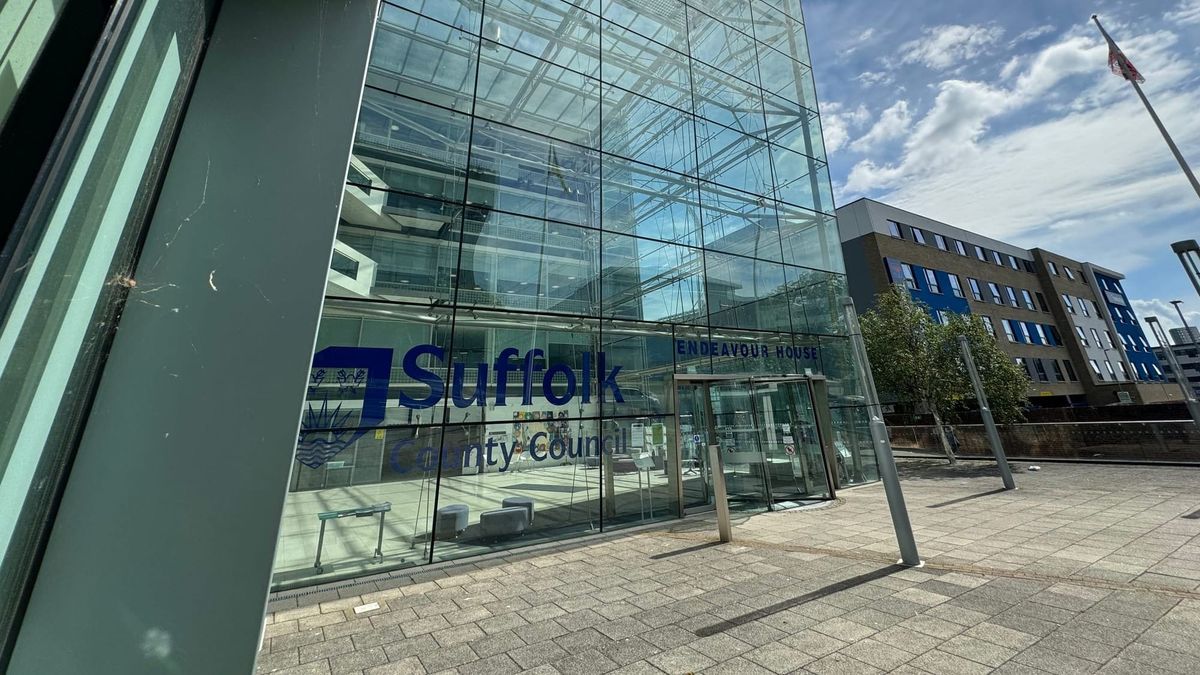
The assessment, published on Wednesday, 1 July, marks the second time Suffolk's adult social care has been rated "Good" by the regulator, following an earlier pilot assessment in November 2023. The council said there were "no surprises" in the findings, having submitted its own self-assessment to the CQC in September last year.
What inspectors found
The CQC assesses how councils meet their duties under the Care Act (2014), looking at how local authorities work with people, provide support, ensure safety, and demonstrate leadership. Suffolk's report scored the local authority "Good" overall, with quality statements rated either two ("evidence shows some shortfalls") or three ("evidence shows a good standard") out of four.
Inspectors praised "committed and compassionate staff", strength-based and personalised assessments, and the council's "signs of safety" approach, which is fully embedded in day-to-day practice and was highlighted as relatively unique among local authorities. The report also noted close working between adult social care and public health, and "good multi-agency working to keep people safe", referring to Suffolk's safeguarding arrangements, including its multi-agency safeguarding hub.
The council said the report recognised "commitment and just how compassionate our staff are", adding that strength-based and personalised practice "was highlighted as a real strength for us in Suffolk". The council also pointed to its integrated neighbourhood teams, described in the report as a "national exemplar", as a particular area of strength, along with the council's safeguarding hub, which they said was "one of the first nationally to have an adult MASH". A MASH is a Multi-Agency Safeguarding Hub, which is the central point of contact in adult social care where professionals from various organisations—such as social services, the NHS, police, and housing—work together to protect vulnerable adults at risk of abuse, neglect, or harm.
Cllr Philip Faircloth-Mutton, Deputy Leader and Cabinet Member for Adult Care, said: "I am really pleased that Suffolk has again been rated as Good. This reflects the strength of our adult social care service and the ongoing dedication and professionalism of the fantastic staff we have; I want to thank them all for their hard work."
Where the report identifies shortfalls
Despite the overall rating, the CQC scored two of the four themes covered by the assessment as showing "some shortfalls": how the local authority works with people, and equity in experience and outcomes. Both areas had also been scored at the lower end during the 2023 pilot assessment, suggesting there remains room for improvement.
The report sets out detailed waiting times across several services.
- At the time of the assessment, 113 people were waiting for a Care Act assessment, with a median wait of 12 days and a maximum of 64 days, against an internal target of 28 days.
- For care reviews, the picture was more strained: 2,290 people were waiting for a review, around 30% of those in receipt of long-term support for more than 12 months, with a median wait of 104 days and a longest wait of 399 days.
- The council said 70% of people received an annual review in 2025, against a local target of 80%, though it noted the median wait time was continuing to fall.
- Occupational therapy assessments also showed waits, with 454 people waiting as of 2 December 2025, a median of 34 days and a maximum of 140 days.
The report linked this in part to staffing vacancies and absence among occupational therapists, which it said had affected timeliness. Asked about this at a media briefing on the report, council officers said this reflected a sector-wide recruitment challenge affecting occupational therapy services more broadly, rather than a problem unique to Suffolk. Officers said Suffolk benchmarked well against neighbouring authorities, where waits for similar assessments could run into a year or more.
Officers also pointed to a separate, structural issue behind some of the OT-related delays: in Suffolk's two-tier system, the council carries out occupational therapy assessments for home adaptations, but the relevant district or borough council must then complete its own financial assessment before a Disabled Facilities Grant can be approved. "We do the assessments...and then we have to ask the district or the council to do the financial assessment," they explained, adding that having all of this under one roof "would be more efficient", though the council said it was working with district and borough partners to improve the pathway within the current system.
Applications for Deprivation of Liberty Safeguards (DoLS), which authorise the lawful restriction of a person's liberty when they lack the mental capacity to consent to their care arrangements, saw a far longer median wait of 302 days, down from 351 days in October 2025, though the maximum wait stood at 2,302 days. The council said it was working with an external agency to address the backlog, with up to 100 cases allocated externally each month, while a recent legal ruling was expected to reduce the volume of new applications over time as the eligibility threshold changes.
Unpaid carers and digital inclusion
The report also examined support for Suffolk's unpaid carers, of whom the council estimates there are more than 65,000 across the county. National data cited in the assessment showed 53.19% of carers experienced financial difficulties because of caring, worse than the England average of 46.55%, while only 23.82% felt they had encouragement and support, also below the national figure of 32.44%.
A council spokesperson described unpaid caring as "often an invisible role" but "a vital role", pointing to the council's partnership with Suffolk Family Carers and a self-assessment model introduced in November 2023 that has been used by around 70% of unpaid carers since launch. The spokesperson said there was "always more to do" to reduce the burden on carers, including further digital support.
Digital inclusion featured prominently in the report and the briefing that followed it. More than 6,000 people in Suffolk now have access to "Cassius", an assistive technology, ranging from fall detection to remote monitoring, which the council said had, in many cases, helped people avoid moving into residential care. The council confirmed it is also trialling artificial intelligence in the form of ambient-listening technology, which records and transcribes conversations during assessments to help structure reports, freeing up practitioner time. The council stressed that decisions and analysis remain with qualified social workers and occupational therapists.
The CQC report, however, flagged digital exclusion as an ongoing risk, particularly for older people and those who do not speak English as a first language. The council said it was addressing this through free SIM card schemes, library-based digital support, and a "rural coffee caravan" offering face-to-face contact in areas with poor digital access.
The LGR backdrop
The CQC assessment lands amid wider upheaval for Suffolk County Council, which has launched a judicial review against the government's plans for local government reorganisation (LGR) in the county. Cllr Faircloth-Mutton warned against "breaking up established, high-performing services into new and unproven council structures", arguing that maintaining stability was "key to continuing to deliver good outcomes for the people of Suffolk", but this seemed to be contradicted by officers who raised the existing two-tier structure as a challenge.
Asked directly whether adult social care could move from "Good" to "Outstanding" under a single unitary authority, as opposed to the existing two-tier structure and the government's chosen three-council one-tier structure, Cllr Faircloth-Mutton said he had researched the question nationally but would be guided by his officers and cabinet colleagues "if a one unitary solution is ever offered", adding: "At this point in time, it certainly isn't."
"If you disaggregate it into having three authorities... you will jeopardise what we do" in adult social care, he said, adding that the judicial review challenged the government's process for arriving at its decision, not the underlying choice between one, two or three authorities.
Suffolk County Council leader Michael Hadwen has been clear that the council's objection is to local government reorganisation itself, not to the specific choice between one or three new authorities.
"There is no offer from His Majesty's government to have one unitary on the table," Cllr Faircloth-Mutton said, adding that the council was "operating in the realms of what we know the possibilities to be" under the existing two-tier system.
We pushed back on this framing, pointing out that many of the specific challenges raised in the CQC report, such as the disjointed handover between the council and district and borough councils on home adaptation funding, appeared to support the case for a single unitary authority rather than the status quo. Cllr Faircloth-Mutton maintained that adult social care was already performing well under the current arrangement and that fragmenting it into three new authorities risked undermining that progress. The council said it was continuing to prepare for the possibility of a three-way split going ahead, while pursuing the judicial review.
The bottom line
Suffolk's adult social care service remains "Good" for the second consecutive assessment, with inspectors again praising the compassion and skill of its workforce. With a battle over local government reorganisation now expected to work its way through the courts, the council's new Reform UK administration must retain the rating it has inherited from the previous Conservative administration, while finding the money and the workforce to push for further improvements.
Don't forget: If you enjoy our content, please add Ipswich.co.uk as a "preferred source" on Google so you can easily find more of the content you value.
This article cost us ~£149 to produce
It's free for you to read thanks to the generous support of our partners. Please support us by supporting them.
Below the line