
Suffolk and Norfolk strike eight-point devolution deal
Suffolk and Norfolk County Council leaders have agreed on an eight-point deal to put to the Government for an East Anglia Mayoral Strategic Authority, with Suffolk's cabinet voting on Tuesday, 10 November, on whether to back it.


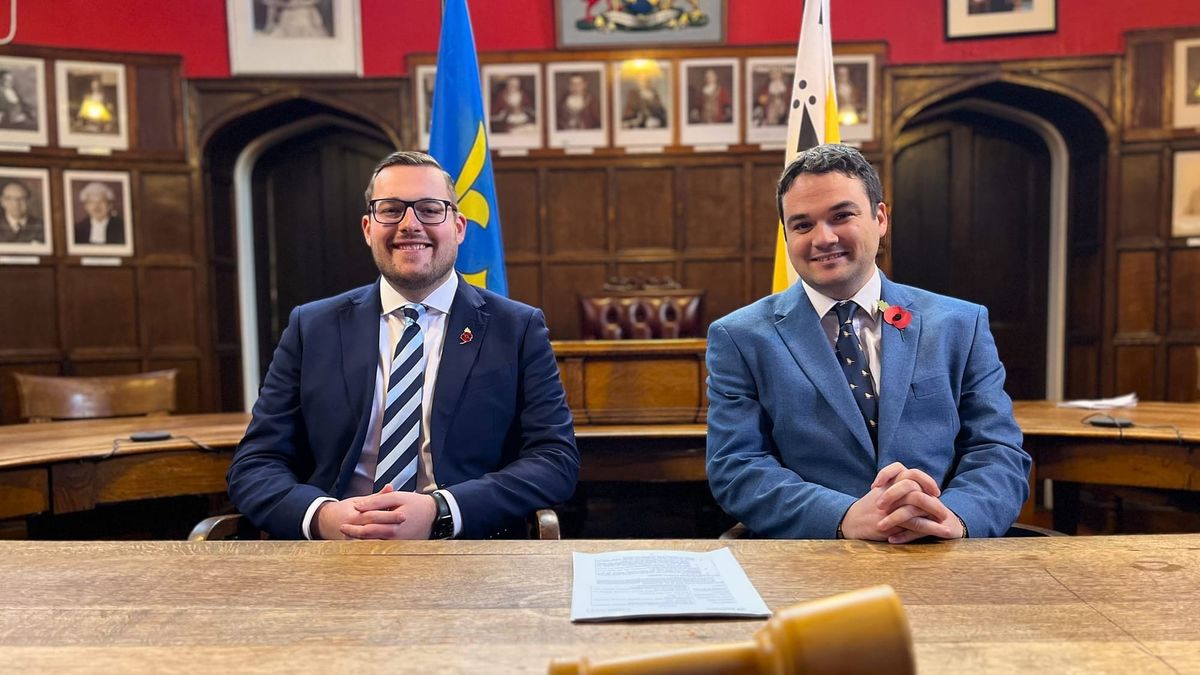
Why it matters: Cllr Michael Hadwen, Suffolk County Council's leader, said the agreement was "the foundation" on which the new Mayoral Strategic Authority was built, after he argued a previous deal – worth at least £1.1bn in Government funding over 30 years – did not give Suffolk enough protections.
The details: The new deal sets out several proposals the councils want the Government to implement.
- Investment decisions must benefit the whole region and be assessed for money, deliverability and geographical distribution.
- The new elected mayor would have to appoint both a deputy and a scrutiny chairperson from a different county to their own.
- Commissioners, who deal with different policy areas, would be appointed on merit and distributed across both counties.
- Subject to separate legislation, the new authority would take on governance of Norfolk Fire and Rescue Service and Suffolk Fire and Rescue Service, with the mayor also assuming both counties' Police and Crime Commissioner functions. Chief constables would retain responsibility for operational policing.
- The councils want to explore a new permanent office beyond Norwich and Ipswich.
- They are also asking the Government to name the new authority the East Anglia Mayoral Strategic Authority.
Cllr Hadwen said the measures would ensure the new mayor represented "the whole region, not just one place".
The deal also asks the Government for bespoke powers over fisheries and agriculture for the new mayor, even though neither county currently has the power to set the mayor's priorities. Both leaders rejected the idea that this amounted to a promise they could not be sure to keep.
What they're saying: "We know what the perspective is here in Suffolk […] it's that thing that we're the little partner in the relationship with Norfolk," Cllr Hadwen said. "We know that's not true – what this deal puts forward is that we're walking into this as two united counties. Getting this mayor will put us right back where we belong, which is on top of the table."
On the fisheries and agriculture powers, Cllr Hadwen said: "We know that our fisheries have been abandoned for decades […] we know our farmers are feeling the squeeze more than ever. I think any mayor coming into Norfolk and Suffolk not wanting economic powers to do with fisheries and rural are going to really struggle with the electorate."
Cllr Robin Hunter-Clarke, Norfolk County Council's deputy leader, said: "We have got to stop looking at this [as] Norfolk versus Suffolk – we've got to start working collaboratively going forward."
On the fisheries and agriculture powers, Cllr Hunter-Clarke said: "That's our job, to [ask for it], we are the local politicians on the ground here in Norfolk and Suffolk."
For context: This is the second time Suffolk's cabinet has been asked to consent to the new authority. It first agreed in October last year, but the Government subsequently confirmed the first mayoral election would be held in May 2028 rather than May 2026, and new legislation changed the legal framework for how the body would operate – meaning councillors must now approve the proposal afresh. Norfolk's leadership renewed its consent on Monday, 26 October.
What's next: If consent is given on Thursday, the Government will lay regulations before Parliament to formally establish the authority. The first mayoral election is currently expected in May 2028. Among the projects devolution is hoped to unlock are improvements to the Ely and Haughley rail junctions and a long-term solution to the traffic chaos caused when the Orwell Bridge is forced to close.
The bottom line: Suffolk and Norfolk's leaders say the deal gives Suffolk a fairer seat at the table in a joint mayoral authority. But the fisheries and farming powers are only a request, not a guarantee – and it's now up to Suffolk's cabinet to decide whether devolution proceeds.
Don't forget: If you enjoy our content, please add Ipswich.co.uk as a "preferred source" on Google so you can easily find more of the content you value.
This article cost us ~£34 to produce
It's free for you to read thanks to the generous support of our partners. Please support us by supporting them.
Below the line