
SnOasis: The greatest downhill ride in Suffolk history
£500 million. 1,800 jobs. Nearly a million visitors a year. A 415-metre ski slope, hotels, restaurants, bobsleighs and parking for 2,500 cars. Suffolk was going to become the winter-sports capital of Britain.

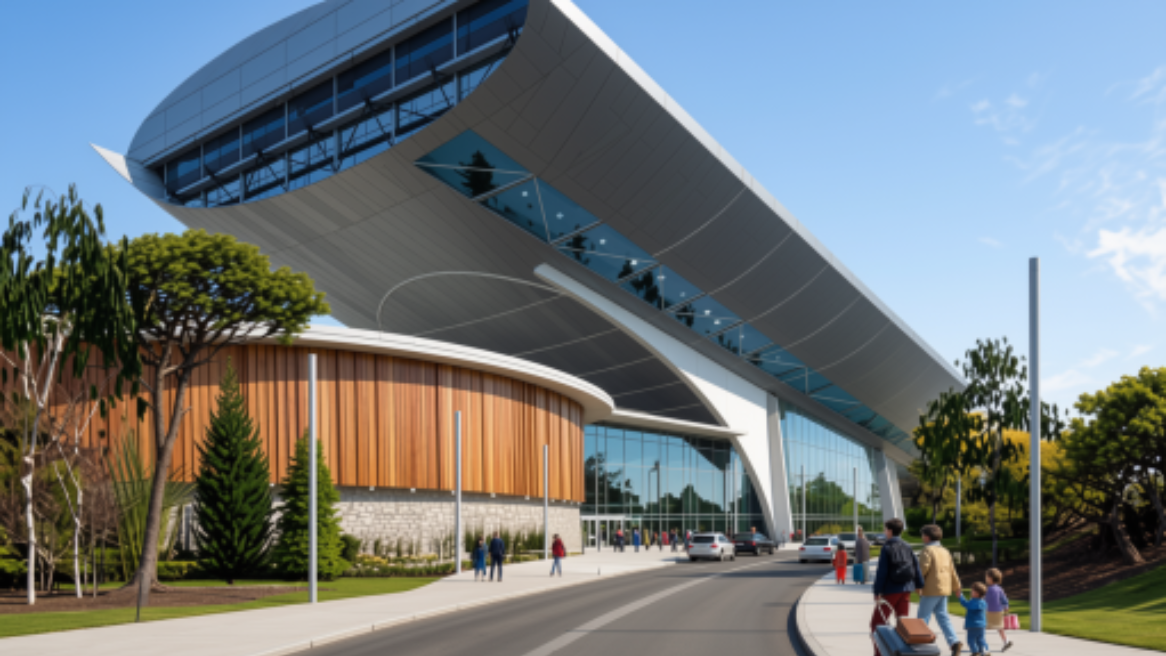
Then the developers discovered that building a railway station was a tad on the pricey side, so they proposed putting everyone on a bus from Stowmarket instead. Welcome to SnOasis – quite possibly the most gloriously preposterous development saga in Suffolk's history.
Ipswich and the surrounding area desperately need ambitious leisure developments. For a town of its size, there is precious little to do, and we should welcome major investment, imaginative attractions and developers prepared to offer something more interesting than another supermarket or housing estate.
But there is ambition, and then there is fantasy. After its twentieth anniversary without a ski lift, a skier or even a snowball, SnOasis was looking increasingly like a very expensive exercise in creative writing.
It had survived countless planning applications, inquiries, delays and announcements. Every few years, somebody would emerge to explain that Britain's greatest winter-sports destination was finally about to happen.
It never did.
And the extraordinary thing is that we don't have to exaggerate anything. The promoters and newspaper reports have left us with more than enough material.
The Alps come to Great Blakenham
The original proposal emerged around 2001, championed by businessman Godfrey Spanner and his company, Onslow Suffolk. A spanner, of course, is a tool. And Onslow is the jaunty but idle character from the tele...
The location? A former quarry beside the A14 at Great Blakenham.
Not exactly St Moritz.
But the ambition was positively Himalayan.
By 2005, industry reports were discussing a £350 million project, with claims that about £20 million had already been spent developing it.
The centrepiece was to be a 415-metre indoor ski slope, promoted as the world's longest. It would include bobsleigh facilities, speed skating, ice climbing, cross-country skiing, and a centre of excellence for British winter sports.
Naturally, that wasn't enough.
There would also be a 350-room hotel, 350 holiday chalets, apartments, shops, bowling, a nightclub and 17 bars and restaurants.
Seventeen. Dix-sept. Siebzehn. Diecisiete. Diciassette, Zeventien.
Apparently, the developers weren't entirely certain whether they were building an Olympic training centre or a replacement for Magaluf.
And there was more. Tennis, squash, badminton, watersports, entertainment facilities and almost anything else that could conceivably persuade someone to spend a weekend in a former chalk quarry.
Us expectant types were only missing a tropical rainforest, a submarine base and a direct cable-car connection to the Matterhorn.
1,800 jobs...just like that
The employment promises were equally breathtaking.
In November 2008, reporting carried forecasts of 3,500 construction jobs and another 1,800 when the development opened. Those figures were repeated so frequently that they became almost part of the project's name.
SnOasis. £500 million. 1,800 jobs.
Except forecasts are not facts, and jobs do not materialise simply because somebody puts them in a breezy brochure.
How many were permanent? How many full-time? How many would be displaced from existing hotels, restaurants and leisure attractions? All these questions. Best not to ask, really.
And who, exactly, had established the market for nearly a million annual visitors to a gigantic refrigerated lump alongside the A14? More questions. Pesky these questions...
Interestingly, the figures weren't always consistent. In 2019, the project's own transport consultants referred to 2,000 full-time-equivalent posts, while other publicity continued to use 1,800 jobs. The unfortunate 200 could have tried for a gig at the new Olympic-sized outdoor ice-skating rink at Chantry. Errr...
Apparently, even the employment forecasts enjoyed considerable freedom of movement.
One might have expected a slightly more inquisitive reception.
Instead, the announcements kept coming. The legacy media lapped it up, unquestioningly. Now, dear reader, it's a fact that those of us who are more likely to simply feed a press release into AI are likely to be less discerning than those of us who use our words.
First, they couldn't build the railway station
Now we arrive at my favourite part of the pantomime. The original scheme included a new railway station at Great Blakenham, close to the former Claydon station. An excellent idea, actually.
If you're expecting thousands of people to visit a vast leisure complex, including holidaymakers arriving by train with luggage and skiing equipment, providing direct rail access makes considerable sense.
In 2004, the proposed station was being discussed as a £5 million project, complete with its own car park.
In September 2012, reporting explained that SnOasis could not proceed without the railway station.
Spanner said negotiations over operating the station had held up the development. Following discussions with the Department for Transport, he was optimistic that a way forward had finally been found.
The resort, we were informed, should open in 2015. Of course it should. But the station never appeared. Undoing the dastardly deeds of Dr Beeching was beyond the wits of our Mr Spanner.
And eventually, instead of building one, the developers negotiated its removal from their planning obligations.
The replacement? A shuttle-bus service from Stowmarket railway station. Yes, really.
Forget the new station beside the development. Forget arriving conveniently by train. Visitors would instead get off at Stowmarket, gather their luggage, children, suitcases and skiing equipment, and transfer to a bus for the remaining journey. How many buses – or coaches – would be going to drive them, and where would they park at Stowmarket station? Oh hang on, I appear to be doing that questioning thing again.
The project's own transport consultants subsequently described negotiating away the station requirement as a major achievement that represented a very substantial cost saving.
I bet it did.
By April 2019, local council records were openly discussing the Stowmarket shuttle arrangement. Suffolk County Council's highways assessment confirmed that the Great Blakenham railway station had been removed from the scheme.
The revised transport arrangements became part of the 2020 legal agreement.
There were commitments to buses, station improvements and financial safeguards, so this was not simply a proposal to abandon public transport altogether.
But consider the transformation. A £500 million world-class winter-sports resort, supposedly attracting visitors from across Britain and beyond, had begun with its own railway station. It ended up proposing a shuttle bus from Stowmarket.
It was an absolutely splendid demonstration of how to reduce the cost of delivering a grand vision while continuing to promote it to the leisure-thirsty hordes of Ipswich and beyond. I can only imagine the eye-rolling over Cornflakes.
And rather neatly, the first major casualty of Suffolk's international winter-sports dream was the infrastructure needed to get people there.
Another green light, another nothing
In 2008, SnOasis secured government planning approval following a lengthy inquiry. A breakthrough, naturally. But nothing was built.
In January 2011, reports suggested construction could begin that September, with skiing by 2014. It didn't. In September 2012, the opening moved to 2015. That didn't happen either. By April 2020, Britain was in lockdown, businesses were closing, and the economy was facing one of its greatest challenges in generations. What better moment to announce another triumph for SnOasis?
Mid Suffolk District Council approved outstanding planning details using emergency delegated powers, rather than through an ordinary committee meeting.
On 22 April 2020, the construction press reported yet another green light for the £500 million resort. The familiar promises returned. Jobs. Investment. Economic growth. World-class facilities. One could almost hear the champagne corks popping – well, bombing out of the bottles and leaving holes in the wall.
The development's promoter, meanwhile, had been declared personally bankrupt in 2012, although he maintained that his circumstances would not prevent the project proceeding. Personal bankruptcy is distinct from a company's financial position, but it was hardly reassuring publicity for an already delayed undertaking.
This must be the point at which our legacy media friends began to have questions. By this point, SnOasis had become less a development project and more a local tradition.
Christmas. Easter. The Suffolk Show. Another announcement that SnOasis was finally going ahead. This time. Fo' sure. Imminently. Faster than the slipperiest skis scooting down the plastic snow.
Never mind the mountain, here's a lazy river
Eventually came the reinvention. In March 2021, the promoters unveiled Valley Ridge, a revised £500 million leisure resort.
The enormous 415-metre ski slope had shrunk to approximately 180 metres. Out went several elements of the original entertainment complex. In came a water park, swimming pools, spas, zip wires, climbing, adventure golf and, magnificently, a lazy river. A lazy river.
After twenty years of spectacular inactivity, one might have thought Suffolk already possessed the world's leading example.
The new development would feature hundreds of holiday lodges, a substantial hotel, and forecasts approaching one million visitors annually. The 1,800-job promise was back too.
So, too, was an enormous parking requirement, with later proposals discussing provision for approximately 2,500 cars. Two thousand five hundred. All apparently converging on a former quarry in rural Suffolk to enjoy a holiday experience now bearing increasingly little resemblance to the winter-sports extravaganza originally announced.
The new opening target was 2024. I'll save you the suspense. It didn't open.
And then there was the tip next door
There was, however, another small difficulty. Beside the proposed luxury leisure resort stood Masons landfill – an operating waste-disposal site. Not exactly the view one might expect from the balcony of a four-star spa hotel.
The landfill operator wanted to continue activities until 2035. Suffolk County Council subsequently supported an earlier cessation date of December 2030, followed by restoration.
The resort promoters argued that continued landfill operations conflicted with their leisure plans. An entirely understandable concern. But the landfill had hardly arrived overnight.
It was a longstanding feature of the landscape, rather like the A14, the railway and the geography of Great Blakenham.
One might reasonably have expected such matters to feature rather prominently in the commercial feasibility studies before announcing Europe's answer to the Austrian Alps.
By 2023, the latest leisure ambitions had been abandoned. The mountain had finally melted.
The companies survived; the skiing didn't
The corporate story is worth mentioning. Onslow Suffolk Limited was incorporated in February 2001 and remained registered as active long after its original vision had faded.
Valley Ridge Holdings Limited, incorporated in December 2016, had previously been called Masons Quarry Investment Co Limited before changing its name in October 2020.
There is nothing improper about companies changing names, directors or development strategies. But there is something rather instructive about the persistence of the corporate and planning arrangements while the attraction itself repeatedly failed to appear.
After all, unlike an artificial snow slope, development land is a tangible asset. And land with a substantial planning history can keep commercial significance even when the original proposals are abandoned.
The mountain was imaginary. The land was real.
From bobsleighs to big sheds
In November 2025, a new planning application emerged for the site. This time, the proposal was to expand the neighbouring Port One logistics development across land formerly associated with SnOasis and Valley Ridge.
Warehousing, commercial floorspace, depots and container-storage facilities – not quite the glamorous Alpine destination we were promised.
But then, warehouses have the considerable advantage of serving an identifiable commercial purpose.
And let me be clear. Suffolk needs major investment. Ipswich needs better facilities, more attractions, ambitious employers and serious developers with the resources to deliver.
We should positively encourage them.
There is absolutely nothing wrong with thinking big. Too often, this part of the country settles for considerably less than it deserves. A major leisure attraction would be welcome. So would ambitious employment schemes and developments offering genuine long-term economic benefits.
But big ideas need credible business plans. They need funding, deliverable infrastructure and customers willing to pay. They cannot survive indefinitely on artists' impressions, employment forecasts and cheerful announcements that everything is progressing wonderfully.
The proposed logistics scheme deserves to be examined on its own merits. It may prove a worthwhile investment, subject to proper scrutiny of its transport, environmental and economic consequences.
But SnOasis? Come on.
The greatest downhill run of all
For more than twenty years, the people of Suffolk were treated to a succession of extraordinary promises. One of the world's biggest indoor ski slopes. Olympic-standard facilities. Thousands of jobs. Nearly a million annual visitors. Hotels. Holiday villages. A railway station.
Then no railway station.
Then a smaller ski slope.
Then a water park and a lazy river.
Then nothing.
It was a breathtaking progression from international winter-sports excellence to the prospect of catching a shuttle bus from Stowmarket to paddle around a former quarry.
And throughout it all, the headlines kept arriving, announcing another milestone, another breakthrough and another reason to believe construction was imminent. At some point, surely, somebody should have asked that one, most important of them all and bleeding obvious question.
Was there ever a sufficiently convincing commercial case for this enormous enterprise, or had the sheer spectacle of the proposal become a substitute for examining whether it could actually work?
That is a legitimate question, not an allegation of dishonesty. Ambition is admirable. Investment is essential. Vision should be encouraged. But credibility matters too.
SnOasis promised Suffolk the future of British winter sports.
For my money, it always looked more like an elaborate flight of fantasy, complete with its own imaginary departure lounge.
After a quarter of a century, hundreds of millions in proposed investment and enough optimistic headlines to wallpaper the entire resort, we can finally assess its contribution to the county.
No ski lifts, no skiers, no trains, not a single snowflake, real or imagined.
It was 'snow' joke. Or was it...
Don't forget: If you enjoy our content, please add Ipswich.co.uk as a "preferred source" on Google so you can easily find more of the content you value.
This article cost us ~£368 to produce
It's free for you to read thanks to the generous support of our partners. Please support us by supporting them.
Don't forget: If you enjoy our content, please add Ipswich.co.uk as a "preferred source" on Google so you can easily find more of the content you value.
Local journalism is expensive to produce
It's free for you to read thanks to the generous support of our partners. Please support us by supporting them.
Below the line