
Should businesses underwrite Ipswich's culture strategy even if it loses City of Culture?
Win or lose its bid to become the 2029 City of Culture, local businesses are being asked to fund a "city of culture" regardless. Can the council convince a cash-strapped private sector to look beyond its past performance and fund its ten-year culture strategy?

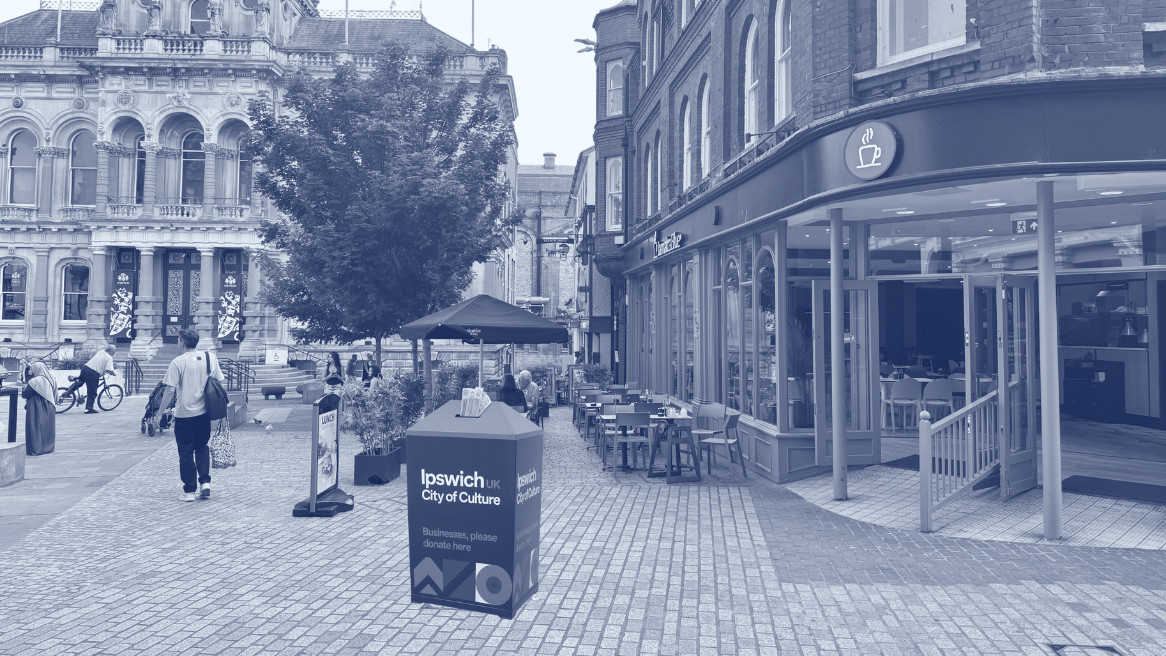
It is almost a year to the day since Ipswich MP Jack Abbott hosted the town's first City of Culture meeting. It was during that meeting, that one Ipswich Borough Council cabinet member labelled the council's then-new £30,000 culture strategy a "failure", and council leader Neil MacDonald famously admitted he hadn't read it because it was "too long".
Fast forward twelve months, and just seven days before the City of Culture bid deadline, an email landed in business inboxes across the county.
The email asks businesses to pledge their financial support to the bid, citing the £10 million prize on offer, a year in the national spotlight, and the headline-grabbing economic returns seen by previous winners.
But the actual financial ask is broader and longer-term than the bid itself.
Businesses are not just being invited to commit matched funding if Ipswich is crowned 2029 City of Culture, they are being asked to fund the council's ten-year culture strategy regardless of the outcome of that competition.
It is, by any measure, a massive ask of a cash-strapped private sector that will need some convincing that this council – and the council that will replace it in less than two years' time – is capable of defining and executing a 10-year strategy that delivers the level of economic growth required to justify the millions it is seeking to raise – potentially without the City of Culture title and the associated prize money.
Why it matters
Matched funding is a crucial element of a City of Culture bid. The Department for Culture, Media and Sport places real weight on evidence that the private sector and local partners are prepared to back a bid financially, treating it as proof that a place can deliver at scale rather than simply talk about it. The government's £10 million prize funds the winning year itself; everything beyond that, is expected to come from elsewhere.
That "elsewhere" is where businesses come in. The bid team describes visible business support as "a core factor" in winning the competition, and points to Ipswich's business community as one of the bid's strongest assets when set against rival towns. But the council wants that support for a second reason that has nothing to do with winning: a ten-year culture strategy that exists independently of the City of Culture competition, that needs financing whether or not Ipswich wins.
It is a genuinely interesting model – the council doesn't have the funds to deliver a meaningful culture strategy, so is looking to leverage City of Culture as the vehicle in which it can convince the private sector to step up to the plate.
However, that distinction changes what businesses are actually being asked to weigh up. This is not one ask with a single, binary outcome – pledge money, and if we win, reap the rewards of a £10 million programme of events and a year in the national spotlight – it is two separate asks bundled into one: back the bid, and if we lose, instead back a decade-long strategy that carries none of the guarantees that come with a £10m cash injection from central government.
Asking the difficult questions others don't
This is the kind of nuanced reporting you won't find elsewhere in Suffolk. Become a member for £4.75 a month to back more of it.
The ask
The pitch asks businesses to invest "in the conditions your business trades in, alongside a contribution to achieving genuine social change" and sets out six routes for businesses to do so:
- Individual pledges through the "2029 Club", starting at £20.29 and increasing to £2,029 over three years
- Three tiers of sponsorship from £5,000 up to £250,000-plus
- A long-term "Rolling Infrastructure Fund" investment vehicle offering "high" but undisclosed commercial and social returns
- In-kind contributions such as use of vacant units, professional hours or staff volunteering
Whichever route a business chooses, the money flows to the same place: the Ipswich Culture Company – a Company Limited by Guarantee that will act as the Delivery Body for the bid, and that will be responsible for planning, procuring, commissioning and delivering any City of Culture programme, win or lose.
It has been funded initially by a £50,000 start-up grant from the council – a modest investment compared to the millions it is seeking to raise from the private sector – and in its start-up phase will receive its financial services from the council or from IPSERV, a company wholly owned by the council.
The council will, at least at first, be the company's sole member. "It is proposed that initially the Council would be the sole member of the Company, but that as the project progresses, key partners will be invited to become members," states a council report. No timeline or criteria for when that might happen are set out.
A charitable Company Limited by Guarantee is an established model that funders recognise. It allows for community benefit rather than private profit, and the council says it provides "appropriate separation between the Council and the Delivery Body," as trustees of the company will be required to act independently of the council once it is registered as a charity, even though the council is currently its only member and principal funder.
A fascinating model, but not without risk
While the model is zero-risk to the council, it is anything but for businesses.
The first layer of risk is simply the odds of winning. Nine places made the longlist earlier this year; only four will make the shortlist, expected to be announced this summer, before a single winner is chosen by the end of the year.
As Ipswich.co.uk has previously reported, getting onto the shortlist was widely seen as the floor, not the ceiling, but after a sluggish start since it took the reins, the bid team faces a tough task to make a very competitive shortlist, never mind beat current favourites Sheffield and Wrexham to the crown. If there were an equal chance of each entrant winning – which there isn't – then Ipswich has a 1-in-9 (11.1%) chance. The reality is that despite having genuine credentials to win outright, the true probability of winning is likely lower than that.
The second layer is structure and governance. The council's own risk assessment rates the likelihood of the relationship between the Ipswich Culture Company and its members breaking down as "possible," with a "moderate" impact rating. It lists good governance and dispute-resolution mechanisms as the intended controls, but this cannot account for what is arguably the single largest unknown facing any decade-long commitment tied to Ipswich Borough Council: the council will not exist beyond 2028.
In 2028, Ipswich Borough Council is due to be abolished and replaced by a new unitary authority for Ipswich and South Suffolk. The council acknowledges this in a single clause buried in its "Local Government Reorganisation Considerations" section of its committee report: "If the bid is successful, the new unitary council will be the Accountable Body for the City of Culture programme and will be a member of the Company which will be responsible for the delivery of the programme and attracting further investment for the town."
That sentence covers what happens to the council's formal role if Ipswich wins the bid. It says nothing about what happens if Ipswich does not win — the scenario in which businesses' money is still committed to the ten-year Culture Strategy regardless.
It says nothing about how a new unitary authority, with its own incoming leadership, executive and cabinet, might choose to treat a strategy and company it did not create.
While the Ipswich Culture Company is a separate legal entity from Ipswich Borough Council — with its own board, its own charitable objectives, and, once registered, its own governance obligations independent of any single funder — its board, its members, and its founding relationship have all been built around a council that has a confirmed expiry date. Neither the council's committee report nor any of the bid's business-facing material sets out how the Culture Strategy and Culture Company's governance would be protected through the transition to a new unitary authority.
None of this means the ask is unreasonable, or that the Culture Strategy is not worth backing. Ipswich's culture and visitor economy already supports 5,300 jobs — 7.2% of all jobs in the town — and £274 million in spending, according to the bid's own business case. The precedents cited by the bid team are significant: Hull saw a 28% increase in visitor spend and a 27% increase in tourism-related employment in the years around its 2017 title year, while Coventry saw visitor spending rise 51% and tourism jobs increase by 22% the year after it hosted.
If Ipswich could replicate even a fraction of that, and the model was conditional on winning City of Culture, the case for business investment would arguably be straightforward.
But this isn't straightforward.
It is being asked of a business community facing real financial pressures of its own, at a time when confidence in the council's ability to define a vision and deliver it is not universally high. That does not disqualify the current strategy on its own merits, but it does mean the council is asking the private sector to extend a benefit of the doubt it has, for many, not yet earned. And a strategy, in the end, is only as good as the people and institutions that will deliver it — most of whom have not yet been chosen, appointed, or in the case of the incoming unitary authority, even elected.
The bottom line
Ipswich's bid for City of Culture is being sold to businesses as a chance to back the town's future, and it is a decision every business will make for itself. That means weighing the known economic benefits that will come our town's way if we win, against the unknown economic benefits if it doesn't.
What is clear is that this is not simply a bet on a competition. It is a decade-long culture strategy, and businesses must now decide if they are willing to underwrite it – win or lose City of Culture.
Asking the difficult questions others don't
This is the kind of nuanced reporting you won't find elsewhere in Suffolk. Become a member for £4.75 a month to back more of it.
Don't forget: If you enjoy our content, please add Ipswich.co.uk as a "preferred source" on Google so you can easily find more of the content you value.
This article cost us ~£230 to produce
It's free for you to read thanks to the generous support of our partners. Please support us by supporting them.
Below the line