
Poundland: The £1 deal, the £18m in fees and the collapse of a British high street giant
For the past month, Ipswich.co.uk has followed the story of Poundland's financial crisis – examining the numbers, ownership arrangements, rejected rescue offers, and the money flowing out of the business. This week, the retailer finally fell into administration.

Before you read: Subscribe to our free newsletter and get our best content delivered straight to your inbox – there's no spam, no ads, and you can unsubscribe at any time...although 99% of our readers don't!
There is something particularly uncomfortable about the collapse of Poundland
This is not simply the familiar story of a British retailer struggling against rising costs, changing shopping habits and competition from the internet. Nor is it the straightforward tale of a business losing money until there was no money left to lose.
It is the story of a company bought for a nominal sum, whose new owners reportedly received £18.3 million in interest, fees and other charges, including £3.8 million associated with closing its shops.
It is the story of a retailer whose management reported an £86.2 million improvement in its underlying annual financial performance, yet which found itself struggling to access the money needed to replenish its shelves.
And it is the story of approximately 11,000 employees approaching Christmas without knowing whether they will have a job in January.
On Wednesday, 25 November, Poundland entered administration.
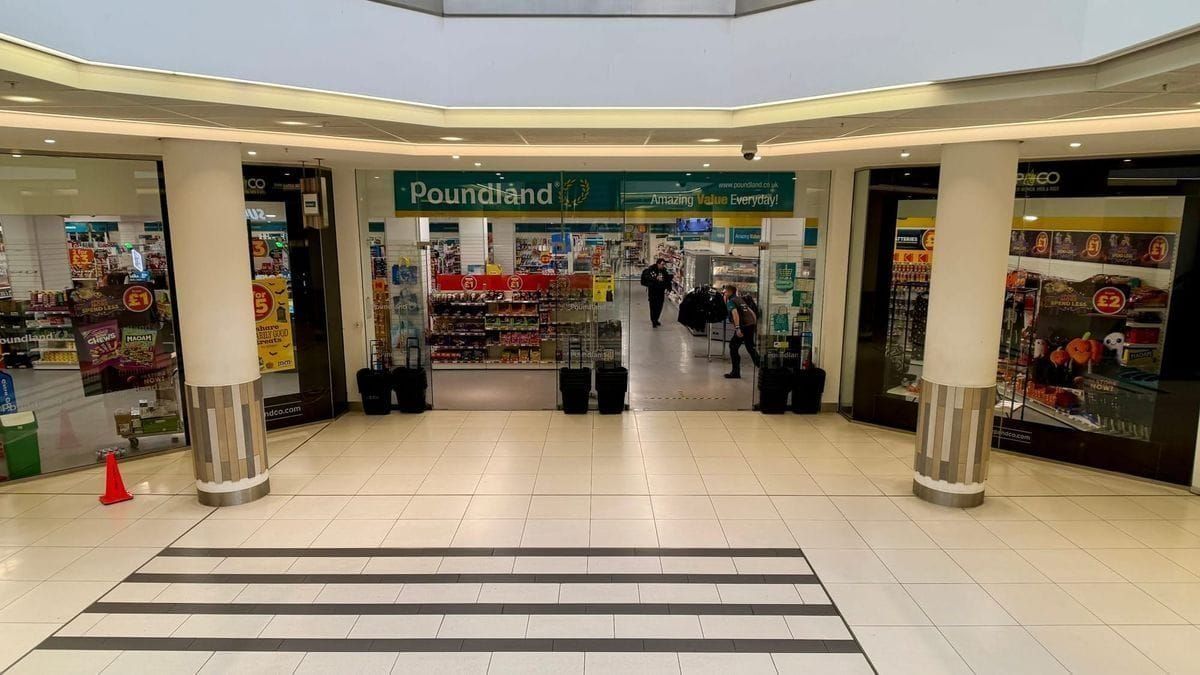
For those working at its Ipswich branch, on the ground floor of the Sailmakers shopping centre, the financial manoeuvring of an American investment company thousands of miles away has become a matter of immediate personal concern.
Throughout the past month, Ipswich.co.uk has taken a detailed interest in this story. We have followed the money, examined the company's financial performance and explored the commercial arrangements that made this anything but an ordinary retail collapse.
Here is how the story unfolded, what happened this week and why Parliament is now demanding answers.
The story we have been following
Our coverage began on 29 October, when we reported that Poundland's Ipswich store was at risk as the company moved towards insolvency.
At the time, the Government's position was relatively restrained. It regarded the situation primarily as a commercial matter for Poundland's owners.
That position would change considerably over the following weeks.
As details emerged of rejected rescue offers, shareholder loans, restrictions on working capital and substantial payments to its American owner, the story moved from the business pages to the floor of the House of Commons.
Date | Our coverage |
|---|---|
29 October | Ipswich Poundland store at risk as chain nears collapse |
Early November | 'Predatory capitalism': Poundland's US owner under fire as time runs out |
11 November | Poundland handed last-minute lifeline as owners release £10m |
16 November | Poundland owners bought it for £1 – and took nearly £20m |
24 November | Stock sell-off firm approached as Poundland deadline nears |
26 November | Poundland: Owners paid millions in fees to close their own shops |
Taken together, these reports chart the deterioration of a household-name retailer and the increasingly extraordinary circumstances surrounding its demise.
A pound for Poundland
In June 2025, Boston-based investment firm Gordon Brothers acquired Poundland from its previous owner, Pepco Group, for a nominal sum, widely reported as £1.
It acquired one of Britain's most recognisable retail brands, hundreds of shops, an established distribution network, relationships with suppliers and a workforce numbering in the thousands.
It also acquired a business in genuine financial difficulty.
Poundland's accounts for the year to September 2025 showed sales declining from approximately £1.8 billion to £1.6 billion, with pre-tax losses reaching £85.2 million.
Rising employment costs, inflation, squeezed margins and problems with its product range had all contributed to its difficulties.
Gordon Brothers specialises in distressed businesses. Buying companies experiencing precisely these sorts of problems is what it does.
The acquisition was followed by an extensive restructuring programme, rent renegotiations, shop closures and changes to the retailer's product offering.
But what makes the Poundland story particularly interesting is that, by some important financial measures, the restructuring appeared to be working.
The £86 million turnaround
One of the most significant sets of numbers we published during our coverage received far less national attention than it deserved: figures reported by Poundland's management showed a £86.2 million improvement in earnings before interest, tax, depreciation and amortisation (EBITDA).
EBITDA is not the same as overall profitability. It excludes several high costs and does not necessarily indicate that a business has enough cash to meet its obligations.
Nevertheless, this was a remarkable improvement.
Gordon Brothers itself has pointed to approximately £100 million in cost savings achieved during the restructuring.
That makes what happened subsequently all the more worthy of examination.
Rather than continuing to operate the business, Gordon Brothers began looking for a buyer in September 2026, just 15 months after acquiring it.
Following the money
On 16 November, we published details of the payments Gordon Brothers reportedly received during its ownership of Poundland.
The figures, originally revealed by Sky News following a presentation by Poundland's management to the Government, were striking.
Payments to Gordon Brothers | Amount |
|---|---|
Interest | £8.6m |
Store closure fees | £3.8m |
Debt arrangement fees | £2.6m |
Other fees and charges | £3.3m |
Total | £18.3m |
Here's where the £18.3 million went:
- Interest: 47.0%
- Store closure fees: 20.8%
- Debt arrangement fees: 14.2%
- Other charges: 18.0%
The £18.3 million represents reported receipts, not established net profit. Gordon Brothers says it provided £85 million in new financing to support Poundland.
However, the breakdown reveals something important about the commercial relationship between Poundland and its majority shareholder.
Gordon Brothers was not simply an owner hoping to make money by building a successful retailer and eventually selling it.
It was also a lender and a provider of restructuring services.
It had several potential sources of income, some of which did not depend upon Poundland's long-term survival.
Getting paid to close your own shops
Yesterday, Ipswich.co.uk examined one of the most unusual aspects of those payments in greater detail: the £3.8 million in store closure fees.
Approximately 200 shops closed during Gordon Brothers' ownership.
Dividing the reported fees by that number yields an illustrative average of £19,000 per shop closed.
Poundland's management separately identified 115 shops closed as part of its restructuring programme. If the fees related exclusively to those closures, the equivalent figure would exceed £33,000 per shop.
Neither figure represents a confirmed contractual charge. The precise arrangements have not been published.
But the underlying issue is straightforward.
A company controlling a British retailer was receiving payments associated with reducing that retailer's presence on the British high street.
Closing a shop involves work. Stock must be sold, equipment removed, premises handed back and contractual obligations addressed. There is nothing inherently improper about charging for those services.
The question is how those arrangements were negotiated when the company receiving the money also controlled the business paying it.
Who authorised the fees? Were they independently assessed? Could another company have undertaken the work more cheaply? And were the owner's financial incentives sufficiently aligned with those of the retailer?
Those questions remain unanswered.
The other £22.5 million
Another central feature of our reporting has been the shareholder loan that appears to have become a major obstacle to a rescue.
When Gordon Brothers acquired Poundland, it obtained an entitlement to £22.5 million of an existing £30 million shareholder loan.
Pepco retained the remaining £7.5 million.
Pepco was reportedly prepared to defer repayment of its share to facilitate a rescue.
The timing of repayment to Gordon Brothers, however, became a significant issue in negotiations.
Martin Property Group, a Northern Ireland-based business, reportedly offered to repay Gordon Brothers' entitlement in full over time, including an initial payment of £5 million.
A deal was not reached.
The importance of this arrangement is that Gordon Brothers' interests as a creditor may have differed from its interests as a shareholder.
If the company could recover more of its lending through insolvency than through a negotiated sale, the financial calculation would be quite different from that of employees, suppliers and customers hoping to see Poundland survive.
Whether that calculation ultimately determined the outcome is something Parliament will want to establish.
The week Poundland finally fell
Monday, 23 November: Preparing for the worst
Business Secretary Jonathan Reynolds held further discussions with Gordon Brothers as the rescue deadline approached.
Meanwhile, the Financial Times reported that Hilco, a specialist in distressed retail businesses, had been approached about overseeing a potential clearance of Poundland's stock.
It was a particularly significant development.
While negotiations to save the company continued, preparations were simultaneously being made for the possibility of dismantling it.
Reports also emerged that Gordon Brothers had stepped away from consideration for the stock disposal assignment itself.
Such a contract could have provided another source of fees for the investment company. Its potential value has not been disclosed.
Tuesday, 24 November: Four potential buyers
In our Tuesday report, we identified four parties involved in the closing stages of the rescue negotiations.
They included Martin Property Group, German investment firm Zachert Private Equity, Xyra Group Holdings and a proposal linked to Premier Quality Foods in Dubai.
Separately, other retailers were examining opportunities to acquire individual Poundland premises.
The distinction was important. Buying a functioning retailer and buying selected shops from a failed retailer are two very different propositions.
One preserves a business. The other may preserve little more than its former locations.
Wednesday, 25 November: Administration
The rescue negotiations failed to produce an agreement.
Clare Kennedy, Daniel Imison and Kevin Wall, of restructuring specialist AlixPartners, were appointed joint administrators of Poundland Limited.
The company confirmed that most shops would remain open in the immediate future.
Poundland's management blamed the loss of access to banking and borrowing facilities for its inability to continue operating solvently.
Gordon Brothers disputed allegations that it deliberately brought about the company's insolvency, maintaining that it had supported the retailer financially and explored opportunities to sell it.
Later that day, Parliament's Business, Innovation, Science and Trade Committee formally requested that Gordon Brothers' European director, Mark Newton-Jones, attend a public hearing.
Thursday, 26 November: The fallout begins
The collapse was discussed again in the House of Commons.
Ministers faced questions about the fairness of the administration process, the protection of employees and the circumstances that led to the retailer's failure.
The Government indicated that it did not consider a taxpayer-funded rescue appropriate.
Meanwhile, prospective purchasers continued to express interest in salvaging parts or potentially much of the business through the administration process.
Poundland also announced changes to its customer returns policy.
Friday, 27 November: An uncertain future
As of Friday morning, no confirmed closure date had been identified for Ipswich's Sailmakers branch.
There is still a possibility that shops and jobs could be saved, but Poundland's future is now in the hands of insolvency practitioners rather than its former management team.
Poundland by the numbers
Here are some numbers:
- £1: Widely reported nominal acquisition price
- 17 months: From acquisition to administration
- £18.3m: Reported fees, interest and charges
- £3.8m: Reported store closure fees
- £85m: New financing Gordon Brothers says it provided
- £22.5m: Shareholder loan entitlement
- ~200: Stores closed during Gordon Brothers' ownership
- ~600: Remaining stores across the UK and Ireland
- ~11,000: Employees whose futures are uncertain
- £35m: Estimated statutory redundancy bill if the entire workforce lost its jobs
Parliament wants answers
The political language surrounding Poundland has changed almost beyond recognition since our first report in October.
What began as a commercial matter has developed into a debate about the responsibilities of investors who acquire distressed British businesses.
Liam Byrne, chairman of the parliamentary committee examining Poundland, has expressed serious concerns about the circumstances of its collapse.
His letter to Gordon Brothers, dated 25 November, also seeks confirmation that neither the investment company nor a related party will undertake a liquidation or other insolvency role in relation to Poundland.
The committee intends to hold a public hearing once it considers that doing so would not jeopardise efforts to salvage the business.
There are several questions that deserve particular attention:
- Why were proposals to keep Poundland operating under new ownership unsuccessful?
- Why was management's access to working capital restricted at such a critical point in the retail calendar?
- How were the £18.3 million in reported payments authorised?
- What were the contractual arrangements governing the £3.8 million in closure fees?
- What financial return could Gordon Brothers ultimately receive through the administration?
- Could a different commercial decision have preserved more jobs and delivered a better outcome for suppliers and other creditors?
None of these questions requires Parliament to prejudge the answers.
All of them deserve to be asked.
What Gordon Brothers says
It is important to understand the investment firm's position.
Gordon Brothers argues that Poundland was already in severe financial distress when it acquired the business and that insolvency could otherwise have occurred in 2025.
It says it provided £85 million of new financing, supported substantial operational improvements and helped deliver £100 million in savings.
It maintains that the business remained exposed to difficult trading conditions and that efforts to find an acceptable buyer were unsuccessful.
The company denies deliberately engineering Poundland's collapse.
Its ultimate financial return cannot yet be calculated. The money it has received must be considered alongside its lending, investment, expenditure and whatever it subsequently recovers through administration.
The administrators' findings and the forthcoming parliamentary examination will be important in establishing a fuller picture.
What it means for Ipswich
Poundland has occupied the former Littlewoods premises in Sailmakers since 2014.
It is part of the everyday fabric of Ipswich town centre: a shop used by pensioners, students, families, office workers and people looking to make increasingly stretched household budgets go a little further.
Its loss would represent more than another empty unit.
Large retailers generate footfall that benefits neighbouring businesses. Their employees spend money locally. Their customers combine shopping trips with visits to other shops, cafés and services.
There is also the question of affordability.
Discount retailers fulfil an increasingly important function as many households struggle with the cost of living.
For customers, Poundland remains open in the immediate term, although its returns policy has changed.
From 26 November, the company no longer offers discretionary refunds or exchanges for purchases simply because customers have changed their minds. Statutory consumer rights remain, although recovering money relating to purchases made before administration may prove difficult.
Customers with outstanding claims can contact the administrators at poundland@alixpartners.com.
For the people working in Sailmakers, however, the concern is considerably more fundamental. They have bills to pay, Christmas presents to buy and families to support. They had no say in the shareholder loan arrangements, the store closure fees or the negotiations between American investors and prospective purchasers. Yet they may ultimately pay the highest price.
The story is far from over
Over the past month, Ipswich.co.uk has sought to look beyond the usual headlines accompanying the demise of a major retailer.
We have examined the accounts, the restructuring, the fees, the prospective buyers, the shareholder loans and the political intervention.
We will continue to follow what happens to Poundland, both nationally and here in Ipswich, because there is a much bigger story here than the potential disappearance of another familiar name from our high street.
It concerns how British businesses are bought, how they are financed, how their owners are remunerated and where responsibility lies when things go wrong.
Investment firms are entitled to make money. Businesses sometimes fail. Restructuring can be painful, and not every struggling retailer can be saved.
But when a business reports an £86 million improvement in underlying earnings, its owner reportedly receives millions in fees, prospective purchasers come forward, and thousands of jobs nevertheless end up in jeopardy, the public is entitled to a rather more comprehensive explanation than that the high street is having a difficult time.
Poundland began as a remarkably simple British retail proposition: offering people value for money.
Thirty-six years later, the most important question surrounding its collapse is who, precisely, ended up getting the value.
And who has been left paying the price?
Don't forget: If you enjoy our content, please add Ipswich.co.uk as a "preferred source" on Google so you can easily find more of the content you value.
This article cost us ~£218 to produce
It's free for you to read thanks to the generous support of our partners. Please support us by supporting them.
Below the line