
Nvidia and Huang, and their connections to Ipswich and the AI revolution
From quantum computing experiments at Martlesham to plans for a new generation of British artificial intelligence data centres, one of the world's most influential technology companies already has connections with Suffolk. Could Ipswich be about to play a much bigger role in the AI revolution?

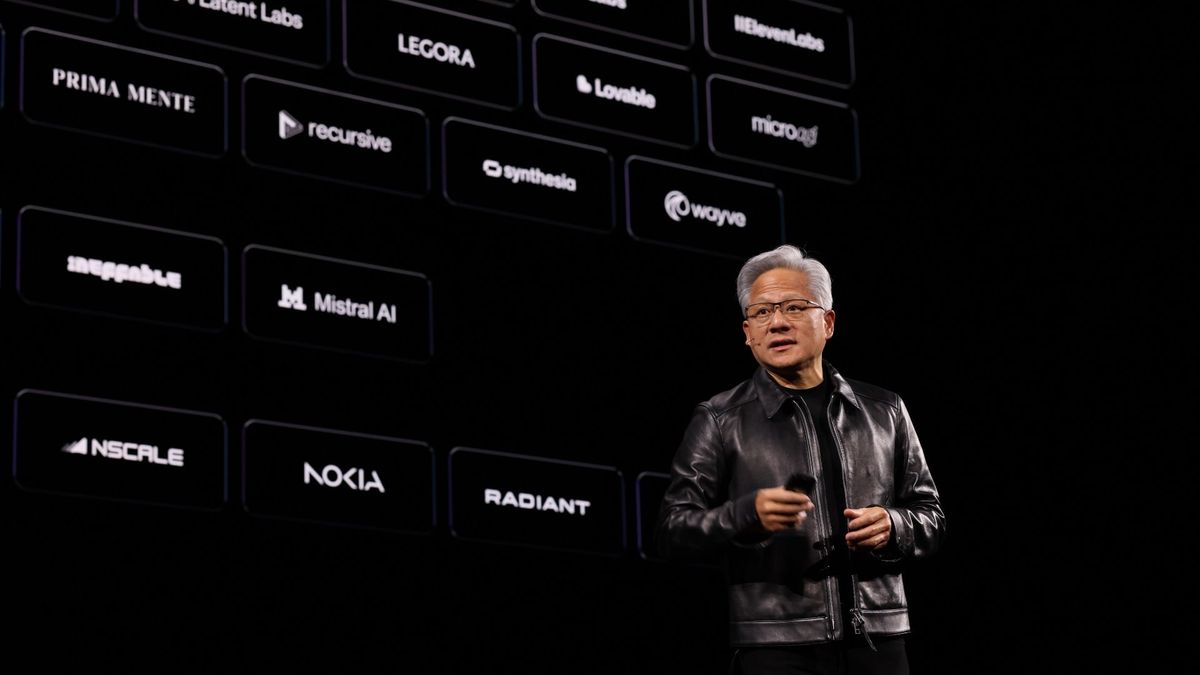
When Jensen Huang co-founded Nvidia in 1993, the internet was barely recognisable, mobile phones were a luxury, and artificial intelligence largely belonged to the realm of science fiction.
Over in Suffolk, scientists at Martlesham had already spent almost two decades developing technologies that would underpin the digital revolution.
Today, those two technological worlds are beginning to converge.
Nvidia has become one of the most valuable and strategically important businesses on the planet. Its processors power artificial intelligence systems, supercomputers, autonomous vehicles, medical research and increasingly the communications networks upon which modern society depends.
And some of the research involving its technology is taking place just a few miles from Ipswich town centre.
From computer games to the world's most powerful computers
Nvidia originally made its name developing graphics processors for computer games.
The graphics processing unit, or GPU, was designed to perform enormous numbers of mathematical calculations simultaneously, allowing computers to render increasingly sophisticated three-dimensional images.
But what makes a processor good at generating realistic images also makes it remarkably effective at the mathematics behind artificial intelligence.
Traditional central processing units, or CPUs, are highly versatile. GPUs, by comparison, excel at processing large numbers of similar calculations in parallel.
In 2006, Nvidia introduced CUDA, a software platform that allowed scientists and programmers to harness GPUs for purposes far beyond graphics.
It proved an extraordinarily important development.
Modern AI systems require vast quantities of mathematical processing. Nvidia provides not simply the processors but an interconnected ecosystem of software, networking equipment and computing infrastructure.
Huang's great commercial achievement was recognising that the market for these technologies extended considerably beyond computer games.
Why Nvidia's processors matter
| CPU | GPU |
|---|---|
| General-purpose computing | Parallel mathematical processing |
| Operating systems | Artificial intelligence |
| Complex sequential tasks | Scientific modelling |
| Everyday applications | Image and video generation |
Why Martlesham matters
In November 1975, Queen Elizabeth II officially opened the telecommunications research laboratories at Martlesham Heath.
Within a few years, scientists working there pioneered optical-fibre communications, laying the foundations for the high-speed networks we now take for granted.
Today, Adastral Park is home to BT's research headquarters and a technology community of approximately 150 businesses, alongside the University of Suffolk's DigiTech Centre.
Its expertise encompasses photonics, cybersecurity, quantum communications, advanced mobile networks and the transmission of enormous quantities of data.
These are precisely the technologies required to support the next generation of artificial intelligence.
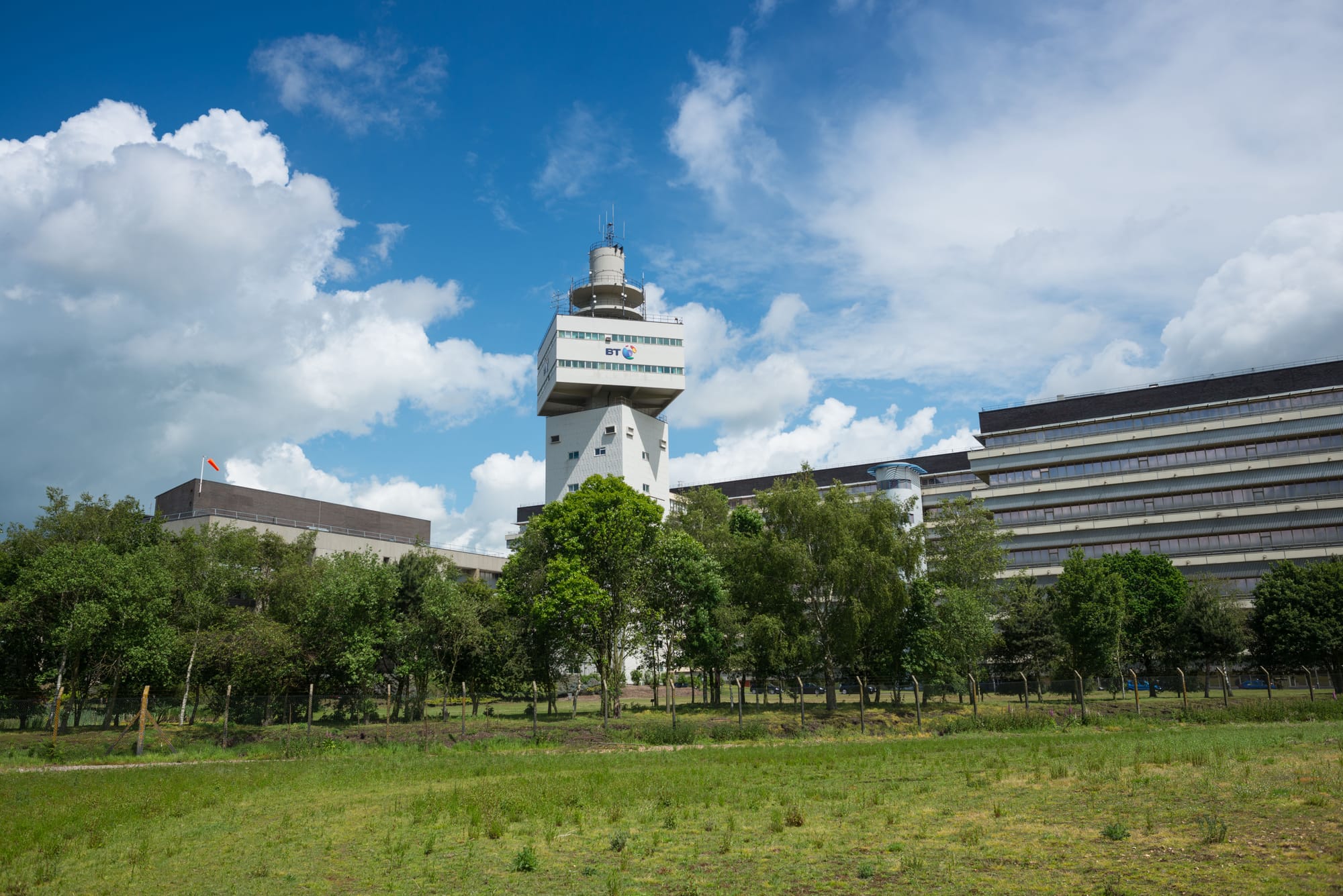
AI is often discussed as though it exists entirely inside a computer. In reality, it depends upon an enormously complicated physical infrastructure connecting processors, storage systems, telecommunications networks and electricity supplies.
Suffolk has considerable experience in several of those fields.
Nvidia technology is already being used at Martlesham
In early 2024, British quantum computing specialist ORCA Computing and BT hosted a demonstration at Adastral Park examining how future data centres might operate.
Among the technologies demonstrated was ORCA's PT-1 photonic quantum computer, working alongside conventional GPU technology and Nvidia's CUDA quantum computing platform.
Quantum computers operate using fundamentally different principles from conventional computers. Photonic quantum systems use particles of light to encode and manipulate information.
The intention is not necessarily to replace traditional computers but to combine their capabilities, allowing different types of processors to tackle different elements of particularly complicated problems.
Applications could eventually include discovering new medicines, developing advanced materials, modelling financial markets and solving complex industrial problems.
Such systems remain an emerging technology, but the demonstration established a tangible connection between Nvidia's computing ecosystem and research undertaken in Suffolk.
A relationship gathering momentum
In March this year, Dell Technologies, Nvidia and BT collaborated on an AI Innovation Day at Adastral Park.
BT research leader Nektaria Efthymiou subsequently described how her researchers had discussed GPU infrastructure and its application to cybersecurity and autonomous telecommunications networks.
The latter is particularly interesting.
Imagine a mobile phone network capable of identifying developing faults, predicting demand, adjusting capacity and managing aspects of its own operation without waiting for human intervention.
BT is now working with Nvidia and Nokia on AI-RAN - artificial intelligence-enabled radio access networks - with initial live trials planned for Birmingham in 2027.
Nvidia's technology could ultimately allow telecommunications infrastructure to undertake AI processing alongside its traditional communications functions.
It represents a significant change in what mobile networks actually do.
The £6.2 million investment in Suffolk
As Ipswich.co.uk reported in May, the University of Suffolk has opened its £6.2 million Quantum Optics Discovery Laboratory at Adastral Park.
The facility enables researchers to investigate laser communications between Earth and satellites, including how atmospheric conditions affect information transmission.
Although not an announced Nvidia project, it strengthens Suffolk's credentials in the advanced communications technologies upon which future computing infrastructure will increasingly depend.
UM-Labs, a member of the Innovation Martlesham technology community, has also developed cybersecurity solutions that protect applications built using Nvidia's Omniverse and CloudXR platforms.
Its technology has been deployed in a BT project creating an immersive digital representation of Belfast.
It is another example of Suffolk businesses participating in Nvidia's expanding technological ecosystem.
Three new data centres – but where?
Perhaps the most intriguing development came on 23 April this year.
BT announced a partnership with British AI infrastructure specialist Nscale to establish three new AI data centre developments at existing BT locations in the United Kingdom, using Nvidia computing infrastructure.
THE BT, Nscale and Nvidia partnership
| Details | Planned development |
|---|---|
| Maximum combined planned capacity | 14 MW |
| Existing BT locations | Three |
| BT | Infrastructure and connectivity |
| Nscale | AI data centre development |
| Nvidia | AI computing technology |
| Purpose | UK sovereign AI infrastructure |
| Proposed users | Business, government and research |
Source: BT Group announcement, 23 April 2026. Locations were not disclosed.
The project is intended to support sovereign AI, enabling British organisations to operate artificial intelligence systems within UK jurisdiction and retain greater control over sensitive information.
Anthony Hills, Nvidia's UK and Ireland director, said telecommunications was central to delivering that ambition.
BT has not identified the three locations in its announcement.
Given Martlesham's existing research capabilities, extensive telecommunications infrastructure and involvement in Nvidia-related projects, could Adastral Park be among them?
It is a question worth asking.
Jensen Huang and East Anglia
Huang's ambitions for East Anglia are well documented.
In September 2020, Nvidia announced a proposed $40 billion acquisition of Cambridge semiconductor designer Arm, accompanied by plans for substantial investment in AI research.
Regulatory difficulties eventually killed the acquisition in February 2022, but the technological relationship between Cambridge and Nvidia continued.
On 4 November 2025, the Nvidia founder received the Professor Stephen Hawking Fellowship from the Cambridge Union.
There is even a small Suffolk connection to Huang's Cambridge visit. Cambridge Union treasurer Ella Cairns, whose professional profile lists the University of Suffolk, subsequently recalled meeting Huang, who jokingly nicknamed her "Prime Minister".
No public record has been identified establishing that Huang has personally visited Ipswich.
The connections: a timeline
| Date | Development |
|---|---|
| November 1975 | Martlesham telecommunications laboratories officially opened |
| 1993 | Nvidia founded |
| 2006 | Nvidia introduces CUDA |
| September 2020 | Nvidia announces proposed $40bn Arm acquisition |
| February 2022 | Arm acquisition abandoned |
| Early 2024 | Nvidia-related quantum computing demonstration at Martlesham |
| November 2025 | Huang receives Cambridge's Hawking Fellowship |
| March 2026 | Nvidia, Dell and BT AI Innovation Day at Martlesham |
| April 2026 | BT and Nscale announce three AI data centre developments |
| May 2026 | £6.2m Quantum Optics Discovery Laboratory opens |
| 2027 | Planned BT, Nokia and Nvidia live network trials |
What could it mean for Ipswich?
Artificial intelligence infrastructure requires considerable electricity, sophisticated cooling systems, specialist engineers and high-capacity fibre connections.
Suffolk's developing energy infrastructure adds another dimension to the discussion, although electricity generation alone does not guarantee sufficient local grid capacity for data centres.
For Ipswich, the greatest prize would arguably be attracting research, engineering and software development rather than simply accommodating buildings filled with servers.
A data centre can consume considerable electricity without creating many permanent jobs. A thriving research community, however, can attract businesses, investment, graduates and highly skilled employment.
Fifty years ago, scientists at Martlesham helped develop the infrastructure that would make the modern internet possible.
Today, the technologies being investigated there could help shape another industrial revolution.
The question is whether Ipswich can convert its considerable scientific heritage into a meaningful share of the extraordinary investment now flowing into artificial intelligence.
The connections are already there. What remains to be established is how far they will take us.
Don't forget: If you enjoy our content, please add Ipswich.co.uk as a "preferred source" on Google so you can easily find more of the content you value.
This article cost us ~£255 to produce
It's free for you to read thanks to the generous support of our partners. Please support us by supporting them.
Below the line