
‘Not enough rungs’: Young Ipswich on the Milburn review
Young people in Ipswich say they have no shortage of ambition, only a shortage of ways in. As a landmark report promises new deals for under-25s, they tell us whether it will make a difference.


“My friends and I talk constantly about dream jobs, promotions, and our futures,” says Harriet, 26. “This isn't a question of ambition or attitude; it's a question of access. We cannot expect young people to get onto the career ladder if there simply aren't enough rungs to climb.”
Harriet's words go to the heart of a debate that reached Westminster this week. On Tuesday, 17 November, former Labour minister Alan Milburn published his 278-page review into the almost one million young people across the UK who are not in education, employment or training (Neet).
We asked young people in Ipswich what they thought.
What the review proposes
Around 13% of 16 to 24-year-olds across the UK are Neet.
Milburn wants that rate to fall to around 5% within a decade, getting 440,000 young people into work by 2036. The report itself forecasts a rate of 6.8% if its proposals are implemented, with stronger economic growth needed to reach 5%.
His proposals include a legal entitlement for young people to an opportunity, such as a job, an apprenticeship, a college place or a supported internship, backed by a guarantee of support such as mental health help and job coaching.
He wants the number of young people completing apprenticeships to double, and employers' National Insurance costs for 21 to 24-year-olds to fall, starting in retail and hospitality.
Employers who take on a young person who has been Neet for six months would receive £3,000, with an extra £2,000 for small businesses.
The benefits system would change too. Under-25s would move onto a new youth allowance, set at the basic Universal Credit rate for their age group, and would no longer be able to claim the health element of Universal Credit.
Personal independence payment (PIP) would be replaced by a new additional cost allowance, with Milburn saying those with enduring severe needs would get more support through the additional cost allowance and a local health and disability fund.
Prime Minister Andy Burnham has called the report a “watershed moment” and appointed Milburn to chair a new youth opportunities unit. A white paper setting out the government’s plans is expected in the new year.
‘A needle in a haystack’
In the year to September 2026, Ipswich had 211 vacancies suitable for young people per 1,000 18 to 24-year-olds, according to analysis by the Institute for Public Policy Research (IPPR).
For young people searching, the numbers do not always feel like opportunity.
“Getting a part time job sometimes feels like finding a needle in a haystack, finding a full time job feels impossible for most of us young people,” says Komala, 20.
Mia, 22, is considering moving back to Ipswich after struggling to find work since university. For the past eight months she has volunteered two or three days a week while applying for jobs.
“I never hear back from the jobs I've applied to, and even when I get an interview I rarely get told if I've been rejected,” she says. “It's really disheartening, especially because I spend time and money preparing for and attending those interviews.”
She has applied for several paid roles at the organisation where she volunteers. After one interview, she says, her supervisor told her privately that the panel thought she was too young.
“I don't understand why I'm too young for a paid position, but they're comfortable letting me work three days a week for free,” she says. “I really love the volunteering work I do, but I need a job, and after eight months it's starting to feel like I'm being taken advantage of.”
The missing first step
Harriet believes the pandemic is a crucial part of the story. “This generation missed out on those first jobs in retail and hospitality, opportunities to build confidence, develop skills, gain work experience, and make connections that often open doors later in life,” she says.
Harriet says the gap hits hardest for “working-class young people who may not have parental guidance, professional networks or school connections to fall back on”.
“At 26, despite having years of work experience, I still find it incredibly difficult to break into an industry I am both interested in and qualified for,” she adds. “I can only imagine how much harder that must feel for someone starting with no experience at all.”
‘Labelled as unmotivated or lazy’
Even for those in work, the worries continue to linger. Oli, 24, has been employed since the age of 16, working through his A-levels and university before securing a graduate job a few months after handing in his dissertation. Yet he believes his chances of owning a home by 30 are slim.
He sees the crisis as coming from several directions: from universities that he says are “run as businesses” to secondary schools that use “a one size fits all model”.
“There are not enough apprenticeships, 18-24 training programs or courses that work for students and then young people are labelled as unmotivated or lazy,” he says.
Milburn's report shares part of that diagnosis, naming apprenticeships as the “largest education and skills priority” arising from the review.
Support before cuts
The benefit changes draw the most caution. “I'm not convinced removing young people from Universal Credit eligibility is the answer in itself,” says Harriet, although she sees creating “more genuine entry-level opportunities” as “an important place to start”.
One young person working in Ipswich, speaking anonymously, welcomes the debate but warns that the order of the changes is critical.
“The Milburn Report gives permission to have an honest discussion about the unfair reality for many young people in Ipswich and more widely in Suffolk,” they say. “If the fast-tracked therapy services are not up and running and the proposed Youth Opportunity Service established before benefits are removed, the reset on young people's lives will be short-lived.”
Milburn has acknowledged the short-term risk. “I fully accept that it's possible that young people, some young people, may lose some money in the short-term,” he told the BBC. “But they will gain more in the medium term because they will be in work.”
‘You cannot put a price on that’
RJ, 23, was 17 when their mother died, leaving four children, including siblings aged five and three. Although the children hold dual British and Finnish citizenship, they had lived all their lives in England. With no immediate family here, no full qualifications and the country in the middle of the Covid pandemic, the family felt they had no choice but to move to Finland.
At 18, months before dropping out of A-levels to leave, RJ found a 12-hour part-time job in retail, hoping it might allow them to stay. Instead, almost all of the money went on their siblings and groceries.
“Without being in education I had nobody to reach out to for advice, I wouldn't have even known where to start,” RJ says. “Having an advisor would've completely changed my life. Having access to relevant support is so fundamental to success, you cannot put a price on that.”
Milburn's plans would see young people supported through new youth hubs staffed by work coaches and advisers, alongside the new youth allowance. RJ, who returned to England at 22 and lodged with a friend while searching for work, believes the allowance would have offered “a benefit with much less stigma”.
“I genuinely believe had I had this five years ago I would have had access to the choice of where I wanted to instead of what felt like being forced to,” they say. “I feel nothing but optimism for the Neets of today and tomorrow that this system will help stop them from becoming as stuck and choice-less as I once was.”
Support closer to home
Some support is already arriving. From the end of November, eligible 18 to 24-year-olds in Ipswich who are claiming Universal Credit and looking for work will be guaranteed a funded six-month job through the government's Jobs Guarantee. Initially, it is open to those who have been claiming for 18 months, falling to 12 months from April 2027. The town is also set to get one of the government's new youth hubs.
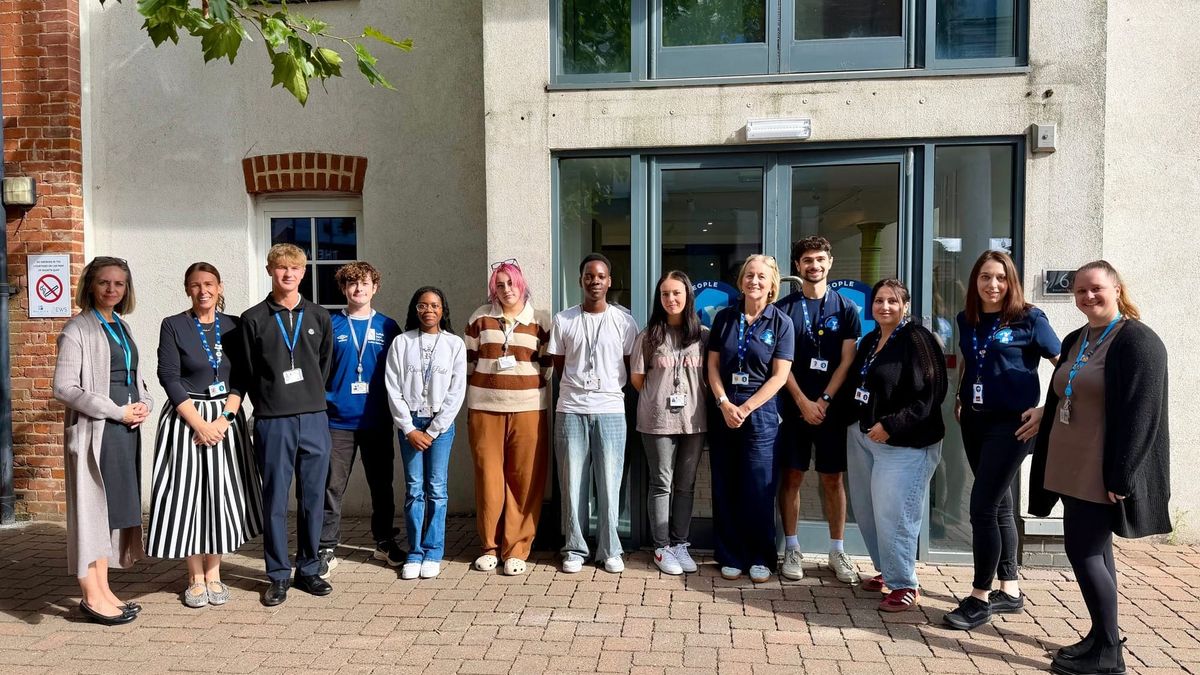
4YP, which supports children and young people aged seven to 25, moved its counselling, youth work and group sessions from Lower Brook Street, its home for more than 25 years, to a new hub at Regatta Quay on the Waterfront in September, officially opening it in October.
 Nicola Sebastian
For Komala, support is the priority. “I really hope that more support will be put in place for young people,” she says. “After reading the review, it's clear that young people aren't getting enough support in both their education and their home lives.”
Andy Crump, chief executive of Ipswich charity Inspire, says the first barriers the charity hears about are often “low confidence, anxiety and practical challenges such as preparing a CV or affording travel to work or college”.
“One young person who contributed to the review put it plainly: ‘I say I can't and they hear “I won't”.’ That stayed with me,” he says. “A young person not being ready to step straight into work doesn't mean they lack ambition.”
He welcomes the recognition that young people need “both a genuine opportunity and the right support to access it”, and believes the proposed employer incentives could help smaller businesses offer a first opportunity. But he warns that the new offer “can't be funded by moving money away from existing services”.
“As the proposed changes to benefits are worked through, young people need to be involved and there must be no gap between the support they rely on now and the support the new system promises,” he adds.

Oliver, one of the young people Inspire supports, is on The King's Trust Team programme. He says Inspire and the job centre have boosted his “confidence, social skills and hope for the future”, and that the review “does give me hope that they are going to change what opportunities young people can have”.
But he has concerns too. “It worries me maybe that people who genuinely struggle will be overlooked and therefore have lasting negative consequences,” he says.
His message to the government is simple: “Young people really want to work and live normal lives and they have so many skills and positivity to bring to their local communities. Don't underestimate them.”
The bottom line
For the young people we spoke to, the problem has never been a lack of ambition. It is a lack of first steps, replies and routes in.
A 278-page report cannot reply to an application, offer someone their first shift or hold back a benefit cut until the support is ready. Only delivery can.
Milburn's report has won backing from the top of government, and although the plan stretches over a decade, Westminster now has its blueprint. Until the first jobs, the replies and the advisers are in place, Harriet’s point stands: you cannot expect anyone to climb a ladder without enough rungs.
Don't forget: If you enjoy our content, please add Ipswich.co.uk as a "preferred source" on Google so you can easily find more of the content you value.
This article cost us ~£84 to produce
It's free for you to read thanks to the generous support of our partners. Please support us by supporting them.
Below the line