
No plan, no replacement: Do we risk losing the waterfront's historic charm forever?
National planning rules say a heritage building should not be demolished unless all reasonable steps are taken to secure its replacement. At Cranfield Mill on Ipswich Waterfront, nothing has been proposed, so we ask: what precedent would the council set by approving it?

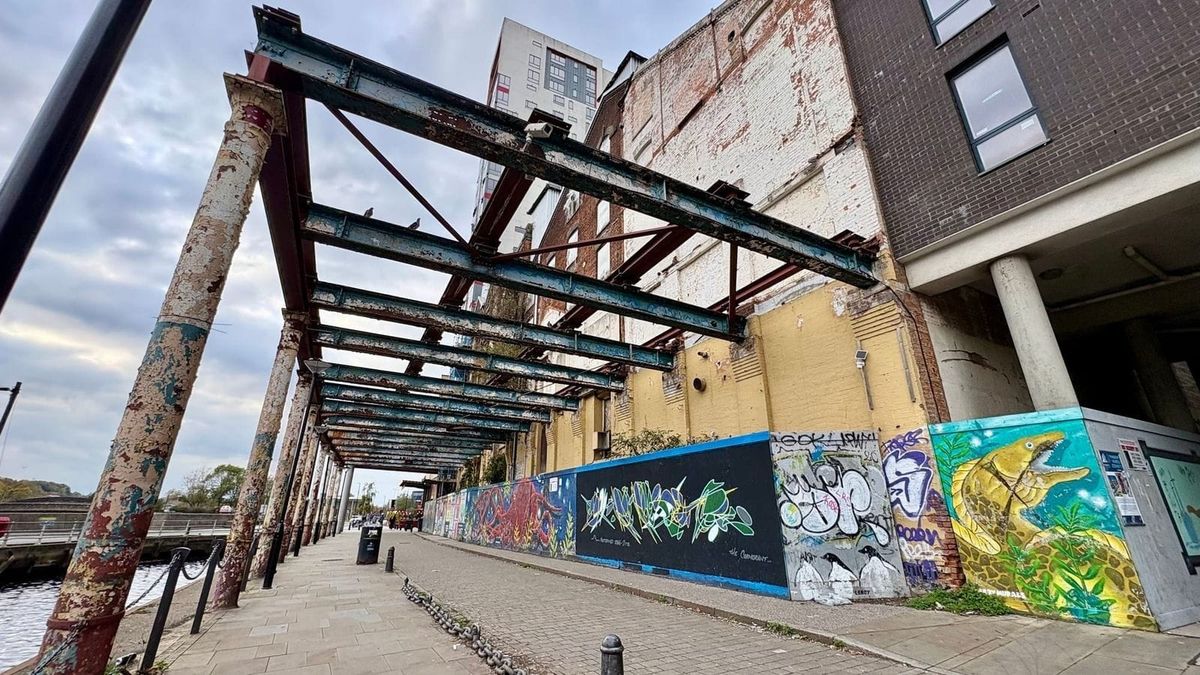
Cranfield's Mill was established at the head of the Wet Dock in 1884 and milled flour until the late 1990s.
When the waterfront was redeveloped, its warehouses were deliberately kept. The council's Wet Dock Conservation Area Appraisal describes the site's Victorian warehouses as "of special local interest" and says they "were consciously retained in the redevelopment but await refurbishment".
That was the council's own choice. When it granted planning permission to redevelop the Cranfield Mill site on Wednesday, 25 May 2005, Blocks B and C were to be kept and converted into flats, with new buildings designed around them. The scheme stalled; the original developer collapsed in the early 2010s, according to the applicant's agent, and the conversion never happened.
The Western Gateway project, which focuses on the western entrance to the Ipswich Waterfront, includes sites such as Paul's Silo, Cardinal Lofts, Marinero Lounge, Jerwood Dance House, The Mill, and two Victorian blocks that have recently become the centre of attention.
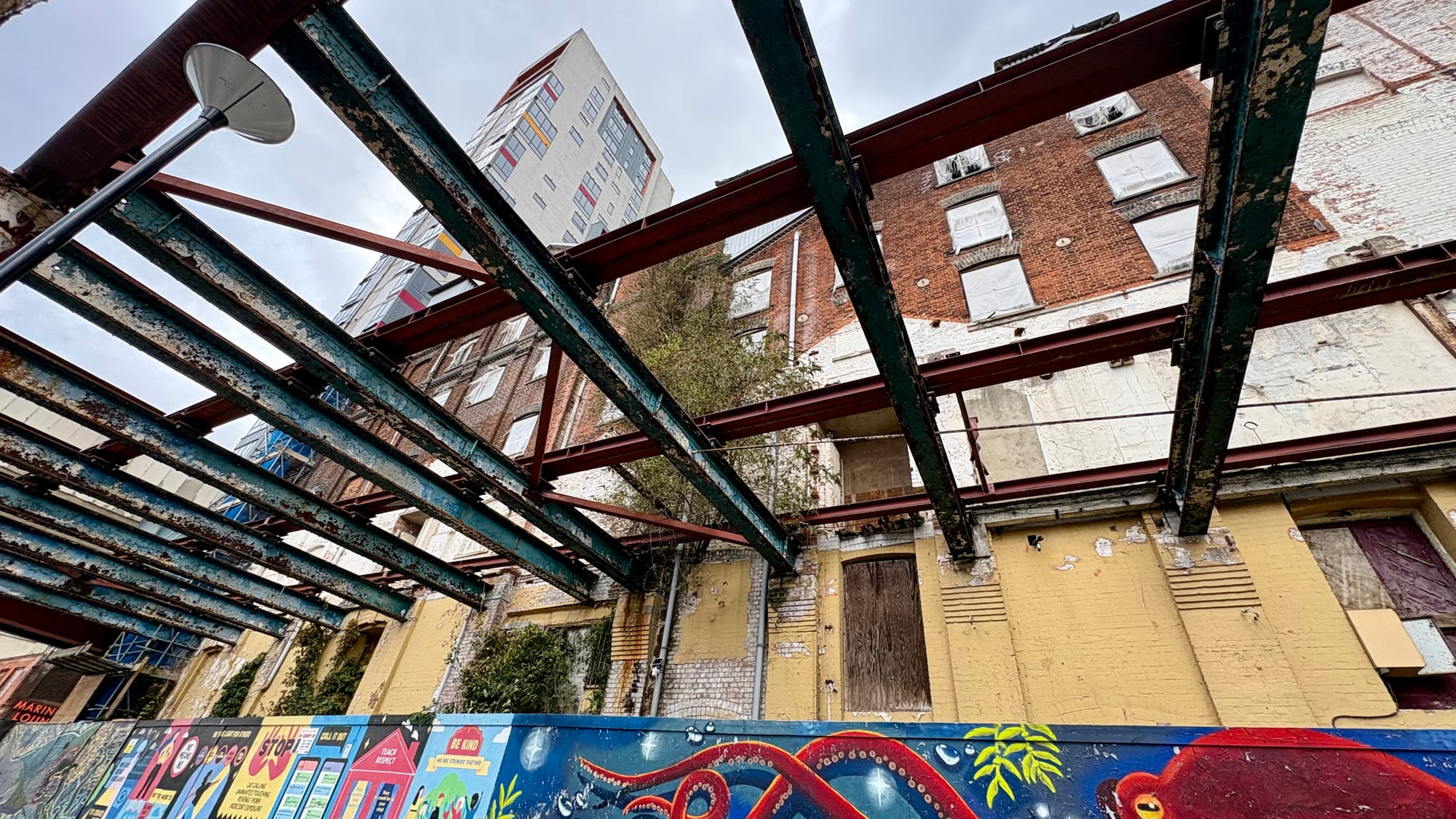
Blocks B and C are hard to miss: two red-brick warehouses with boarded windows and a rust-red framework of columns reaching out over the quayside below. Above them rises The Mill, at 23 storeys, Suffolk's tallest building, still waiting for its cladding to be replaced.
 Nicola Sebastian
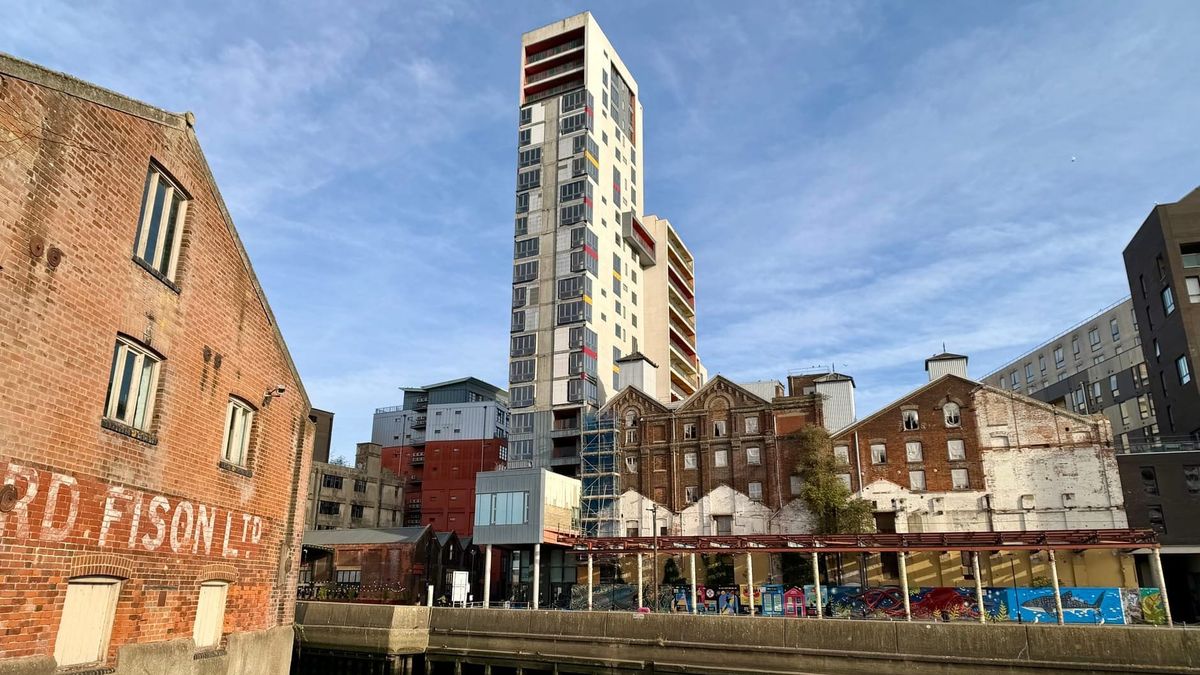
The application to demolish Blocks B and C is to be judged against the National Planning Policy Framework (NPPF). The framework is government policy rather than law.
Councils must take it into account, and how Ipswich Borough Council applies it here will show how seriously it treats heritage it once chose to protect, particularly as it also plans to buy the land the buildings stand on, according to correspondence seen by Ipswich.co.uk.
 Nicola Sebastian
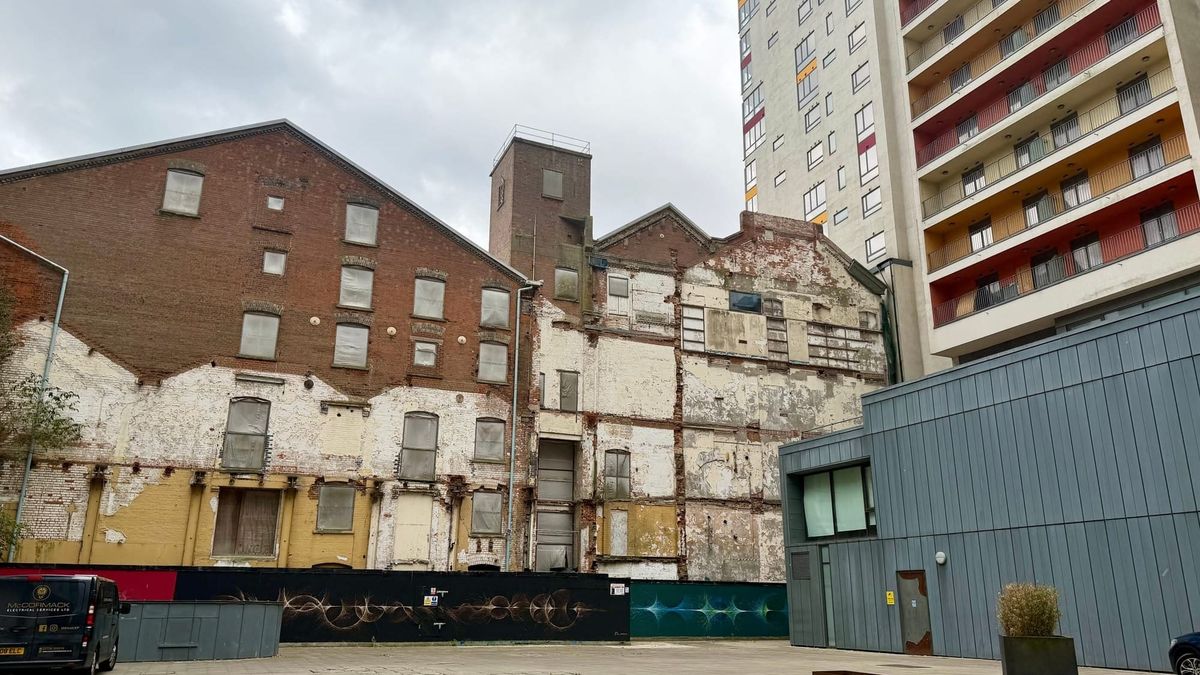
The test
Blocks B and C are not listed, but because they sit within the Wet Dock Conservation Area, demolishing them requires planning permission.
The council received the application on Wednesday, 5 August 2026. Twelve days later, the rules changed.
On Monday, 17 August, the government published a rewritten version of the NPPF.
Policy HE10 speaks directly to this case. It says development that leads to the loss of a heritage asset "should not be approved without all reasonable steps being taken to ensure that the new development will proceed after the loss has occurred".
In short: heritage should not be knocked down unless what replaces it is secured.
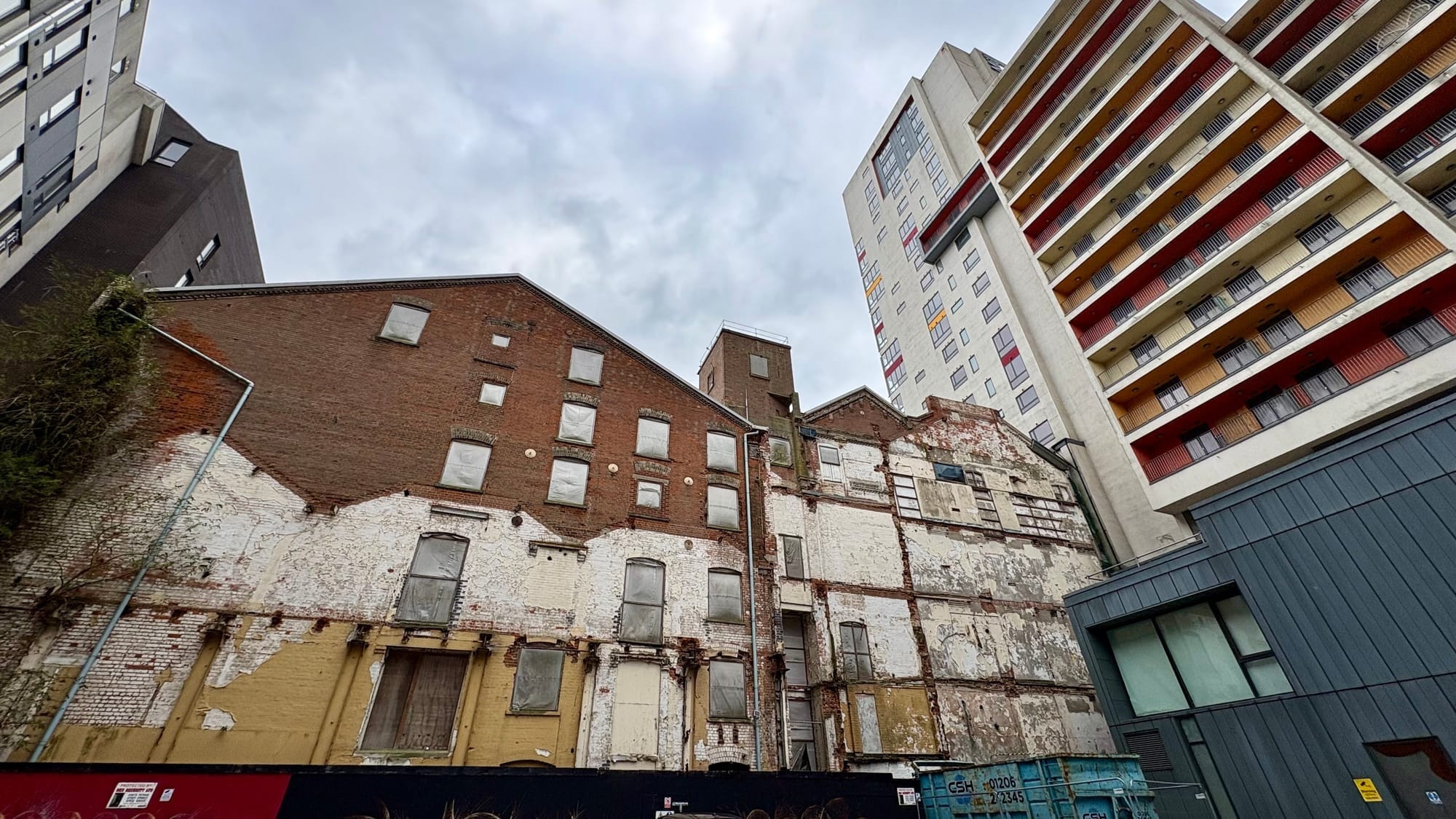
Normally, a council does that by tying demolition to a specific replacement, either stopping work until a contract is signed to build it or binding the developer through a legal agreement. In 2024, for example, when Associated British Ports applied to remove 93 pontoons from the Wet Dock that it said were "no longer fit for purpose", the same application proposed 15 replacements and two new buildings, so the old and the new were judged together.
Councils can still weigh a policy against other benefits, a process known as the planning balance. But they must show how they have applied it, and decisions that fail to do so properly can be challenged in the High Court through judicial review, which is the only route available to appeal against the granting of a planning permission.
The case for demolition
The applicant, Cardinal Lofts (Victorian Building) Limited, makes three arguments. A structural assessment by GC Robertsons & Associates concludes that "substantial retention of the external structure is not a realistic option", warning: "Left alone, further areas will collapse each winter."
The applicant says clearing the site "is key to unlocking access" to The Mill, whose cladding it describes as "flammable", for repairs expected to take two years.
And it accepts "some temporary harm" to the conservation area, but argues this is outweighed by repairing The Mill, which it says "will add over 200 flats to the local housing stock".
Measured against the test
Set against HE10, the gaps in the application are clear.
No replacement has been designed, submitted or approved. The applicant says only that a scheme will follow once The Mill's repairs are finished, and that "various options have been drawn up and discussed with planning officers". None of those various options has been made public.
The application does not say whether any alternative, such as a different route to The Mill's elevations, was considered. Its heritage statement still cites the previous version of the NPPF. And it says demolition is sought "for reasons which the Council are aware of", without saying what those reasons are.
The applicant's revised demolition plan adds detail on dust, silica and run-off, but nothing on what would replace the buildings, or how a neighbouring terrace that one resident says is secured to the blocks would be made safe once the wall comes down.
That leaves the council with a choice: refuse or delay until a scheme comes forward, or approve on the strength of a promise of plans "at a later stage". If it chooses the second without exploring every alternative, what precedent does that set for the next heritage building in the way?
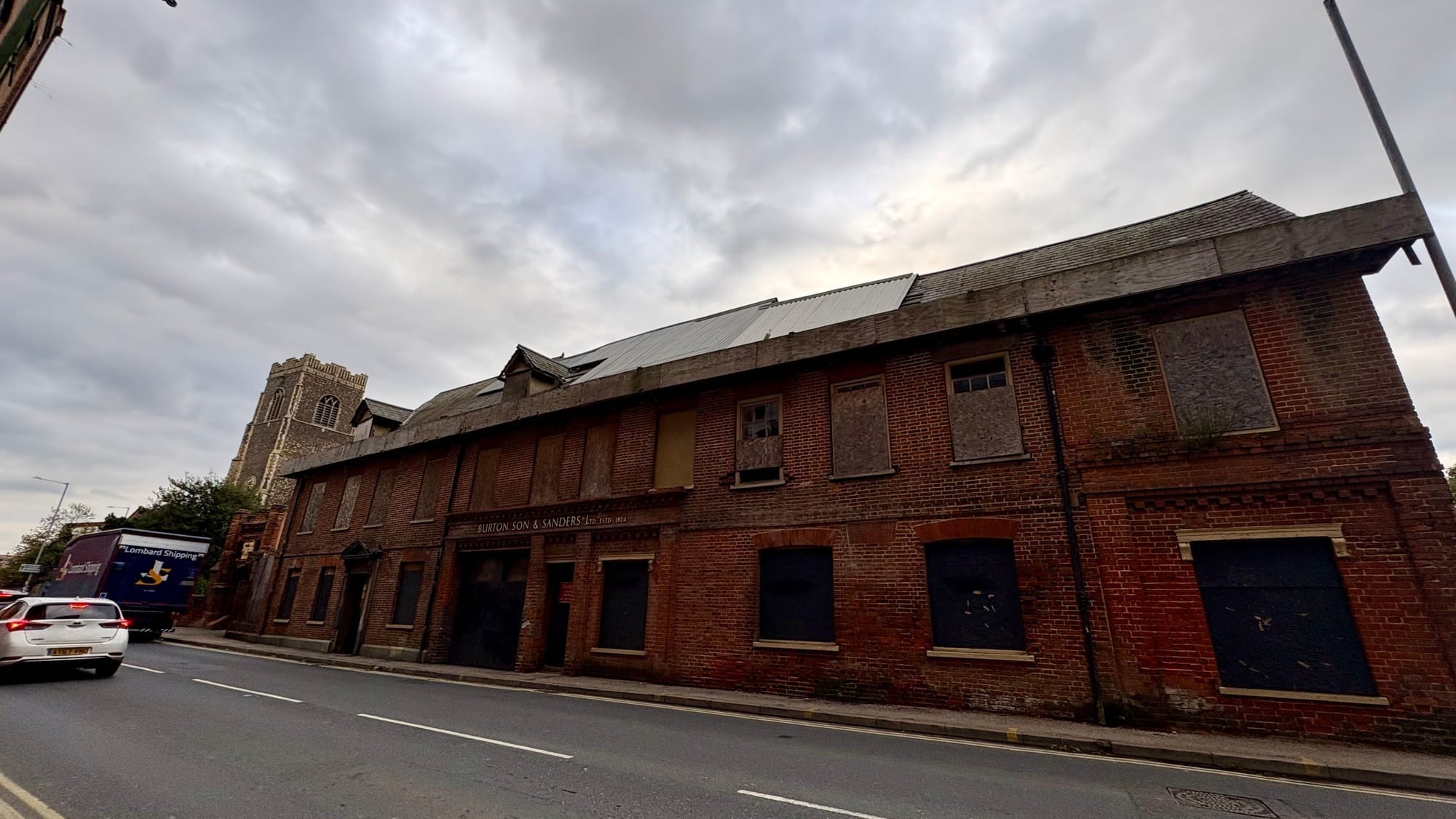
Blocks B and C are not the only heritage buildings on this stretch of College Street to have stood empty for years. Opposite Cardinal Lofts, the Grade II-listed former offices of confectionery maker Burton, Son and Sanders have been empty since its offices closed in 1993. A fire there in 2018 was treated as arson, and plans to turn the building into a bar, hotel or homes have come and gone.
The council's two roles
The applicant is Cardinal Lofts (Victorian Building) Limited, while the application form names Ipswich Mill Investments Limited as an owner of part of the land.
As Ipswich.co.uk has reported, the warehouses are owned by the Hembry family, which also owns the Port One logistics park. Team AB, which commissioned the structural, demolition and ecology reports, is based at Port One.
 Oliver Rouane-Williams
Ipswich Borough Council, which will decide the application, also plans to buy the land beneath the blocks for £1.09m, according to correspondence seen by Ipswich.co.uk. When asked about the purchase in October, the council said it was "not commenting on this matter".
That puts the council on both sides of the decision: as the planning authority judging whether the buildings can go, and as a prospective buyer of what lies beneath them.
Which comes first, the sale or the demolition? How will the two roles be kept separate? And what assurance can taxpayers have that £1.09m of public money is being spent independently of a planning decision the council itself will make?
Questions unanswered
Ipswich.co.uk put seven questions to the council, covering how it will apply HE10, whether it has asked the applicant for a replacement scheme, what the "reasons" referred to in the application are, how it will keep its roles as planning authority and prospective buyer separate, and its vision for the Western Gateway.
The council's press office asked us to submit a Freedom of Information request, which we have done, but that same council routinely fails to disclose information we request via FOIs.
What happens next
Public consultation on application 26/00609/FUL closed on Tuesday, 3 November 2026. The council's target decision date is Tuesday, 1 December 2026.
The bottom line
The Mill needs fixing, and the warehouses beside it are in a desperate state. Neither fact is in dispute.
What is in dispute is how Ipswich treats its heritage. If buildings the council once chose to save can be cleared on the promise of undisclosed plans “at a later stage”, that could become the standard by which the next heritage building on the waterfront is judged.
Places like the Ipswich Waterfront only have one opportunity to leverage their rich history and heritage as an asset for regeneration. Once that heritage and history is gone, it is gone forever.
Don't forget: If you enjoy our content, please add Ipswich.co.uk as a "preferred source" on Google so you can easily find more of the content you value.
This article cost us ~£106 to produce
It's free for you to read thanks to the generous support of our partners. Please support us by supporting them.
Below the line