
Is Suffolk County Council stalling its own watchdog to save its court fight over local government reorganisation?
A Section 5A report is one of the most serious sanctions available in English local government – and one is heading Suffolk County Council's way. Rather than being issued at pace, as convention demands, it appears set to wait until the council's October cabinet meeting. We ask why.

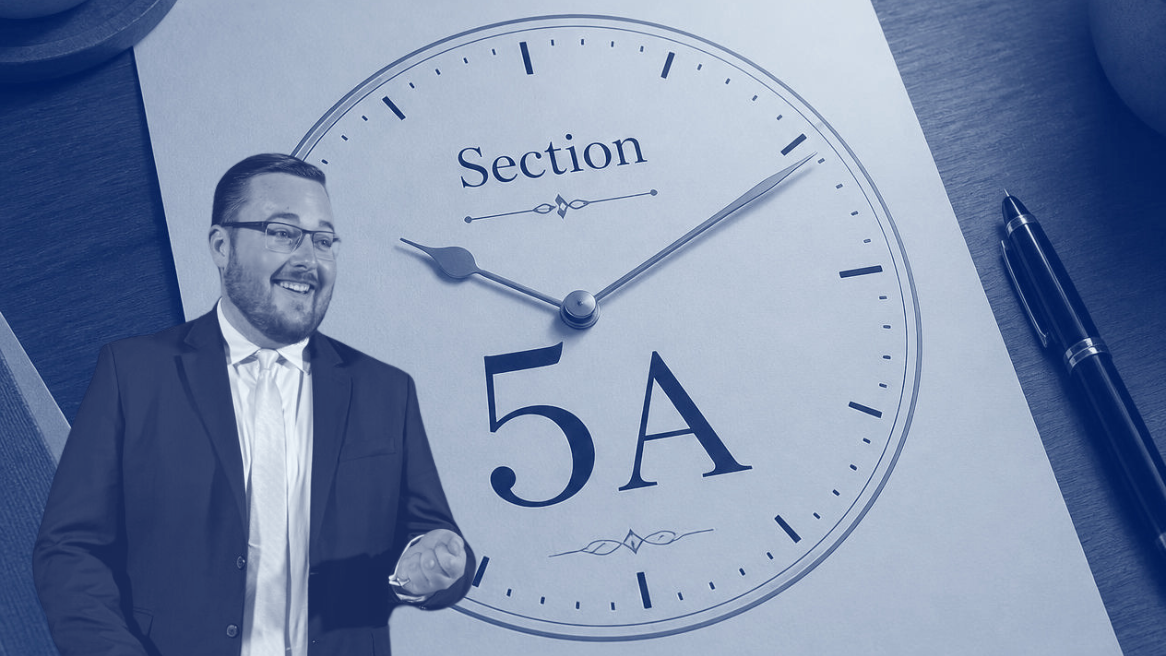
A Section 5A report, issued under the Local Government and Housing Act 1989, is triggered when a monitoring officer concludes that a breach of the law, or an act of maladministration, stems from a council's executive – its cabinet or leader – rather than the full council. It is reserved for the most serious cases, and its issuance has real teeth: the moment it lands with the executive, all further action on the decision in question is suspended. The cabinet cannot take further steps, sign contracts, or enforce the disputed decision until it has formally met and responded.
Councillor Richard Rout, leader of the Conservative group at Suffolk County Council, said such a report would be unprecedented locally. "Issuing a Section 5 or 5A report would be serious and incredibly rare – I cannot recall one ever being issued at Suffolk County Council," he said.
How we got here
The prospect of a Section 5A report stems directly from the process by which Suffolk County Council decided to take the Government to court over local government reorganisation (LGR).
On 18 June 2026, council leader Michael Hadwen used his executive powers to authorise judicial review proceedings against the Secretary of State. Cabinet formalised that decision on 29 June, in a decision recorded as "urgent" – a classification that prevented it from being called in for scrutiny.
Headline
Description
Between 27 June and 1 July, councillors from the Conservative, Green and Labour groups lodged four formal challenges, or "call-ins", questioning how those decisions were taken. The council's monitoring officer has since rejected all four challenges, in a 26-page response deemed confidential and withheld from the public. It is understood the same monitoring officer is now preparing to present a Section 5A report to cabinet.
Asked directly, the council has declined to say whether the call-ins were rejected, whether a Section 5A report is due, or whether it has done anything wrong.
Why the timing matters
The purpose of a Section 5A report is to have consequences at the point of issue. Once it is served, the executive decision it concerns is immediately frozen pending a mandatory cabinet meeting, which must be held within 21 days, followed by a formal response within a further 14 days.
For Suffolk County Council, that would mean the decision to continue the judicial review – the case the council has already spent public money pursuing – could be suspended overnight. Cllr Rout said any delay in issuing such a report, once a breach had been identified, would run against its purpose. "Reports of this kind exist to have consequences, that's the point of them," he said. "Holding off on the issuing of such a report so that a decision can run its course, or become irrevocable, would not, in my opinion, be in the spirit of the law."
He added that speed was the whole point of the mechanism. "As soon as any breach of the law, or an act of maladministration, is identified, I would expect any monitoring officer to bring forward a Section 5 or 5A report at pace and not to suit the timetable of the council or any other political or legal objective," he said. "If that requires a special meeting to be convened, then that should be the case."
 Oliver Rouane-Williams
So, when will it be issued?
Ipswich.co.uk understands that the Section 5A report will not be issued until the council's October cabinet meeting – several months after the decisions it concerns were taken.
Councillor Andrew Stringer, leader of the Green group, confirmed he has written to the monitoring officer directly on this point. "I have written to the monitoring officer already asking if the 21-day publishing date for the Section 5A will be adhered to, or if SCC is waiting for the autumn," he said, adding that he had also asked whether this amounted to "a deliberate planned breach of protocol".
Cllr Rout said that if a monitoring officer had identified the need for such a report, urgency should follow regardless of other timetables. "This would be, to my knowledge, unprecedented on the county council, and it would be irresponsible to dress it up as anything else," he said. "Our expectation, if such an event were to happen, would be for the monitoring officer and joint chief executives to move with absolute urgency."
Suffolk County Council has previously said only that its monitoring officer had "already sent a detailed response on this matter" and that it did not plan to comment further. Ipswich.co.uk approached the council specifically about the timing of any Section 5A report, and about whether an October date had been chosen deliberately, but the council did not wish to comment further.
The bottom line
A Section 5A report is meant to be a fast-acting safeguard, freezing a disputed decision the moment a serious breach is identified.
If Suffolk County Council's monitoring officer has indeed concluded that one is needed over the decision to launch judicial review proceedings against the Government, an autumn timetable would mean months passing between that conclusion and its formal consequences.
Whether that gap is a coincidence or a manufactured convenience is not something the council will comment on. But what is now clear is that an incredibly serious and rare mechanism, designed to be used swiftly to safeguard the public, appears to be moving to a different clock altogether.
Don't forget: If you enjoy our content, please add Ipswich.co.uk as a "preferred source" on Google so you can easily find more of the content you value.
This article cost us ~£135 to produce
It's free for you to read thanks to the generous support of our partners. Please support us by supporting them.
Below the line