
Ipswich could lose its northern route by default, not by decision
Suffolk County Council voted by 50 votes to two against Labour’s motion on Ipswich’s traffic on 8 October. Martin Cook, leader of the Labour group at the county council, was one of the two, and explains what the fifty voted against.

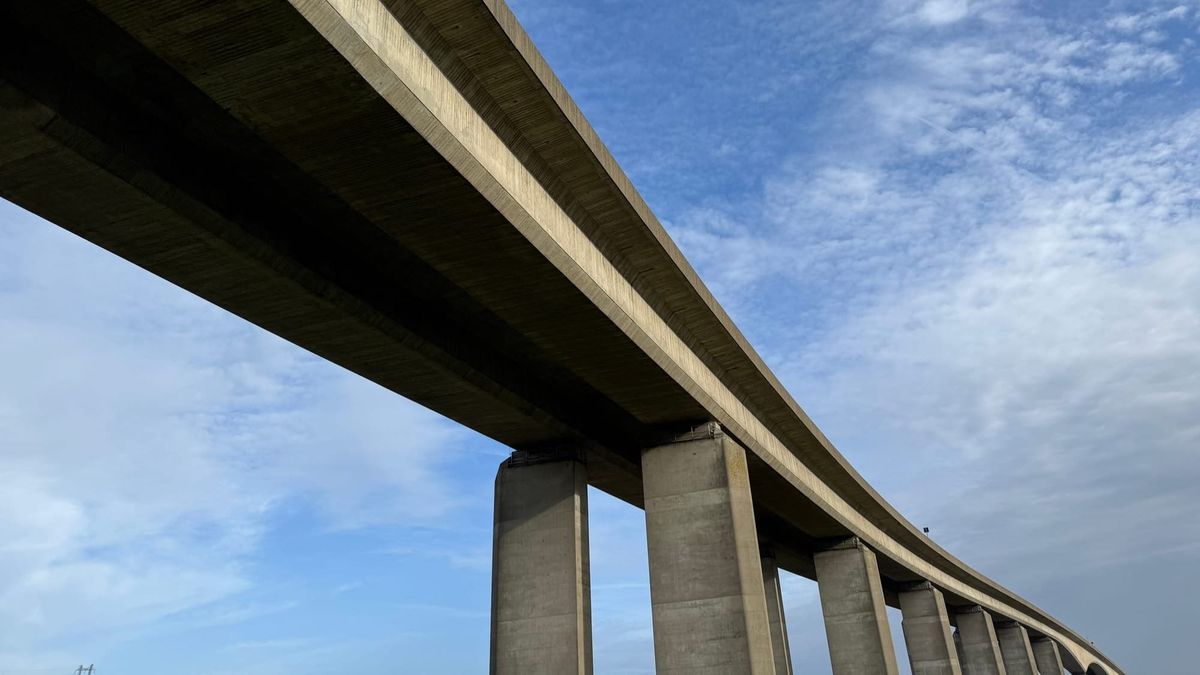
Only two councillors voted for it. I was one. The other was my seconder, Colin Kreidewolf. I have had better afternoons.
The motion asked the cabinet for three things. A costed package of practical measures to keep Ipswich moving before the bridge is dug up again, by spring 2027. Every route north and south of the town kept open in the district councils’ housing plans until the business case is finished in late 2028, because Babergh and Mid Suffolk start consulting on theirs in January. And publication of how the options were ranked.
Every one of those is advice from the cabinet’s own paper, the 70-page Strategic Position Paper it approved on 17 September. The paper says smaller tactical interventions “should be prioritised” because of the maintenance coming on the bridge between now and 2031. The paper says the weighting of options should be made explicit next time so the process is “transparent, auditable and not pre-determined”. The motion took those sentences and added dates. That is all it did. It did not pick a route or ask for a penny the cabinet has not already set aside. It did not even mention the word bypass. I checked.
The paper scores every option against four tests. The test about finding an alternative to the Orwell Bridge is counted twice. The two tests about Ipswich’s own roads – the traffic already here and the houses still coming – are counted once each. The bridge belongs to National Highways, and the paper’s table says the best-scoring options would be promoted by National Highways or the government, not this council. So the scoring leans towards the scheme that is somebody else’s job to build, and away from the roads the council is responsible for.
Fifty councillors voted against it. Thirty-six were Reform. Eleven were Greens, who have never wanted a northern route and were at least consistent in voting against keeping the corridor open. Six Conservatives abstained, one voted against, and so did the two independents.
The Reform vote is harder to explain. The cabinet’s Corporate Strategy, adopted on Thursday, covers the next four years. Under roads it says the council will “support long-term solutions to resilience on the A14 Orwell Bridge by exploring strategic infrastructure options, including a northern bypass around Ipswich”, and will “review the existing technology (signals) for short-term improvements” when the bridge shuts.
Those are two promises.
Every Reform councillor in the room voted against a motion asking for a date on the second one. And on Thursday, before adopting those words, the leader told the cabinet that a bypass and the bridge “have nothing to do with each other”. His own paper scores them as if they had everything to do with each other. In May, Reform’s then leader told the East Anglian Daily Times that the “number one” question for Ipswich was how to get over, under or round the bridge. In October, apparently not.
On Thursday we asked the leader a simple question about the strategy: is a review of the traffic lights the whole of the short-term plan, and if not, what else is in it, what will it cost and when will it arrive? The answer ran for some minutes and contained none of those things. The traffic lights are being reviewed. The traffic is not. Short-term measures, the leader said, have to wait until “the work is done”. Anything sooner would be “a sticking plaster”. A sticking plaster is what you use while you wait for the operation. The operation is booked for 2040. I would take the plaster.
Ipswich congestion, he said, is “our next priority”. Next, after the bridge, after the business case in 2028, after the maintenance that runs to 2031. Next is a comfortable word. It never says when. And the motion, he said, had tried “to curtail us into a timeframe”. It had. That was the point of it.
The reason it matters is houses. Ipswich.co.uk reported this month on 7,500 new homes planned in and around the town. The houses north of Ipswich are coming whether the county does anything or not. The only question is whether we get the roads that should come with them. If this council says nothing about corridors when the district councils’ housing plans go out in January, the land will be allocated for houses, and the option will close. That was the second request. Fifty councillors voted against it. The road north of Ipswich will not be lost by decision. It will be lost by inaction.
And the paper’s timetable has construction on anything big starting in 2036, with a road open around 2040. The cabinet member said in September the danger was moving too quickly. Nobody on Colchester Road in the rush hour recognises that danger. The practical measures that could be done before 2040 are the whole point.
Nurses
Roads were not the only subject on which the cabinet was asked for a number and declined to give one. At the same council meeting, the Labour group asked the cabinet member for public health about the consultation on health visiting, school nursing and the Family Nurse Partnership, which closed on Sunday. The council’s finance report says £2.4m is being drawn from the public health grant reserve this year to keep the service going. We asked how much of that gap the proposals would close in a full year, how many nursing posts would go, and whether the equality impact assessment would be published before the consultation closed.
She gave no figure for either. To answer, she said, would predetermine the outcome of a consultation that was still live. On the equality assessment, the answer was the same, with the addition that we had been at the scrutiny meeting and ought to know better. An equality impact assessment is not a decision. It is what you do before you decide, not after. Ipswich.co.uk reported in August that up to 49 nursing roles could be affected, and the union puts the figure higher. The cabinet member will not put a figure on it at all.
So the council will not say what the changes save, how many nurses go, or what the impact on families is. The cabinet is due to decide on 10 November. A cabinet that cannot answer those three questions is not ready to decide this one. The administration’s own Strategic Statement, published last month, promises to “give children the best start in life, from pregnancy through to school”. The people who do that – health visitors and school nurses – are the very people whose jobs Reform has put on the line.
Potholes
Last month I wrote about the JCB Pothole Pro, borrowed for two days as the leader’s “new way of waging war on potholes”, and Suffolk Highways’ figure of around 370 repair orders waiting. The council also says it fixes about 1,000 defects a month at this time of year. If those two numbers measure the same thing, the whole backlog is under two weeks’ work, and I have a suggestion.
A hole does not count until it is 1.6in (4cm) deep and 8in (20cm) wide. With a backlog that small, the council could afford to lower the bar and fix a hole while it costs you a tyre, rather than wait until it costs you a tyre, a wheel and a morning off work. And if the real backlog is a great deal bigger than 370, then the council has a counting problem as well as a pothole problem.
Two votes for, 50 against. Both were Labour. At Endeavour House, one party is pressing for something to be done about Ipswich’s traffic before 2040. The traffic will still be there in the morning, and so will we.
Don't forget: If you enjoy our content, please add Ipswich.co.uk as a "preferred source" on Google so you can easily find more of the content you value.
Local journalism is expensive to produce
It's free for you to read thanks to the generous support of our partners. Please support us by supporting them.
Below the line