
Ipswich cannot regenerate its town centre while treating its car parks as a cash machine
Ipswich Borough Council's strategy promises to make the town centre "vibrant, inclusive, and a great place to live, work, and visit." Its parking strategy is to charge a little more every year. At some point, it needs to address the obvious contradiction.

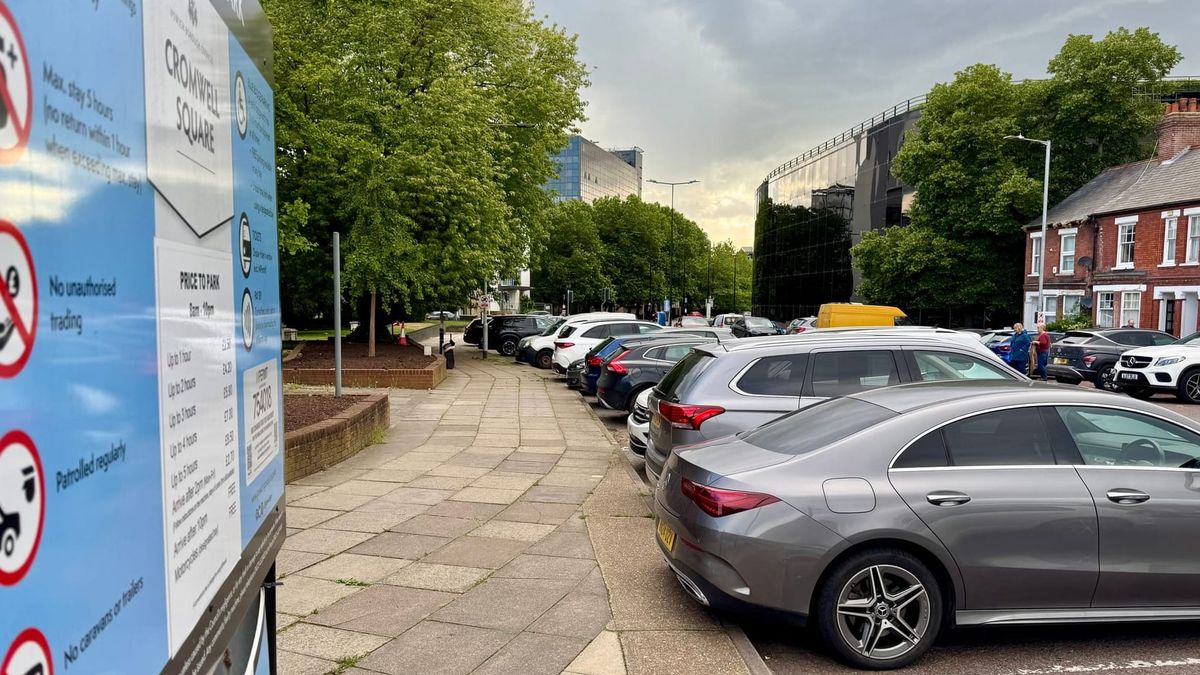
Next week, the council's Executive will consider proposals to raise parking charges across its off-street car parks and on-street bays – again.
Short-stay rates would rise from £1.60 to £1.70 per hour. All-day parking would go from £7.50 to £8.00. The justification, as ever, is meeting "inflationary cost pressures." The proposals are forecast to generate an additional £194,000 per year for the council – but at what cost to our local economy?
The council needs the money. Everyone understands that. But understanding a decision is not the same as accepting that it reflects the right way of thinking about parking — and few think it does.
The question the council is not asking
Every year, the parking review asks the same question: how much should we charge? What it never asks is: what is our parking actually for?
The Association of Town & City Management, a not-for-profit membership body that supports those who manage high streets, town centres and city centres, and the British Parking Association, a not-for-profit association providing a leading membership community to support parking and traffic management professionals across the UK, are explicit on the point. Their guidance states that parking policy "cannot be viewed one-dimensionally as a simple revenue source for local authorities" and that "revenue generation should not be the exclusive objective of parking provision in the town centre." If charges damage the viability of the town centre, they warn, the knock-on effect on the council's own resources will follow.
And here lies the frustration. Parking should be viewed strategically through the lens of economic growth, not fiscally through the lens of how much money we can make.
Ipswich Borough Council's parking reviews contain no assessment of what its charges mean for town centre footfall, dwell time, or consumer spend. It compares Ipswich with Cambridge and Norwich — cities with objectively stronger retail and leisure offers, better public transport, and a fundamentally different relationship with their visitors — and concludes that Ipswich is not the most expensive, so the increase is defensible.
It isn't.
It is the wrong comparison entirely. Ipswich's town centre does not compete with Cambridge or Norwich. It competes with Copdock, Ransomes and Martlesham, which offer free parking that is easily accessible as standard.
What the evidence actually says
I'll be careful here, because the evidence on parking and town centre health is more complicated than people give it credit for, and the instinctive response from traders, that cheaper parking equals more customers, is not as well-supported as many assume.
Research by Mingardo and van Meerkerk, analysing data from 80 Dutch urban centres, found a positive correlation between higher parking fees and retail turnover per square metre — not a negative one. Studies in Edinburgh, Bristol, and London town centres consistently show that retailers overestimate both the proportion of their customers who arrive by car and the weight those customers place on parking costs when deciding where to shop. Yes, it's old, but a 1995 Edinburgh study found that while 51% of retailers cited parking as their top concern, shoppers ranked it well below the quality of the retail offer, pavement width, and pedestrian priority.
Free parking trials in Aberdeen, Herford in Germany, and Oslo showed little or no increase in footfall and in some cases reduced space turnover, with workers rather than shoppers claiming the freed-up spaces. The dogma that "no parking, no business," as one major study put it bluntly, "is not correct."
None of this is an argument for unlimited price rises. The same body of research is also clear that mid-range and smaller town centres — the category Ipswich sits in — that charge above the national average relative to their retail offer have recorded above-average footfall decline. The evidence does not say charge as much as you like. It says charge strategically, relative to the offering people are parking for, with a clear sense of what you are trying to achieve.
That is precisely what Ipswich is not doing.
The council already knows how to do this
The £2.70 after-2pm offer — soon to become £2.80 — principle is sound: use pricing to incentivise behaviour, in this case drawing visitors into the town centre during the afternoon and evening when footfall would otherwise be lower. The proposed trial extension to Saturdays and Sundays at Crown car park applies the same logic to weekends. Whether it works is not something the council has published data on, and, as is so often the case, the council does virtually no marketing of it, but the thinking behind it is right.
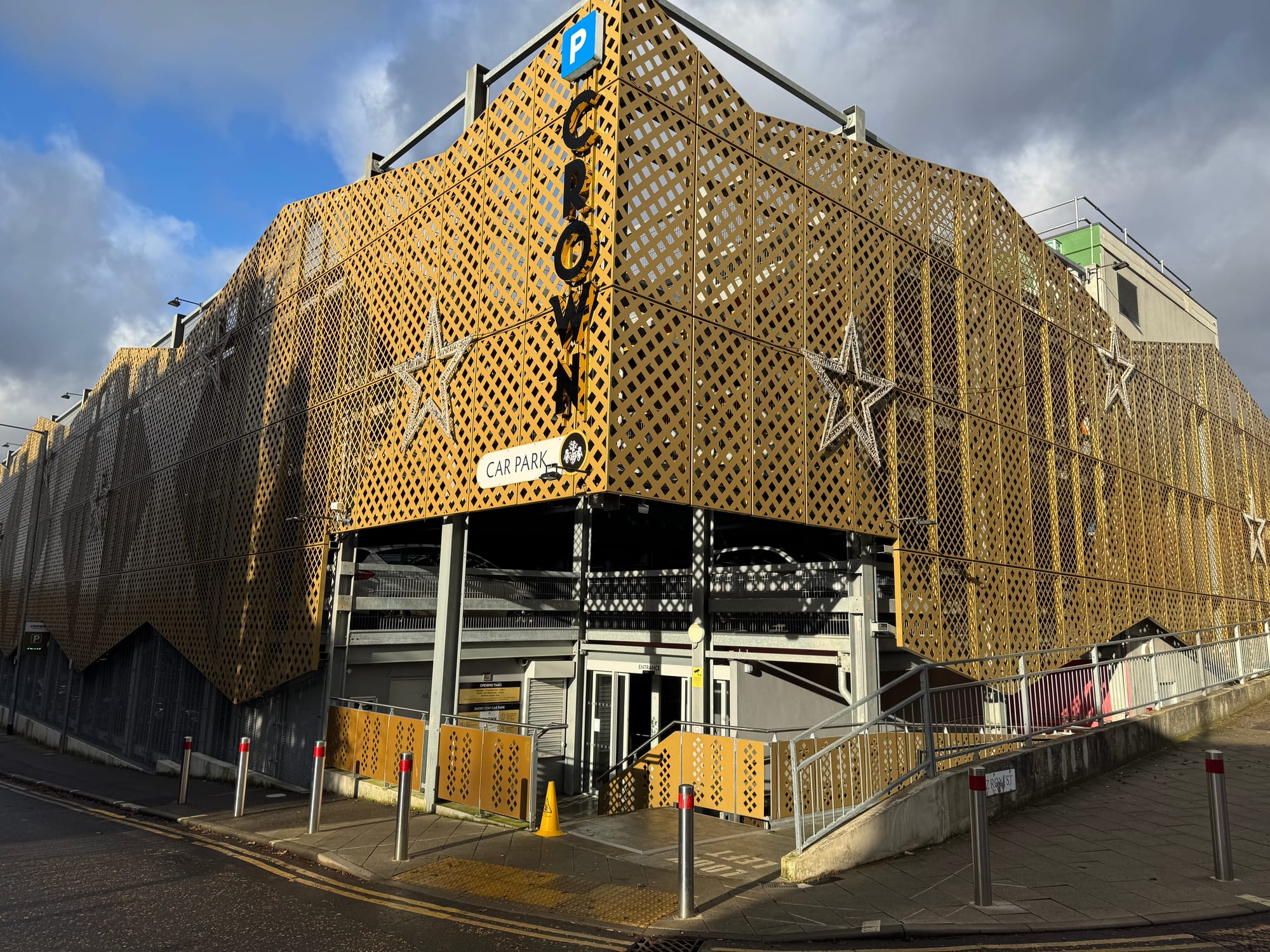
Which makes the gap between that initiative and the rest of the council's parking strategy all the more puzzling. If differential pricing can be used to shape behaviour on weekday afternoons at one car park, why is that logic not applied more broadly? Why is the default position still "a little more, across the board, every year"?
The bottom line
The British Parking Association sums it up: "The only universal answer is that local authorities and other operators must develop a plan for parking provision that faces up to the question, 'What and who is our parking for?' and complements a wider strategy for accessibility."
Ipswich does not have that plan. It has an annual tariff review and a hole in its budget to fill.
The council should scrap its price increase next week. It should also commit to developing a proper parking and accessibility strategy — one that starts from the town centre's economic needs, not its budget requirements. Until parking is treated as a lever for growth rather than a source of revenue, we will be having this same conversation again next June, and the June after that, and the June after that.
Don't forget: If you enjoy our content, please add Ipswich.co.uk as a "preferred source" on Google so you can easily find more of the content you value.
Local journalism is expensive to produce
It's free for you to read thanks to the generous support of our partners. Please support us by supporting them.
Below the line