
How the numbers stack up for a Ipswich HMO landlord
A £210,000 Ipswich terrace let as five rooms could bring in £34,200 a year. After bills, management, repairs and mortgage interest, a hypothetical landlord would be left with around £11,300 – before tax and before recovering the cost of the conversion. We take a deep dive into the figures and facts.

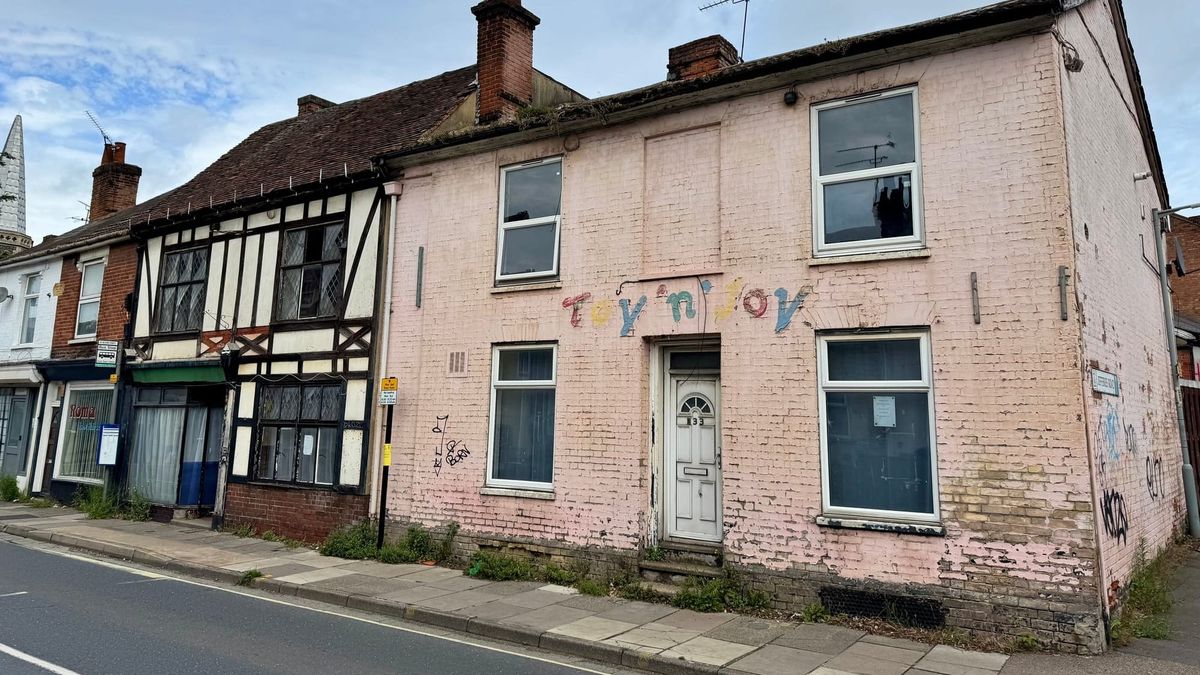
Not quite a goldmine: what an Ipswich HMO really earns
On paper, five rooms in a £210,000 Ipswich terrace bring in £34,200 a year, nearly three times the average rent on a three-bedroom house in the town, before bills. Once the bills, the mortgage and the empty months are paid for, the sums look very different – and so does the question of what Ipswich gives up in return.
Ipswich Borough Council estimates that the town has around 650 houses in multiple occupation (HMOs), more than any other district in Suffolk reports. On the council’s 2024/25 returns to the government, Ipswich had 10.4 HMOs for every 1,000 homes – roughly two and a half times the rate in East Suffolk and nearly three times that of West Suffolk.
A typical HMO is a rented home where at least three people from more than one household share a kitchen, bathroom or toilet. To some, they are an affordable foothold in an expensive rental market. To others, they are a sign of family homes being carved up for profit.
The money behind them sits somewhere between those two pictures – and that may matter more to the town than either side’s argument.
A long tradition of lodgers
Shared housing in Ipswich is nothing new. In 1865, a trade directory listed Mrs Catherine Maria Bianchi as the keeper of a lodging house on Museum Street. A few years earlier, the census had recorded Charles Gooderham running the Horse Shoes, a beerhouse and licensed lodging house in Curriers Lane.
By 1911, a lodging house on New Street was home to Walter Worth, a 29-year-old dock labourer, and 29 other lodgers – which makes a five-bedroom terrace sound rather roomy.
The modern rules came much later. The Housing Act 2004 established today’s licensing framework, and in 2018 mandatory licensing was extended to houses with five or more occupants from at least two households, regardless of how many storeys they have. Ipswich added its own planning restrictions on smaller house shares in parts of the town in June 2024.
Why tenants take the rooms
A room on Grove Lane was recently advertised at £595 a month, bills included. In September 2026, a one-bedroom home in Ipswich averaged £748 a month – before a single utility bill had been paid.
For someone starting a new job, studying at the Waterfront or looking for somewhere to live after a relationship ends, that gap matters. A room with the bills included also makes the monthly budget easier to predict.
The borough’s own evidence identifies students, young professionals and people needing temporary accommodation as the groups HMOs serve. Its technical evidence paper says “HMOs make an important contribution to the housing supply”, while its equality impact assessment says they provide “affordable accommodation for many students and young people of working age.”
The government takes a similar view. Its impact assessment for extending mandatory licensing states that “HMOs are an affordable form of accommodation”, and its Homelessness Code of Guidance says housing authorities “will wish to work with landlords willing to provide suitable Houses in Multiple Occupation (HMOs)”, particularly when finding homes for younger people.
For some renters, a room is less a choice than the limit of what the benefits system will cover. The Department for Work and Pensions says single private renters under 35 without children will usually “only be able to claim for a single room in a shared house”, although there are exceptions.
Why Ipswich has so many
The ingredients for house shares are all here: a university, a mainline station and streets of terraced houses within walking distance of the town centre. An Ipswich terrace averaged £210,000 in August 2026.
Demand has also built a local industry. One Westerfield-based firm offers landlords guaranteed rent, HMO management and property investment services. Its founder says that when she took her first graduate job in Ipswich in 2004, the house shares she found were tired and poorly presented, so she set up a professional house share herself. According to the business, enquiries soon came in from other young workers looking for much the same thing.
Across Suffolk, nowhere else comes close. East Suffolk estimates it has around 500 HMOs (4.0 per 1,000 homes), West Suffolk 320 (3.8), Babergh 40 (0.9) and Mid Suffolk 35 (0.7), according to the councils’ 2024/25 government housing returns and March 2025 dwelling-stock estimates.
Look beyond the county, however, and Ipswich looks less unusual. Colchester reported about 17 HMOs per 1,000 homes, and Norwich about 58.
The figures also come with a health warning. Councils estimate their totals, and smaller numbers are particularly hard to track. An earlier countywide modelling exercise put Ipswich at around 1,850 potential HMOs, with West Suffolk slightly higher – a reminder of the wide margin of uncertainty around any Suffolk league table.
Within Ipswich, house shares are far from evenly spread. In the council’s ward breakdown of licensed HMOs, Alexandra had 76, Westgate 42 and Bridge 31 – roughly two-thirds of the total between them. It is why one resident can feel surrounded by house shares while someone across town barely notices them.
The landlord’s sum
To test the headline numbers, take a hypothetical £210,000 terrace converted into five compliant rooms, each let at £570 a month. Full occupancy brings in £34,200 a year.
For comparison, the average three-bedroom rental in Ipswich was £1,054 a month, or £12,648 a year. The two are not like-for-like – one is a family let, the other five individual tenancies with the bills included – but the gap explains why landlords keep looking for houses to convert.
Then the deductions begin. Allowing 5% for empty rooms leaves £32,490 in collected rent. Management at 10% takes £3,249. Bills and council tax account for around £6,000, repairs, insurance and compliance another £2,500, and interest on an illustrative 75% mortgage at 6% comes to £9,450.
What is left is around £11,300 a year before tax – and before the landlord has recovered the cost of the conversion, the furnishings or the purchase itself.
Then a boiler goes, or a room sits empty for three months. Five tenants also mean five sets of comings and goings, and somebody still has to settle whose turn it is to clean the kitchen.
A real listing tells a similar story. A specialist agent marketed a six-bedroom HMO on Henslow Road at £380,000, with rooms bringing in between £595 and £695 a month. The listing put total annual rent at £47,460, a gross yield of 12.49% at the asking price.
The agent’s itemised budget, covering utilities, council tax, cleaning, insurance and management, came to £14,832 a year, bringing the figure down to £32,628. That excluded mortgage costs, tax, repairs and empty rooms. An illustrative interest-only mortgage on three-quarters of the asking price at 6% would take another £17,100 a year, leaving around £15,500 before tax, repairs or a single empty room.
What eats into the rent
HMOs cost more to run than ordinary lets. In most single lets, tenants pay their own utilities. In most HMOs, the landlord pays the bills and council tax and includes them in the rent, according to a tax guide published by Accounted.
Specialist HMO management agents often charge 12% to 18% of gross rent, compared with 8% to 12% for single lets, the guide says. Compliance adds fire doors, fire alarms, emergency lighting, five-yearly electrical inspections and annual gas safety checks.
The income is taxed through Self Assessment like any other buy-to-let. Under the Section 24 rules, landlords receive a tax credit worth 20% of their mortgage interest, rather than deducting it in full.
The guide gives the example of an HMO generating £30,000 in gross rent, with £10,000 of running expenses and £8,000 of mortgage interest. That produces a taxable rental profit of £20,000 and a tax credit of £1,600. For a landlord with £50,000 of other income, it takes their total income to £70,000 – well into the higher-rate band.
“The higher yield from HMO letting often justifies the higher tax cost, but it is important to model the numbers carefully,” the guide says.
Nationally, the picture is tightening. In the last quarter of 2025, 85% of landlords reported their lettings as profitable, down from 89% the quarter before, according to Pegasus Insight’s analysis of the private rental market. Average achieved yields edged down from 6.6% to 6.4%, while HMO landlords achieved an average of 7.3%.
Mark Long, managing director and founder of Pegasus Insight, said: “We’re seeing a clearer separation between business models. Higher-yielding, more intensively managed portfolios, particularly HMOs, continue to provide a degree of insulation, while more traditional portfolios have less flexibility as costs and complexity remain challenging.”
He added: “The risk to buy-to-let landlords is not a sudden deterioration in performance, but a more gradual erosion of resilience.”
One more room
Spreading the rent across several rooms has a practical advantage: when one tenant leaves a six-room house, one rent stops while the others keep coming in. It also creates an incentive to turn one more room into a bedroom. A dining room earns rent as soon as someone moves into it – and for everyone else in the house, that can mean eating dinner in the kitchen or taking it upstairs.
A six-bedroom house on Colchester Road shows how that can play out, according to Reform UK councillor William Patrick, who has written about the scheme. He says the house was bought in 2025 for £356,000, with an initial plan for a nine-bedroom HMO.
In his account, that proposal, which included a second row of tandem parking spaces, was refused by Ipswich Borough Council and the decision was upheld on appeal. A revised scheme for eight bedrooms, with one parking space removed, was then approved, he says.
He says the layout absorbed the standalone living room into bedrooms and shrank the kitchen into the dining room, and that one of the exit route's for residents ran through the communal kitchen and dining space and out via the back garden.
His estimates show why the extra rooms matter. As a family home, he calculates, the house would rent for roughly £1,350 to £1,550 a month. As a six-room HMO at £450 to £550 a room, it would bring in £2,700 to £3,300. With eight rooms, that rises to between £3,600 and £4,400.
His room rates sit below some of the asking rents elsewhere in this article, including £595 on Grove Lane and £595 to £695 on Henslow Road – a reminder that room rents vary across the town.
The councillor’s case
Cllr Patrick argues the model is both more lucrative and less risky than landlords’ margins suggest. “The financial incentives driving these conversions are immense,” he wrote.
His argument rests partly on the benefits system. That single-room limit is set by the Local Housing Allowance’s Shared Accommodation Rate, which for the Ipswich area is £366.50 a month in 2026/27. It is below the room rents he cites, but he argues it acts as a floor. Across eight rooms, it would come to £2,932 a month – nearly double his estimate of the family rent for the same house.
“High reward, structurally insulated risk,” he wrote.
He also points to council tax, which is usually charged on an HMO as a single property. “Eight independent adults residing in one house pay the exact same collective council tax band as a single family, despite consuming substantially more municipal services,” he wrote.
The safety net is less certain than it sounds. The shared rate applies to single renters under 35 without children, and some are exempt. Under Universal Credit, housing support is normally paid to the tenant, with payment direct to a landlord generally reserved for cases such as rent arrears. And while the landlord pays the council tax bill, it is recovered through the rent, as part of the £6,000 set aside for bills in the illustration above.
The rate also cuts the other way. Set against the £595 asked for the room on Grove Lane, it leaves a gap of £228.50 a month – the difference between a room that is cheaper than a flat and a room that someone on the tightest budget can afford. On that listing, a tenant relying on the shared rate would need to find the difference elsewhere.
Nor do the national figures suggest a sector without risk. Pegasus Insight’s Mark Long describes HMOs as offering “a degree of insulation”, not immunity, at a time when the share of landlords in profit is falling.
The 650 and the 240
The council’s estimate of 650 HMOs comes from its 2024/25 return to the government. Its more recent public register lists only about 240 licensed addresses.
The gap is largely down to the rules. A typical HMO needs a licence only when five or more people from at least two households live there, so a four-person house share in Ipswich will generally fall below the mandatory threshold.
The licensed total has been climbing. The council counted 151 licensed properties in 2022, 202 when its new planning controls took effect in June 2024 and 225 in January 2026, although some of that increase came from licensing houses that were already operating.
Ipswich lists a licence fee of £155 per sleeping room, or £775 for five. Nationally, Accounted says a five-year mandatory licence typically costs between £500 and £1,500. Cllr Patrick calculates that, for an eight-room house, the fee works out at roughly £21 a month over the life of the licence.
Licensed HMOs face occupancy limits and minimum bedroom sizes. Nationally, a room used by one adult must be at least 70 sq ft (6.51 sq m). Fire precautions, shared facilities and waste storage also have to be dealt with.
The planning line
Licensing and planning are two separate decisions. Since June 2024, Ipswich’s Article 4 direction has meant that converting a house into a small HMO for three to six occupants needs planning permission inside mapped parts of 12 wards.
Elsewhere in the borough, that change can generally still be made under permitted development rights. A new HMO for seven or more people typically needs permission anywhere in the borough.
The council’s technical evidence paper says high concentrations “can sometimes have a detrimental impact on local housing areas”, pointing to noise, parking demand and pressure on local services. Its Local Plan policy DM20 sets out what counts as too many, including “more than two HMOs within a run of twenty properties on one side of the road”.
The policy also covers three or more HMOs side by side, a single home sandwiched between two, and more than one HMO on one side of a street with fewer than 20 properties on that side. Exceptions are allowed where the applicant can show a conversion would do no harm to local amenity.
Not everyone backed the controls. According to a 2023 report to the full council, Suffolk County Council’s Health Improvement team objected to the Article 4 direction, believing the restrictions would “disadvantage the most vulnerable and poorest residents in the Borough”. Borough officers replied that their evidence supported targeting areas with concentrations of HMOs and student housing. The county’s planning and highways teams raised no issue.
In practice, the controls have produced a near-even split. In its first review after Article 4 took effect, the council recorded 12 HMO planning approvals and 13 refusals, alongside 12 certificates of lawful development.
The council’s January 2026 review found no clear evidence of new clusters emerging, or of conversions being pushed into other parts of town, and recommended keeping the boundaries under review. Officers also found “no consistent or direct relationship between enforcement levels and HMO concentrations”, recording 28 planning enforcement investigations into suspected breaches between April 2024 and December 2025.
Cllr Patrick believes councils are outmatched. “Tasked with holding back a sea of incoming proposals backed by deep institutional finance and parachuted corporate advisors, local authorities are playing a lopsided game,” he wrote.
What the neighbours are saying
The business case does not always survive the planning committee – and a refusal is not always the end of the story.
In September 2026, a residents’ representative and two ward councillors opposed plans to turn two self-contained flats on Sherrington Road into a seven-bedroom HMO. Their objections included parking, noise, bin storage and whether the kitchen and shared living space were adequate for seven people. The applicant and agent backed the scheme, and officers recommended approval, but councillors refused it.
The scheme would have added rooms to rent while removing two homes where households could live independently.
On Felixstowe Road, the council refused a seven-person scheme after officers found the frontage could not accommodate safe access, suitable parking and cycle storage.
The case on St Helens Street went further. In June 2026, the argument was over 16 rooms in two vacant, fire-damaged shops. The applicant’s representative said the conversion was the only viable option and would give younger people somewhere they could afford to live. Officers thought bringing the buildings back into use was worth it, despite the existing concentration of shared housing.
Cllr Adam Rae called the proposal “just nonsense”, and the committee refused it by 10 votes to one.
On 18 September 2026, the Planning Inspectorate allowed the appeal. The inspector found that the scheme had not been shown to breach the borough’s over-concentration policy, that restoring the buildings would improve the conservation area, and that the evidence did not establish the claimed harm from parking, noise or waste. Permission came with conditions, including a limit of 16 people, a management plan and sound insulation.
Each case came down to questions a borough-wide count cannot answer. How many people can comfortably share a kitchen? Where do the bins go? Which neighbouring houses count towards a concentration limit? And for someone who can afford £595 a month with the bills paid, where else in Ipswich can they live?
A one-way street
There is one more cost that rarely features in the sums. Accounted warns that HMOs are less liquid than standard homes, because buyers are mainly other investors rather than owner-occupiers.
In other words, once a family house has been converted, its most likely next buyer is another landlord. Conversions such as en-suite bathrooms and fire safety systems do not reduce income tax, but they do form part of the property’s base cost for capital gains tax, reducing the taxable gain when it is sold.
The two halves of the St Helens Street story point to a distinction that often gets lost in the argument. That scheme created 16 rooms out of empty, fire-damaged buildings without taking a family home off the market. Sherrington Road would have turned two independent homes into one shared house, and the sums above start with an ordinary terraced house.
The bottom line
Ipswich has been letting rooms to people who need to live near their work since Victorian times, and the demand has not gone away. For many tenants, a room with the bills paid is a more affordable way to live in the town. For landlords, the sums are tighter than the headline yields suggest: a real profit, but one easily eroded by mortgages, tax and the empty room nobody budgets for.
Thin margins, though, push landlords towards one more bedroom, and that bedroom usually comes out of the space everyone shares. St Helens Street shows shared housing can bring empty buildings back to life. But with two-thirds of licensed house shares in three wards, and converted homes most likely to be sold on to other investors, the question for Ipswich is less how much an HMO earns than how many more family homes the town can afford to give up.
Don't forget: If you enjoy our content, please add Ipswich.co.uk as a "preferred source" on Google so you can easily find more of the content you value.
This article cost us ~£321 to produce
It's free for you to read thanks to the generous support of our partners. Please support us by supporting them.
Below the line