
How live facial recognition works, and why you're always told first
A facial recognition van is returning to Ipswich town centre on Thursday, 27 August. Here is what the technology actually does, and the legal reason why police tell you about it in advance, despite the obvious flaw with doing so.

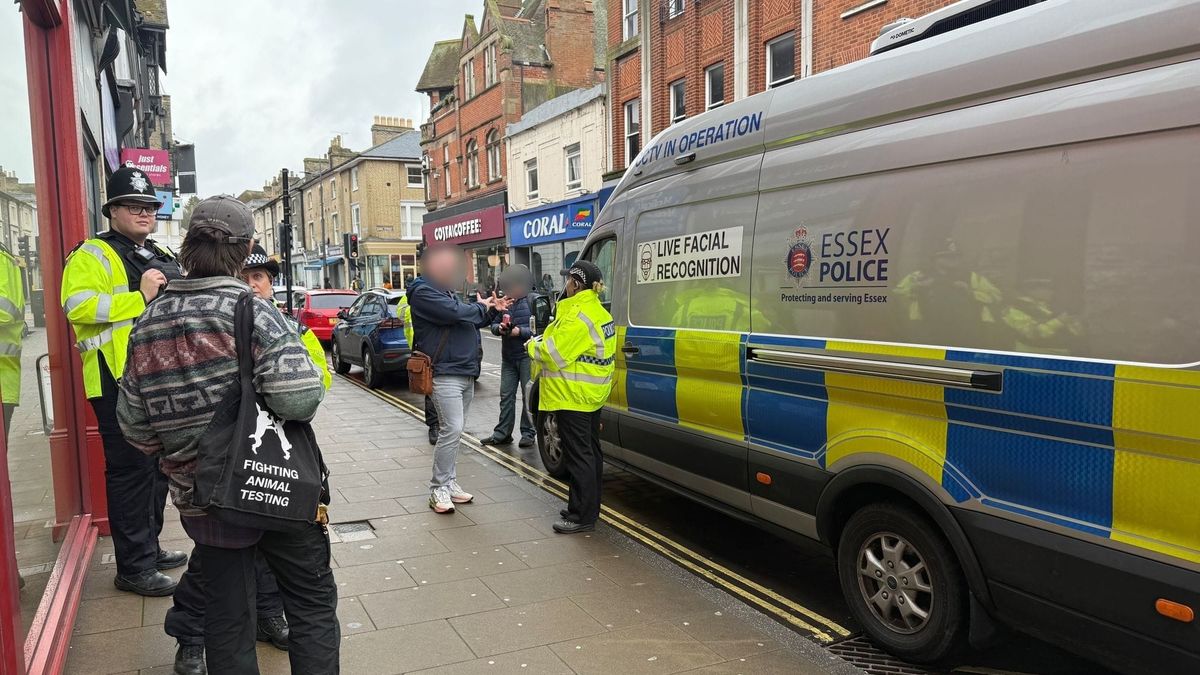
Suffolk Constabulary confirmed this week that live facial recognition (LFR) will be deployed in Ipswich, alongside Lowestoft and Bury St Edmunds, using a van and equipment temporarily loaned from Surrey Police. It is not the town's first encounter with the technology. In February 2025, a six-hour trial on the Cornhill scanned more than 47,000 faces and led to five arrests.
For many people, the technology remains something of a black box: a van appears, a poster goes up, and officers stand nearby. What follows is a look at how the system actually works, and why the police are legally required to announce it before they switch it on.
What live facial recognition actually does
LFR compares a live camera feed of people's faces against a predetermined list of individuals the police are trying to locate, known as a watchlist. According to Suffolk Constabulary, the technology is being used "to locate people wanted in connection with investigations into serious offences."
The process happens in stages. A camera captures facial images from people passing within its field of view, known as the "zone of recognition." Software then detects individual faces and extracts their features, converting them into a numerical template rather than storing the image itself. That template is compared against the templates of people on the watchlist, generating a "similarity score."
If the score passes a set threshold, described in Parliament's Office of Science and Technology (POST) rapid response as often 0.6 in police systems, the system generates an alert for a trained officer to review. According to Suffolk Constabulary, the scanning of an image "takes less than a second."
Crucially, a match is not an automatic identification. Officers on the ground assess the alert and decide what action, if any, to take. If there is no match, the template is deleted immediately.
The numbers, nationally and locally
The POST briefing offers some sense of how the technology performs elsewhere. Using a 0.6 threshold, 2,067 of 2,077 potential match alerts by the Metropolitan Police's LFR system in 2024–25 were true alerts, leading to 962 arrests, with a false positive rate of 0.0003%.
Ipswich has its own case study. During February's six-hour trial at the Cornhill, borrowed equipment from Essex Police scanned over 47,000 faces. Five arrests followed, for offences including failing to appear before court and shop theft, and around 400 members of the public engaged directly with officers about the technology.
Assistant Chief Constable Eamonn Bridger described the trial as "a positive outcome" at the time, adding that he was "optimistic that we will be using this technology again in the future."
Why the police have to tell you first
The requirement to notify the public before deploying LFR is not a courtesy. It follows directly from a legal ruling.
In August 2020, the Court of Appeal found in the Bridges case that covert use of automated facial recognition technology does not comply with the European Convention on Human Rights. As a result, police forces must make the public aware when they are using live facial recognition and ensure their data policies align with Home Office procedures.
The College of Policing's Authorised Professional Practice sets out what this means in practice. Deployments must be overt: signs publicising the technology must be prominently placed in advance, outside the zone of recognition, giving people "sufficient time to exercise their right not to walk into the zone of recognition." Forces are also expected to notify the public in advance using websites and other communication channels, including social media, "without undermining the objectives of the deployment" — which is why locations and dates, rather than exact positioning, tend to be announced ahead of time.
Anyone engaged by officers following an alert should, in the normal course of events, be offered information about the technology, and anyone seeking more detail should be given contact information for the operation.
The legal basis extends further than notification. Each deployment engages Article 8 of the Human Rights Act, both for people passing the system and for anyone placed on a watchlist, and chief officers must be satisfied that its use is necessary and proportionate for a legitimate policing purpose. A senior officer, usually of superintendent rank or above, must authorise each deployment in writing, and watchlists themselves must be reviewed before each use and are not meant to be excessive for the purpose of the operation.
A wider debate
Facial recognition's expansion has not been without scrutiny. The POST briefing notes that error rates for live facial recognition have been found to increase by up to 9.3% when used outside controlled testing conditions, and that some studies have identified higher false positive rates for particular demographic groups on certain algorithms. A National Physical Laboratory analysis in 2023 found "substantial improvement" in UK facial recognition accuracy compared with earlier years, reporting no difference in performance between population groups on the system it tested, though researchers continue to examine how different algorithms perform in practice.
Public attitudes, according to Home Office research cited in the briefing, are broadly supportive: 64% of people backed the use of facial recognition in policing, against 11% opposed.
Police and Crime Commissioner for Suffolk, Tim Passmore, has consistently backed the technology's continued use in the county.
"I really welcome the use of this live facial recognition technology and pleased to see plans for it to be used in locations across Suffolk," he said of the August deployments. "It has huge potential to bring criminals to justice and prevent crime, which I trust is welcomed by everyone."
The bottom line
Live facial recognition works by matching faces against a specific watchlist in real time, discarding everything else within moments. Its expansion to Ipswich this week follows the same legal requirement that has applied since 2020: use it openly, tell people first, and give them the chance to avoid it if they choose. Whether the technology is a proportionate tool or an intrusive one remains a live debate, but the notification itself is not optional. It is the law.
If you would like to know more about the deployment or raise questions with officers, signage and further information will be available on the day at the locations in question.
Don't forget: If you enjoy our content, please add Ipswich.co.uk as a "preferred source" on Google so you can easily find more of the content you value.
This article cost us ~£34 to produce
It's free for you to read thanks to the generous support of our partners. Please support us by supporting them.
Below the line