
How fifty years of Citizens Advice reveals a changing Ipswich
Since 1974, thousands of Ipswich residents have walked through Citizens Advice's doors with their most difficult problems. Five decades of frontline experience have given the charity a unique vantage point on a town that has changed a great deal since it first opened.

Five decades in one place
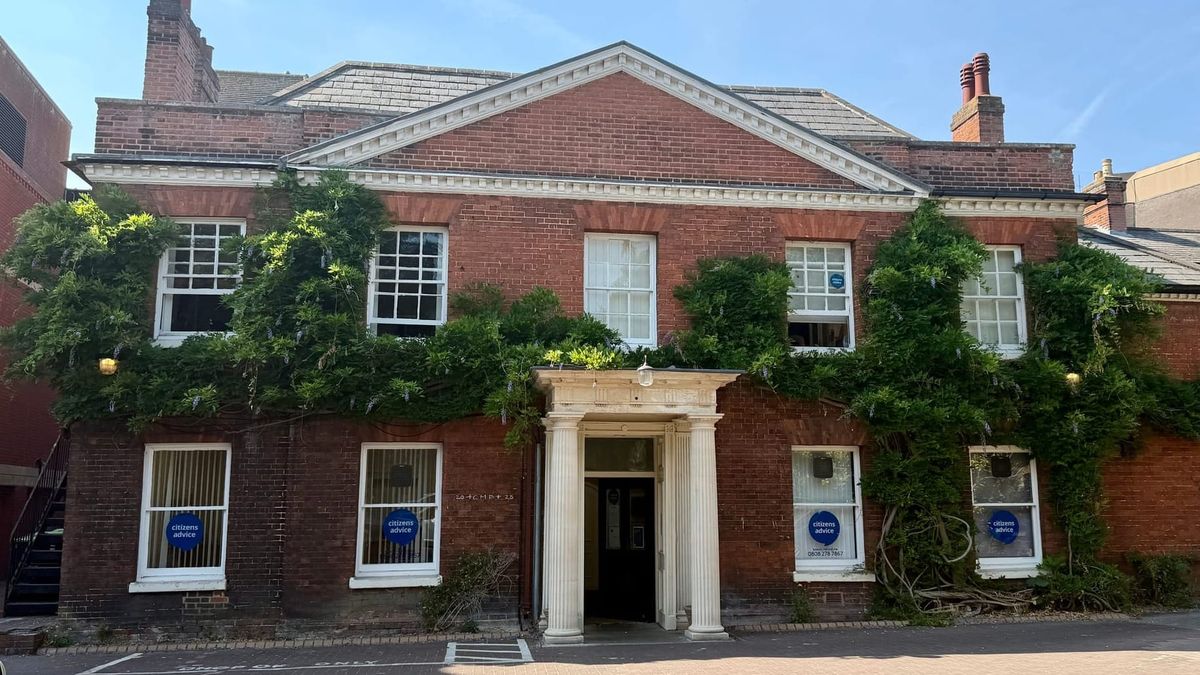
Citizens Advice Ipswich has been offering free, confidential and impartial advice since 1974, on everything from debt and benefits to housing, employment and consumer disputes. For much of that history, the organisation operated from the same site, before moving to its current town centre building three years ago.
"Don't move an organisation after 48 years — the stuff you find," reflected chief executive Nicky Willshere, on the scale of the relocation.
That move has not marked the end of the charity's growth. Demand has continued to rise, and the organisation has since had to expand further, taking on additional space next door. Today it employs 34 staff, supported by around 30 to 40 volunteers — a considerable size for an organisation with roots stretching back five decades.
Citizens Advice will not use that additional space alone. The charity plans to open part of the building to other charities and community organisations, many of which have lost a physical presence in Ipswich in recent years. Rising rents and business rates have forced several local organisations to move their services online or close altogether. By offering low-cost, flexible access to office and meeting space in the town centre, Citizens Advice hopes to help ease that strain and keep a recognised charitable presence within reach of the people who need it.
From one problem to many
Chief operating officer Margaret Vane, who oversees the charity's generalist, money, welfare benefits and social prescribing teams, said the nature of the help people need has changed noticeably over the years — particularly since the pandemic. "The services evolved hugely since, well, certainly since Covid," she said. "That's where you start to see this massive increase in cost of living, and people just, no matter what they do, multiple jobs, all the rest of it, they cannot make ends meet."
What often begins as a single issue can quickly become several interlinked problems. That shift has changed the composition of a typical case. "We've seen the complexity of these issues increase so much," said Saffeen Yamulki, Impact Analyst at Citizens Advice Ipswich. "We're having to spend more time than perhaps we would have previously with these cases, because those issues become more complex. It's no longer just a debt issue. It's a debt issue, but it's also a benefits issue, and you move between the different specialist teams."
To keep pace, the charity has built specialist, in-house teams over time – covering debt advice accredited by the Financial Conduct Authority, welfare benefits and tribunal support, and energy and income maximisation – alongside its original generalist advice service.
Vane said the model is designed so clients only have to explain their situation once. "Most clients really value the fact that they can talk about their situation in general terms, and then we can distil down: okay, well, we can help with this, we can help with that, we can refer you to them. There aren't many places where you can get that type of time invested in you anymore."
A generation shifting into need
Perhaps the clearest sign of how Ipswich itself has changed is who now comes through the charity's doors, with the issues clients bring increasingly reflecting today's pressures. Willshere said the demographic of clients has shifted rapidly in recent years. "Our demographics have changed rapidly towards working age, and especially in the younger working age, with families, because they're the ones who are feeling it hardest."
Contrary to common assumptions, she said, most people the charity supports are in work. "People aren't proud of the fact that they're in a situation where they can't make ends meet. It's not intentional. Most of the people that we support are working, and they're doing everything they can."
Among the clearest current trends are a sharp increase in people applying for Personal Independence Payments, and rising rent arrears across both private and social housing. To reach people before problems escalate, the charity now runs outreach sessions at Ipswich's top-up shops — low-cost community food schemes — supported by funding from the Suffolk Community Foundation and Sizewell C. "We'll try and have a presence in the community where people are in most need, so that we can try and help and support, or at least give them some guidance," Willshere said.
The charity's role has also grown beyond individual casework and into advocacy. Willshere described how a call from an Ipswich primary school revealed a wider problem after free school meal applications moved online. The school told her: "We've got a problem, because half the children that had free school meals the previous year weren't getting them." Families who had previously relied on teachers to help them complete paper forms were being excluded once the process moved to a digital-only portal. Willshere raised the issue directly with the county council, asking whether an equality impact assessment had been carried out. "Children not having a cooked dinner is not okay," she said. The result, she added, was that the forms were sent back to the schools.
It is this kind of intervention that underpins the charity's relationship with statutory partners, including Suffolk County Council and the NHS — a relationship Willshere agreed could best be described as that of a "critical friend."
What the numbers show today
The scale of today's need is reflected in the charity's own figures for 2025–26. Citizens Advice Ipswich supported 7,496 clients presenting with 33,453 individual issues over the year, including 1,126 clients with 2,329 separate housing issues. Of those, the charity says it helped prevent 96 people from becoming homeless.
Through a combination of welfare benefit claims, charitable grant applications, reduced expenditure and income maximisation, the charity says it secured £1,637,315 for clients during the year — money it says flowed straight back into the local economy.
The bottom line
From decades spent in one home to a growing operation now spilling into neighbouring space, Citizens Advice Ipswich's own story mirrors the town it serves – one where need has grown steadily more complex, and where more working families than ever are finding it hard to cope. Fifty years on, the charity's front door remains one of the clearest windows onto how Ipswich is really doing.
Don't forget: If you enjoy our content, please add Ipswich.co.uk as a "preferred source" on Google so you can easily find more of the content you value.
This article cost us ~£106 to produce
It's free for you to read thanks to the generous support of our two community impact partners: local contractor Barnes Construction, and flat roof waterproofing and design firm Axter. Please support us by supporting them.
Below the line