
Hadwen warming to devolution – but Suffolk could still reject £1.1bn deal
Suffolk County Council's cabinet will decide on 15 October whether to proceed with devolution. Its leader is warming to the idea, but nothing is settled, and not consenting remains on the table.

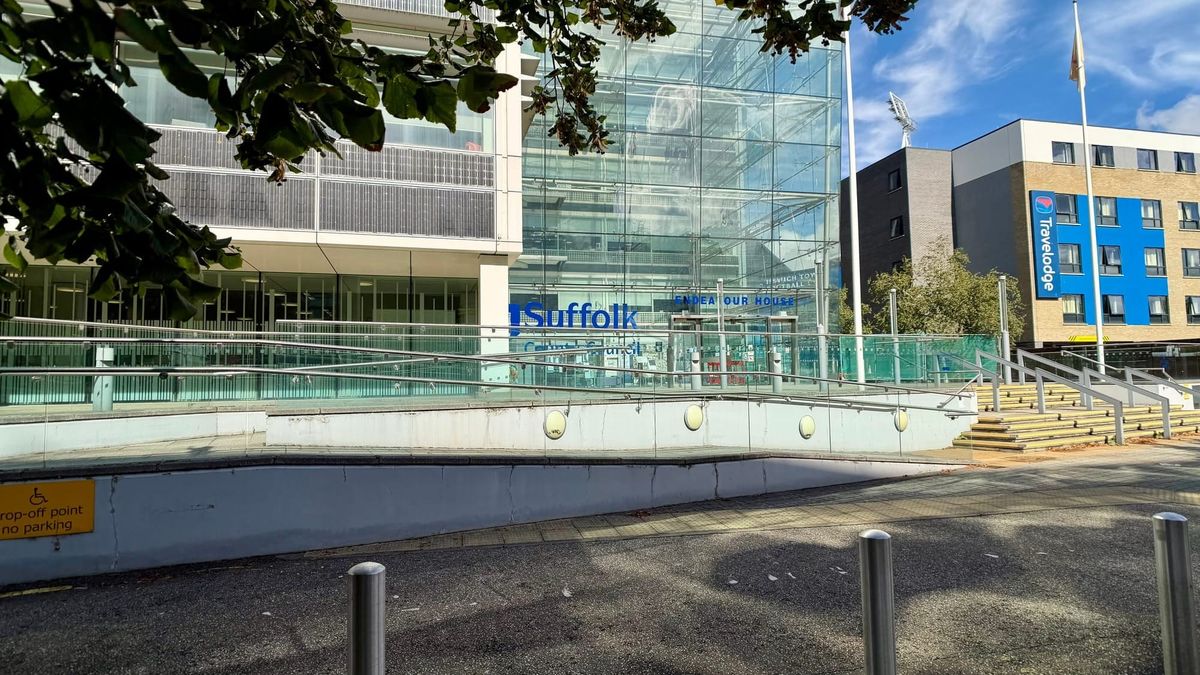
Three weeks from now, nine people sitting in Endeavour House will take one of the most consequential decisions in Suffolk's recent civic history. The item on the cabinet forward plan is: "Decision to consent to laying of the draft Statutory Instrument for devolution across Suffolk and Norfolk."
It amounts to whether Suffolk becomes a constituent member of a mayoral strategic authority covering Suffolk and Norfolk, with a mayor elected in 2028, or not.
A decision, not a formality
A mayoral strategic authority cannot be brought into existence without the agreement of its constituent councils – in this instance, Suffolk County Council and Norfolk County Council. Central government cannot compel Suffolk to join one. The county council holds a veto, and the cabinet meeting on 15 October is where it will be exercised or set aside.
The decision sits with the executive rather than the full council, which the authority says is standard practice. The responsible cabinet member is Councillor Tristan Gale, who holds the planning, devolution and fire service portfolio. A covering report will be published at least five clear days beforehand, which places it in the public domain on or around 9 October.
A change in tone
Speaking to Ipswich.co.uk on 9 September, in the days after the government abandoned local government reorganisation in Suffolk, Cllr Michael Hadwen was positive about a devolution deal but a little cooler on his stance. He said he remained instinctively opposed to unnecessary layers of local government, described his own approach as pragmatic, and argued that the devolution offer then on the table provided "no protections for Suffolk residents".
Asked this month whether it was now his position that Suffolk would be better served without a mayoral strategic authority at all, his answer had shifted a little.
"It is my job to assess all positions, however I am increasingly of the view that devolution could be in the best interests of Suffolk, provided the necessary safeguards are in place, and the arrangements deliver genuine equity between the two counties," he said.
It would be easy to overread that. The conditions attached have not moved, and both statements are conditional. But "increasingly of the view" is a warmer formulation than "no protections for Suffolk residents".
"We have been clear that we intend to move forward with a deal, but it must have true equity between Norfolk and Suffolk at its heart, with the right safeguards for Suffolk built into the arrangements," he said.
Suffolk appears to be holding the pen
What is most interesting so far is how much of the process Suffolk appears to be driving, despite Norfolk's greater voting power.
Reform UK has entrusted Hadwen with leading negotiations on behalf of both counties, and the shape of the proposal is being settled between him and Norfolk County Council's leader, Councillor David Bick, before it goes any further. He told this publication earlier this month that discussions with Cllr Bick had been very encouraging, and that he intended to put the proposal to all prospective mayoral candidates and ask them to back it.
That remains the plan. "I still intend to speak to prospective candidates once Cllr Bick and I are content with the proposal," he said.
The protections he wants are beginning to take clearer shape, if not yet precise form. "I have been clear that a devolution deal must have meaningful protections for Suffolk hardwired into its governance," he said. "For example, the mayor should have a clear responsibility to work in the interests of both counties, with appropriate arrangements around funding, investment and decision-making so that Suffolk's interests are properly protected."
Not consenting remains on the table
For all the warmer language, the council did not rule out refusing consent when asked directly, and Cllr Hadwen was candid that the option is being weighed. "It is my job to assess all positions," he said.
Ipswich.co.uk understands that not consenting has been the subject of recent conversations within the administration, and has received serious consideration.
Pressed on whether withholding consent would make it harder for Suffolk to compete for central government funding, Cllr Hadwen did not accept the framing, but nor did he close the door.
"This is not about withholding consent or delaying for its own sake," he said. "Any deal must be agreed through the correct governance procedures in our respective councils, and our focus is on securing an arrangement that gives Suffolk the appropriate protections and ensures that it can benefit fully from the opportunities devolution provides."
Asked whether Norfolk and central government had been told Suffolk's consent was in question, the council said it had been "working through the options" with both. "Discussions have been encouraging, and we are continuing to work constructively towards an arrangement that delivers the right outcome for both counties," the spokesperson said.
On timing, the council said a mayoral election in May 2028 was "the latest advice from Ministers" – a formulation that reports the government's position rather than committing to it.
What is at stake
New powers to make decisions locally, a £1.1bn investment fund, and greater influence over transport, housing and growth are what is at stake. As is a seat at Andy Burnham's devolution table.
Paul Simon, head of public affairs and strategic communications at Suffolk Chamber of Commerce, told this publication in August that the region had no realistic route to greater powers without first agreeing what is currently on offer.
"It is clear that we stand no chance whatsoever of getting to that point unless we give the green light immediately to the current deal on the table," he said, warning that Suffolk and Norfolk were already behind not only the big metropolitan areas but more rural ones too. He pointed to the Cambridgeshire and Peterborough Combined Authority, nine years old and recently awarded Established status.
"If we fail to put our foot on the lowest rung of the devolution escalator now, we risk being left far, far behind those already ahead of us," Simon said.
The bottom line
Michael Hadwen has moved, but he has not committed. The language is warmer, the conditions are unchanged, and the man himself is clear that every option is still being assessed – including the one that would stop devolution in Suffolk before it starts.
Terms are being worked out between Cllr Hadwen and Cllr Bick, and the question at the heart of them – whether Suffolk secures parity with Norfolk – will be settled between the two counties before it goes anywhere near Parliament. Suffolk's cabinet votes on 15 October.
Ipswich.co.uk shall be there to report it.
Don't forget: If you enjoy our content, please add Ipswich.co.uk as a "preferred source" on Google so you can easily find more of the content you value.
This article cost us ~£115 to produce
It's free for you to read thanks to the generous support of our partners. Please support us by supporting them.
Below the line