
Government scraps council reorganisation in Suffolk and Norfolk
The government's abrupt decision to abandon local government reorganisation (LGR) in Suffolk and Norfolk marks one of the most significant reversals in English local governance for a decade.

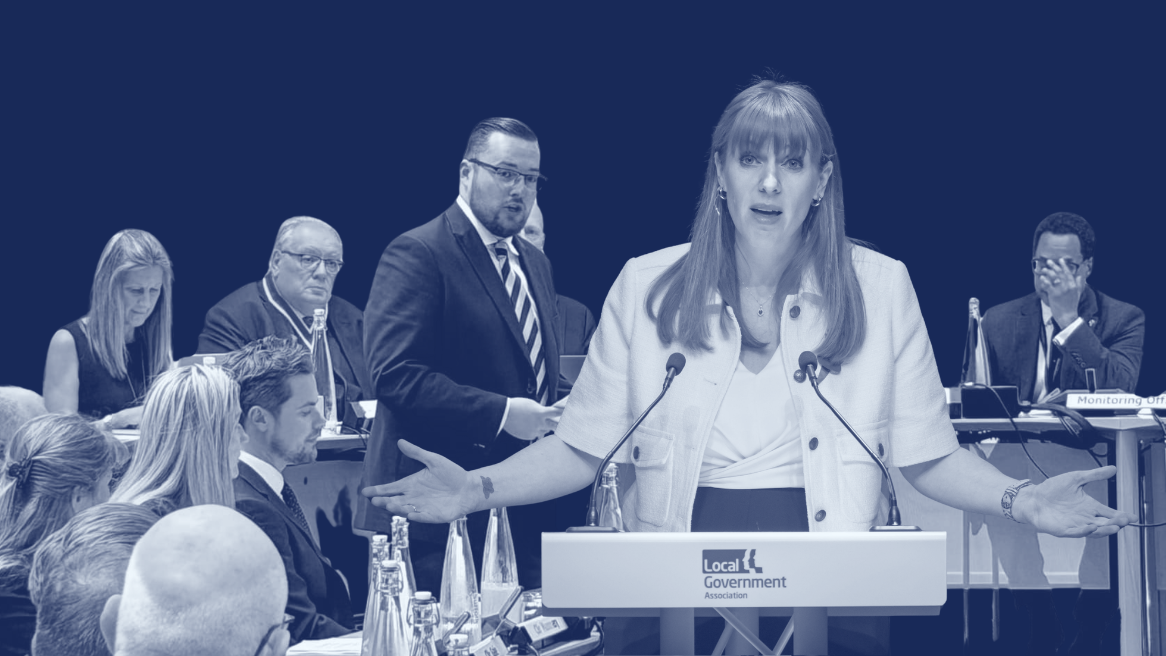
What began as a technocratic restructuring exercise has now become a test of ministerial judgement, legal robustness and political credibility, with implications that stretch far beyond East Anglia.
Communities Secretary Angela Rayner told Parliament that "in light of legal advice" she must be satisfied that the government's entire LGR process "is robust and, of course, complies with the law." In one move, ministers have withdrawn reorganisation decisions in Suffolk, Essex, Hampshire and Norfolk, and paused fourteen more pending review.
The plans, originally developed under Sir Keir Starmer's government and passed between successive Communities Secretaries, had been presented as a modernisation of England's fragmented local state. The reversal suggests the centre is no longer confident that the process can withstand judicial scrutiny.
Suffolk's contested legal fight
Suffolk's case was among the most politically charged of the twenty-plus reorganisation decisions made this year. In March, ministers opted for a three-unitary model – Western Suffolk, Central and Eastern Suffolk, and Ipswich and South Suffolk – despite officials having recommended a single unitary as the stronger option against the government's own criteria.
County Council leader Cllr Michael Hadwen launched a judicial review almost immediately, using his executive powers before cabinet had formally agreed the action. The challenge, expected to cost up to £500,000 in public money, argued that the Secretary of State had acted beyond his powers and departed from published criteria without adequate justification.
Opposition councillors criticised both the substance and the process of the challenge, and four formal complaints were dismissed by the monitoring officer, whose 26-page reasoning was withheld from public view.
Victory, or vindication?
Cllr Hadwen called the announcement "a resounding victory for Suffolk," saying ministers had "seen sense and withdrawn their plans." He argued residents had been spared "unnecessary upheaval" and that the council could now focus on "better value for money, stronger public services and a council that puts the interests of Suffolk first."
However, Rayner's statement makes no reference to Suffolk's legal challenge. The government attributes the reversal to "updated and privileged" legal advice affecting the national process, not the merits of any single case. Politically, though, the optics favour Reform UK, which has campaigned hard against LGR in Suffolk.
Suffolk is one of only four areas to have its decision withdrawn outright.
What they're saying
Cllr Richard Rout, leader of Suffolk's Conservative group, welcomed the news while criticising the government's handling of the entire process:
"The reorganisation process the Labour government has pursued has been chaotic from start to finish. They seem incapable of following advice or making proper decisions."
He reiterated the Conservative position that a single unitary council would be "smarter, simpler and better," but warned that the latest U-turn "means more chaos, delay and uncertainty" for residents and staff.
Cllr Andrew Stringer, leader of the Green group and official opposition, said the reversal was "very frustrating":
"Not only because of the amount of time and money already spent by Suffolk councils to bring services together, but because the challenges of delivering local government services still remain – from adult social care to fixing potholes, education and SEND to alleviating local flooding. All of these are essential for residents and deserve a sustainable financial footing, but under the current system, that is a distant dream. As Greens we believe in real devolution. That was not what was offered, but a little devolution is better than none."
Inga Lockington, Leader of the Lib Dem Group at Suffolk County Council, said she was "really disappointed" by the decision, describing unitary councils as "a better form of Local Government," as "residents only have to contact one Council who can deal with their issues."
Cllr Martin Cook, leader of the Labour group at Suffolk County Council, said: "Unitary councils are right in principle, and for Ipswich that means one council for the Ipswich area. Nobody should call this a victory for Suffolk.
"The Government has withdrawn four decisions and paused sixteen more for a rapid review, and Suffolk is part of that review. Cllr Hadwen says the council can now focus on value for money and stronger public services. That is what he should have been doing anyway for the last four months."
Cllr Neil MacDonald, leader of Ipswich Borough Council, confirmed that scheduled elections would go ahead as planned, adding: "We will continue to engage constructively with Government, our neighbouring authorities, and partners across the county as the review progresses. Our priority remains ensuring that any future changes to local government structures deliver better outcomes for residents, stronger local accountability, sustainable public services, and a real voice for communities."
Ipswich MP Jack Abbott, who has been a vocal advocate of LGR and fully backed the three-unitary structure, said: "I understand the disappointment felt by residents, businesses, organisations and councils by today's announcement.
"A huge amount of work has been undertaken on Local Government Reorganisation, particularly over the past six months when the original decision was made.
"LGR is about looking forward, ending a status quo that isn't working for anyone, delivering better local services and offering value for money.
"I will continue to back an ambitious future for our town and our county, and continue to press the Government for a settlement that works for us."
What this means for Ipswich and devolution
For Ipswich, the immediate consequence is the shelving of the proposed Ipswich and South Suffolk unitary authority. Ipswich Borough Council remains intact, for now.
The impact on Suffolk's parallel devolution ambitions is less clear. Business leaders in Suffolk and Norfolk have been pushing for a Strategic Mayoral Authority, with elections pencilled in for May 2028, warning that the region risks falling behind areas further along the devolution path.
Paul Simon, Head of Public Affairs and Strategic Communications at Suffolk Chamber of Commerce, said businesses needed clarity on the government's next steps:
"Suffolk Chamber notes the Government's decision to withdraw its plans to reorganise local councils in the county. It is imperative that Angela Rayner speedily clarifies what happens next: whether that is the end of the process in Suffolk or whether it will be bringing forward new proposals and timescales. Businesses will be nervous that further uncertainty and disruption might degrade council staff time and resources available for important frontline services such as planning, economic development and waste."
 Oliver Rouane-Williams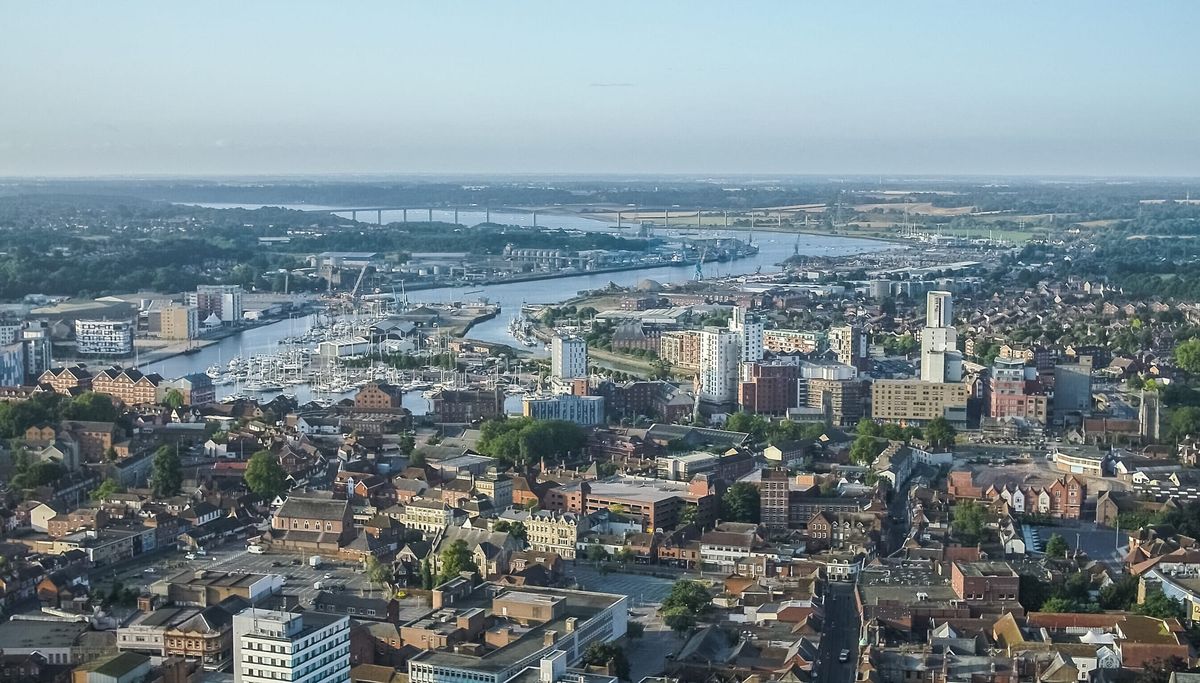
He said the Chamber would continue to press its five principles for more business-friendly local government "regardless of the number of tiers and councils involved: greater efficiency, better economic development delivery through the use of the private sector, SME-friendly local procurement, better Suffolk-wide collaborative working and advocacy alignment whereby the Suffolk system works through the Chamber to secure the key economic asks of Government."
On devolution specifically, Simon added: "Based on communications from the Government, we are not entirely sure what impact, if any, this announcement will have on its devolution plans to create a Norfolk & Suffolk Strategic Mayoral Authority. We fully back such a proposal and would be extremely disappointed were the timetable for this to be further delayed or entirely rescinded."
Following previous announcements that mayors will receive a share of income tax and business rates revenue, Suffolk's Chamber of Commerce and prospective mayoral candidates have urged the government to accelerate devolution. Andy Burnham is among the most vocal national advocates for devolution, but it remains uncertain whether the collapse of LGR in Suffolk and Norfolk will alter the region's timetable, or political appetite, for a mayoral deal.
The bottom line
Suffolk's reorganisation plans are dead, at least for now. Ministers have withdrawn decisions in four areas and paused a further round pending a rapid national review, citing legal advice that applies across the entire process. The government has not endorsed Suffolk's legal arguments, nor has it ruled out revisiting reorganisation in future.
Cllr Hadwen is entitled to claim victory. But whether the announcement represents a genuine win for Suffolk, or simply a temporary reprieve in a much larger national rethink, is a question that will only be answered in the months ahead, as ministers decide what comes next for local government, devolution and the future shape of English councils.
One thing is settled for now, at least: May 2027's elections will go ahead on existing council boundaries.
Don't forget: If you enjoy our content, please add Ipswich.co.uk as a "preferred source" on Google so you can easily find more of the content you value.
This article cost us ~£108 to produce
It's free for you to read thanks to the generous support of our partners. Please support us by supporting them.
Below the line