
From war to wellness: Svitlana's journey
When Svitlana Prykladovska arrived in Ipswich from Ukraine in April 2022, she had her daughter, a suitcase, and the question of what may come next. Three years on, she is running healthy eating workshops for the very community that took her in.

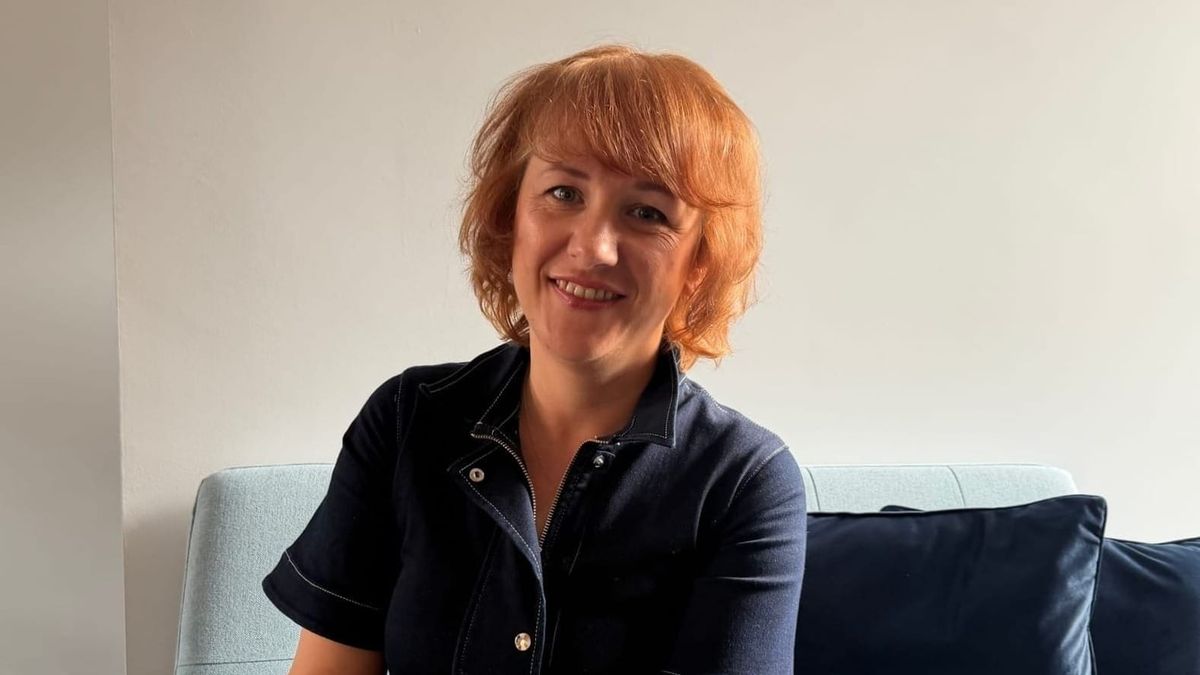
Svitlana and her daughter left Ukraine in the first weeks of the Russia-Ukraine war, travelling through Poland and Lithuania before settling in Ipswich under the Homes for Ukraine scheme. "It was a very difficult and uncertain time," she says of those early weeks.
What followed, she says, was an abundance of support from her host family, neighbours and colleagues. "It's very big help and support from my host," she explains. "They took me to concerts and events, and also helped me to find a job in Ipswich." Integrating into a new community can bring a sense of uncertainty, however Svitlana makes it clear that the effort was never hers alone: "It's not just my host, it's neighbours, it's also my colleagues from my job. They all done a good job for integrating me and my daughter."
The turning point, she says, came when her employer offered her an accountancy role. "When I understand I can be independent, I can be useful here in England, I can continue my current job. Because it's very important for me to give something from my heart, from my skills, from my knowledge."
From unhealthy habits to a healthier life
That instinct to give back eventually found its focus in food – but Prykladovska's own relationship with healthy eating began, by her own account, somewhere, much earlier and harder. Going through a divorce, she says, was the push that changed her life. "My story started with that too. I understood I would like to change my life – not just my body, maybe my mentality as well."
She began running, gradually building onto the habit. "It doesn't just change my body – I lost weight, of course, my body was more fit – but it's also about mentality. It made me stronger, and gave me a sense to continue, to keep going."
Her daughter noticed the shift too, Prykladovska says she simply modelled the change herself: "It's very difficult to push a teenager to start eating healthily. I just kept my healthy style, and she picked it up from me."
It was a conversation with colleagues – who noticed how healthy her packed lunches were – that planted the seed for what would become WellEats. "They told me, we are not so organised, we don't have enough motivation, we don't know the advantages," she recalls. "I have a bit of an entrepreneur's brain – I like to be organised, I like to think about something creative."
What happens at a WellEats workshop
That interaction underpins the sessions Svitlana now runs under WellEats.
Each session, she explains, follows a simple structure. It opens with a relaxed, jargon-free presentation – from there, attendees spend around fifteen to twenty minutes looking at ingredients and shopping habits with fresh eyes, before moving on to prepare a simple dish together – assembling rather than cooking from scratch.
The final part of the session, she says, matters just as much as the food itself: eating together, away from screens, and talking. "It's another problem of healthy eating – when we eat in front of a screen and don't talk during dinner," she says. "Food can connect and collect people, and I guess that's extremely important."
Her goals for the sessions, echo the projects' tagline: "Eat well, feel better, live better," she says. "If you eat well, you feel better – mentally and physically – and your quality of life will be much higher. Everything is connected."
The bottom line
Svitlana Prykladovska's story is, in many ways, two journeys folded into one: a personal path from disruption to stability, and a wider effort to hand that stability on to others through something as ordinary as a shared plate of food. As she puts it herself: it is about giving something back – from her heart, her skills, and her knowledge – to the community that gave her a home.
Don't forget: If you enjoy our content, please add Ipswich.co.uk as a "preferred source" on Google so you can easily find more of the content you value.
This article cost us ~£87 to produce
It's free for you to read thanks to the generous support of our partners. Please support us by supporting them.
Below the line