
Former C&A department store goes on the market for £2 million
One of Ipswich's largest town centre shops is being offered for sale or rent, raising questions about its future. But the former C&A building on Upper Brook Street has a story that stretches far beyond its current occupant, Poundstretcher. From childhood shopping trips to a much-loved rocking horse.

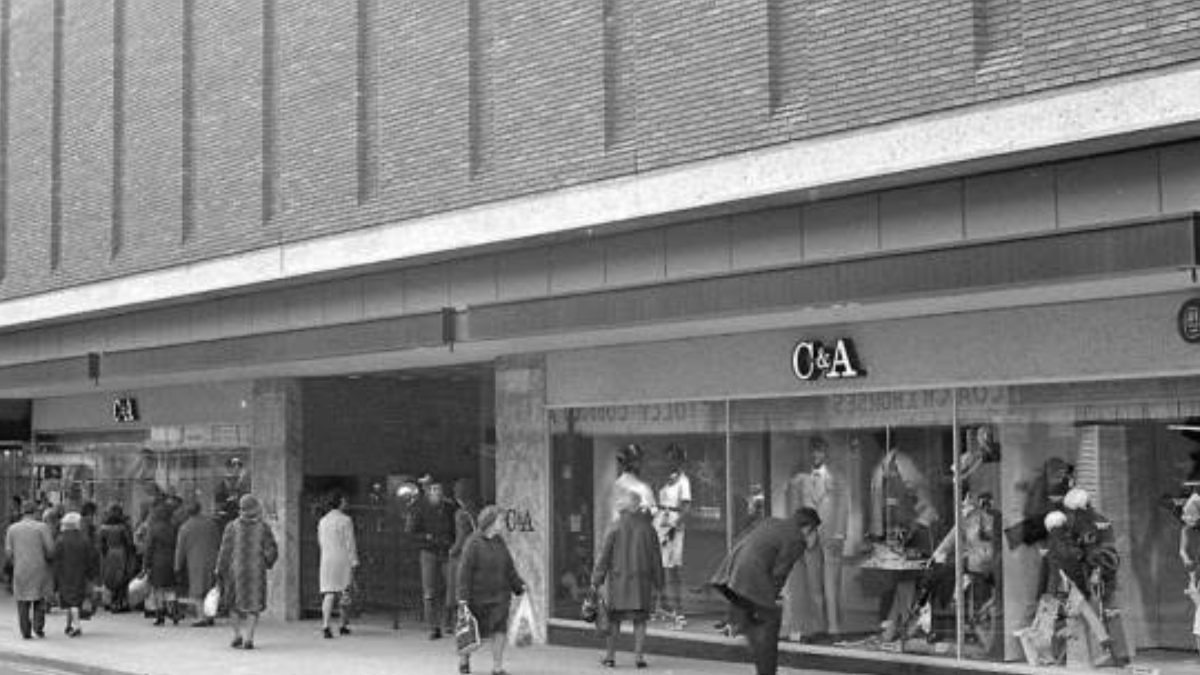
There are some buildings in Ipswich that almost everybody knows, but which very few people ever stop to look at.
The enormous shop at 28-32 Upper Brook Street is probably one of them.
For one generation it was C&A. For another it was Wilkinson, or Wilko as it eventually became known. Today, it's Poundstretcher.
Now, 55 years after it first opened, the four-storey building is being offered for sale at £1,995,000, or alternatively to rent for £195,000 a year.
The marketing particulars contain an intriguing detail. The premises are occupied under a lease which, according to the agents, can be terminated on six weeks' notice.
That doesn't mean Poundstretcher is closing, and there's been no announcement to suggest it is. But the availability of the building, both for sale and to let, raises an obvious question about what happens next.
It's also a good excuse to revisit a shop which, for all its rather unremarkable architecture, has been part of the lives of generations of Ipswich residents.
And which, rather wonderfully, conceals a piece of Tudor history.
When going to C&A was an occasion
C&A opened its new Upper Brook Street store in March 1971.
Ipswich was changing rapidly. Old shops were being knocked down, new shopping developments were appearing, and there was a tremendous sense that the future of retailing lay in large, brightly lit stores where almost everything could be found under one roof.
Upper Brook Street was right in the middle of that transformation.
In 1970, a substantial stretch of older buildings was demolished to make way for the new C&A and neighbouring Sainsbury's supermarket.
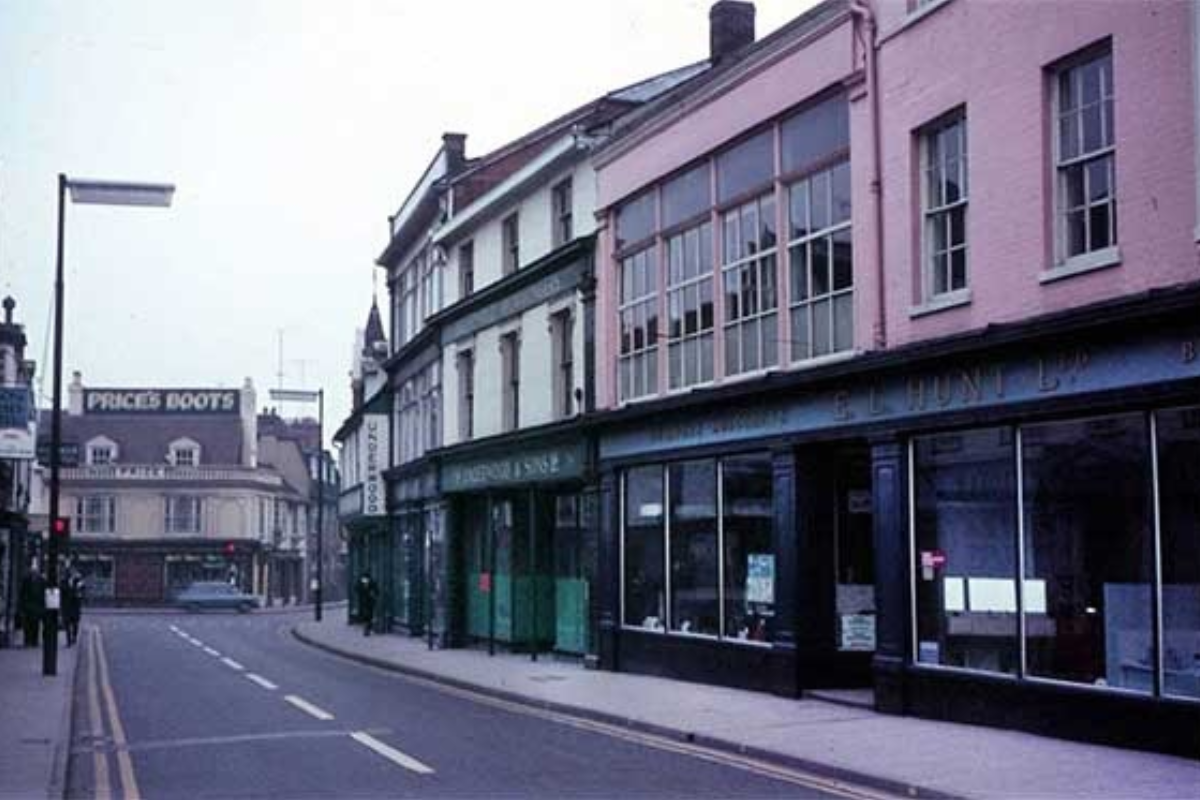
Photographs taken just a few years earlier show a street of individual businesses, traditional shopfronts and buildings of quite different ages and appearances.
By 1971, much of that had gone.
In its place stood a thoroughly modern department store with an imposing frontage, large display windows and thousands of square feet devoted to the business of dressing the people of Ipswich.
And for a while, it must have seemed rather marvellous.
C&A was one of Britain's best-known clothing retailers. It wasn't particularly fashionable or exclusive, but it was dependable, affordable and somewhere the whole family could shop.
There were school trousers, winter coats, summer dresses, blouses, knitwear and those sensible clothes that parents invariably seemed to prefer to the things their children actually wanted.
A trip into Ipswich often meant a visit to C&A.
For children growing up in the 1970s and 1980s, this was a familiar Saturday ritual. Being taken around the shops, looking at clothes, trying things on and occasionally being rewarded with something rather more exciting than a new jumper.
And inside C&A, there was apparently something particularly special.
The Palomino rocking horse
Somewhere in the store stood a Palomino rocking horse which children could ride.
It's a delightful little detail, remembered by someone who visited the shop as a child, and the kind of thing that makes the history of an ordinary building suddenly rather more interesting.
For children accompanying their parents on a shopping expedition, the prospect of riding a horse was probably considerably more appealing than watching somebody choose a cardigan.
We haven't established precisely where the horse stood, how long it remained there or whether it was a mechanical, coin-operated ride.
But it's easy to imagine a small child looking forward to that part of the shopping trip rather more enthusiastically than anything on the clothing racks.
And somewhere, surely, there must be an old family photograph of a proud youngster sitting on the Palomino.
It's these little details that tend to disappear from the official history of our towns.
The buildings are recorded, the businesses are listed in directories and their opening dates sometimes survive in newspaper archives.
But the rocking horses, the familiar shop assistants, the smell of new clothes and the small rituals of Saturday afternoon shopping rarely make it into the history books.
Yet they're often the things people remember most fondly.
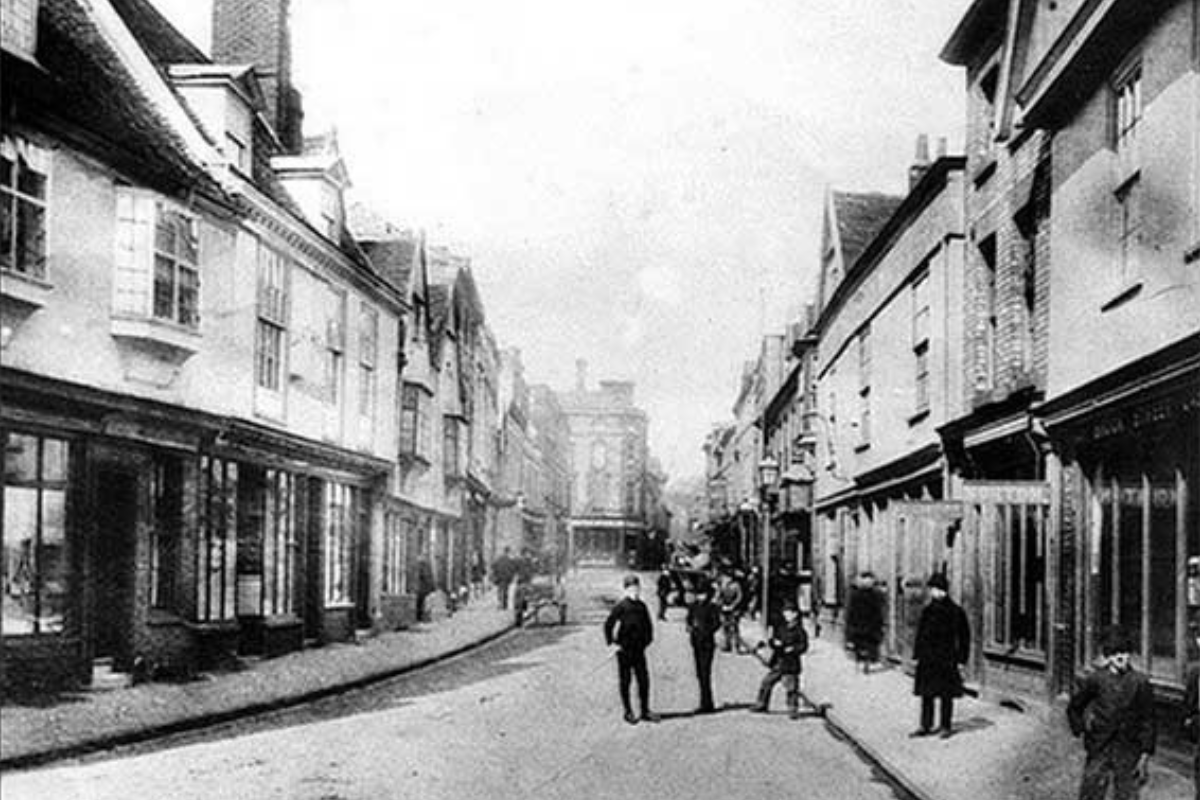
The Ipswich that disappeared in 1970
The arrival of C&A was part of a much wider transformation of central Ipswich.
Look at photographs of Upper Brook Street from around 1900 and it's difficult to reconcile the scene with the one we know today.
The road was lined with old commercial buildings, many of them modest in size, their shopfronts altered and modernised over generations.
By the 1960s, the street had changed considerably, but it still retained much of its earlier character.
Then came the bulldozers.
The redevelopment which produced C&A and Sainsbury's swept away an entire collection of older premises, replacing the higgledy-piggledy arrangement of individual shops with the clean lines and large commercial spaces of the 1970s.
It was considered progress, and by the standards of the time it probably was.
The new buildings offered facilities that older premises simply couldn't accommodate. They were more practical, easier to service and capable of attracting the national retail names that towns were increasingly anxious to secure.
But something was lost along the way.
And one particularly remarkable fragment of that earlier Ipswich very nearly disappeared with everything else.
A Tudor merchant, Cardinal Wolsey and the back of C&A
There's something wonderfully incongruous about finding a piece of Tudor Ipswich attached to the back of a 1970s department store.
Yet that's exactly what survives near St Stephen's Church.
Mounted on the rear wall of the former C&A building is an elaborately carved wooden bressumer beam, dating from around 1520.
It originally belonged to premises associated with Sir Thomas Rush, a wealthy Ipswich merchant who represented the town in Parliament in 1523 and 1529.
Rush was an important figure in Tudor Ipswich, a man with commercial interests, political influence and connections to Cardinal Wolsey's ambitious plans to establish a college in the town.
The college itself was one of Wolsey's grandest projects, intended to bring considerable educational prestige to the place of his birth.
Like so much else associated with Wolsey, the dream came to an abrupt end when he fell from royal favour.
But Rush's carved timber survived.
The beam features elaborate decoration, including mythical creatures, heraldic devices, a merchant's mark and the letter R.
When the old buildings were demolished during the Upper Brook Street redevelopment, the carving was rescued.
Sainsbury's was instrumental in preserving it, and C&A agreed to its reinstatement on the rear of the new building.
An accompanying plaque records that rather unlikely partnership between two modern retailers and the preservation of a fragment of Ipswich's Tudor past.
And there it has remained.
While shoppers bought clothes at C&A, washing powder at Wilkinson and household bargains at Poundstretcher, the 500-year-old carving quietly watched over St Stephen's Church.
Rush himself had a connection to the church, having paid for a chapel on its southern side. Traces of its former doorway can still be identified.
More recently, there was discussion about moving the carved beam inside the church as part of its new life as a music venue.
In the end, concerns about potential damage meant it remained outside.
It's a curious little survival, and one which deserves rather more attention than it receives.
After all, not many discount stores in Suffolk can claim to have a piece of a Tudor merchant's house attached to the back wall.
Goodbye C&A, hello Wilkinson
C&A remained a familiar name in Upper Brook Street for around two decades.
Its departure appears to have coincided with the opening of the Buttermarket Shopping Centre in October 1992, where the company became one of the new development's principal retailers.
The move was entirely in keeping with the shopping fashions of the time.
Enclosed shopping centres were seen as the future, offering national retailers modern premises and shoppers the convenience of moving between stores without worrying about the weather.
C&A continued trading in Ipswich from the Buttermarket, before finally leaving the town around the turn of the millennium.
Meanwhile, the enormous premises in Upper Brook Street began another chapter.
Wilkinson, the household goods and hardware retailer, eventually became its next great retail identity.
If C&A was about dressing the family, Wilkinson was about maintaining practically everything else.
It sold the sort of things that everybody needed, but nobody particularly enjoyed shopping for.
Paintbrushes, light bulbs, batteries, washing-up bowls, cleaning products, bin liners, garden tools, toiletries, pet food, stationery and an apparently limitless assortment of useful little objects.
It was one of those rare shops where you could go in for something costing 99p and emerge having spent £27 on things you hadn't realised you needed.
And people loved it.
The Upper Brook Street premises were ideally suited to Wilkinson's enormous range of merchandise.
Its large floors provided ample space for the rows of shelves and displays that became such a familiar sight to Ipswich shoppers.
For many people, Wilkinson became as much a part of going into town as C&A had been a generation earlier.
It wasn't glamorous, but it was extraordinarily useful.
Sometimes that's more important.
The collapse of a familiar name
Wilkinson survived the growth of out-of-town shopping, the arrival of discount retailers and the increasingly difficult trading conditions facing Britain's high streets.
But in August 2023, its parent company entered administration.
It was one of the more poignant retail collapses of recent years.
Hundreds of shops closed across Britain, thousands of jobs disappeared and another name which had seemed a permanent fixture of everyday shopping suddenly vanished.
The Upper Brook Street branch closed in October 2023.
For regular customers, the loss was immediately noticeable.
Wilko had been the sort of shop that people relied upon precisely because it sold all those ordinary things that other retailers didn't necessarily bother stocking.
But Ipswich was fortunate that the building didn't remain empty for long.
In January 2024, Poundstretcher moved in, taking over the former Wilko premises and giving the enormous shop another lease of life.
There was a pleasing continuity in the change.
Some former Wilko employees were recruited by Poundstretcher, meaning familiar faces returned to a building where they had already spent part of their working lives.
The sign above the entrance changed, but some of the people behind the tills remained the same.
For a town centre which has experienced more than enough empty shops, it was a welcome development.
Nearly 31,000 square feet looking for a future
The scale of the former C&A building is easily overlooked from the pavement.
According to the current marketing particulars, it contains approximately 30,903 square feet of internal accommodation across four floors.
The ground floor alone measures 13,221 square feet, with another 12,514 square feet on the first floor.
There is further accommodation above, together with rear servicing access from St Stephen's Lane.
It is, by any measure, a substantial town centre property.
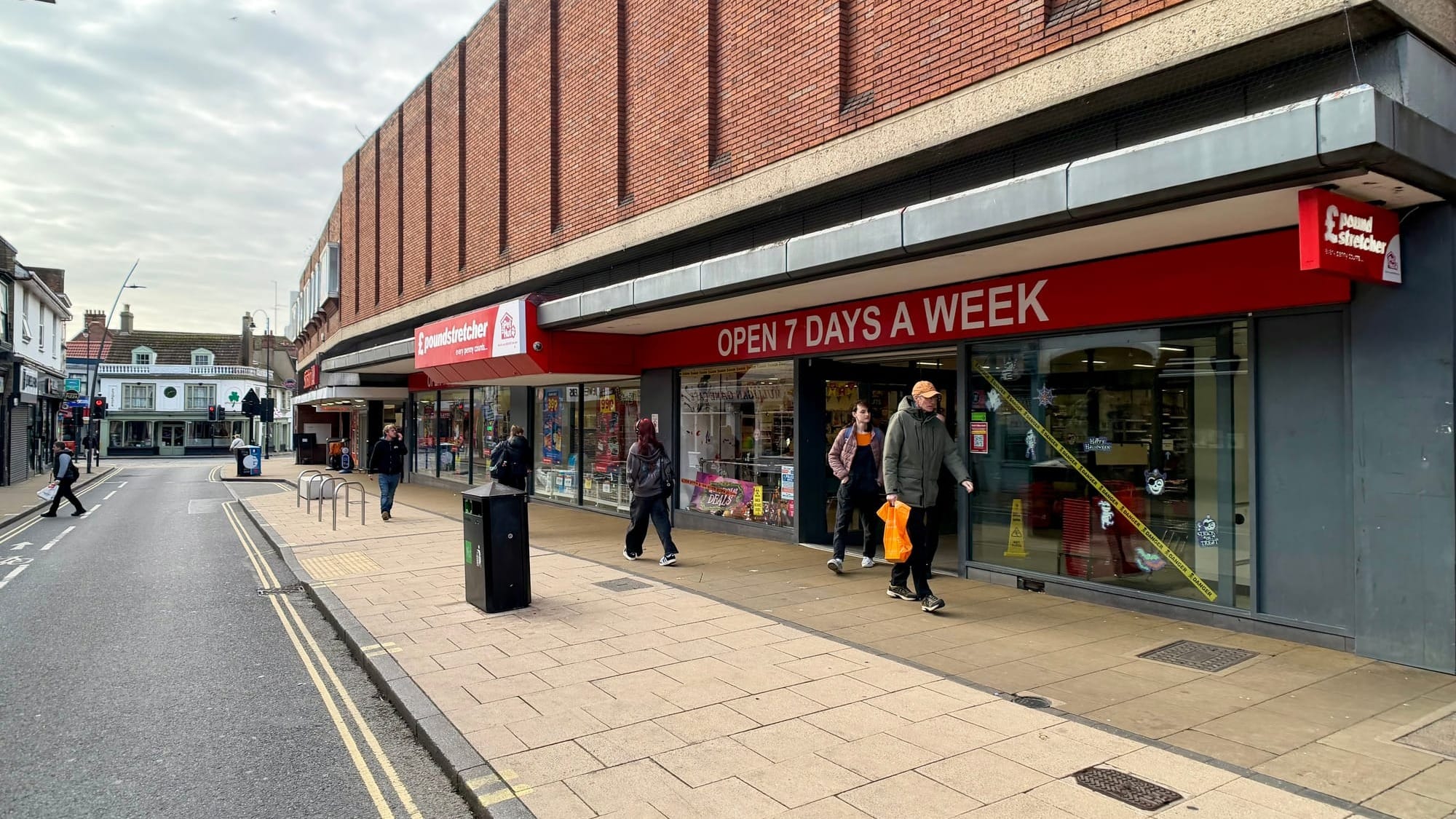
The freehold is now being offered for £1,995,000 plus VAT, while prospective tenants are being invited to consider a new lease at £195,000 a year, also plus VAT.
The agents also state that the existing lease can be terminated on six weeks' notice, potentially allowing vacant possession.
There is no confirmed announcement that Poundstretcher intends to close its Ipswich branch.
Nevertheless, offering the premises both for sale and for rent, with the possibility of vacant possession, makes its longer-term future an interesting question.
And the size of the property presents an obvious challenge.
When C&A opened in 1971, large department stores were precisely what thriving town centres wanted.
They attracted shoppers, employed large numbers of people and helped support the smaller businesses around them.
Fifty-five years later, the economics of retailing are very different.
Many of Britain's former department stores have been subdivided, converted or repurposed, as town centres attempt to adapt to a world in which far more shopping takes place online.
Whether Upper Brook Street continues to accommodate a single large retailer or eventually finds some different purpose remains to be seen.
But the building has proved remarkably adaptable already.
More than just another shop
Nobody is likely to suggest that the former C&A is one of Ipswich's great architectural treasures.
Its brick frontage is unmistakably a product of the early 1970s, when practicality was generally considered more important than charm.
But buildings don't have to be beautiful to matter.
For 55 years this one has been part of the ordinary rhythm of Ipswich life.
It has seen generations of children brought into town for school clothes, countless Saturday afternoons spent wandering its aisles and thousands of people earning their living behind its counters.
It has survived the disappearance of C&A, the collapse of Wilko and the enormous changes that have reshaped Britain's shopping streets.
And behind it, a piece of carved Tudor timber has quietly outlasted them all.
Perhaps that's the real story of 28-32 Upper Brook Street: the names above the door come and go, the fashions change and even the shops themselves disappear, but the memories remain – and somewhere in Ipswich, somebody still remembers the thrill of riding a Palomino rocking horse while their mother bought a new coat.
Don't forget: If you enjoy our content, please add Ipswich.co.uk as a "preferred source" on Google so you can easily find more of the content you value.
This article cost us ~£123 to produce
It's free for you to read thanks to the generous support of our partners. Please support us by supporting them.
Below the line