
Exclusive: Thirteen minutes from tragedy
A mother needs an emergency C-section, immediately. When the lifts serving Ipswich Hospital's maternity block aren't working – which, according to midwives, they often aren't – it could take 13 minutes to carry her to theatre. It could be too late. Ipswich.co.uk investigates.

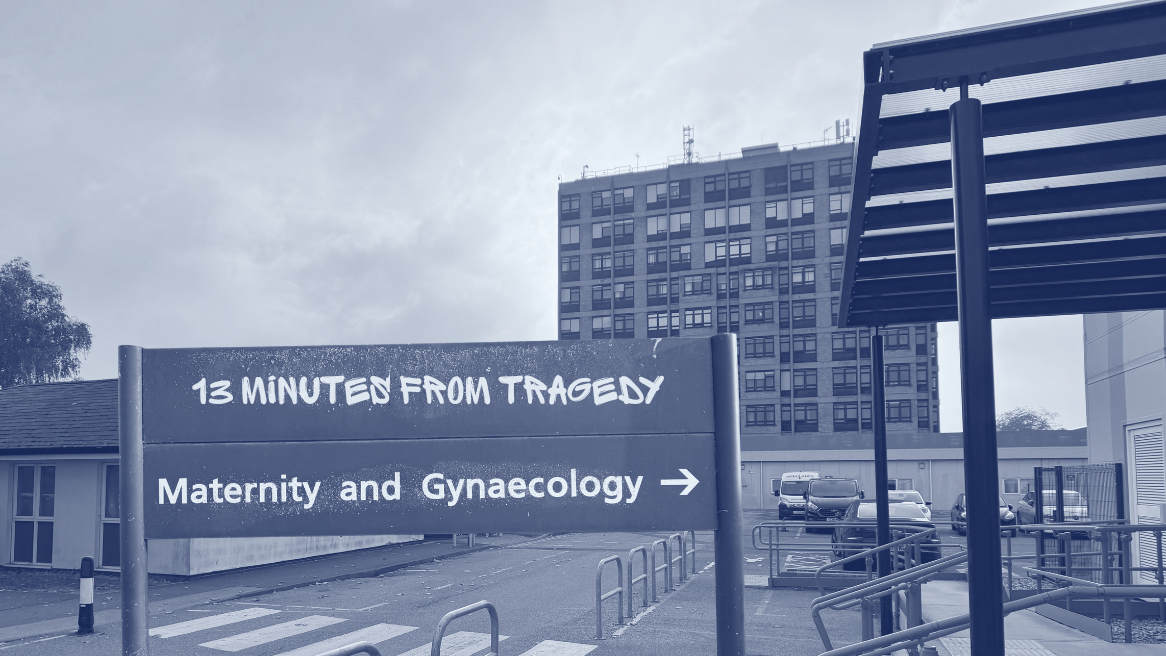
For more than two years, the hospital has been locked in a slow, stubborn fight to fix the lifts that carry Ipswich's labouring mothers to theatre – a project that will not be finished until early 2027, nearly three years after it began.
Speaking exclusively to Ipswich.co.uk, a midwife on the ward whose identity Ipswich.co.uk has agreed to protect, tells us she struggles to recall a time when all three lifts were working at once, and says the unit often has to make do with just one – placing the safety of both mother and baby at risk.
East Suffolk and North Essex NHS Foundation Trust (ESNEFT), which runs Ipswich Hospital, acknowledged "a number of lift failures".
Catherine Morgan, Chief Nurse at ESNEFT, said: "A major programme of replacing all three lifts in the maternity block at Ipswich Hospital began in June 2024 and will continue until next year, with one lift being replaced each year. Our priority is the safety of our patients and colleagues, and much work has taken place to have detailed plans and procedures setting out what we should do to care for our patients in the event of the lifts not being available."
Thirteen minutes
In a maternity unit, a lift is rarely just a lift. It is the difference between a theatre that is seconds away and one that might as well be on the other side of the hospital. A category one caesarean section — the most urgent kind, needed when a mother or baby's life is in immediate danger — is expected to happen within a maximum of 30 minutes of the decision being made.
So when a trial run was carried out on the ward to find out how long it would take to get a labouring patient to theatre, without lifts, the answer landed hard: around 12 to 13 minutes. Long enough, in the wrong emergency, to be the difference between a story with a happy ending and one without. The exercise was a one-off, rather than a response to a specific incident, and took place some time before more recent problems on the ward — but the number itself hasn't gone away.
Amanda Price Davey, Director of Midwifery at ESNEFT, said a standard operating procedure was in place "with specific actions if one lift, or two lifts, or all three lifts are out of action," alongside a full risk analysis and mitigating actions "to make sure we can continue to provide safe care."
Our source described what those plans mean in practice. In the worst case, she said, patients would have to be transferred to the south theatres, at "the opposite end of the hospital". She said the process is discussed at the annual emergency training day and that "fortunately we have not had to use this process thus far to my knowledge, but that doesn't mean we won't have to in the near future."
The solution...and another problem
Faced with a lift system it could not yet fix, the trust built a workaround: a new operative delivery room on the Deben Ward, which opened in June 2024. It exists for exactly the scenario the 13-minute figure describes — a category one caesarean section or a massive obstetric haemorrhage — treating patients on the spot, without a lift-dependent dash to theatre, while the wider lift works grind on.
However, this summer, the room built to remove one risk developed a risk of its own, when power cut out twice — on 11 June and 6 August this year. ESNEFT said there was no patient harm in either incident.
"We do recognise how concerning these incidents were for colleagues working in the delivery room," Ms Morgan said.
Frontline staff said the outages occurred during significant obstetric emergencies, and described a head torch being introduced as a backup option in case of further light failures. Picture it — a surgeon, mid-procedure, reaching for a torch strapped to their head because the room around them has gone dark. She said this was communicated to staff in correspondence sent around the time of the incidents and the wider safety planning. Ipswich.co.uk put this specifically to ESNEFT; the trust's response did not directly address the use of head torches.
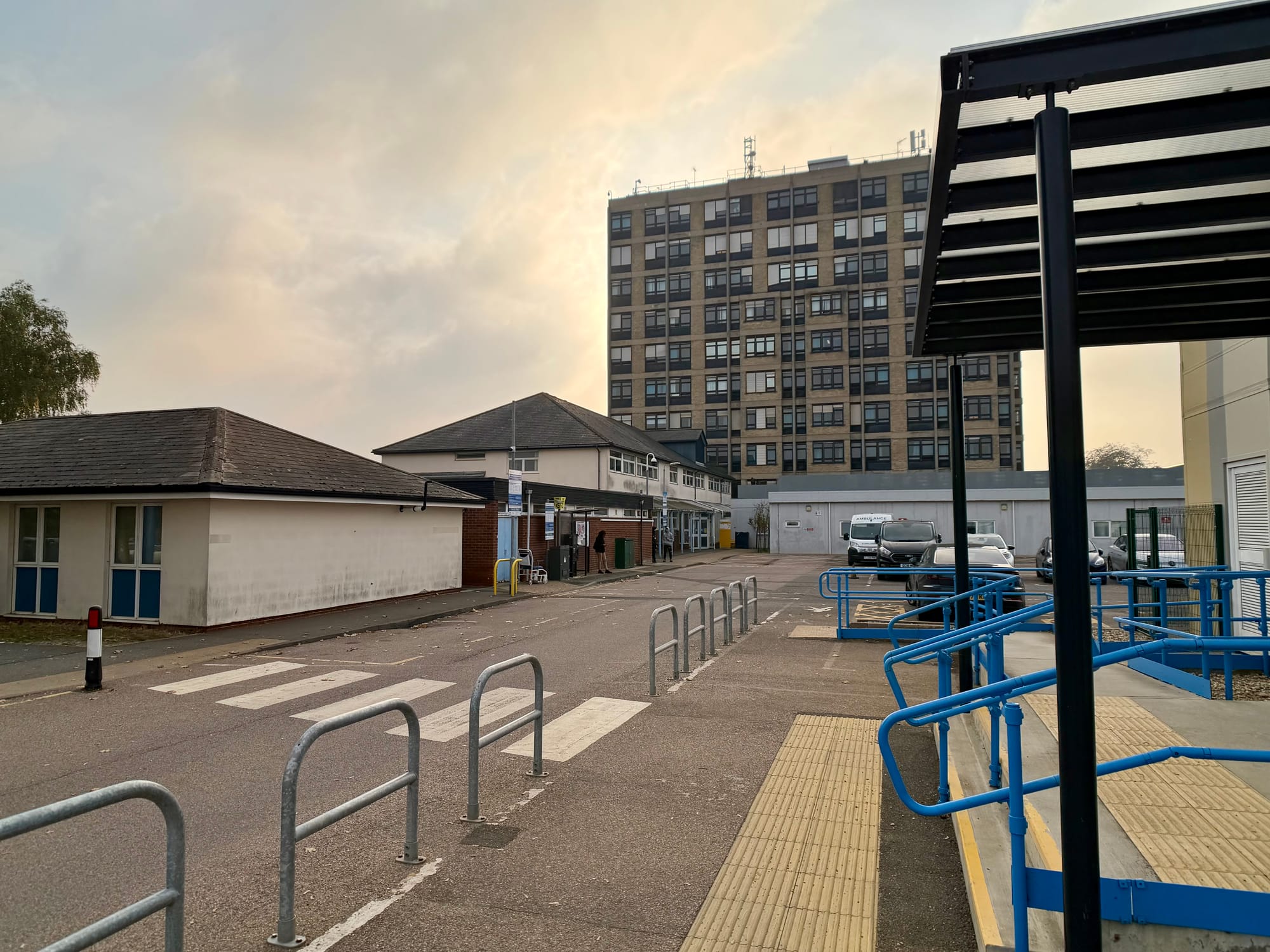
The cause, when investigators finally traced it, turned out to be a Belmont RI-2 blood warmer, found to be electrically safe but wired in a way it was never meant to be, sharing a circuit instead of running on its own dedicated supply. A dedicated circuit for the warmer was installed on 3 September — nearly three months, almost to the week, after the first outage.
"The investigation confirmed that the Belmont RI-2 blood warmer itself was electrically safe," Ms Morgan said. "It identified that the power interruptions occurred because the blood warmer requires a dedicated electrical supply and must be the only item operating on that circuit."
Ms Morgan said the room's electrical supply had since been separated from the wider Deben Ward supply and divided across two independently protected circuits, with the anaesthetic machine, neonatal resuscitation and patient-monitoring equipment all now on back-up power. Further work to strengthen the room's electrical resilience is planned once the second new lift is fully operational.
After the first power interruption, staff tested the emergency call system intended for use if problems recurred. This was a precautionary test, not a response to a live emergency.
"After the first power outage, we tested the emergency call system and found that we did need to strengthen this and have made sure that all colleagues are fully aware of who and how to call for support," Ms Morgan said. "This was a test not a response to an emergency situation, and we have made sure that all staff are fully aware of what to do in an emergency call situation."
Increased workload and a long list of staff sickness
On paper, the numbers tell a reassuring story. ESNEFT said the maternity service at Ipswich Hospital was fully staffed, with 17 more midwives in post than its established staffing numbers — a deliberate strategy, Ms Morgan said, to ensure safe staffing levels. Gaps caused by unplanned absence, she said, were covered through "a clear escalation policy including support from specialist and community midwives."
On the ward floor, the picture described to us is different. One midwife did not dispute the overall numbers, but said they do not always reach the shifts that matter. "That doesn't mean that on multiple shifts in the unit and in community, staff aren't feeling the impacts of increased workload and a long list of staff sickness," she said, describing short-staffed shifts as a regular occurrence that could be demoralising for those left working them.
A new building on the horizon
The trust confirmed that a proposal for a new £92 million maternity and neonatal unit was progressing, with a decision expected this month on whether to proceed to the design phase with architects.
"Our new build proposal for a £92 million new maternity and neonatal unit is progressing well," Ms Morgan said. "We should know in October whether we have the go-ahead for the first phase of working with architects to design the new centre."
A new unit, bringing maternity, gynaecology, surgery and anaesthetic services together, would address the underlying issue behind much of this story: a building not originally designed around the way maternity care now needs to function. But that solution remains some way off. Some way off. The decision due this month is only on whether to proceed to the design phase with architects — not approval or funding for construction itself. Even if it goes ahead, a new maternity unit will not appear on Ipswich Hospital's site any time soon.
The bottom line
ESNEFT says it has detailed plans and procedures in place for when the lifts fail, and that no patient was harmed in either of the summer's power interruptions. But strip away the trust's reassurance, and what's left is this: a potential 13-minute rush to theatre if a mother or baby's life is in immediate danger, a backup room that went dark twice in one summer, and a workforce that, in one midwife's words, is caught in "a vicious cycle" of short staffing, burnout and rising workload.
In a maternity unit, the gap between "nobody has been hurt" and "nobody has been hurt yet" is measured in minutes — and Ipswich's margin could be thirteen of them.
Below the line