
Council claim anti-social behaviour crackdown in town centre is working...but won't (or can't) prove it
Ipswich Borough Council says a partnership with Suffolk Police is cutting anti-social behaviour in the town centre – but when asked to provide evidence to back up the claims, neither the council nor the police could...or would.

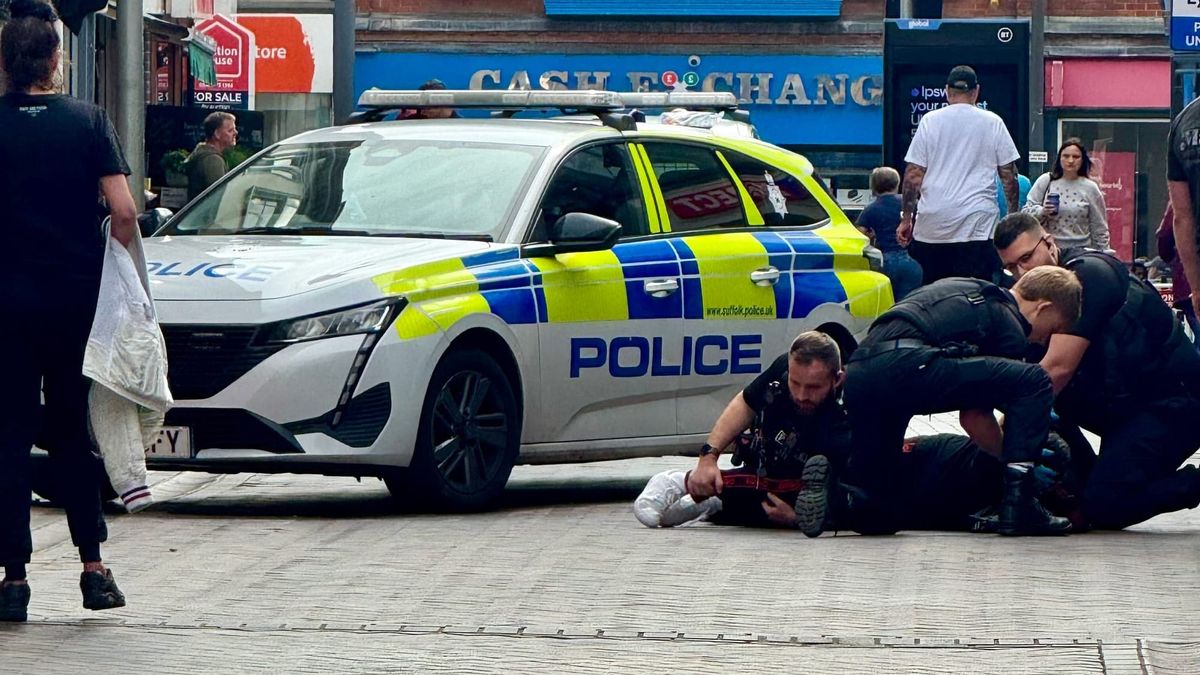
The council announced this week that a joint approach with police, using CCTV evidence, had delivered "positive results" tackling street drinking, anti-social behaviour and dangerous parking. Council CCTV operators and police officers have been working together to gather and review evidence, identifying repeat offenders and taking enforcement action, they said.
Slightly suspicious of the claims given that – at least to the naked eye – there has been an observational increase in all of the aforementioned in recent weeks, we asked the council to substantiate that claim with figures. They couldn't. So we asked the police. And they wouldn't either.
What the council announced
According to their joint press release, the CCTV and police partnership has led to a number of outcomes:
- Community Protection Notices (CPNs) have been issued to people involved in persistent street drinking and anti-social behaviour who had not engaged with offered support.
- Evidence gathered through the partnership has also helped identify a business linked to the issue, allowing police and licensing teams to work with the premises on responsible alcohol sales.
- Separately, the partnership has led to enforcement action against motorists for offences including obstructing footpaths, using a mobile phone while driving, failing to wear a seatbelt and parking on prohibited road markings.
Councillor George Lankester, Ipswich Borough Council's Portfolio Holder for Communities, said: "This is a great example of how we work closely with the Police to tackle problems in the town.
"Council CCTV footage has provided crucial evidence relating to persistent street drinking and traffic offences, which means the Police can take action."
Inspector Jess Lawlor, of the Ipswich Central Community Policing Team, added: "The evidence provided through our partnership with the council has been invaluable in helping us identify repeat offenders and take proportionate action. Working together allows us to respond more effectively to concerns raised by the community and helps us create a safer and more welcoming town centre for everyone."
What the council was asked to prove
This publication put six questions to the council, seeking the data behind the claims of success.
Claimed: CPNs issued to persistent street drinkers
Asked how many, the council said this "would be an enquiry for the police." No figure has been provided.
Claimed: Repeat offenders identified through the CCTV partnership
Asked how many, the council gave the same response. No figure has been provided.
Claimed: Enforcement action against motorists for a range of offences
Asked how many offences had resulted in action, the council again referred the question to police, even though the council is responsible for enforcement of parking in prohibited spaces in the town centre, not the police. No figure has been provided.
The gap extends beyond this publication's direct questions to the council. On the enforcement of prohibited parking in the town centre, Ipswich.co.uk submitted a Freedom of Information request to establish how many penalty notices had been issued, and how many had been paid – following a credible tip-off that many notices were going unpaid and little was being done about it.
The council has a statutory period of 20 working days to respond to such requests. That deadline passed 16 days ago. Despite chasing the council on several occasions, this publication has received no indication of when a response will be provided.
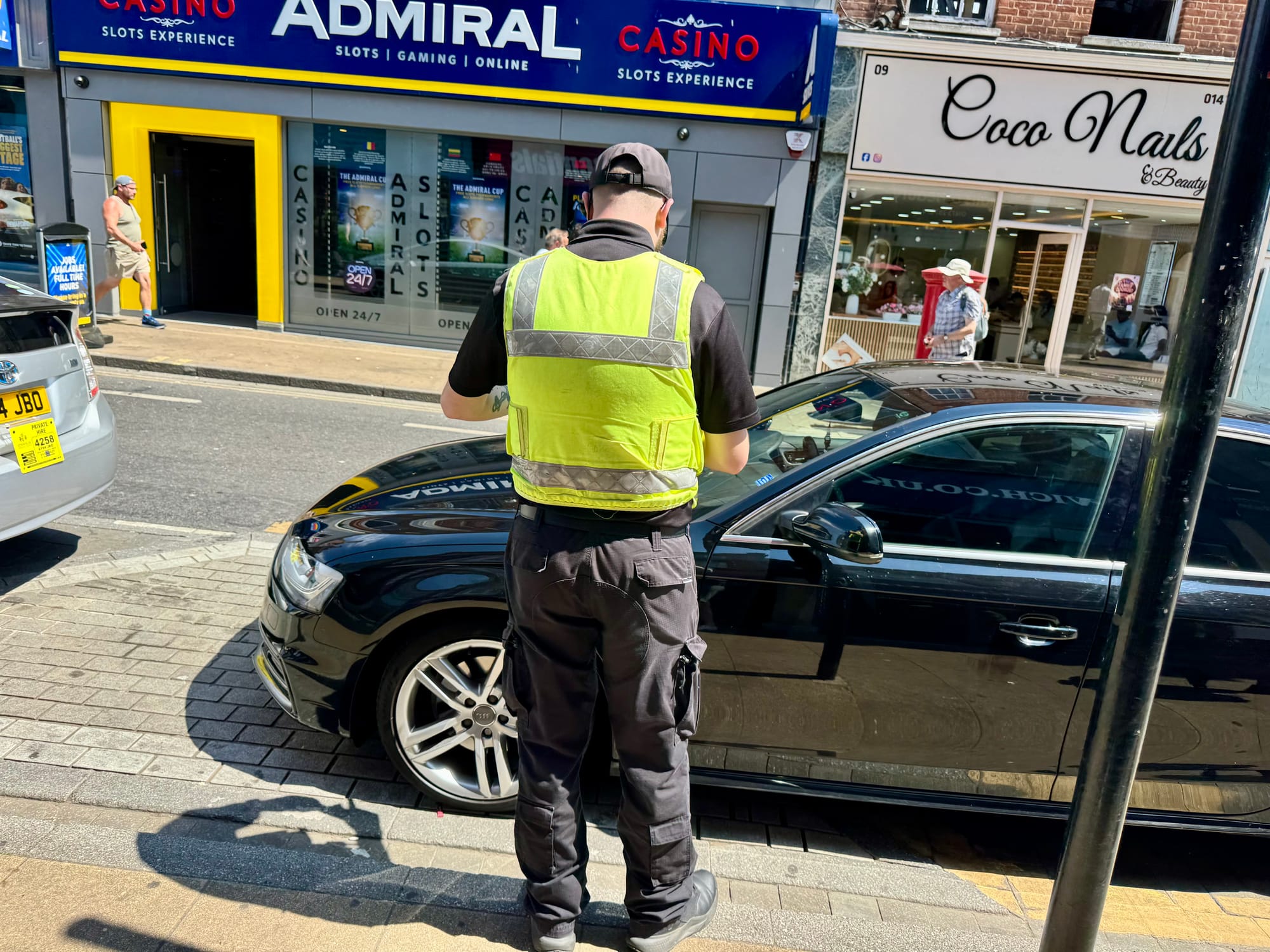
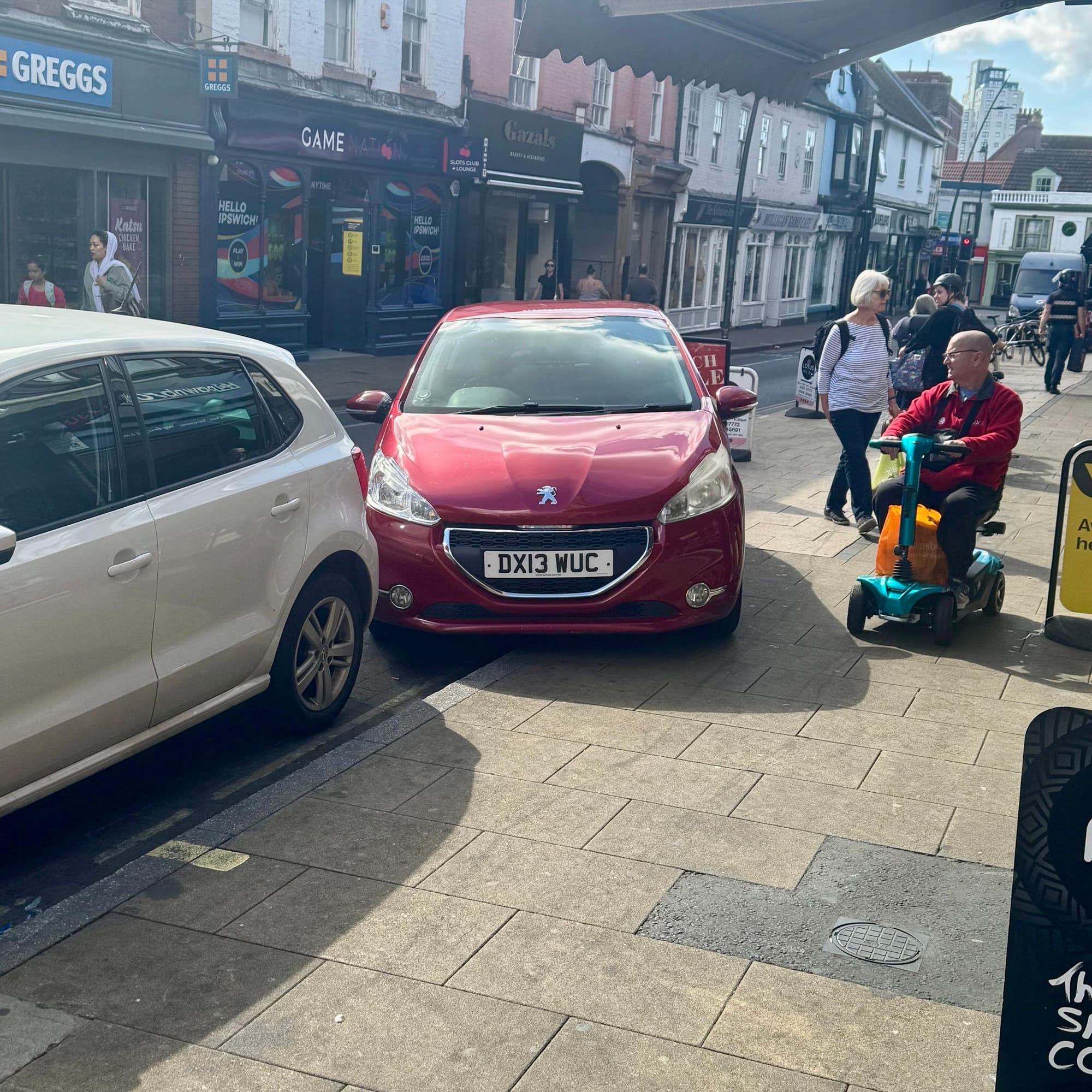
An officer issuing a PCN on Upper Brook Street in Ipswich (Photo: Oliver Rouane-Williams/Ipswich.co.uk) and a car parked on the pavement (Photo: Allister Frost)
Claimed: The partnership is succeeding
Our offices are on Upper Brook Street, and we walk the town centre multiple times every day of the week. From our own observations, and those of others, street drinking and anti-social behaviour have gotten progressively worse in recent weeks and months. The council was asked for its response to this observation but did not directly address it.
Asked what data or metrics underpin the council's definition of success, the council did not provide incident or complaint figures. Instead, a spokesperson described a change in method: "Success is determined by the effective utilisation of our CCTV system, supporting the Police in tackling issues reported by residents and finding ways to use legislation to enable evidence sharing.
"The driver is to improve people's enjoyment of the town centre and challenge those making the town less appealing to others through their detrimental activity," they said.
Claimed: Enforcement follows a genuine offer of support
Asked how many people had engaged with support compared with how many had not and subsequently faced enforcement, the council did not provide that breakdown. It said its team works with approximately 40 individuals a month, helping them "progress into treatment, outreach to identify early intervention, accommodation or other services" – a general caseload figure, not one tied specifically to this initiative.
The council maintains that enforcement is not the starting point. Councillor Lankester said: "We do recognise that some people involved in street drinking may be facing complex challenges, which is why support and rehabilitation is an important part of our approach. Enforcement action often occurs where an offer of help has not been taken but where it is in the public interest to protect the safety of town centre residents, visitors and businesses."
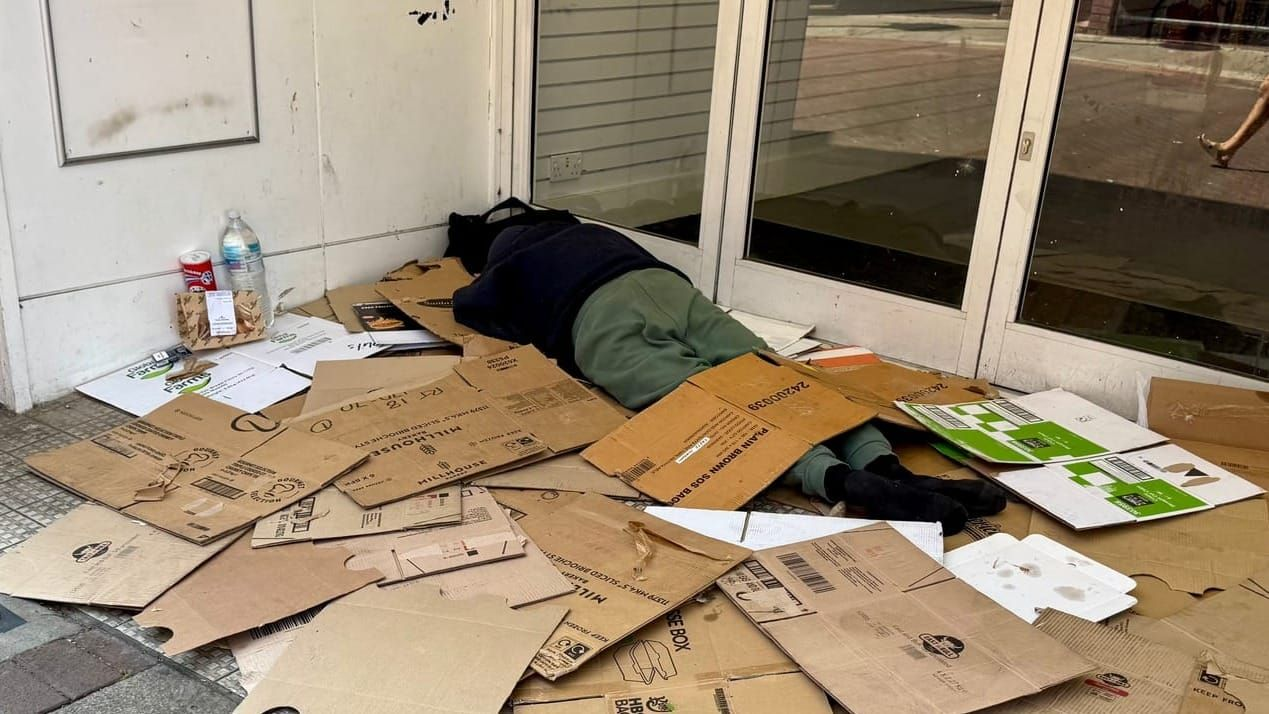
The council said it works alongside Ipswich Housing Action Group and NHS Health Outreach teams to carry out street welfare checks and housing assessments, connecting people to mental and physical health services, substance misuse support or financial guidance, often delivered by voluntary and community organisations in the town.
In short: the process behind the partnership has been explained in some detail. The scale of what it has actually achieved – if anything at all – has not.
The bottom line
The council and police say their CCTV partnership is making Ipswich town centre safer and nicer. That may well be true – but for now, it is a claim resting on an account of a joint press release rather than any evidence.
Neither the council nor the police have been able to provide the data to quantify the claims. Until that data arrives, readers are being asked to take their word for it.
 Oliver Rouane-Williams
Don't forget: If you enjoy our content, please add Ipswich.co.uk as a "preferred source" on Google so you can easily find more of the content you value.
This article cost us ~£122 to produce
It's free for you to read thanks to the generous support of our partners. Please support us by supporting them.
Below the line