
Can Ipswich cope with 7,500 new homes?
Ipswich is entering one of its biggest periods of physical change in decades, with developers pressing ahead on thousands of new homes around the town. The real test over the next decade may be whether roads, schools and GP surgeries can keep up.

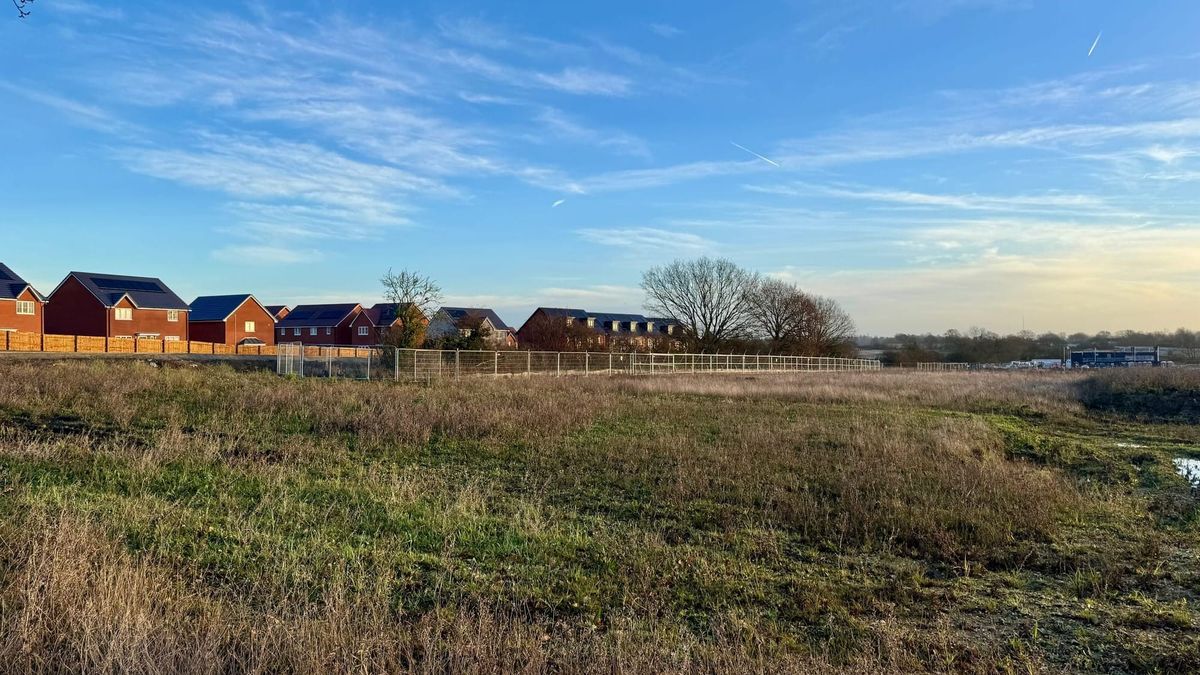
Why it matters: Across the Garden Suburb, Wolsey Grange, Brightwell Lakes and smaller sites within Ipswich itself, planning figures already in the system add up to a gross capacity of more than 7,000 homes – on top of the borough's adopted Local Plan target of at least 8,000 additional homes between 2018 and 2036.
The big picture: Several large developments are moving forward at once, extending Ipswich outward in multiple directions.
- Ipswich Garden Suburb, to the north, has a long-planned capacity of around 3,500 homes across its Henley Gate, Fonnereau and Red House neighbourhoods. Henley Gate already has outline permission for 1,100 homes, and Persimmon has bought part of the site to deliver 465 of them, marking the housebuilder's return to Ipswich. Fonnereau has permission for 815 homes, while Red House's application for 1,020 homes, a local centre and a primary school has been resolved for approval by the council's Planning and Development Committee, subject to a Section 106 agreement.
- Wolsey Grange, off the A1071 at Hadleigh Road, has outline permission for a further 750 homes in its second phase, adding to around 475 already delivered in phase one – more than 1,200 homes combined, just outside Ipswich's administrative boundary. Taylor Wimpey is now preparing detailed proposals for the first 157 of these homes, 55 of which are proposed as affordable.
- Brightwell Lakes, east of Ipswich at Martlesham, has outline permission for 2,000 homes, along with employment land, a school, green infrastructure and sports facilities.
- South of Ravenswood, the council is drawing up a masterplan for five undeveloped sites, with an indicative capacity of around 160 homes alongside new employment and recreation space.
The other side: Not every planning figure can simply be added together. Some developments are already partly built, others have only outline rather than detailed permission, and some remain dependent on legal agreements or future funding.
Plans for 660 homes on land between Humber Doucy Lane and Tuddenham Lane show how quickly the picture can change. Both Ipswich Borough Council and East Suffolk Council refused the scheme, and a Planning Inspector dismissed developers' appeals in January. Those homes cannot currently be counted towards the total.
For context: The council is also continuing its own housebuilding programme, with more than 100 additional affordable homes proposed across the second phase of the former Tooks Bakery site (45 homes) and council-owned land between Gower Street and Vernon Street. These follow more than 400 council homes already delivered at sites including Ravenswood, Bibb Way, Fore Hamlet, Hawke Road and Grimwade Street.
Smaller schemes add further to the total, including 21 homes approved at the Great White Horse Hotel and, on the Waterfront, long-delayed plans to remove dangerous cladding from 215 existing flats at The Mill and finally complete its unfinished tower with another 85 apartments, at an estimated cost of £30m to £40m.
The bottom line: Ipswich's growth over the next decade looks less likely to be a question of whether the town expands, and more a question of whether its roads, schools, GP surgeries, public transport and water infrastructure can expand quickly enough alongside it.
Don't forget: If you enjoy our content, please add Ipswich.co.uk as a "preferred source" on Google so you can easily find more of the content you value.
This article cost us ~£81 to produce
It's free for you to read thanks to the generous support of our partners. Please support us by supporting them.
Below the line