
Broken down again – Suffolk firms asked to prove the cost
Nearly two years after more than 350 Suffolk businesses set out what a lack of investment in the A14 was costing them, the Suffolk Chamber of Commerce is asking again. This time the answers will land while the business case is still being written.

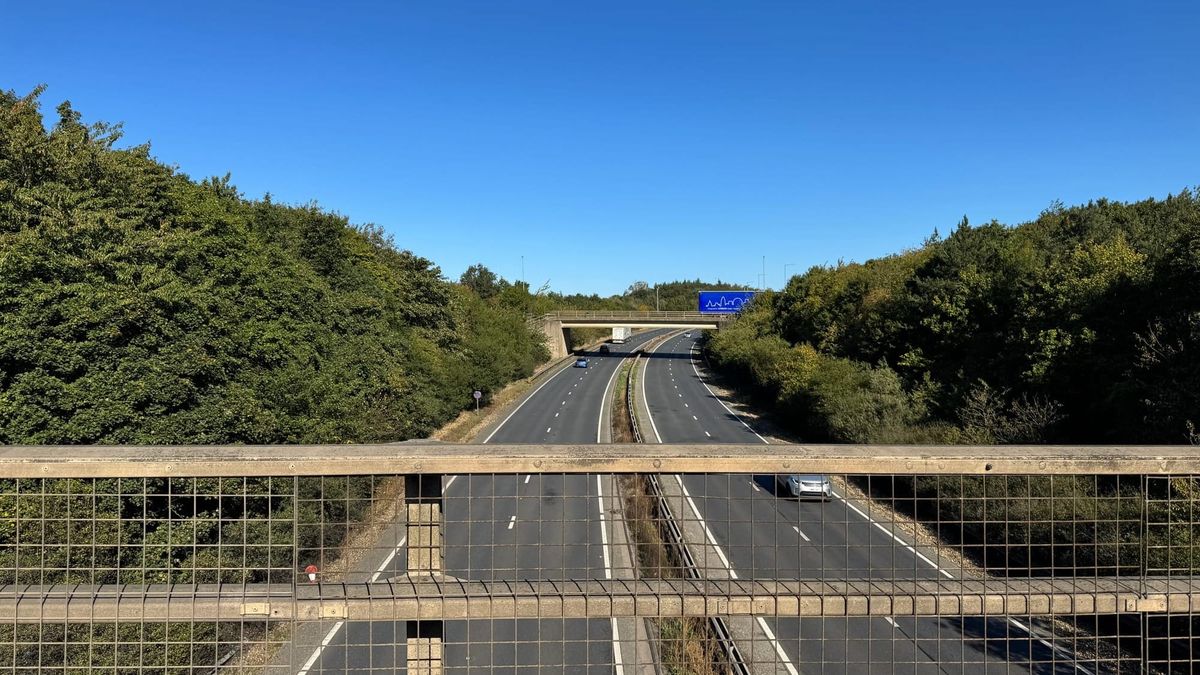
Suffolk Chamber of Commerce has launched a second Broken Down survey, calling on businesses across the county to set out what congestion and delays along the A14 corridor between Felixstowe and the Cambridgeshire border is doing to their profitability and growth plans.
The timing is the point. Suffolk County Council is currently assembling a Pre-Strategic Outline Business Case for improvements to the A14 and associated roads, the document intended to persuade government to fund a solution. The Chamber has launched the survey, it says, in time for the evidence to directly influence the options being looked at.
"The aim of this second Broken Down research is both to refresh the evidence base and to re-concentrate the minds of key stakeholders to give priority to implementing short-term, medium-term and long-term solutions to these problems," said Paul Simon, head of public affairs at Suffolk Chamber. "We hope that it will provide evidence for Suffolk County Council's transport resilience study. It will certainly act as a clear wake-up call to national and local policymakers to better understand the threat to Suffolk's economy."
What the first survey found
The 2024 report, Broken Down: the economic impact of the A14 in Suffolk, drew on responses from more than 350 local firms of all sizes and across a broad range of market sectors. Its findings were bleak.
Some 87% said they had been negatively affected by A14 disruption over the previous 12 months. Just over half, 51%, cited increased costs. Nearly half, 49%, reported damage to client retention and customer satisfaction. Almost a third, 32%, pointed to impacts on staff, including additional childcare costs and pressures on recruitment and retention.
Asked where the disruption bit hardest, 81% named the Orwell Bridge, followed by knock-on delays at 46% and the Copdock Interchange at 39%.
The forward-looking figures were sharper still. The same proportion, 81%, said they were concerned that future capacity constraints on the Orwell Bridge and the wider corridor would affect their business. Of those firms, 85% said their investment plans in Suffolk would be considerably or moderately affected if no significant improvements arrived within the decade, and 83% said their job numbers in Suffolk would suffer.
Behind the percentages sat individual balance sheets. Companies described losses ranging from several hundred pounds per delay to one firm that put its annual cost at more than £80,000.
Why the numbers matter now
When the original report was launched in January 2025, the Chamber's chief executive John Dugmore said it made "sobering reading", adding that "with no end in sight to the regular delays and closures across parts of this nationally vital road, many business owners and employers clearly feel abandoned by Government and National Highways".
What has changed since is people and process rather than tarmac. On Thursday, 17 September this year, Suffolk County Council's now-Reform-UK-cabinet unanimously approved £300,000 to develop the Pre-Strategic Outline Business Case, with the cabinet member for transport and highways, Cllr Christopher Hudson, telling members the resulting document needed to be robust enough that the Department for Transport would not "laugh us out the room".
The 72-page report considered that afternoon contained an initial sift of more than 20 possible solutions, each scored against four objectives. A tunnel under the River Orwell from the A12 came joint top on 19 points, alongside a new bridge on an outer alignment linked to the A12. A straight replacement bridge scored 18. The three Ipswich Northern Route alignments scored 15 apiece.
Several of the measures the Chamber pressed for in 2024 appear lower down that same list. An upgrade to the Copdock junction scored 12. Rail freight schemes at Ely and Haughley scored eight apiece. Stationing National Highways traffic officers in Suffolk scored three.
Those positions reflect what the council was scoring for rather than a judgement on the measures themselves. The first of the four objectives — providing a viable alternative route when the Orwell Bridge is closed or eventually needs replacing — was counted twice, a weighting the paper says was applied "to reflect the importance of long-term Orwell Bridge resilience". Schemes that do not cross the river fall behind those that do.
Crucially, none of that scoring is settled. The council's own paper describes it as "qualitative" and as "an initial strategic sift rather than a definitive option appraisal", and commits to making the weighting, rationale and sensitivity of the results explicit at the next stage "so the process remains transparent, auditable and not pre-determined".
That is the window the Chamber is asking businesses to speak into. The Pre-Strategic Outline Business Case is expected to take around six months and to produce a report by spring 2027.
No consensus on the cure
What the evidence should be used to argue for remains contested, and has been for years.
Suffolk's political leaders have been divided over the merits of an Ipswich Northern Bypass for years. The Chamber itself has held to a position of being open to all concepts, but has always stopped well short of backing a bypass. Its 2024 asks spanned all three timescales: rail junction funding and an automated closure messaging service in the short term, National Highways traffic officers and earlier investment in Copdock in the medium term, and a government taskforce on additional capacity in and out of Felixstowe in the long term, which the Chamber argued was needed as maintenance interventions increase and the Orwell Bridge nears the end of its expected lifespan.
The council's own report takes a slightly longer view of that horizon, placing full replacement "at the end of its service life (likely to be beyond 2100)" and saying the shift from episodic disruption to a structural resilience problem "is not likely until the latter years of this century". However, slightly contradicting his own report, Cllr Hudson told the September meeting the Orwell was "a failing bridge that is coming to the end of its life".
What the survey asks
The survey takes about eight minutes. It covers sector, workforce size and postcode, then moves to whether a business depends on cargo movements along the corridor and whether it has been affected by disruption in the past year.
Firms are asked to identify where disruption bites — customer service, additional costs, additional staff costs, exceeding drivers' hours, additional port costs for missed vehicle booking system slots, increased staff absence, recruitment and retention, missed meetings — and then, importantly, whether they can quantify the cost and supply the figures.
There are direct questions on the Orwell Bridge, too: on how decisions to close it are taken, how closures and reopenings are communicated, and whether the diversion routes deployed are fit for purpose. Respondents are also asked how critical the Copdock Interchange and the bridge are to their operations.
Paul Ager, chair of the Chamber's Transport and Infrastructure Group, was blunt about who should be filling it in.
"I would urge all businesses that use the A14 in Suffolk, whether they are based here or not, to contribute to this vitally important piece of evidence-gathering," he said. "The A14 in Suffolk is Britain's premier international gateway linking the North, the Midlands, London and the East of England to key international markets. Yet, it is bedevilled with congestion at various pinch points and a number of single points of failure, such as the Orwell Bridge, which costs businesses money and residents unnecessary hassle and stress."
The bottom line
Across two surveys, Suffolk businesses have now been asked twice to describe what the A14 costs them. The difference now is that a £300,000 pre-strategic outline business case is being written, and the council has committed to showing its working at the next stage.
Evidence that arrives after a document is finished is a complaint. Evidence that arrives while it is being drafted is influence. For the cost of eight minutes, firms across the county can decide which of those they would rather have.
The Broken Down 2 survey can be completed at surveymonkey.com/r/LRH8SXZ.
Don't forget: If you enjoy our content, please add Ipswich.co.uk as a "preferred source" on Google so you can easily find more of the content you value.
This article cost us ~£54 to produce
It's free for you to read thanks to the generous support of our partners. Please support us by supporting them.
Below the line