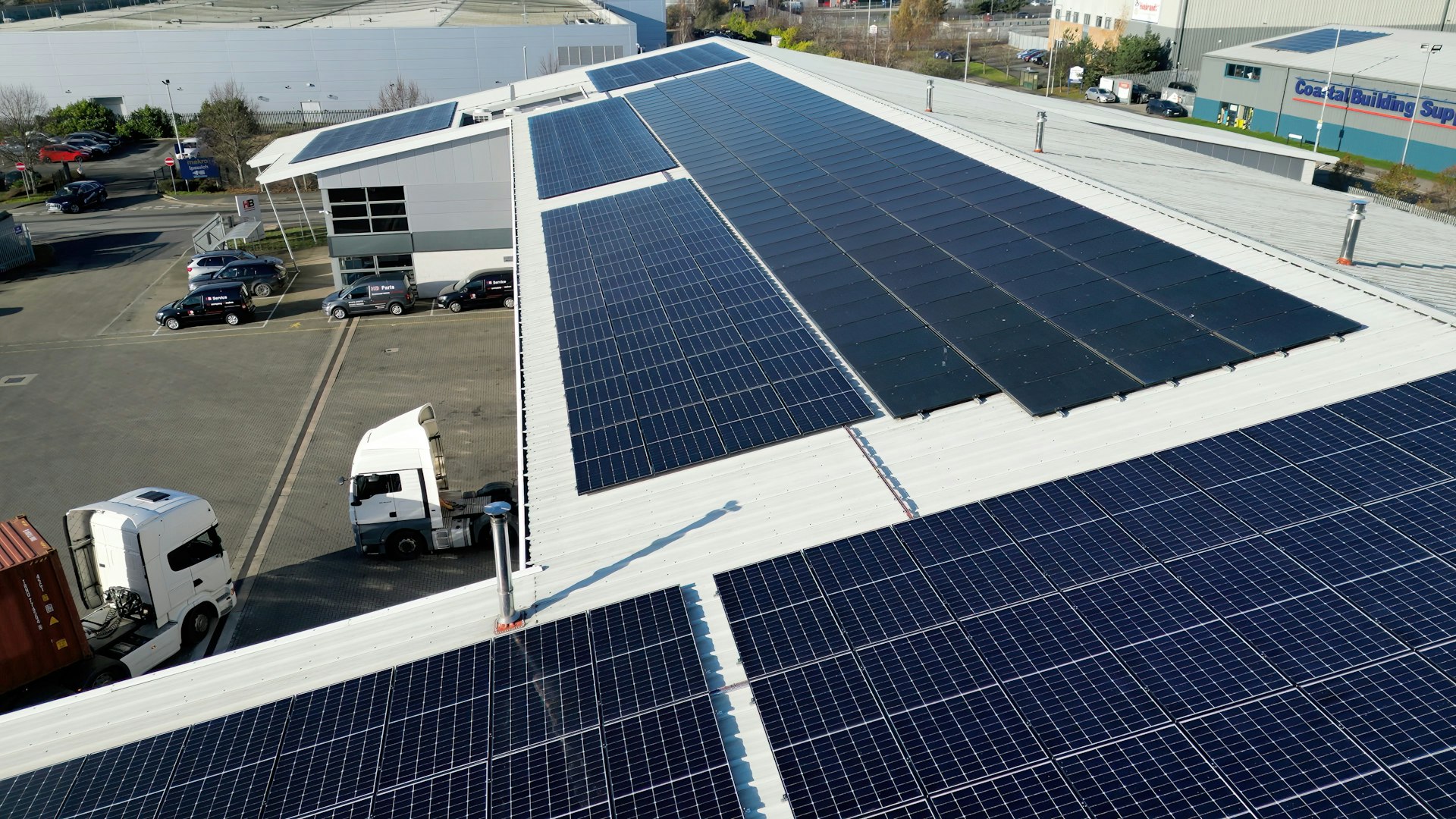
With the government confirming recently that new homes will have solar panels by default from 2027, and the potential for a similar mandate for solar canopies for new outdoor car parks under consultation, it's a fair question to ask.
Suffolk boasts over nine million square feet of commercial roof space across just eight major developments in the Freeport East area alone. Yet only around 5% of UK warehouses currently have solar installations.
Understanding the challenges
With politicians from all parties enthusiastically supporting the concept of warehouse solar and very few consumers finding fault in the idea, either, Ed Dolley from the UK Warehousing Association describes it as a "90-10 issue, maybe closer to 100-nothing"
However, there are practical infrastructure considerations that need to be addressed, he says.
"The one we hear about all the time is the grid," he explains. "Grid constraints, delays in getting connection approval, restrictions on how many solar panels you can have based on grid capacity."
Grid constraints are just one consideration. Another key factor is what Dolley calls "the landlord-tenant dynamic." Landlords need to weigh the investment in systems against tenant turnover, especially if future occupants have different energy requirements and preferences. Meanwhile, tenants naturally consider whether or not it makes sense to fund infrastructure improvements on properties they don't own.
The Chair of Gateway 14, Sir Chris Haworth, a Freeport East tax site with significant commitments to deliver the highest levels of sustainability, also highlighted grid issues as a significant barrier to the adoption of rooftop solar.
At Gateway 14, we have been informed by UK Power Networks that due to current grid restraints on the Stowmarket grid, any export of generation over and above a standard G99 export is not currently possible.
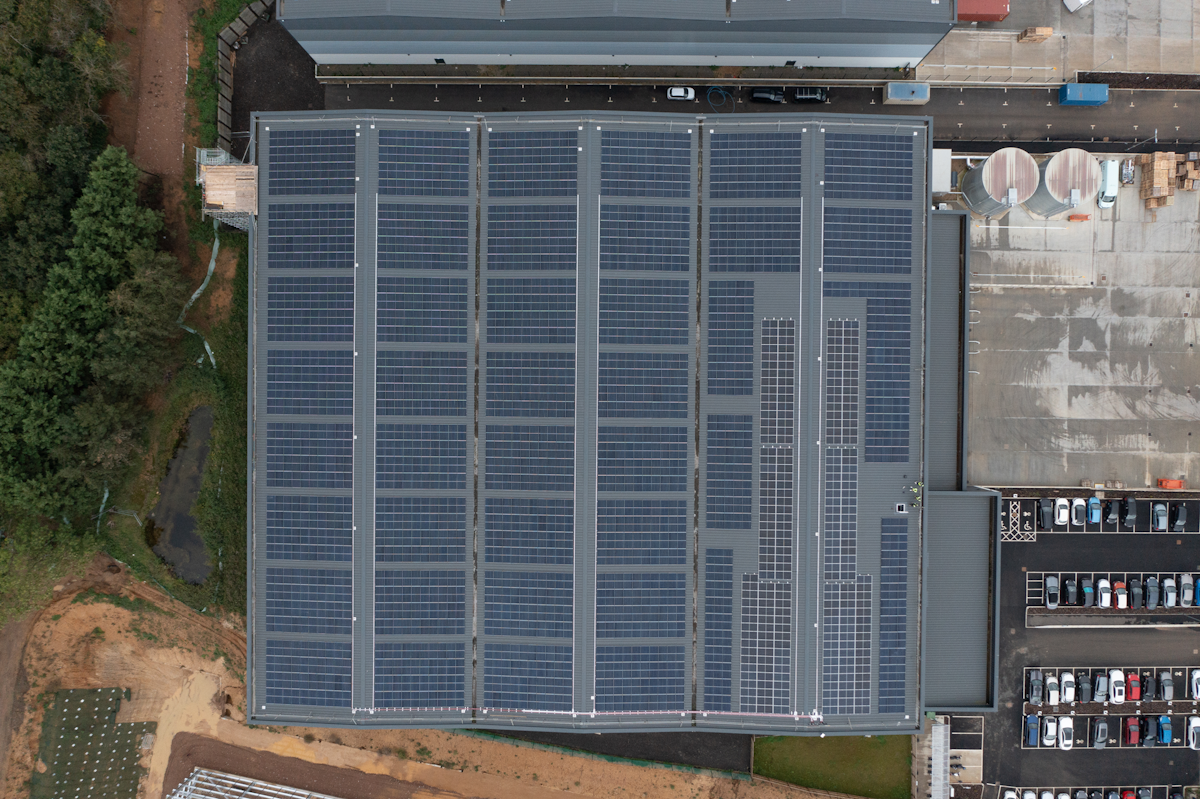
Warehouse roofs have the ability to generate large amounts of excess power, which could be exported to grid, however, as a result of the restricted ability to export, the solar coverage on roofs has been limited to the daily usage of the individual businesses' specific operations.
We ultimately need the right reforms and investment in our local grid to make this much more viable for all businesses to adopt.
"There's no simple fix," Dolley admits, "but we're seeing innovation." Some developers are experimenting with power purchase agreements that pause payments when buildings are vacant, offering flexibility for property owners. The legal landscape is evolving, with lawyers actively seeking clearer guidance to help navigate these arrangements.
Planning processes also vary among local authorities, resulting in different experiences for businesses across regions.
Building awareness and opportunity
Kristian Day, co-founder of Insight Energy, emphasises the importance of education. "We believe the core issue is a lack of awareness around just how commercially attractive this investment can be," he explains, before suggesting that robust data demonstrating commercial advantages could accelerate adoption.
Their advice for warehouse operators is practical:
Begin by engaging a solar expert to conduct a comprehensive feasibility study. This will identify your building's solar potential, model your savings, and highlight any technical, financial, or regulatory considerations upfront.
For many warehouse operators, rooftop solar can reduce energy costs by 40-80%, with additional savings possible through smart tariffs and storage solutions. The challenge lies in effectively communicating these benefits across the sector.
The Suffolk advantage
Suffolk is uniquely positioned to lead this transformation. Proximity to the UK's largest container port at Felixstowe, the A14 logistics corridor, and the growing influence of Freeport East in attracting international investment creates an ideal environment for commercial solar deployment.
Local energy experts estimate that over 1GW of rooftop solar could be developed across Suffolk, representing over £500 million of investment and supporting thousands of jobs. Within just 20km of Ipswich, 100MW of installation could deliver savings exceeding £20 million annually for local businesses.
International investors increasingly expect renewable energy solutions as standard. Assan Panel's new £45 million manufacturing facility at Gateway 14 in Stowmarket will include extensive rooftop solar, demonstrating what's possible.
Practical considerations
The warehouse sector presents unique challenges and considerations for solar deployment. Many buildings are 20-30 years old, requiring assessment for retrofitting to support solar installations. Energy usage patterns in warehouses fluctuate throughout the day, meaning that surplus energy must be exported to the grid or stored, but this comes at a price.
Installation timing requires coordination for occupied buildings, with consideration for business operations during the process. Most significantly, the warehouse sector is dominated by small and medium enterprises, often family businesses.
If the government were to mandate the installation of solar panels on warehouses, more accessible guidance on planning, regulation, and financing would have to be made available to businesses already feeling the pinch.
"While larger companies might have their own experts on policy and planning, the smaller ones might not," Dolley notes. They would require "support structures" to "help them navigate this space."
The path forward
The government's residential solar mandate demonstrates how policy can drive adoption. For commercial warehouses, the focus shifts to developing supporting infrastructure and frameworks. This includes streamlining planning processes, upgrading grid infrastructure, and clarifying legal frameworks around landlord-tenant arrangements.
The policy landscape is evolving rapidly. In fact, today marks the deadline for the Department for Energy Security and Net Zero's consultation on mandating solar canopies for new outdoor car parks.
UKWA has been monitoring this development closely, as Dolley explains: "We're keeping an eye on the developments that come out of the solar canopy consultation just to see if precedent gets set in terms of mandating those which would then move into mandating commercial property."
This consultation could signal broader government appetite for extending solar requirements across different commercial property types, potentially including warehouses in future policy considerations.
Progress is already underway within the sector. UKWA is developing a comprehensive "solar toolkit" guide covering everything from initial feasibility through to end-of-life decommissioning, addressing legal, insurance, and financing considerations.
The sector recognises its potential role. As Dolley puts it: "This sector can play a really big role in the solar generation capacity of the UK and the wider net-zero agenda."
Looking ahead
Suffolk's warehouse roofs represent significant potential. Industry analysis suggests that if just 20% of the UK's largest warehouses by roof space were to install solar, it could double the country's national solar generation capacity. This represents a substantial opportunity for both the region and the country.
The fundamentals are strong: the technology is proven, the economics are compelling, and political support is cross-party. Success depends on the coordinated development of planning frameworks, grid infrastructure, and industry support systems.
With Freeport East driving international investment and local expertise growing, Suffolk is well-positioned to demonstrate how commercial rooftop solar can work at scale. The question isn't whether this transformation will happen, but how quickly the supporting infrastructure can develop to match the ambition.
Those flat roofs could indeed become powerhouses of Britain's renewable future. The foundations are in place – now it's about building the systems to support sustainable growth.