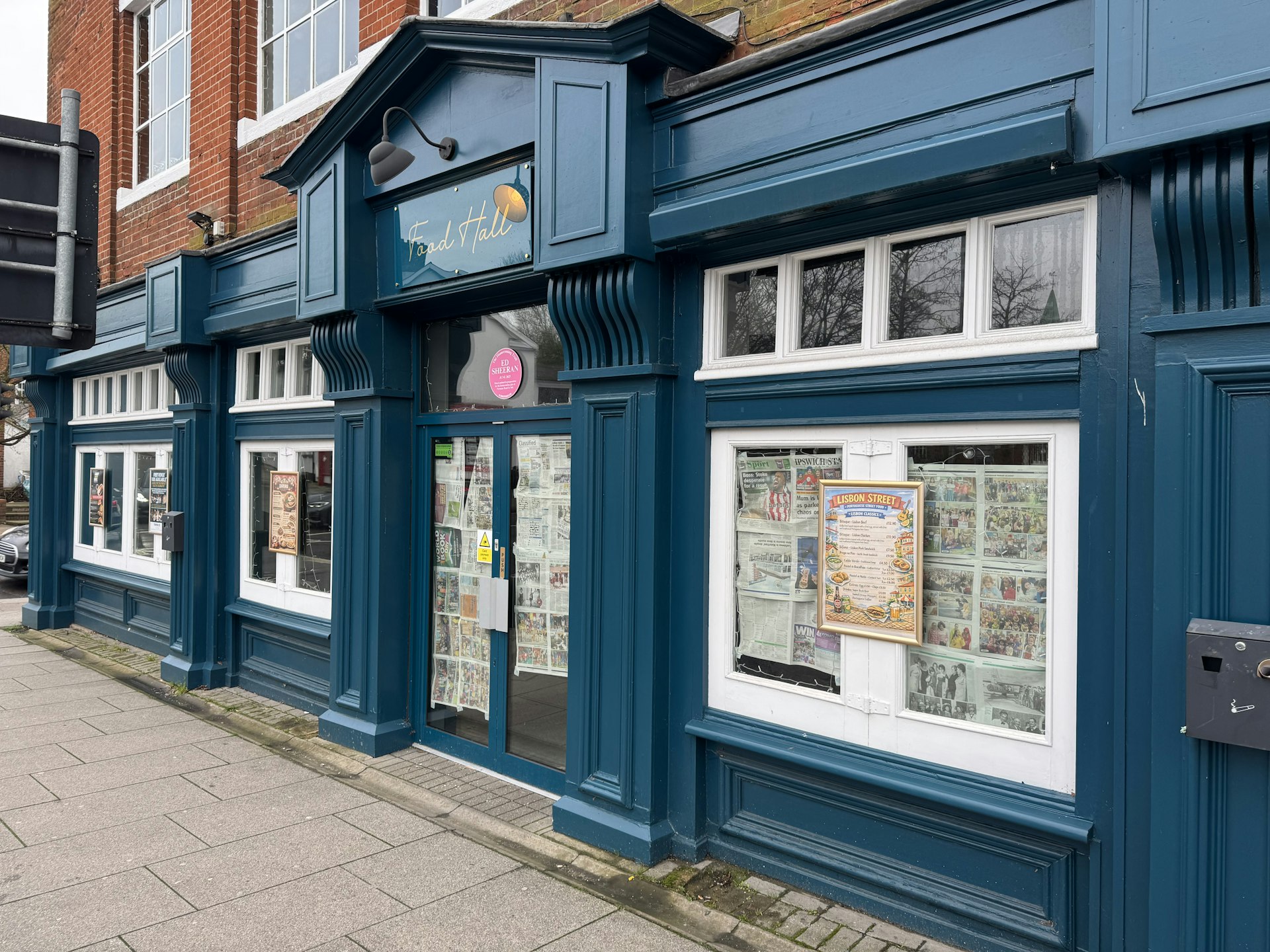
After several weeks of reduced hours, kitchen equipment was removed from Tower Street Food Hall last week, confirming what many had feared: Ipswich's first food hall had closed permanently, less than two years after it opened its doors.
For Sandeep Singh, the man who transformed the long-empty former Yates building on Tower Street into one of the town centre's most ambitious hospitality ventures, the closure marks the end of a chapter that cost him dearly – in money, in time, but also in belief.
A genuine desire to transform a town
When Singh first acquired the building, he had a clear vision. Inspired by what Altrincham Market and Market House had achieved in their town, he wanted to replicate that model in Ipswich – a vibrant, community-focused food hall that would become a genuine destination and transform the fortunes of a town centre that was crying out for ambition and investment.
Altrincham has a population of around 50,600 people – about a third of the size of Ipswich. The model had worked there. Singh believed it could work here too.
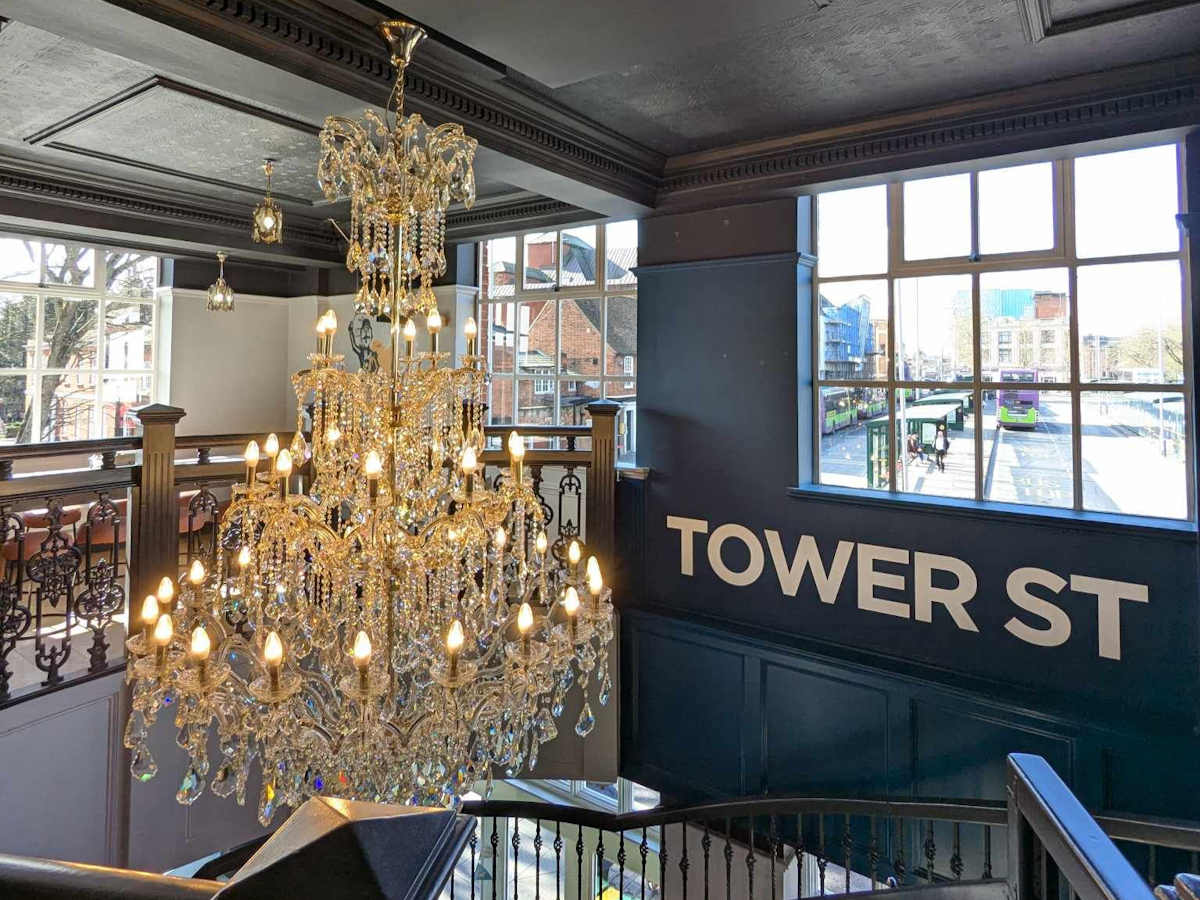
A £2m renovation transformed the empty, disused pub into a stunning three-storey venue, complete with marble service tops crafted by local companies and a showstopping chandelier his consultants had advised against. On reflection, Singh said he perhaps should've just focused on the ground floor, but compromise is not in his nature.
Six independent vendors signed up: Titu's Kitchen, Big Bro Bao, Slap and Pickle, The Bucket List, Dad & Daughter's Pizza and London Calling. On 15 February 2025, Tower Street Food Hall opened its doors.
In its early months, there were genuine reasons for optimism. March 2025 brought strong numbers across the kitchens. Sunday mornings became popular with families. A loyal customer base was beginning to form. When we spoke with Singh in May, he was bullish about the future.
But momentum is a fragile thing. Gradually, the numbers that had peaked in March failed to hold, and with them, the energy that had driven the project from the beginning.
By the time Tower Street began winding down – reduced hours first, then last week the removal of kitchen equipment – Singh had already reached a conclusion that went beyond the balance sheet.
"Food is my passion," he says now. "But when the passion dies, I detach myself from the project."
"Every town gets the high street it deserves"
Singh is clear about where he places the blame. He does not point to the council, to the economy, or to the market. He points to the consumer. And he does not mince his words.
"Every town gets the high street it deserves," he says.
It is a damning assessment, but Singh does not offer it without evidence. He points to Loungers, a proven concept that trades successfully elsewhere, closed in Ipswich's Buttermarket and relocated to the waterfront. VQ is another example he cites. Time and again, he argues, models that have succeeded in other towns have struggled to find their footing here – and in his view, the variable is not the product, but the customer. He has always maintained complete belief in the food hall model, saying it is thriving nearly everywhere in the country. Altrincham, with a population of around 50,600 – a third of the size of Ipswich – has sustained exactly this kind of venue for years.
"People didn't, or didn't want to understand what we tried to do," he says. "Ipswich was not ready for it."
He acknowledges the chicken-and-egg dynamic – the argument that footfall only comes when there is something worth coming for, and something worth coming for only survives if the footfall is there. But he rejects the idea that this cycle is beyond the consumer's power to break.
"People in Ipswich say they'd rather go to Bury," he says. "Well, people in Bury go to Bury high street. That is the difference."
It is the habit of talking the town down while doing nothing to lift it up that has clearly dented Singh's seemingly undentable optimism. His frustration is with the gap between what people in Ipswich say they want, and what they are actually willing to support. "It's not us," he says of the venture's failure, but "the town" that lies at the root of the problem.
The personal cost
What makes Tower Street's story particularly notable is the scale of what Singh personally committed to this town. The £2m investment was his own money. No government grants or funding – just a sizeable personal outlay driven by a genuine desire to make a difference. When I spoke with Singh last month, he was covering £18,000 per month in losses out of his own pocket to keep the business open as he sought investment.
Throughout, Singh has remained measured and without bitterness. He is not a man given to public grievance. But speaking with him now, there is a quiet, clear sense of someone who feels he gave a great deal and received less in return than he had hoped – from the town, but also its media, with Singh critical of the US-owned Ipswich Star's "negative" coverage.
What comes next
New tenants are expected to take over the building within weeks. The incoming operator is understood to be food-related, though not a food hall.
Whoever they are, they will inherit and benefit from a building that has been completely transformed – one that stood empty and disused for years before Singh spent £2m bringing it back to life.
Singh, meanwhile, still believes in the food hall concept. He is exploring locations in other towns and cities — Bristol among them — where he hopes to launch the same vision in a market he feels will embrace it.
"Why not Ipswich?" was how he once answered my question of why he came here. The answer, it turns out, was more complicated than he anticipated.
The bottom line
"Every town gets the high street it deserves." Singh does not say it with anger. He says it with the quiet certainty of someone who has spent £2m finding out whether it is true.
There is no villain in this story – no callous landlord, no council failure, no market collapse. Just a man who gave more than most would dare, and a town that wasn't ready to meet him halfway. Whether it ever will be is the question Ipswich has been avoiding for a long time. Singh has simply made it harder to ignore.