
Suffolk County Council accused of 'autocratic approach' over election delay stance
Opposition councillors have condemned Suffolk County Council for refusing to publicly support May's elections going ahead, accusing them of giving the government the "green light" to postpone democracy for a second time.


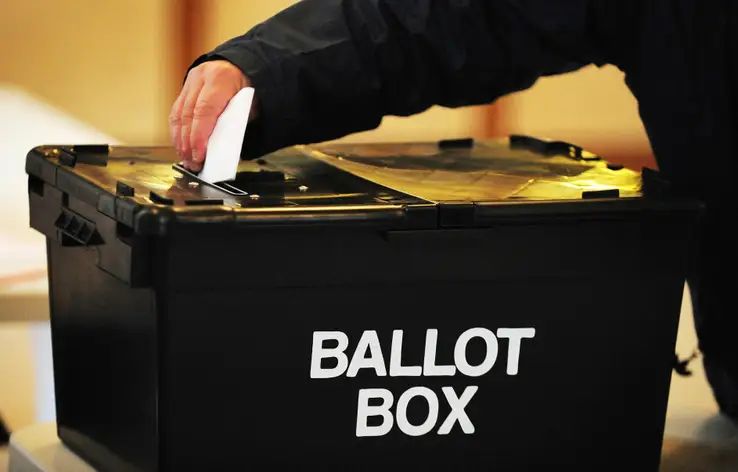
Why it matters: The decision marks a significant clash over democratic accountability, with opposition councillors arguing that Conservative members are avoiding going on record about elections that have already been delayed once from 2025.
The debate: Members of the Green, Liberal Democrat and Independent group tabled an amendment at the morning's council meeting that the council was in favour of the elections going ahead in 2026. Conservative councillors in the chamber unanimously voted it down.
Andrew Stringer, leader of the Green, Liberal Democrat and Independent Group, said: "The Conservative administration are being very disingenuous about the council's role in the possible postponement of the local elections in May."
"We gave the Conservative administration a clear opportunity to go on the record to support the already postponed 2025 county council elections to go ahead this year. We proposed an amendment at the meeting that the council was in favour of the elections going ahead, but unsurprisingly, they rejected that outright," he said.
The other side: The council's cabinet met in the afternoon after the council debate to vote on how the council should respond to the minister on the postponement of the elections, and it agreed that the council would respond to the government outlining capacity pressures which could impact the delivery of local government reorganisation.
Deciding to delay elections is ultimately up to the government and is outside the council's remit, something Councillor Matthew Hicks stressed multiple times during the debate.
The Conservative administration argued the council should stick to what it was asked to do – detailing the delay's impact on available resources amid significant reforms.
Councillor Andrew Reid, lead for education and SEND, said children's services were uniquely sensitive to the instability of carrying both the elections and council reform at the same time.
"Without sufficient capacity to prepare, structural change of this scale would risk the safety and life chances of the most vulnerable children in our communities," he said.
What they're saying: However, Stringer criticised the approach taken by Conservative councillors during the debate: "The only Conservative councillors daring to take part in the debate this morning were members of cabinet themselves, who were directly responsible for the decision later in the afternoon. The other Conservative members seemed unable speak on the record, unlike opposition councillors who spoke passionately in favour of Suffolk residents having the right to vote and have their say."
He said he pressed the leader of the council directly at the cabinet meeting whether they had previously made representations to the government about delaying the election, and did not receive a straight answer.
Councillor Andrew Stringer, the leader of the main opposition group – made up of Greens, Lib Dems and Independents – said councillors should be held to account by voters.
"We should stand up and say no, democracy is a line in the sand we are not prepared to cross," he said.
Councillor Caroline Topping, also a leader at East Suffolk District Council, said her authority would have enough resources to carry out elections as planned.
"Let's be clear, when an election is called, it should be held," she said.
Councillor Philip Faircloth-Mutton, of Reform UK, pointed out the council often asked the government to make certain decisions outside of the council's remit, questioning why it was any different this time around.
He said: "We don't have the legal right to enforce those elections, but we have the absolute right to make our view clear."
North Ipswich and Central Suffolk MP Patrick Spencer has previously condemned the idea of delaying local elections again,
For context: In December, the government announced that county councils on the Devolution Priority Programme, like Suffolk County Council, could request postponement of their elections for a second time if they felt that council resources would be better used to work on local government reorganisation, which will see unitary councils established in the county from 1 April 2028.
Suffolk County Council has been preparing for the election so far as usual, and puts money aside every year towards the next set of elections. According to Stringer, it is budgeted for, and the districts and boroughs that run the elections have confirmed they are ready to hold them.
"In that respect, the essential resources of Suffolk are in place to make democracy happen," he said.
But Ipswich.co.uk understands that, behind the scenes, Suffolk County Council leaders have been lobbying Westminster to delay the elections.
What's next: Councillor Matthew Hicks will now respond to the minister's letter, which will be made public. While they are likely to stop short of requesting that the elections be delayed, they are expected to put forward a strong case for why they believe they should. The government will then decide whether elections in Suffolk should be held as scheduled.
The bottom line: "We are appalled by this autocratic approach, and everything we are hearing from the people of Suffolk about this shows that they feel the same," said Stringer. "With the Conservatives now agreeing to respond to the minister's letter, it gives the government the green light to postpone the local elections. This is a very sad day for Suffolk democracy."
This article cost us ~£53 to produce
It's free for you to read thanks to the generous support of our partners.
Below the line