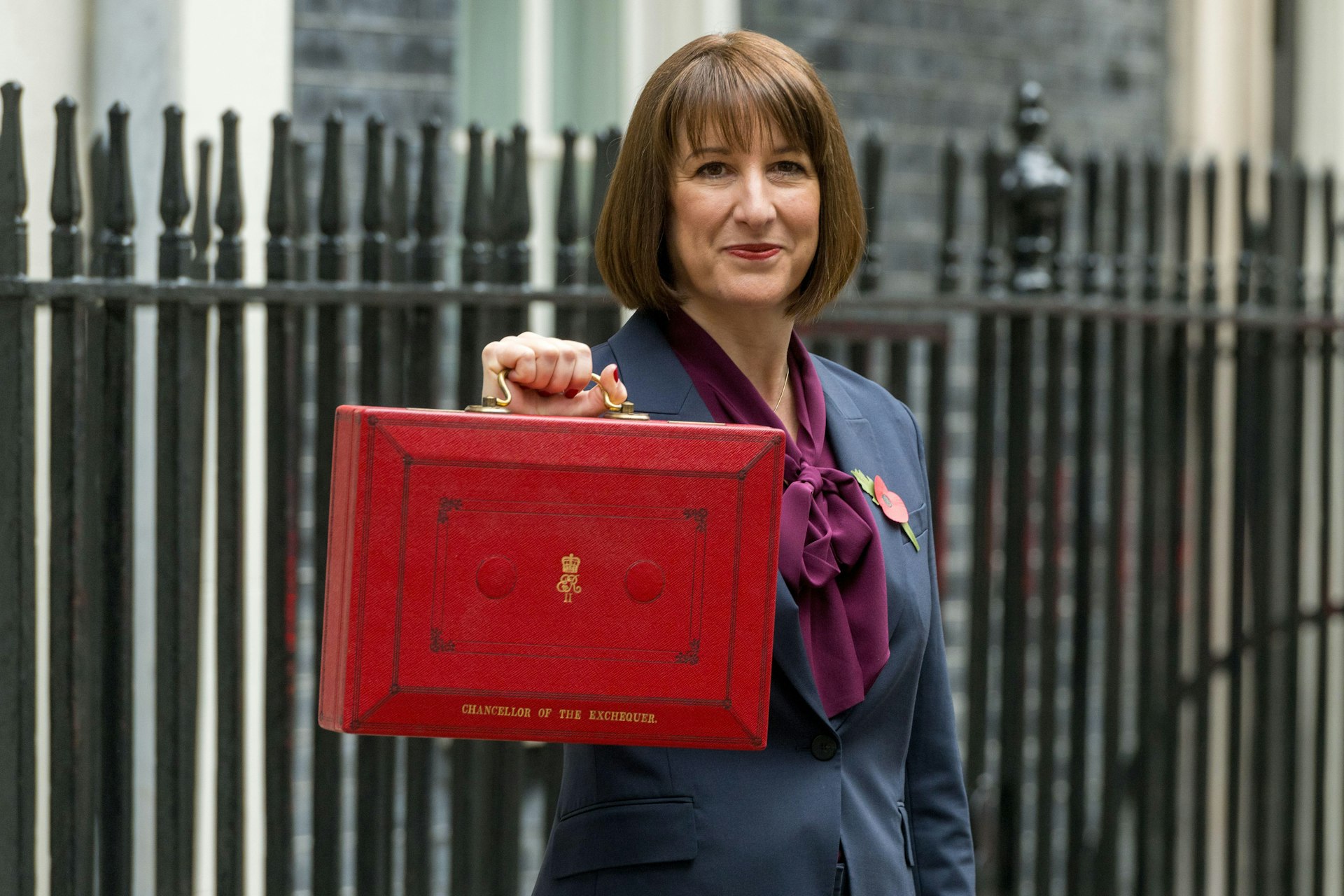
In a rare address three weeks before Budget day, Reeves refused to rule out breaking Labour's manifesto pledge on income tax, National Insurance, or VAT. "Each of us must do our bit for the security of our country and the brightness of its future," she said, all but confirming tax rises are coming on 26 November.
Her three priorities – cutting NHS waiting lists, reducing national debt and improving the cost of living – will require raising an estimated £25-30bn in new taxes, economists suggest, after the Office for Budget Responsibility downgraded UK productivity forecasts by £20bn and Labour MPs blocked £4.8bn of welfare cuts.
"No more business taxes. End of."
Paul Simon, head of public affairs and strategic communications at the Suffolk Chamber of Commerce, said businesses across the region were sending a clear message ahead of the Budget.
"No matter the recent softening-up messages coming from Treasury communicators and preparing us for bad tax news, Suffolk's SMEs have a very clear message for Rachel Reeves ahead of the Budget: 'Don't even think about it. No more business taxes. End of.'"
He said that data and anecdotal accounts obtained by the Suffolk Chamber over the past year show that businesses are losing confidence and scaling back on investment as turnover, profitability, and cash flow forecasts flatline or worsen.
"The impact of the last Budget is causing many smaller firms in particular to scale back on hiring new staff – a problem that many believe could be exacerbated by some provisions in the Employment Rights Bill."
But he said confidence could return if the Chancellor takes two significant steps on 26 November.
"Firstly, on the back of no more business taxes, Ms Reeves needs to begin the process of ripping up the out-of-date and complicated business rates system, which taxes firms before they have sold anything to one based on outputs such as turnover or profits. This could be transformational.
"Secondly, Ms Reeves needs to begin a wholesale shift in the relationship between Government and the business community. Whilst the focus on the Budget will be on taxation, she has the chance to signal a shift from Governments adding ever-increasing legislation and bureaucracy onto the shoulders of entrepreneurs and instead focussing on a legitimate role of the state – capital expenditure."
He cited the Ely and Haughley rail junctions and A14 improvements as infrastructure projects that would boost supply chains and signal that "better times are coming along".
Candy Richards, Regional Business and Stakeholder Engagement Manager at the Federation of Small Businesses (East Anglia), said Reeves’ speech had intensified fears among local entrepreneurs already facing tough trading conditions.
“It’s clear that the scene has been set for more tax rises at the Budget, and small businesses, who are already finding trading conditions very challenging, are feeling increasingly nervous," she said.
Recent FSB research shows that 34% of small firms in the East of England are bracing for contraction, whether through downsizing, closure or sale, with over half reporting falling revenues in Q3 2025.
“It’s a grim picture as local businesses see their costs rising, their profits squeezed and customers’ wallets staying firmly in their pockets.”
She urged the Chancellor to take “dramatic action” to ease the small business rates burden, reduce employment costs and lower what she described as “sky-high tax levels on entrepreneurship.”
“This Budget must be used as an opportunity by the Government to support small business growth and rebuild confidence," she added.
Budget speculation
Expected measures include:
ISA allowances: Cut from £20,000 to £10,000 for cash ISAs
Rental income: National Insurance charges raising £2bn
Capital gains tax: Rates increased to match income tax bands (24-45%)
Income tax thresholds: Freeze extended to 2029-30, generating £10bn
Property taxes: Overhaul replacing council tax and stamp duty
Bank levies: Windfall taxes generating up to £8bn
Gambling tax: New levy raising £3bn
Professional partnerships: National Insurance on 190,000 solicitors, accountants, and doctors using limited liability partnerships
The scale of the challenge is clear: economists estimate Reeves needs to raise £25-30bn while avoiding Labour's manifesto pledge not to increase income tax, National Insurance, or VAT.
However, the Resolution Foundation suggests the fiscal challenge may be less severe than headlines suggest, with wage growth potentially offsetting much of the productivity downgrade.
The bottom line
Tax rises are coming. Reeves has made that clear without saying it explicitly. For Suffolk businesses, the critical question is whether the Chancellor listens to their plea for no more business taxes, or whether the need to fill the £25-30bn hole takes precedence.
With three weeks until Budget Day, the speculation will intensify. But for businesses and families across the region, the question is not whether taxes are rising – but which ones, by how much, and who bears the burden.
Are you a Suffolk business owner? What would you say to the Chancellor? Email matthew@ipswich.co.uk