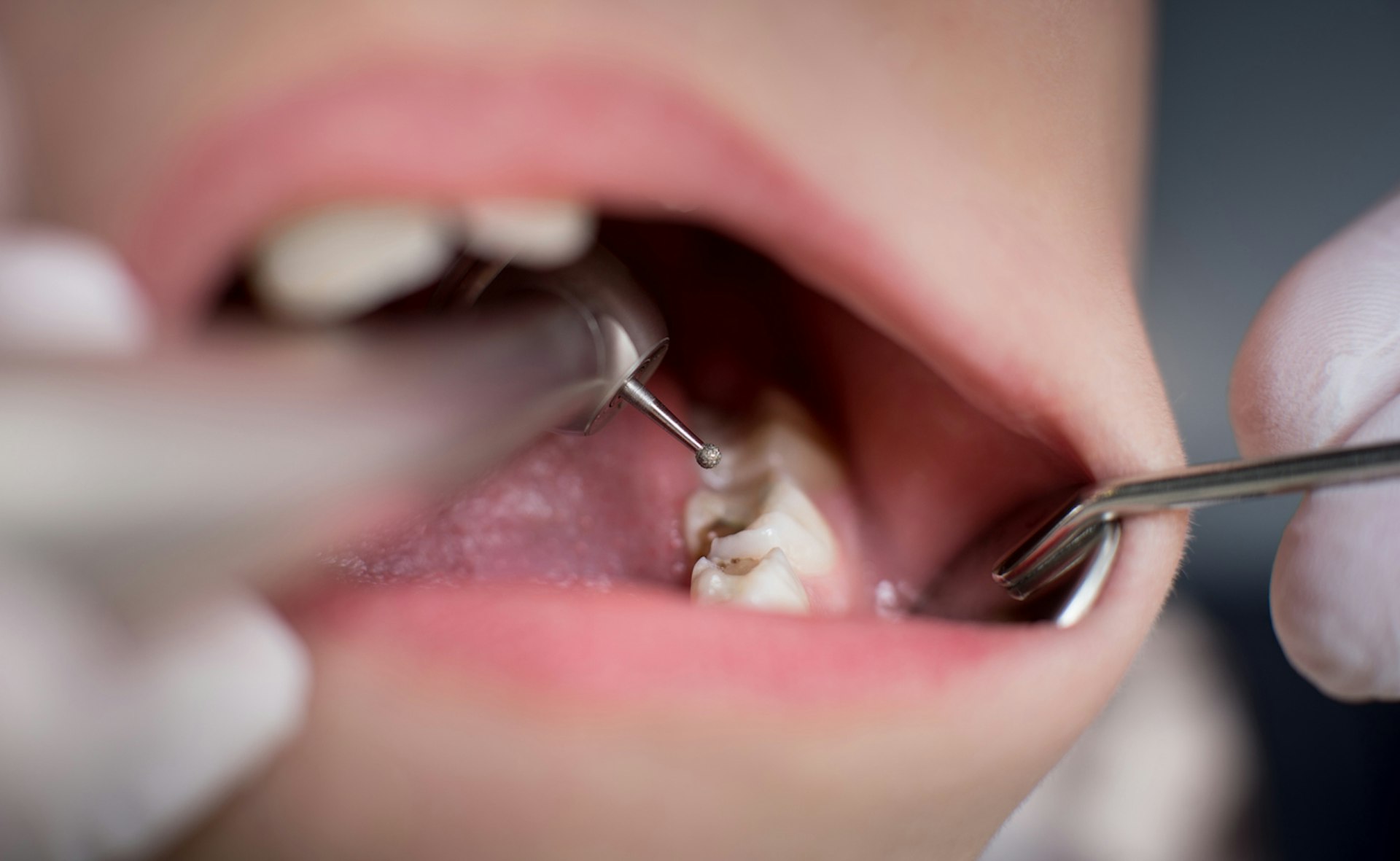
Fresh analysis by The Food Foundation reveals what the charity describes as "shocking" health and dietary inequalities, with dental decay afflicting deprived communities at far higher rates.
Across England, dental decay affects more than one in ten Year 6 children, with rates varying dramatically from 39.4% in Wolverhampton West to just 1.48% in some Brighton constituencies.
In Ipswich, both local constituencies perform better than the national average, but a significant gap exists between them.
Year 6 children in Central Suffolk and North Ipswich have a tooth decay rate of 4.95%, compared to 8.7% in the Ipswich constituency.
Among Reception age children, 20% in Ipswich have one or more obvious untreated decayed teeth, compared to 13% in Central Suffolk and North Ipswich.
Put another way, by the time they reach year 6, children in Ipswich are nearly twice as likely to experience tooth decay than children in Central Suffolk and North Ipswich. Health experts say this reflects disparities in the resources and opportunities available to families.
The deprivation connection
The difference in dental health outcomes tracks closely with household deprivation patterns across the two areas. According to 2021 census data, 51.5% of households in Central Suffolk and North Ipswich are not deprived in any dimension, compared to 45.2% in Ipswich.
The Office for National Statistics defines a household as deprived if it lacks sufficient resources or opportunities in at least one of four key areas: employment, education, health and disability, and housing.
In Ipswich, 15.7% of households experience deprivation in two dimensions, compared to 11.9% in Central Suffolk and North Ipswich.
Research consistently shows links between household deprivation and children's dental health. Families facing multiple deprivations often have less access to preventive dental care, struggle with the cost of healthy food, and may live in areas with limited health services.
Child poverty rates, which influence both diet quality and healthcare access, have climbed in both constituencies over the past decade. In Ipswich, the child poverty rate rose from 27% in 2014/15 to 32.9% in 2023/24, whilst in Central Suffolk and North Ipswich it increased from 20.3% to 23.5%. The growing gap mirrors the pattern seen in dental health outcomes.
Access to dental care
The relationship between dental service availability and children's tooth decay proves more complex than it might first appear. According to 2024 House of Commons data, there are 25 dentists accepting NHS patients across Ipswich, serving a population of 139,300 – roughly one dentist per 5,572 people. In Central Suffolk and North Ipswich, 11 dentists serve a population of 95,100, or one dentist per 8,645 people.
Despite having fewer NHS dentists per capita, Central Suffolk and North Ipswich shows better dental health outcomes among children. This finding suggests that access to dental services, whilst important, may be less influential than underlying socioeconomic factors in determining children's tooth decay rates.
The figures do highlight pressure on NHS dental services across both areas – part of a wider national crisis in dental care accessibility. But the data indicates that addressing childhood tooth decay requires more than simply increasing dentist numbers. Household resources, diet quality, and broader health inequalities appear to play the dominant role.
Diet, nutrition and dental health
The Food Foundation's analysis, funded by the Nuffield Foundation and calculated by the London School of Hygiene and Tropical Medicine, examines multiple health indicators including dental decay, obesity, and access to nutritious food. The data shows these factors cluster together in deprived areas.
Childhood obesity rates, another indicator of diet quality, follow a similar geographic pattern to dental decay.
Among Year 6 children, 23.4% in Ipswich are living with obesity compared to 20.64% in Central Suffolk and North Ipswich.
Reception age figures show 9.3% in Ipswich and 8.68% in Central Suffolk and North Ipswich.
Both obesity and tooth decay are influenced by diet, particularly sugar consumption and access to nutritious food. The Food Foundation's dashboard shows deprived constituencies are the worst affected by poor dietary habits, with significant regional divides across the country.
Dr Hannah Brinsden, head of policy and advocacy at The Food Foundation, said the health and diet inequalities dashboard highlights "stark inequalities" across the country, as well as "the detrimental impact that our food system is having on our health".
She added: "The Government's Food Strategy is a huge opportunity to reduce these regional inequalities and improve the healthiness of our nation. By focusing on national action to improve our food environments, alongside harnessing the power of local leadership, bringing together local businesses, community enterprises and producers, we can ensure that everyone has access to more nutritious, affordable food, no matter where they live."
Professor Sir Michael Marmot CH, director of the UCL Institute of Health Equity, said: "Too many people in Britain have food insecurity and too many people cannot access healthy food. The result is stark inequalities in health related to nutrition. A strategy to achieve greater health equity has to include access to affordable, nutritious and attractive food."
Government response
The Food Foundation called on policy makers to target action where it is needed most in the Government's upcoming Food Strategy and Child Poverty Strategy, after Sir Keir Starmer pledged "to create the healthiest and happiest generation of children ever" ahead of last year's election.
A Department of Health and Social Care spokesperson said: "Through our Plan for Change, we will create the healthiest generation of children ever, limiting kids' access to fast food and cracking down on junk food advertising.
"We are launching a world-first partnership with food retailers and manufacturers to help families make healthier choices and reforming the soft drinks industry levy to ensure it continues to work effectively to reduce sugar consumption.
"We are also rolling out supervised tooth brushing for three-to-five-year-olds in the most deprived communities and have already begun the rollout of 700,000 extra urgent dental appointments."
The bottom line
The difference in children's dental health between two Ipswich constituencies tells a story about how deprivation shapes outcomes from an early age.
The data shows tooth decay rates diverging between Reception and Year 6, influenced by factors including household resources, access to dental care, and the quality of available food. Both constituencies outperform many parts of the country, yet the consistent gap demonstrates that where a child grows up matters.
Addressing these disparities will require action on multiple fronts: improving access to NHS dentists, ensuring families can afford nutritious food, and targeting preventive programmes where they're needed most.
Children living just miles apart deserve the same chance at a healthy smile.