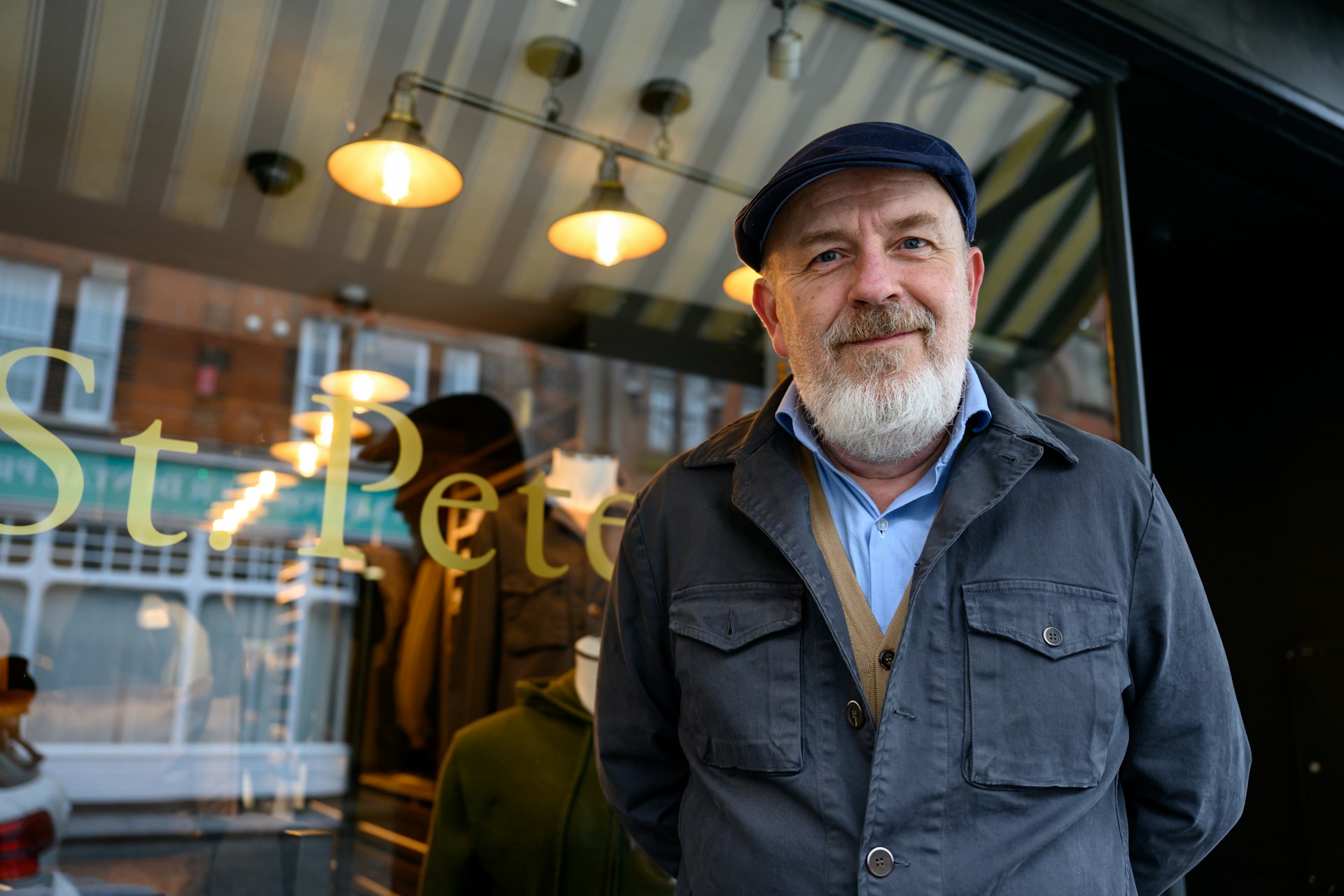
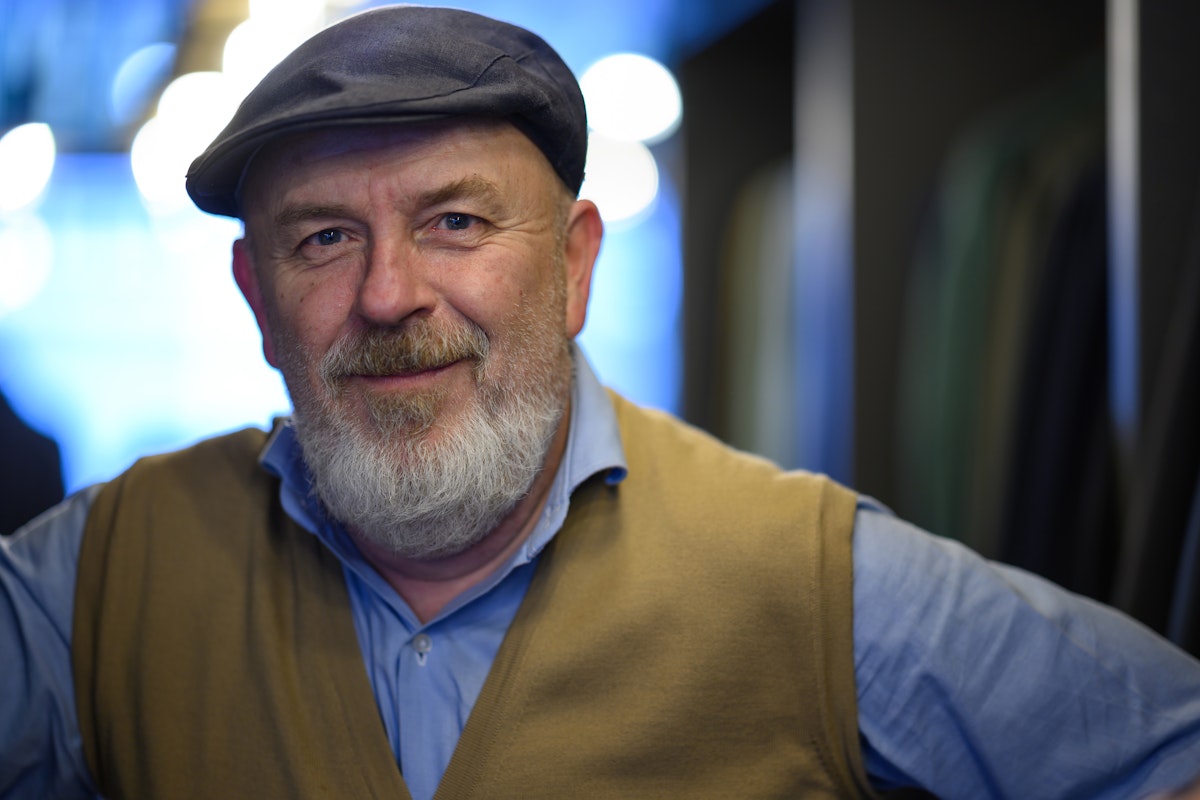
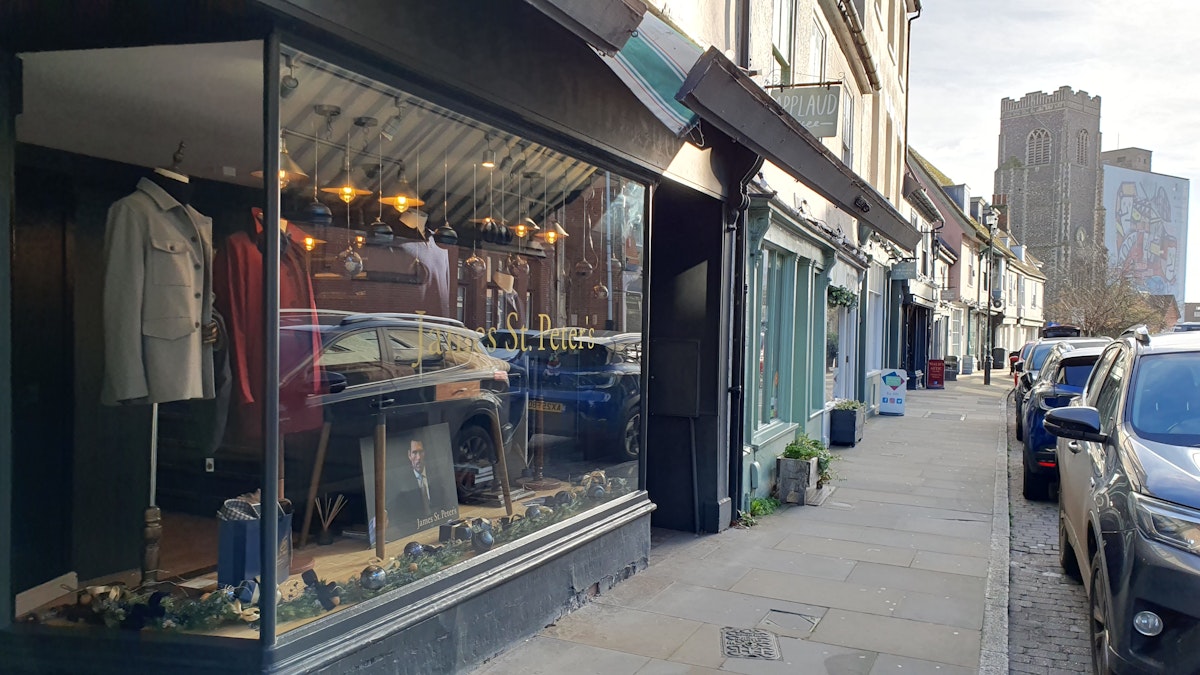
After 20 years working with brands like Brioni and Burberry, he returned to his hometown in October last year to take over James St. Peter's, a luxury menswear shop rooted in Italian craftsmanship, located in Ipswich's independent hub, The Saints. Absolutely nobody – except his wife – thought it was a good idea. Fourteen months later, he's still here.
His survival matters beyond the balance sheet. It's a window into independent retail fragility, economic policy repercussions, and how a town talks to itself about its own potential.
The decision and reality
Mark Hubert, a King's Award winner for international retail trade, took over the decade-old menswear shop, rebranding it around Italian craftsmanship, made-to-measure tailoring, and a capsule wardrobe philosophy that quietly rebels against fashion's usual "buy more" logic.
"Everyone's response to me taking over the shop was 'are you mad?' Literally no one thought it was a good idea," he recalls. "Apart from my wife, actually."
She reframed it: the regret of not doing it would be worse than whatever happened.
He'd never been a retailer. "I always thought retail looks easy. You just open your door, they come in and buy."
That assumption didn't last long. "Nowadays, you have to be your brand and do all the things that come with that."
He's "a cleaner all the way up to CEO".
And the goal, he says, is "interaction over transaction"; offering an experience, not just a sale.
An Ipswich Hospital nurse collecting a suit for her son discusses the quiet streets with Mark. The hospital wards are overwhelmed with the worst winter flu since Covid. Maybe business will pick up soon, they agree. Mark lets her take the suit now and pay later; the kind of trust that marks a neighbourhood shop.
The last three months have been "difficult", Mark admits, compounded by the late Budget. In mid-December, official data confirmed what he'd already felt: UK GDP unexpectedly contracted 0.1 per cent in October. "If the economy starts dipping, you see it frontline, retail first."
The Bury St Edmunds converts
What Mark has figured out – partly by design, partly by survival – is that he cannot rely on people wandering past.
"This is a niche shop. I have to attract people in, and not just from Ipswich, but across Suffolk, even further than that."
Every customer interaction becomes curation: not just of clothes, but of the entire Ipswich experience.
A couple from Bury St Edmunds came in recently. "They were like, we don't do Ipswich, the usual." Mark gave them restaurant recommendations, mapped out venues, sent them to places they'd never have found.
They returned later, surprised. "You know Mark, we've had a really nice time here. If you hadn't told us where to go, we probably wouldn't have done, because it's not quite as obvious on the surface. But when you scratch it out...
"So it's me creating a destination here, but also helping to make Ipswich itself a destination."
The Woolworths effect
Mark's observations cut deeper than retail strategy.
"If you asked a couple who moved here in the last five years, and lifers, to describe Ipswich, you'd think they're talking about two different towns. What are the people from outside seeing that the people inside are not?"
Towns rise or fall not just on investment or planning decisions, but on whether the people who live there believe in them.
He talks about "the Woolworths effect": the nostalgia for a retail model that failed. "Oh, I loved it when we had Woolworths. Well, there's a reason why Woolworths isn't here!"
His analogy about the town is sharp: "When a house doesn't have furniture, you see the cracks. When it's full of furniture, you don't." When Ipswich Town's men's team won Premier League promotion last year, and an estimated 60,000 people descended on the streets, "the town was alive and full of optimism."
"It's all about pride in the town," he says. "Rather than knock it, back it up."
The Made for You service
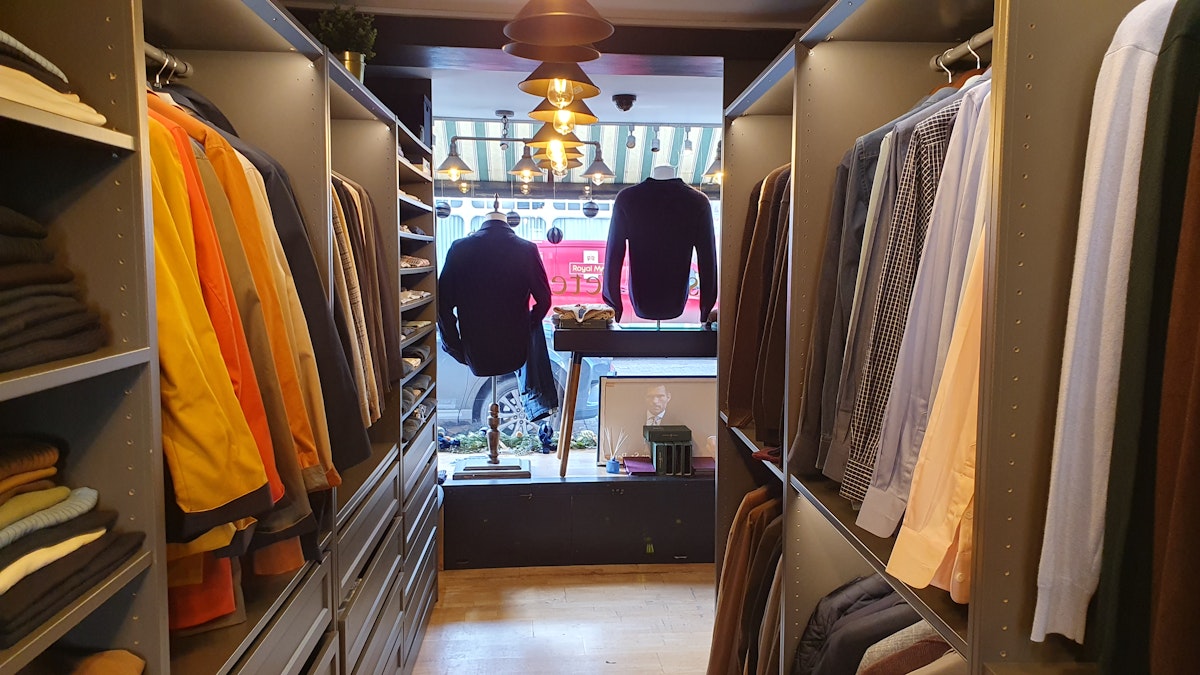
Inside the shop, Mark's Made for You service has grown "beyond anything I expected".
He offers 300 suit options and 400 shirt options. The process begins with a conversation: what you do, how you socialise, how you want to dress.
"For a retailer, this might sound odd, but I don't think you need to buy that much. You need to buy better, well-coordinated." Twelve or thirteen pieces. A wardrobe you can navigate blindfolded.
The pricing is competitive: Made for You in fine fabric for less than branded ready-to-wear, he says.
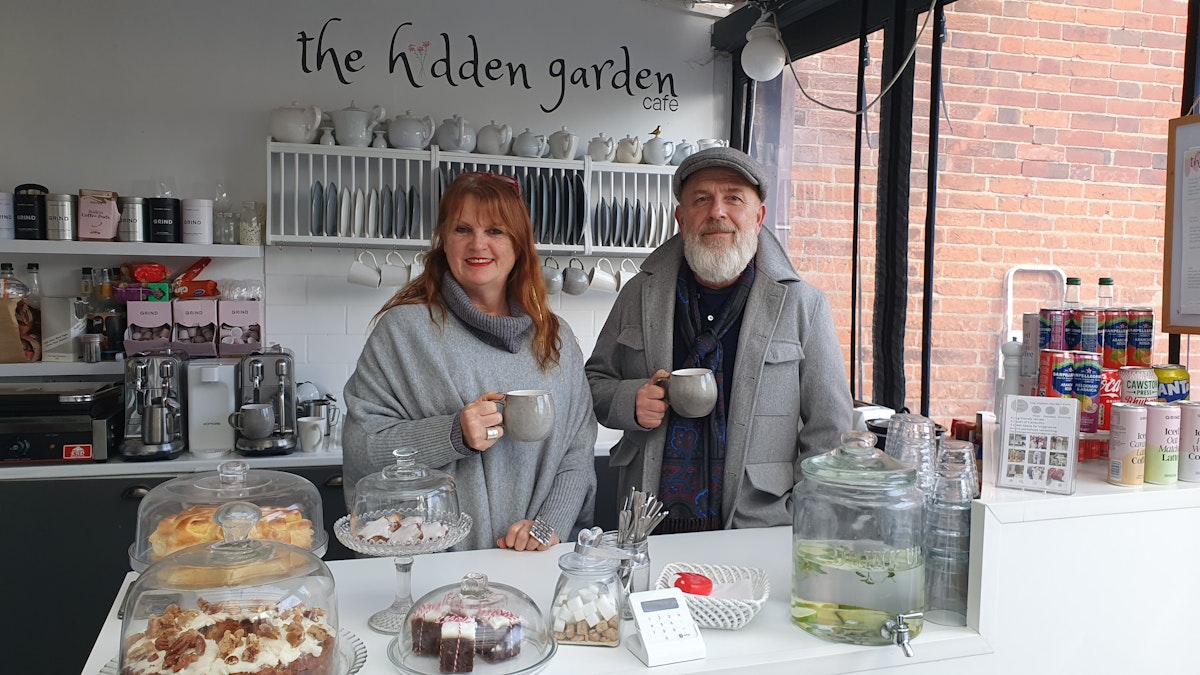
Next door, Karen Stewart runs Puzzle, a Scandinavian-style boutique. Behind both shops sits a shared café and garden space used for fashion shows and art workshops.
"Mark and I bounce around a lot of ideas to help promote The Saints and the town," she says.
It's a micro-ecosystem: independents who understand that footfall for one is footfall for all.
Tailored optimism
A quiet young man buying a suit accidentally spills a fizzy drink. Mark reassuringly waves it off, exemplifying his unflappable optimism.
It's the same attitude that anticipates an easing of post-Budget uncertainty. "I'm really confident for next year," he says. "Once people settle down and realise it wasn't quite as bad as expected, the confidence will start coming back."
As we shake hands and I disembark onto St Peter's Street, he mentions a telling detail.
"I clean the store – not just inside, but outside – every day. That's pride."
He points to the railings that need painting, the roundabouts that need maintaining. "Little things like that change perception," he says.
It captures the whole story: a man sweeping his bit of pavement, dressing people well, championing a town that doesn't always champion itself, and believing – stubbornly, defiantly – that it's worth the effort.