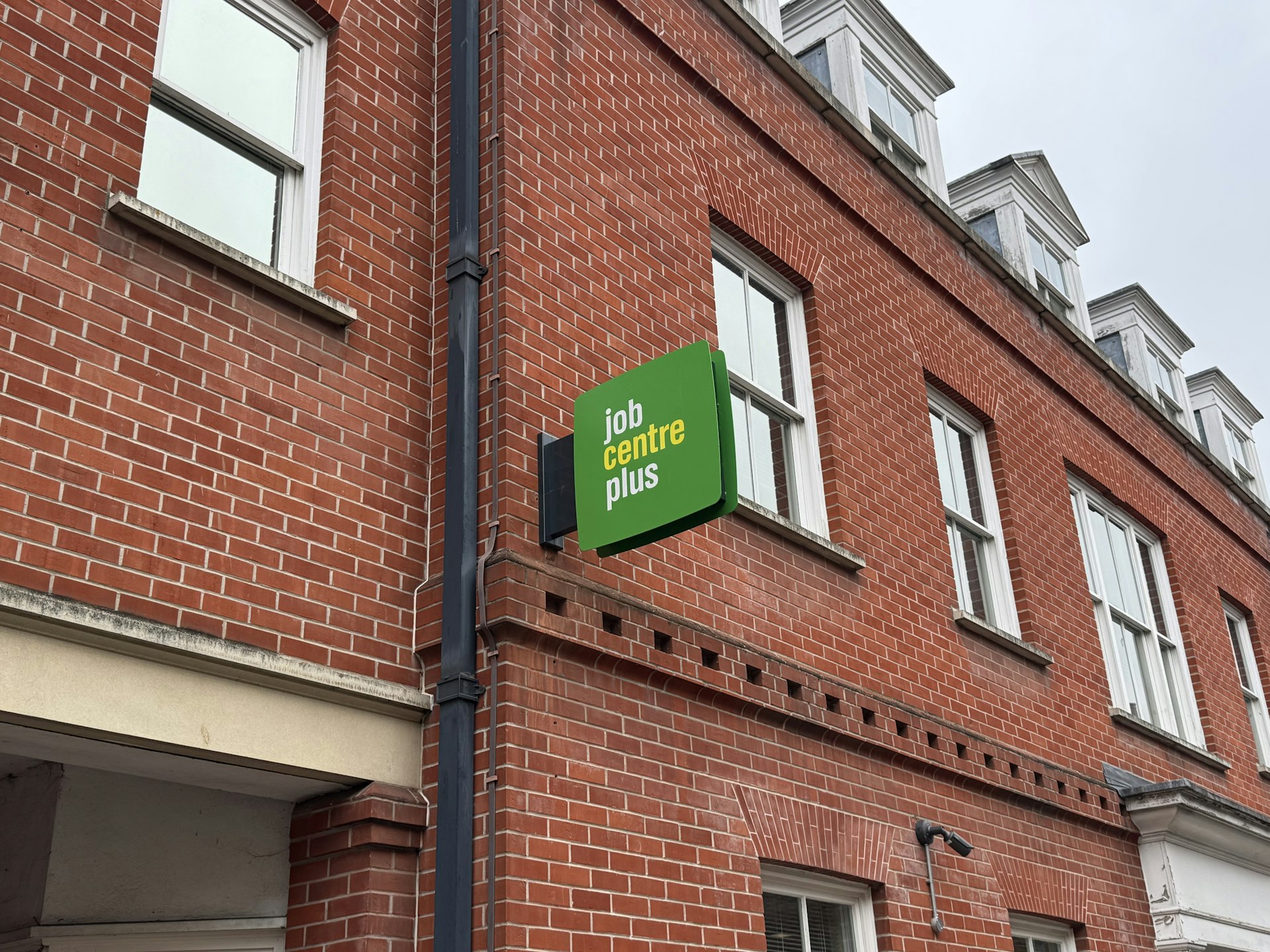
Why it matters: The latest data shows 375 fewer people are now claiming benefits than a year ago, a 9% drop that reduced Ipswich's rate from 4.6% to 4.2%. But the town still trails the UK average (4.0%) as well as regional cities including Norwich (4.1%), Colchester (3.1%) and Cambridge (2.1%).
The details: Office for National Statistics figures show 3,715 people in Ipswich were claiming unemployment benefits in September 2025, down from 4,090 a year earlier.
The town's rate fell 0.4 percentage points over the year – double the UK decline of 0.2 percentage points. The data reveals Ipswich is closing the gap faster than most of the country but still has ground to make up compared to neighbouring areas.
Men hit hardest: Men account for 2,100 of the town's claimants – a jobless rate of 4.8% – while the women's rate stands at 3.7%. Women in Ipswich saw a sharper year-on-year improvement, with 225 fewer claimants compared to 150 fewer men.
What they're saying: Paul Simon, head of public affairs at the Suffolk Chamber of Commerce, said: "It is encouraging that against a backdrop of the highest national unemployment figures for four years, Ipswich appears to have bucked the trend for the three months to August.
"The key question has to be: is this part of a welcome trend or a statistical variation within the margin of error?"
He said key business measures such as investment, cash flow and profitability were "very weak" with growing price pressures and taxation hitting hospitality, retail and tourism particularly hard.
"In a single sentence: 'No more business taxes, Ms Reeves!' It is vital that the Chancellor does not repeat the mistakes of her 2024 Budget in November which unexpectedly hiked business costs to a dangerously high level."
Candy Richards, Regional Business and Stakeholder Engagement Manager at the Federation of Small Businesses (East Anglia), said: “Many small businesses in Ipswich are finding trading conditions tough, with last year’s Budget pushing up staffing costs significantly. Although there was positive news for the smallest businesses who were shielded by the increase in the Employment Allowance, something the FSB had lobbied for, many businesses saw staffing costs soar at the same time as input costs increased. The result is that a large number of businesses have paused both pay rises and recruitment plans.”
She also warned: “With the new Employment Rights Bill right around the corner, nine in 10 small businesses are concerned about the impact it will have, with a majority less likely to hire people out of work or with a poor work history. Government must listen to small businesses and remove new rules on day one dismissal processes from the Bill altogether.”
The bigger picture: Ipswich's improvement comes as national unemployment rose to its highest level since May 2021. Business groups have blamed Chancellor Rachel Reeves' £25 billion increase in employers' national insurance contributions, announced last October, for a hiring slowdown that has seen UK payrolls fall by 126,000.
However, ONS director of economic statistics Liz McKeown said: "After a long period of weak hiring activity, there are signs that the falls we have seen in both payroll numbers and vacancies are now levelling off."
What's next: Chancellor Reeves will deliver her Autumn Budget on 26 November. Local businesses and employment programmes are waiting to see whether the 2025 Budget will include measures that could ease hiring conditions or add further pressure.
The bottom line: Ipswich's faster improvement suggests local employers are hiring despite national headwinds, but the town's higher starting point means sustained progress will be needed to match regional rivals. With the Budget looming, Ipswich businesses face uncertainty over whether the Chancellor will offer relief or introduce further costs that could slow progress on unemployment.
Are you one of the hundreds of people in Ipswich who found work this year? Are you job hunting and struggling? Share your thoughts and experiences with matthew@ipswich.co.uk.