
Inside Ipswich's padel revolution: Why 40 courts by 2030 isn't 'crazy'
Britain's fastest-growing sport has arrived in Ipswich with remarkable force. Operators report being fully booked from opening day and predict the town could support up to 40 courts within five years – a projection that sounds ambitious until you examine the evidence.

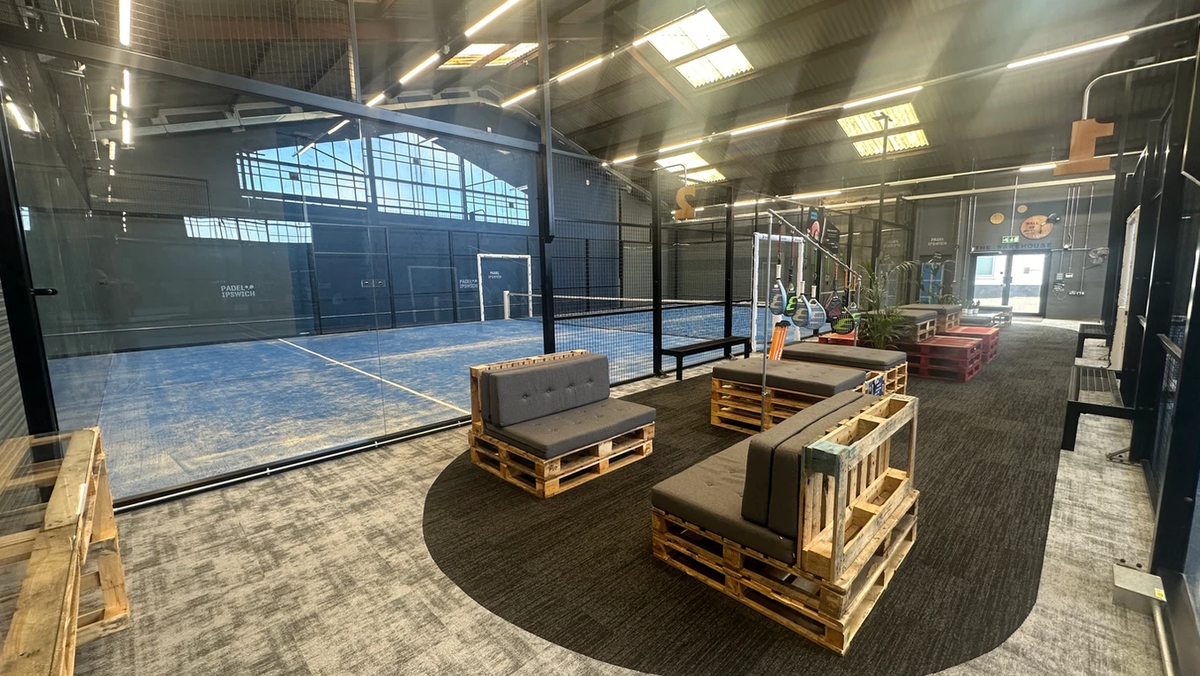
Five courts are currently operational. Within months, that will nearly triple to 13. By 2030, operators believe the town could sustain 40 courts. Nationally, padel has exploded from 50 courts and 15,000 players in 2019 to 893 courts at 300 venues serving 400,000 players by 2024.
What stands out in Ipswich is not just the speed of the boom but the strength of the demand driving it. Operators – from commercial venues to 150-year-old clubs – are investing heavily because courts have been busier than even their most optimistic forecasts.
Three operators, three models
The Warehouse: The commercial leisure destination model
The Warehouse represents the commercial leisure model – a full facility with café, gym, and games room. Will Neall's operation opened with two indoor courts in September 2024 and is expanding to six courts total (adding two doubles and two singles courts), alongside pickleball courts. Two additional courts open at the end of January.
"Our vision is to create something bigger than just a sports venue," Neall said. "The Warehouse is designed to be a place where people come to play, socialise, and feel part of something."
The demand has already proven itself. "Our existing courts are fully booked most evenings and weekends," Neall said. But the expansion is not purely commercial. "We already run free sessions for local charities, schools, and groups, and the expansion allows us to do even more of that. We want padel to be something people discover at school, through a youth group, or via a local organisation, not just something for seasoned players."
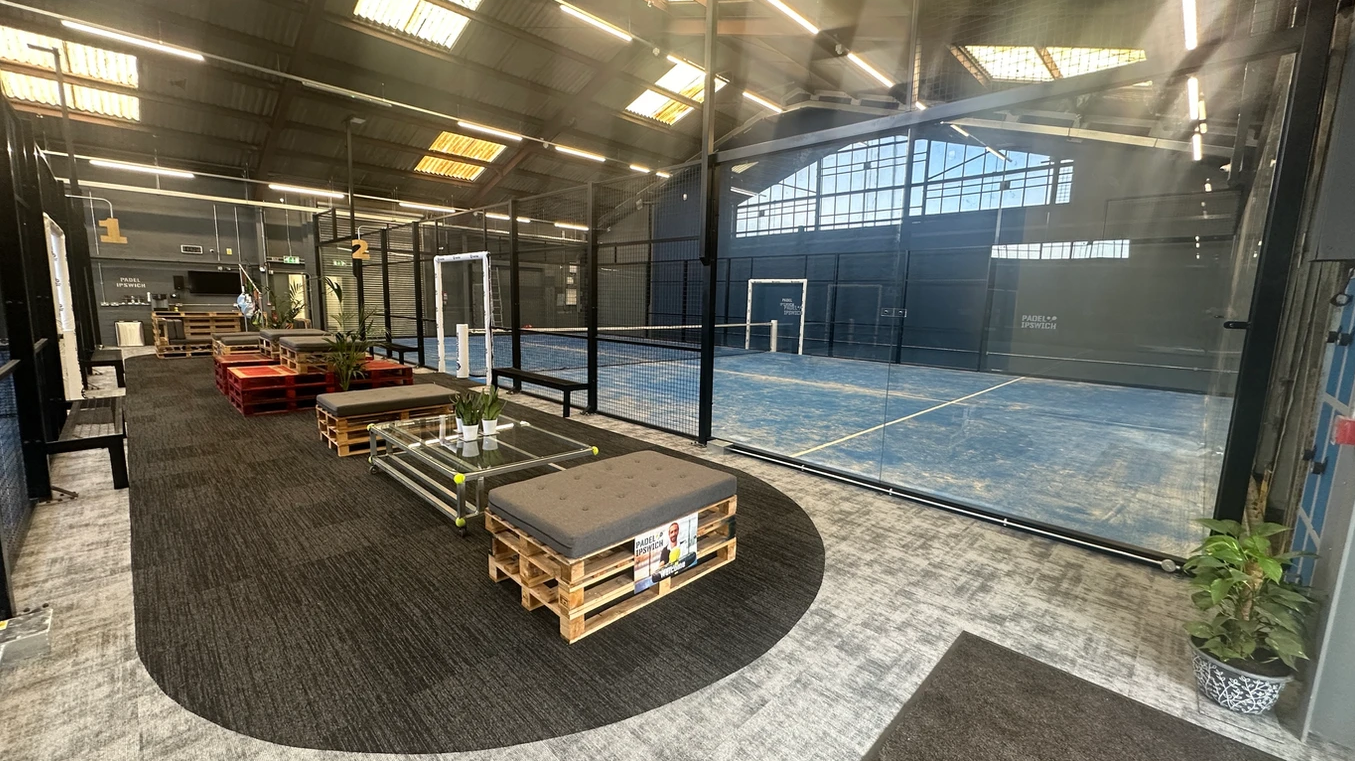
Utopia Padel: The partnership model
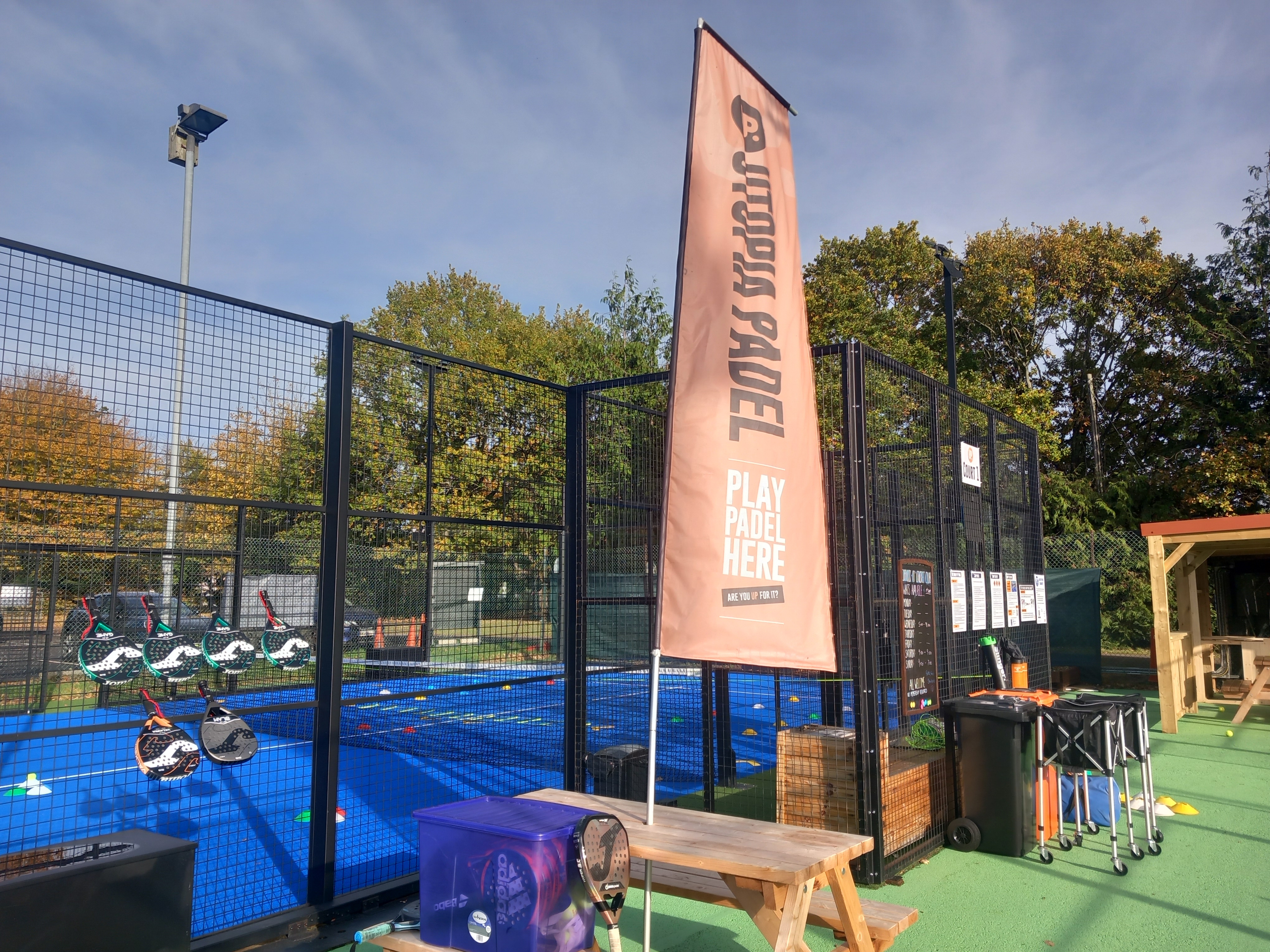
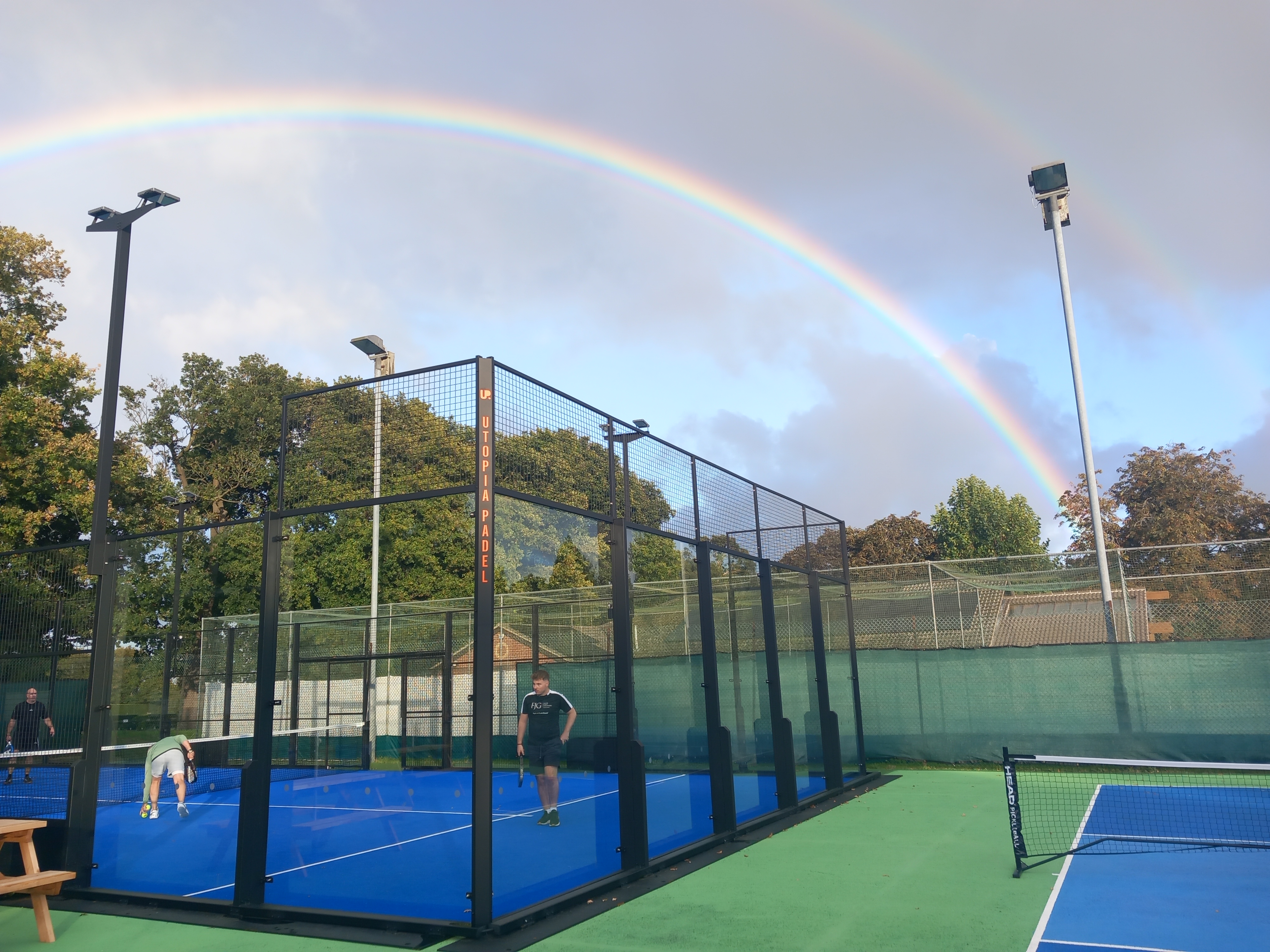
At Copdock, Utopia Padel director Mark Cracknell opened his first court in January 2024 after noticing club members travelling to Diss to play. He partnered with Copdock & Washbrook Tennis & Badminton Club and added a second court in June 2024. A third court awaits planning permission.
"It's very difficult to get a court in Ipswich between 17:00 and 22:00, and weekends are almost impossible," Cracknell said. His courts run at 100% utilisation during peak hours.
England's top female player, Amy Gibson (world number 82), practises there.
Cracknell's social programmes demonstrate the community's appetite. Men's mental health sessions on Thursday nights are consistently double-oversubscribed, with 12 players and a waiting list of 10 to 12. "You can't just put a couple of courts up and think it's going to work," he said. "You need to build a community."
And that community can’t get enough: "I've not yet done a session or come off court without people having a great time. Only one person in four years has said 'I'm not doing that again' out of 3,000 to 4,000 people. That says it all," he says.
Ipswich Sports Club: The not-for-profit membership model
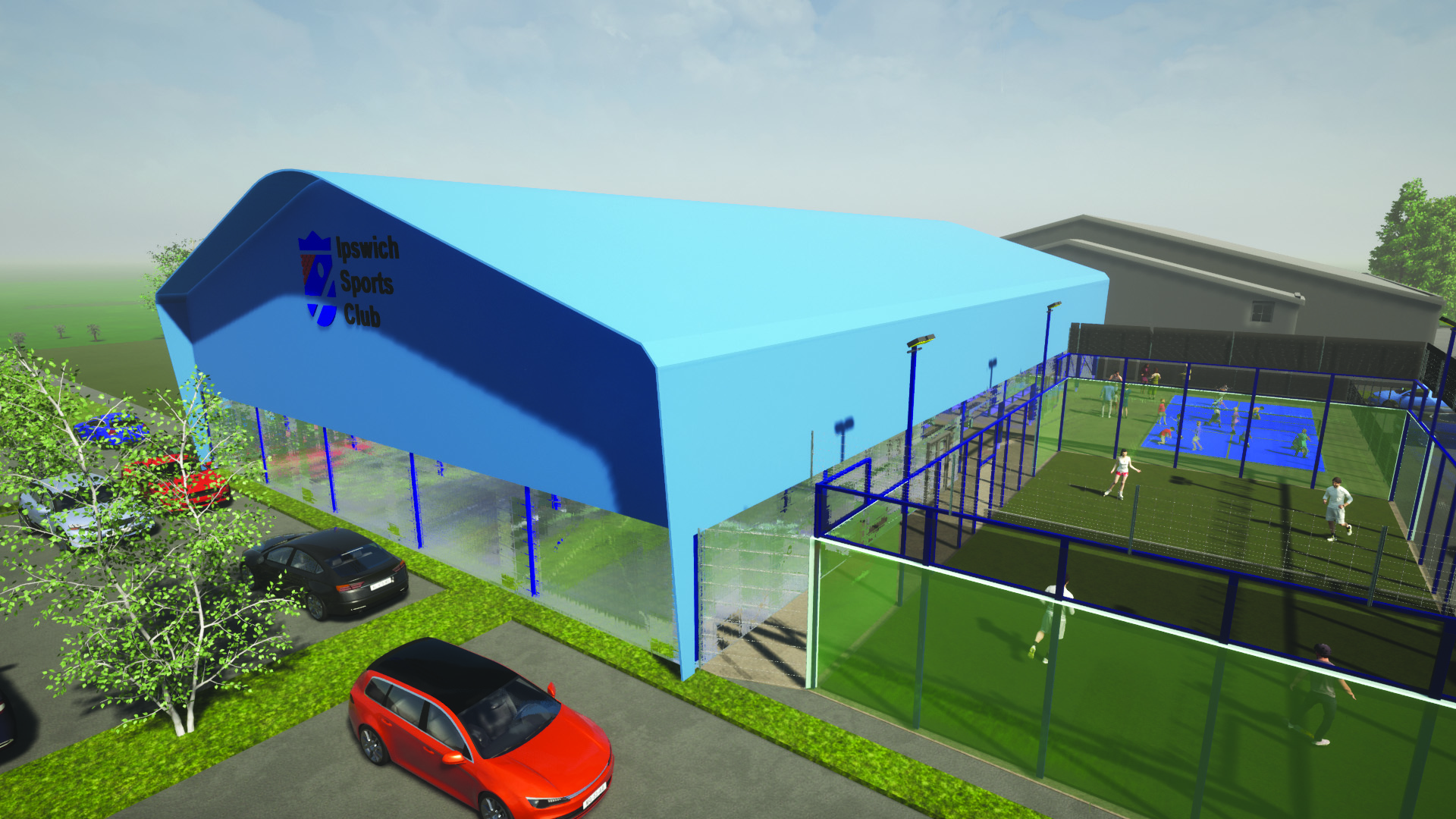
Ipswich Sports Club represents a different approach entirely. The 150-year-old not-for-profit is investing £340,000 in four courts opening summer 2026. The club is signing contractors now.
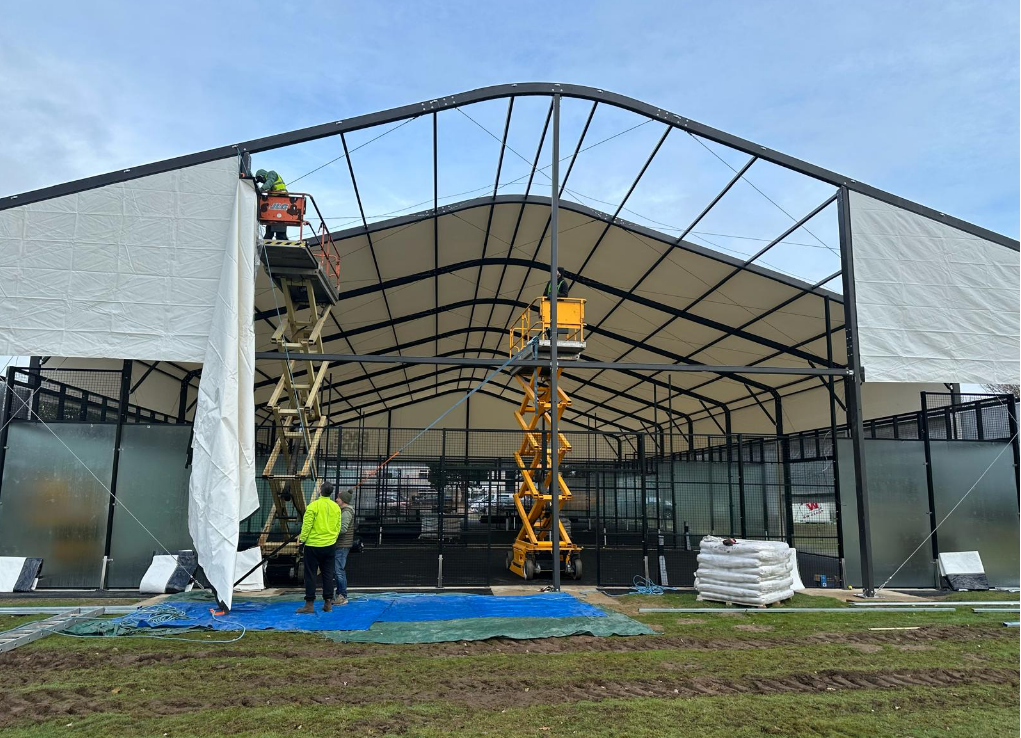
Three courts will sit under a retractable canopy – a rigid aluminium structure that can open in summer and close against winter weather. A fourth permanent court will replace its temporary pop-up, which opened in 2022, the first padel court in Ipswich.
The club tested demand with that pop-up and found strong demand without any marketing. "Padel is the buzz," said Jon Tuppen, club secretary. "There was pent-up demand in the area."
The club's model is deliberately inclusive. "We're a not-for-profit community organisation. We have inclusivity and outreach programmes for people with disabilities and schoolchildren. That's what the club is about, and we'll feed padel into this," Tuppen explained.
He sees padel as a long-term addition, not a gamble. "The research nationally and globally suggests we're still probably a million people short in the UK who are potential padel players. We are not saturated." The club's pay-as-you-go model, which offers members a discount, is designed to attract younger demographics. "Call it the price of a pint of beer to get all the benefits—physical activity, social interaction—for an hour or hour-and-a-half on a padel court."
Why padel is booming
Watch a game for more than a few minutes, and the appeal becomes clear. The ball ricochets off the glass with a sharp crack. Players who moments earlier looked like sensible adults suddenly throw themselves about with surprising abandon. There is laughter between points, shouting during them, and the unmistakable energy of people discovering something unexpectedly enjoyable. It is, simply put, tremendous fun to witness.
The sport's accessibility explains much of its appeal. It’s "incredibly easy to get into," said Adrian Meredith, LTA Padel Ambassador for Suffolk. "It's like playing on the beach with a bat and ball – it's that easy."
The numbers support this. In 60 minutes of tennis, the ball is in play for around 14 minutes. In padel, it is 43 minutes – more action, less time retrieving balls.
The social culture differs markedly from traditional racket sports. "Playing sport and not being good is acceptable with padel," Cracknell said. "If you're not good on court, people don't really mind." He contrasts this with tennis clubs, which "can still be a bit snobby."
"The demographics are amazing. We're seeing people who've never played sport or a racket sport before. Groups of lads from Suffolk One who've never played before come for an hour and a half – you'd never see that at a tennis club," Cracknell said.
The pay-and-play model removes membership barriers. Celebrity endorsement has amplified visibility – David Beckham plays regularly, Stormzy owns a London club, and Serena Williams has taken up the sport. Social media has created momentum that traditional sports struggle to match.
Jon Tuppen sees padel as the latest in a cycle of fitness trends. "Things go through vogues. Ten to 15 years ago, use of the gym exploded. In the 70s and 80s, squash was the vogue. It's just what grabs the population." But he is confident this is not fleeting. "This is not a fad for weeks or months. We are planning for a 10-year cycle."
The planning bottleneck
Despite proven demand, planning permission has emerged as the primary constraint on growth. Lead times stretch to nine to twelve months from initial application through planning and construction to operational courts.
Noise concerns drive much of the difficulty. "It's almost like an edict has gone out to planners. If you're within 30 metres of residential properties, you need to show noise abatement measures," Cracknell observed. Indoor facilities avoid noise issues but bring challenges around warehouse conversions and finding suitable locations with adequate parking and room for expansion.
A facility at Cliff Road was refused permission on change-of-use grounds. The Warehouse won approval despite officers recommending refusal. Councillors unanimously approved the application but imposed a condition: the building must return to employment use if the padel venture fails – demonstrating political support while recognising the commercial risk.
Can Ipswich support 40 courts?
Operators cite a common benchmark of 20 courts per 100,000 population as a saturation point. For Ipswich's population of around 140,000, that would suggest capacity for approximately 28 courts before reaching saturation – making 40 ambitious but not implausible, especially if serving the wider Suffolk area beyond the borough.
"Ipswich is crying out for more courts to satisfy demand," Meredith said. "Forty is not a crazy number. It feels attainable." Suffolk has just 10 to 15 courts compared to Surrey and Kent with more than 100 each. "We're playing catch-up."
Several other local establishments are understood to be exploring padel facilities, though planning applications remain in early stages.
"Until I see planning permission given and construction, I wouldn't believe any rumour," Cracknell said. "But by 2030, I do expect 20 to 40 courts in Ipswich. I expect it to be a sport that's embedded into everyday life."
The sustainability question
The momentum appears as relentless as the sport's gameplay, but the sustainability question remains. Steve Brown, an industry expert and trustee of the Elena Baltacha Foundation, offers a cautionary perspective from international experience.
"The risks are about sustainability. There was a surge in popularity in Sweden, which then dropped off. The trouble was, there was some serious investment that had been put in by operators. It's an expensive thing to get going, and it will typically take several years to pay back loans."
Ipswich operators emphasise they are taking a different approach, focusing on community building rather than rapid expansion. "You can't just put a couple of courts up and think it's going to work," Cracknell said. "You need to build a community." His satisfaction metric offers reassurance: just one dissatisfied customer in 4,000 participants over four years suggests the sport delivers on its promise.
This growth appears genuine rather than manufactured. Padel is expected to become an Olympic sport by 2032, lending institutional legitimacy to what might otherwise be dismissed as a fitness fad.
The accessibility question
As enthusiasm builds, concerns about access and affordability emerge. "There's a real risk of making it exclusive," Cracknell warned. "We need to keep costs low. Local councils need to start taking this on."
Pricing varies significantly. London facilities charge £60 to £120 per hour while locally, Utopia charges £8 to £24 and Ipswich Sports Club frames pricing as "the price of a pint of beer." Even at £8 to £24 locally, a weekly habit adds up – especially for young families or those on lower incomes. The Spain comparison haunts discussions – village courts there are almost free. "Until you get to that point, it's always likely to be inaccessible," Cracknell said.
Meredith points to Norwich as a potential model. "In Norfolk, The Nest, run by Norwich City Foundation, installed courts there to help engage the community and improve accessibility. I'd love to see that here."
Ipswich Borough Council has not committed to public provision, though it confirmed it welcomes more opportunities for residents to participate. The absence of public courts means accessibility depends entirely on private operators choosing to run community programmes – a model that relies on goodwill rather than policy.
The Warehouse runs free sessions for charities and schools, Ipswich Sports Club's pay-as-you-go model targets young families, and the Elena Baltacha Foundation is working with Ipswich Padel to provide court access for children.
Brown emphasises the broader principle: "Padel should complement the other sports, but it must be sure not to get the same reputation for being elitist. Until more padel venues are run with a level of charity and altruism, this remains a barrier to access."
A rallying cry
Whether Ipswich reaches 40 courts by 2030 will depend on whether planning processes can keep pace with demand, whether operators can sustain enthusiasm through inevitable competition, and whether the sport can avoid the boom-and-bust fate that befell Sweden's padel craze.
But with operators putting down serious money, demand running ahead of projections, and players hooked from the first session, the evidence suggests padel is becoming a permanent fixture in Ipswich rather than a passing trend.
The question is no longer whether the town will build more courts. It is whether it can build them fast enough.
This article cost us ~£186 to produce
It's free for you to read thanks to the generous support of our partners.
Below the line