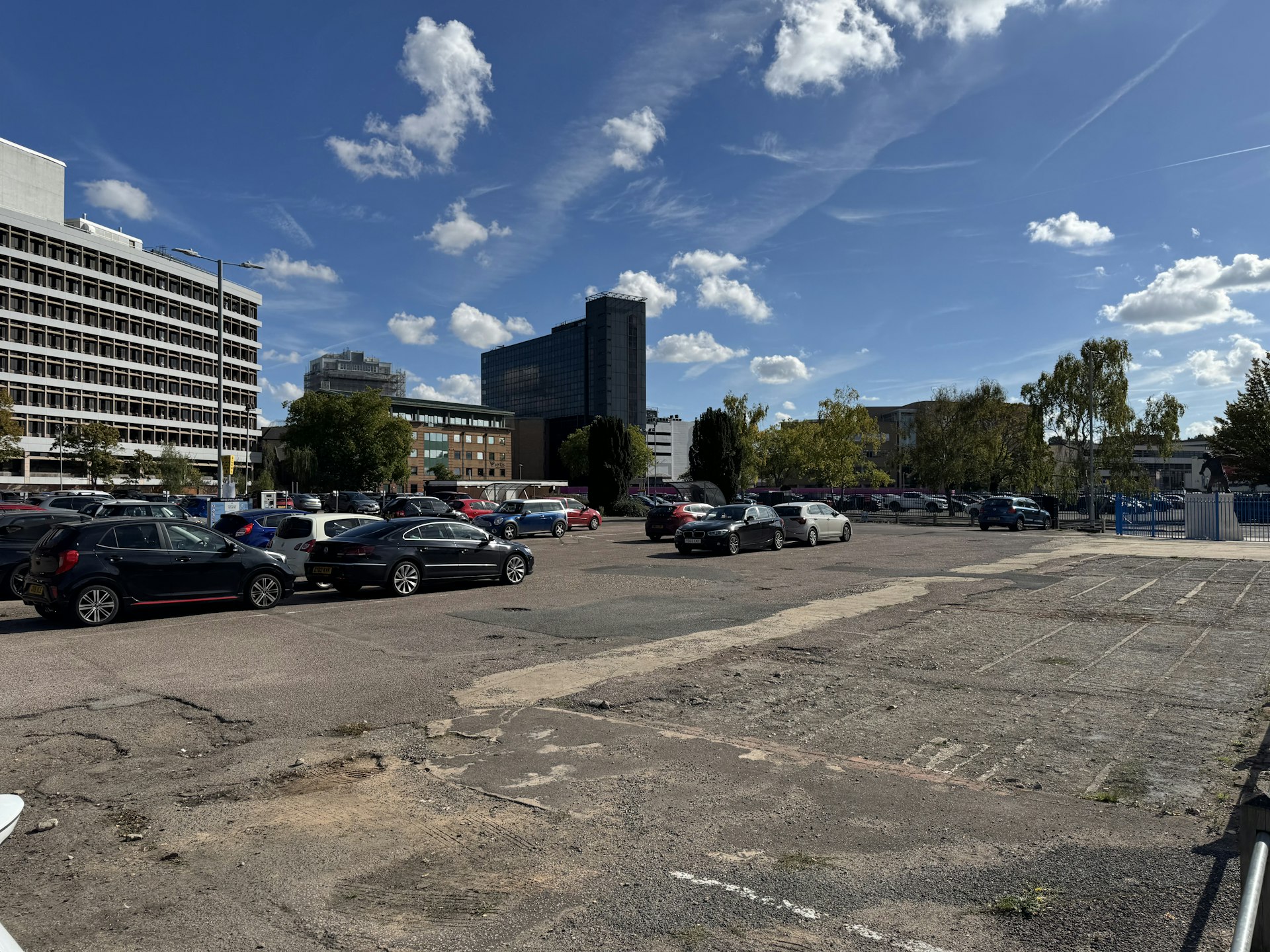
There is something absurd about spending nearly £20m to end up with 92 fewer parking spaces than you started with. The council's Executive approved the project with five votes for and one against – Councillor Ian Fisher cited affordability as his reason for dissent. Looking at the numbers, it is difficult to argue with his logic.
The new facility will provide 718 spaces across a multi-storey structure and surface car park, replacing 810 existing spaces at Portman Road. The justification for this reduction, and the eye-watering expenditure, is that it "enables" future development – an Aquatics Centre, potential stadium expansion, possibly a hotel. These are exciting, ambitious plans. They are also, at present, pipedreams that may never come to pass.
Betting on a future that may not arrive
The timing of this decision is particularly troubling. Suffolk's 50-year-old two-tier council structure is about to be dismantled. The government is to abolish all six district, borough and county councils and replace them with either one or three unitary authorities. A mayor for Suffolk and Norfolk will be elected in May 2026.
What this means in practice is that nobody knows who will be in charge when this masterplan would actually be executed, what their priorities will be, or whether they will have any interest in continuing these plans. The transition itself could derail projects for years. We are being asked to spend £19.7m on infrastructure for a development that faces fundamental uncertainty about governance, funding and political will.
Even if local government reform proceeds smoothly – and nothing about restructuring six councils into one or three new unitary authorities suggests it will – the timeline itself is sobering. Construction would not begin until summer 2026, with completion expected by the end of 2027. During this time, the council will have borrowed £7.5m and diverted £12.2m from the Princes Street Local Enterprise Zone for a car park that actually reduces parking capacity.
A pattern of extraction, not service
This decision does not exist in isolation. It continues a troubling pattern of how Ipswich Borough Council approaches parking – as a revenue stream to be maximised rather than a service to residents and visitors.
The council generated £1.694m in parking surplus in 2024-25, ranking first in the East of England and 31st nationally out of 333 councils. That surplus represents £12.28 per resident – 2.1 times more than Norwich, 2.5 times more than Cambridge, and 26.9 times more than Colchester. Notably, 94 per cent of this comes from off-street car parks, not fines. This is not aggressive enforcement. This is deliberate pricing strategy.
Consider what happened last December when the council increased matchday parking at Portman Road to £15. The authority claimed this aligned with other Premier League grounds. In reality, it made Ipswich Town's stadium parking among the most expensive in English football – higher than Liverpool at £5, higher than Manchester City at £6. The message to fans was unambiguous: we see you as revenue, not customers.
The impact of this approach on the town centre is measurable. High parking charges deter visitors. Deterred visitors do not spend money in local shops, restaurants and businesses. Every pound extracted in parking surplus is a pound that could have circulated through the local economy. The council's short-term revenue maximisation undermines long-term prosperity.
Now the authority proposes to spend £20m – borrowed money and enterprise zone funds – on parking infrastructure that perpetuates this failed strategy whilst simultaneously reducing capacity. It is hard to see this as anything other than economic self-harm at this moment in time.
The opportunity cost
Residents are already paying high council tax rates. They are entitled to ask what else £19.7m could achieve if spent on immediate needs rather than speculative infrastructure for uncertain future development.
The council could argue that the funding streams are restricted – the enterprise zone money has conditions attached, and capital borrowing cannot simply be redirected to day-to-day services. But that rather misses the point. The question is not whether this specific money could be spent elsewhere, but whether this project represents the best use of the council's limited financial capacity and political capital at a time when both are in short supply.
To be sure
The counter-argument is straightforward: infrastructure must precede development. If the council waits until devolution settles and governance structures clarify, it will be years before any progress can be made on the masterplan. The car park needs to be operational before other phases can proceed.
This would be compelling if we had any certainty about what comes next. But we do not. If devolution were not happening, this would be a different decision entirely – a calculated risk on a clear timeline with known governance. Instead, we are being asked to commit significant resources to enable a masterplan that may be abandoned, reimagined or indefinitely delayed by whoever ends up in charge after local government reform.
The sensible approach would be to wait. Let the new governance structure emerge. Let the new authority – whatever form it takes – decide whether this masterplan aligns with its priorities. Then, if it does, build the infrastructure needed to support it.
The bottom line
Councillor Fisher's lone dissenting vote reflected what many residents are likely thinking: the council simply cannot afford this gamble. Not financially, given its stretched budgets and borrowing requirements. Not strategically, given the wholesale restructuring of local government ahead. And not morally, given its track record of prioritising parking revenue extraction over genuine service to the taxpayers it sometimes forgets it serves.
The council should reconsider this decision. The masterplan may be worth pursuing – but not now, not like this, and not at this cost.