
The ballot that will shape Ipswich for the next five years and beyond
In the coming weeks, hundreds of Ipswich businesses will decide whether Ipswich's Business Improvement District (BID) lives or dies. What hangs on that decision is far bigger than many people realise.


Most people in Ipswich have never heard of a Business Improvement District (BID). Fewer still could tell you what one does. But if you have ever walked past a red and black uniformed officer on Tavern Street, drunk at a pub during SIPswich, eaten at a restaurant during Forknight, taken your kids to see the Christmas tree on the Cornhill, or walked past hanging baskets in the town centre, you have seen one at work.
A BID is, at its most basic, a funding mechanism. Businesses within a defined area — in Ipswich's case, roughly everything between the train station, Christchurch Park, the university and the football club — collectively pay a levy based on the rateable value of their premises. That money is pooled and spent on services and initiatives that improve the area for everyone trading within it and their customers.
Ipswich Central has operated as the town's BID for nearly 20 years, coming to the end of its fourth consecutive five-year term in 2027. Under the leadership of chief executive Lee Walker, who took the role two years ago after leading the BID in Nottingham during a period of rapid and sustained regeneration, it currently manages a budget of around £700,000 a year, drawn from just over 400 levy-paying businesses.
Now it is asking those businesses to back a fifth term, with an expanded budget of £900,000 a year for the new term, funded by a small rate increase from 1.89% to 2%, and an ambitious plan for the town centre and waterfront.
The ballot opens on 19 June and closes on 16 July.
How the vote works
The BID ballot is not a public vote. Only businesses within the BID area that meet the levy threshold are eligible. In Ipswich Central's case, that means premises with a rateable value of £25,000 or above — a deliberate decision, Walker says, to protect smaller and independent businesses from a financial burden they may not be able to absorb.
"We don't charge what I would consider incubator or small spaces," Walker explains. "I think it's a really important principle."
For those that do qualify, the ballot operates on what is known as a dual-key system. To pass, the proposal must secure a majority both by number of votes cast and by the aggregate rateable value of those voting in favour. The logic is straightforward: a handful of large businesses cannot force a BID on small ones, and small businesses cannot collectively outvote the major commercial landlords and retailers that contribute the bulk of the levy income.
If the ballot passes, the new term begins in April 2027, running for five years. If it fails, Ipswich Central enters a 12-month wind-down period — and then ceases to exist entirely. The work it currently does goes with it.
How Ipswich Central has invested funds
Walker is direct when asked about his confidence levels ahead of the ballot.
"I never go into these things confident," he says. "I think that would be disrespectful to those businesses."
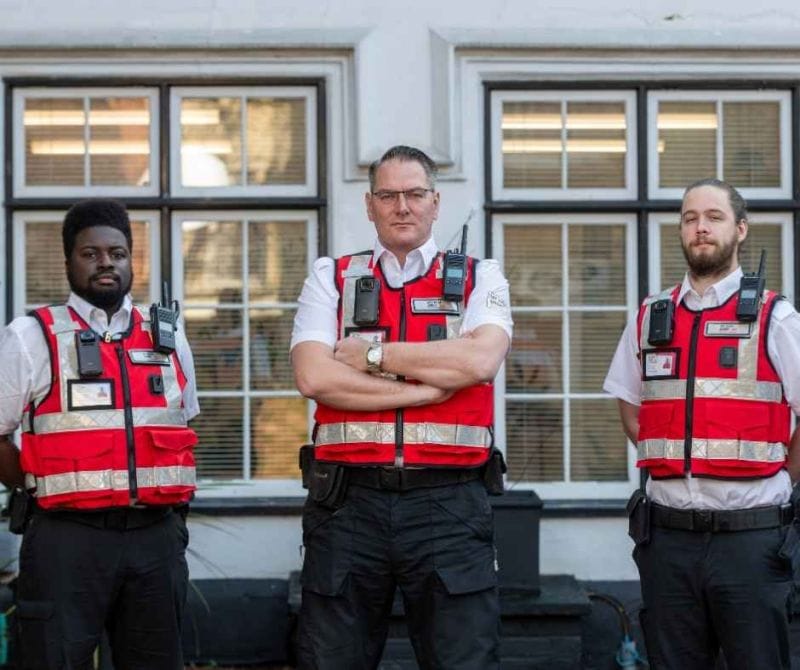
What he will defend is the record. Since 2024, Ipswich Central's My Local Bobby team — four police-accredited uniformed officers working in the town centre — has assisted with 240 arrests, returned £30,000 worth of stock to retailers and, by the organisation's own calculation, deterred an estimated £360,000 worth of shoplifting. A third of the BID's entire budget goes on safety and security.
"They are individuals that run towards the fire," Walker says of the team. "Their results are the thing I will defend until the day I die."
Beyond safety, the BID has also invested in civic improvement — most visibly the Stoke Bridge project, which saw the bridge repainted, its railings restored, a new lighting column installed and a long-neglected phone box removed. It has filled vacant units with art, installed hanging baskets across the town centre and used empty retail space — including the former Superdry unit — as community venues.
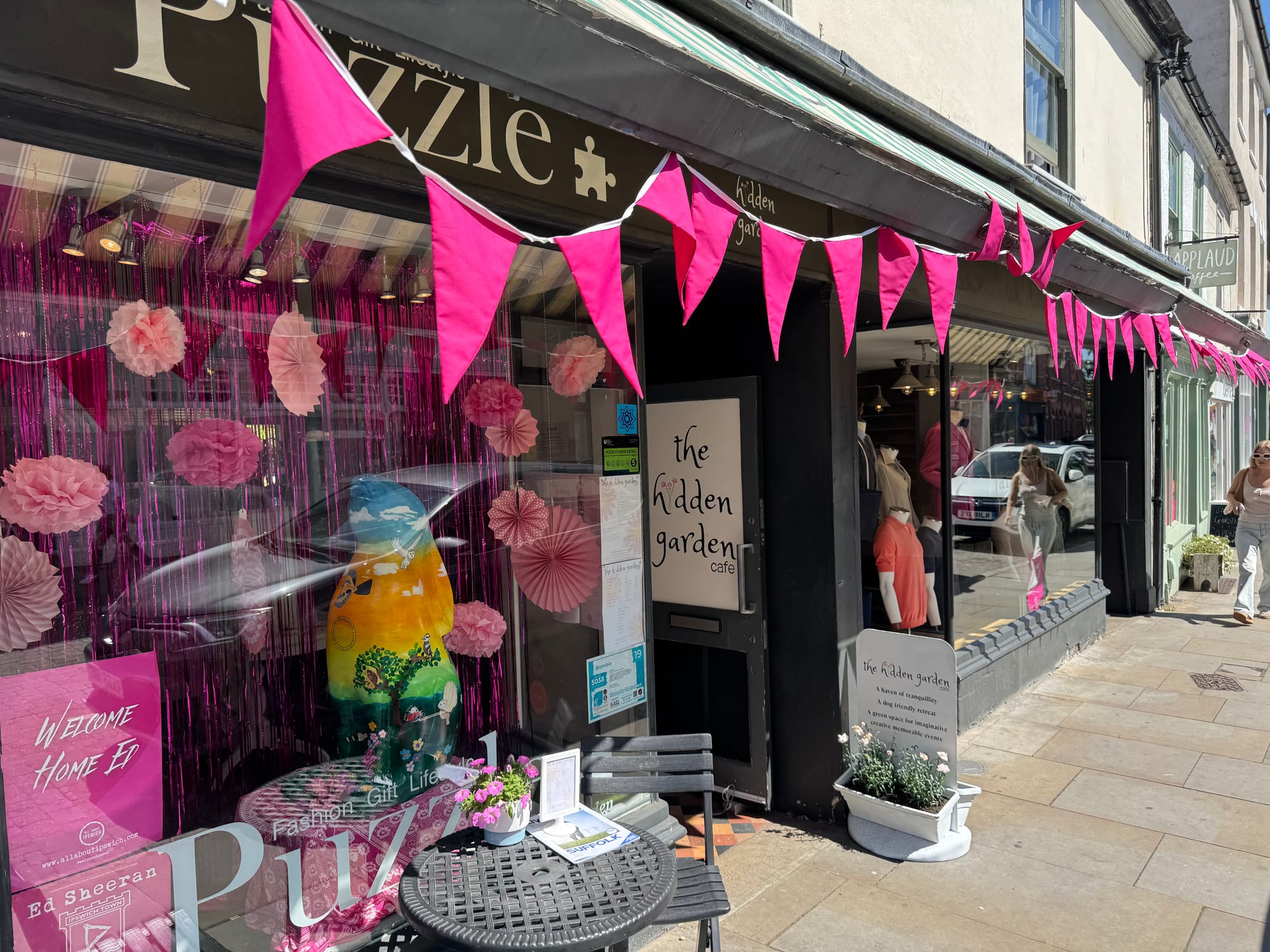
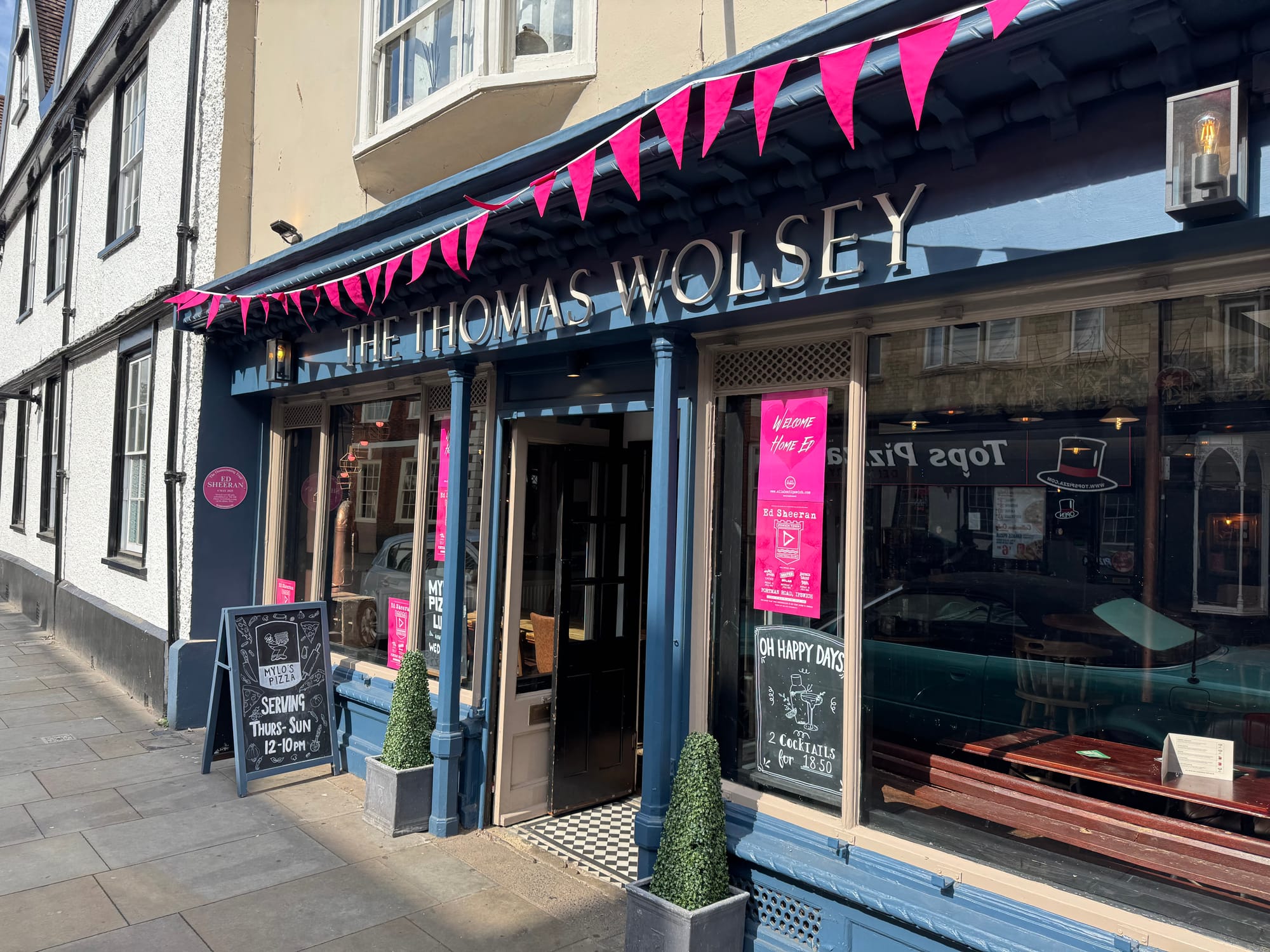
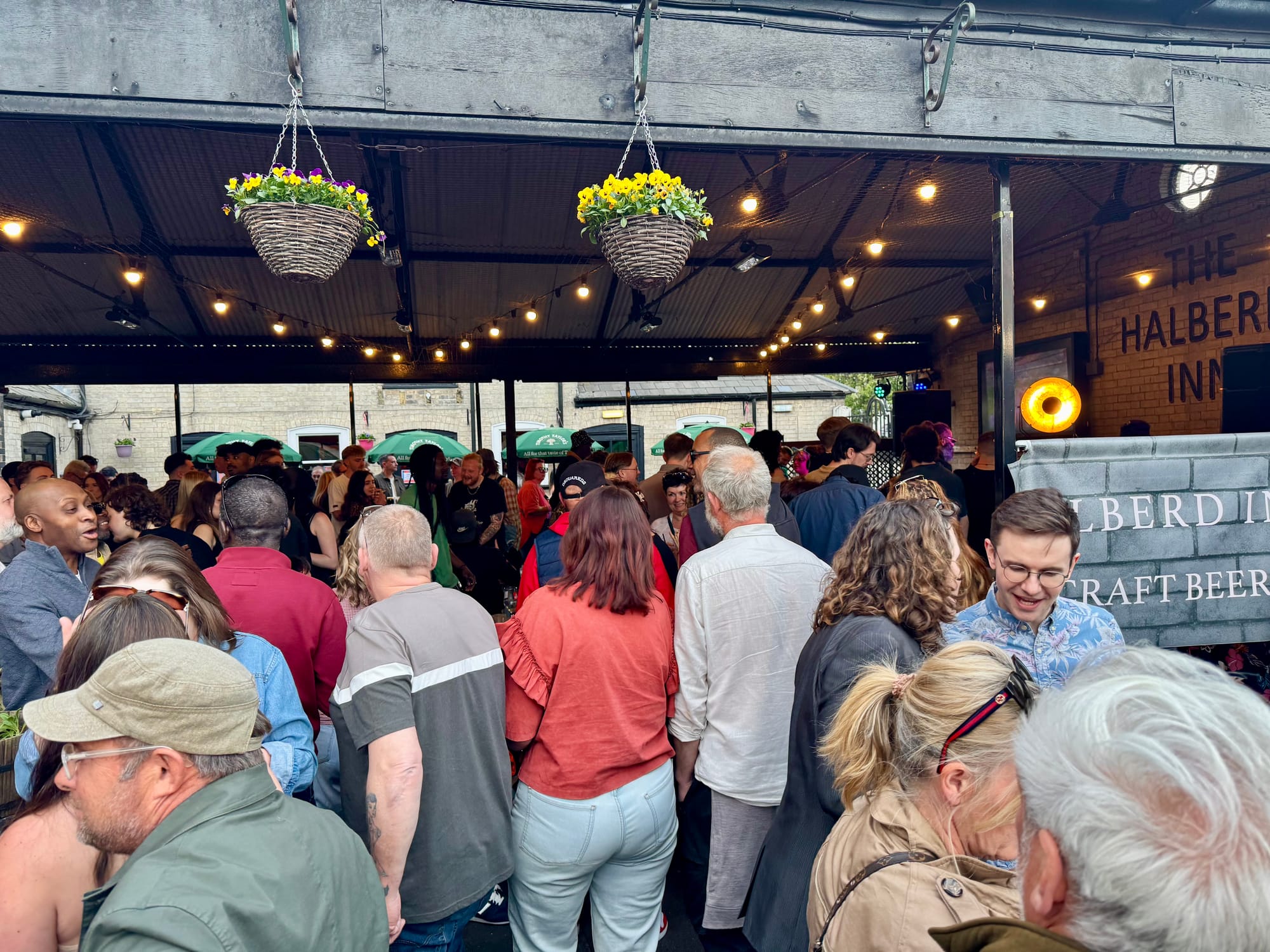
On the events side, the BID was the seed funder behind the Brighten the Corners festivals and played a central role in the Welcome Home Ed campaign during Ed Sheeran's homecoming concerts, which Walker says brought 200,000 additional visitors to Ipswich. The BIPs Which pub crawl campaign, he says, generated £60,000 in spend for participating bars. The Fortnight food and drink campaign this year involved 41 venues and 62 different offers.
"Do I know that fork generates 5,000 additional meals and £100,000 of spend? Yes," Walker says. "But it's not for me to decide whether I should be confident about that or not. That's for businesses to decide if that's value."
The case for scepticism
Not everyone is convinced by the BID model — and Walker is careful not to dismiss those concerns.
BIDs have a complicated reputation nationally. Some have been accused of poor governance, weak delivery and levy spending that bears little relation to what businesses actually need. Walker doesn't shy away from the problem.
"There are bad examples of bids across the UK," he says. "There will always be bad actor bids across the country. I think it's smaller than the people that are really against it would suggest, but like any industry, there are those that I don't think deliver the value. I would encourage their businesses to vote against it. Equally, if people don't think we deliver value here, I'd also encourage them to vote against it."
There is also some confusion amongst residents. Some residents conflate Ipswich Central with the council, attributing its work to the local authority or, conversely, blaming it for things that are the council's responsibility. There is also, within some circles, an incorrect view that the BID is spending taxpayers' money and that they should therefore be accountable to the same kind of public scrutiny of a local authority.
Walker takes a pragmatic view. "If that individual thinks it's done by the council, then why do I care?" he says of the Stoke Bridge project – a project that many assume was delivered by the council. "I just want the place to be better."
What the new plan proposes
The business plan being put to levy payers this month is built around four strands: standards, festivals, campaigns and data. Walker describes the overarching philosophy simply: "There is no magic wand, there's just hard work and delivery."
On standards, the plan commits to maintaining at least four My Local Bobby officers and expanding the Public Space Protection Order so that officers can confiscate alcohol from individuals before anti-social behaviour occurs, rather than after. A civil banning scheme — a "banned from one, banned from all" approach to prolific shoplifters — is also proposed. Walker says around 80% of shoplifting in the town centre is carried out by 20% of offenders, and that targeting that group directly would free up police to tackle more serious organised retail crime.
On greening, the plan sets a specific and audacious target: Britain in Bloom accreditation for the town centre by 2030. The BID already funds hanging baskets in partnership with the council and wants to expand that commitment substantially.
On festivals, the new plan commits £100,000 per year to an arts and culture week, with a pledge to approach Arts Council England for matched funding — potentially creating a £200,000 annual cultural festival for Ipswich. It also commits to making the Ipswich Book Festival the biggest in the region, creating what Walker describes as the UK's biggest craft beer festival, and growing the street art festival to rival Southend's, which currently attracts between 100,000 and 200,000 visitors.
"We need to be less Suffolk about being the county town of Suffolk," Walker says. "We need to be bolder and braver and more ambitious."
On data, the plan proposes a public portal publishing footfall, spend and crime data for the town centre — giving individual businesses the ability to benchmark their own performance against the wider picture and giving levy payers a transparent means of measuring the BID against its own promises.
The plan also proposes a new annual pride-in-place campaign starting each February, championing independent businesses across the town, and a push to make Ipswich's Christmas offering — including new Christmas lights and student-built chalets for a proper Christmas market filled with Suffolk produce — a genuine regional destination.
"If we're going to be the county town, we have to shout about it," Walker says.
A board built for Ipswich
One criticism levelled at BIDs nationally is that they become talking shops for the same familiar faces — institutional representatives cycling between boards and committees without meaningful accountability to the businesses they serve.
Walker is aware of the perception. The board he and chair Steve Flory have assembled includes senior executives from nearly every sector. There are no council representatives on the board, a deliberate decision.
"It's business-led, business-funded, by business, for business, for Ipswich," Walker says.
Why this vote is different
Ipswich Central is approaching this ballot at a moment when the town's ambitions are unusually aligned. Ipswich Town's promotion to the Premier League, the City of Culture 2029 longlisting, the waterfront development, Halo's upcoming move to the Willis building, are all pulling in the same direction — a town that is, tentatively, beginning to believe in itself.
Walker, who grew up in Ipswich, attended Stoke High School and Northgate sixth form, and spent 15 years transforming Nottingham's city centre before returning home, is candid about what that means.
"When it's bad, it's bad. But when it's good, it's actually really great."
For levy payers, the question is not whether they like Lee Walker or approve of BIDs in the abstract. It is whether they buy into a vision for this town that he, his board and the organisations they represent, are working towards, and their ability to deliver it.
The alternative, if the ballot fails, is not that someone else picks up the work. It is that no one does.
The bottom line
Ipswich is not short of people who will tell you what is wrong with the town. It is considerably shorter of individuals and organisations with the mandate and skill set to do something about it. Whatever your view of BIDs or how Ipswich Central has performed over the past 20 years, the question on the ballot paper this summer is a simple one: is a funded, business-led body – under this current leadership – fighting for Ipswich town centre better than no body at all?
Levy payers have until 16 July to decide. It is they who make the decision, but it is the entire town, and anyone who visits it, that will feel the impact of that decision, whatever the outcome, for years to come.
Don't forget: If you enjoy our content, please add Ipswich.co.uk as a "preferred source" on Google so you can easily find more of the content you value.
This article cost us ~£189 to produce
It's free for you to read thanks to the generous support of our partners. Please support us by supporting them.
Below the line